PDO · DOPProtected Designation of Origin (locally DOP)Garlic
A white garlic from the Polesine plains of Rovigo, between the Po and Adige rivers, where garlic has been grown since Roman times. Developed from a local ecotype, it has a fruity scent and a fresh, delicate flavour that is milder than many other garlics.
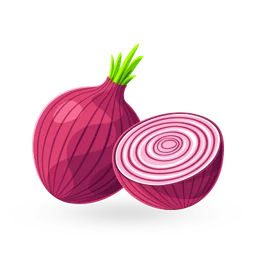
These red onions take their name from Tropea on Calabria's Tyrrhenian coast and come from early, mid-season and late cultivars. Sold as spring onions, fresh onions or storage onions, the ripe bulbs are round or slightly long, juicy and notably sweet.
A small, oval Sicilian tomato shaped rather like a date and weighing 15 to 40 grams. It has thin skin, firm flesh with little water and few seeds, and a sweet, intense taste that suits salads, sauces and preserves; it also keeps well after picking.
Lemons grown on terraced hillsides along the Amalfi Coast in the province of Salerno. They are low in acidity and gentle in flavour, and besides being eaten fresh with salt and mint they go into jams, preserves, sorbets and desserts.
Hazelnuts from the province of Salerno, named after the Giffoni Valle Piana valley. Usually shelled and roasted, they are valued by confectioners for their flavour and long keeping, and go into chocolate-coated snacks, nougat, cakes, pastry creams and ice cream.
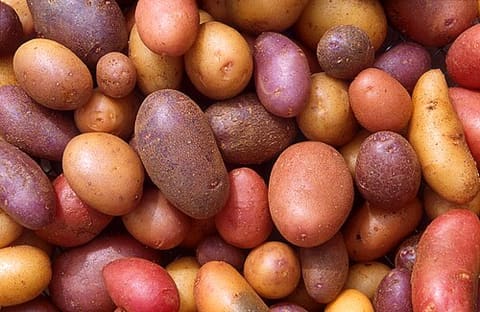
Potatoes grown on the Sila plateau of Calabria, in Cosenza and Catanzaro provinces, from varieties such as Agria, Marabel, Nicola and Désirée. Fertile upland soils and the mountain climate produce tubers known for keeping well over a long period.
PDO · DOPProtected Designation of Origin (locally DOP)Pistachios
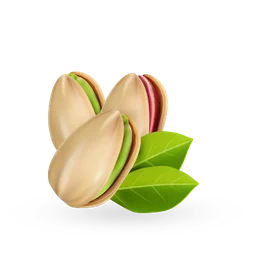
Bright green pistachios of the Napoletana cultivar grown on volcanic soils around Bronte, on the lower slopes of Etna in Sicily. Locally the nut is called frastuca, from the Arabic word. They fill cannoli and other Sicilian sweets and make an aromatic pistachio pesto for pasta.
PDO · DOPProtected Designation of Origin (locally DOP)Cherry Tomato
Small tomatoes grown in Vesuvius National Park near Naples and hung in braided bunches, the piennolo, to dry slowly. Drying concentrates their sweetness and aroma and lets them keep through the year. They are used on pizza and in pasta sauces.
Tomatoes grown around Pachino in the Sicilian province of Syracuse, covering several varieties. They are sweet and juicy and keep well. Mostly eaten fresh in salads, cold pasta and on pizza, they are also sun-dried and preserved in the Sicilian way.
PDO · DOPProtected Designation of Origin (locally DOP)Tomato
Plum tomatoes grown on the volcanic plains along the Sarno river south of Vesuvius, across parts of Naples, Salerno and Avellino provinces. They are bright red, peel easily, have very few seeds and a bittersweet taste, and are a favourite for sauces and canning.
Italian traditional product (PAT)Italian traditional product (PAT)Boletus Mushroom
Wild porcini mushrooms from Molise in southern Italy, especially around Isernia and Campobasso, usually meaning Boletus edulis. The caps are large and brown to reddish brown with a strong flavour. They are dried, kept in oil or frozen and used in a wide range of dishes.
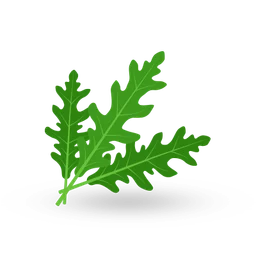
Rocket grown on the Sele plain in the province of Salerno, southern Italy. The leaves are crisp, sharply peppery and so full of flavour that they need no salt. It is sold fresh or ready to eat in trays, tubs, bags or crates.
A rare white truffle (Tuber magnatum pico) found around Alba in Piedmont from October to December, growing alongside oak, hazel, poplar and beech. Its pale, marbled flesh has an earthy, garlicky aroma, and it is shaved raw over pasta, risotto and egg dishes.
Pistachios grown on the island of Aegina from the local Egintiki variety, cultivated there since the late 19th century. The island's soil and climate give them a distinctive aroma and taste, and picking starts in August, with the nuts knocked from the branches using long sticks.
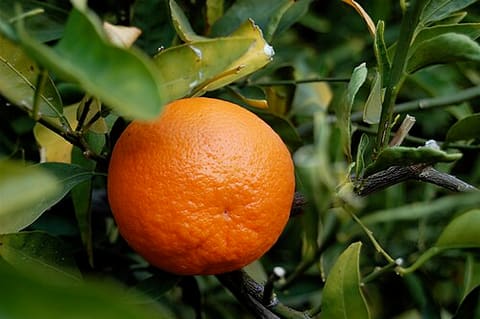
Mandarins grown on the Greek island of Chios, where sunshine and soil give fruit that is sizeable and high in sugar. The tender, slightly orange flesh is strongly aromatic, a scent so linked with the island that it is nicknamed the fragrant one.
Starking Delicious apples grown at altitude around Zagora, Makrirahi and Pouri on the eastern slopes of Mount Pelion. Cultivated with traditional methods and picked by hand once ripe, they are known for their vivid red colour.
Potatoes cultivated around Kato Nevrokopi and nearby villages in northern Greece, where growing began in the 1920s. Sandy soils and the local climate give tubers rich in starch and protein, planted for a summer season and lifted later in the year.
Peaches grown around Naousa in Central Macedonia, northern Greece, covering many varieties including Red Haven, Spring Crest and Sun Crest. Though peaches originated in China, these adapted well to the local soil and climate under careful cultivation.
Small, deep red tomatoes of a local variety grown on Santorini and neighbouring islets in the Cyclades. The dry climate and limey volcanic soils give firm, rather dry flesh full of seeds and a notably high acidity, and they must be grown and processed within the area.
Purple-skinned garlic grown in Castilla-La Mancha, across parts of Cuenca, Albacete, Toledo and Ciudad Real. It is notably pungent and spicy, richer in allicin and sulphur compounds than many types, and its bulbs typically hold eight to ten cloves rather than the usual ten to twelve.
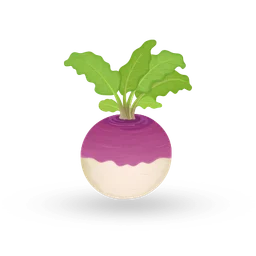
The tender leafy shoots of the turnip plant, grown in Galicia in northwest Spain and picked by hand between October and January. Dark green, soft and low in fibre with a slightly bitter, sharp taste, they are central to dishes such as Galician stew.
PDO · DOPProtected Designation of Origin (locally DOP)Peach
Large late peaches grown in the Calanda area of eastern Aragón, picked fully ripe for flavour. They are creamy orange, sweet and juicy, must be at least 73 mm across and free of blemishes, and each one carries a traceable label.
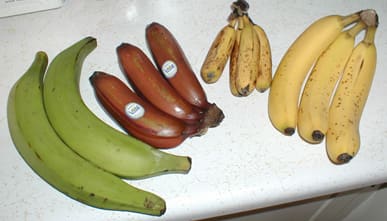
Cavendish bananas grown on the Canary Islands, recognisable by brown speckles on their yellow skin, caused by enzymes that speed ripening. Fruit must be at least 14 cm long, and high sugar with low starch gives a sweet, intense flavour.
These slender, long-stemmed mushrooms with tiny caps grow in clusters and have a mild, faintly fruity taste. Their crisp bite suits Japanese hotpots such as sukiyaki and nabemono, as well as soups, salads and stir-fries, and they are sold fresh or canned.
Japanese nori is seaweed of the red algae Porphyra, rinsed, chopped, pressed and dried into thin, flat dark sheets. Once gathered from the wild, it has been farmed since the Edo period and is now grown on purpose-built nets before processing.
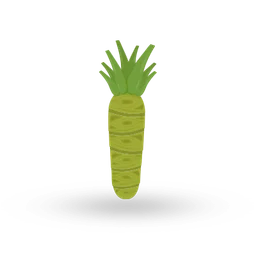
A Japanese plant grown in streams and wet beds for its knobbly rhizome, which takes two to three years to mature. It is grated fresh, traditionally on sharkskin, and its sharp heat peaks within minutes before fading, which is why it is prepared just before serving.
Grown around Gaziantep in south-east Turkey, these pistachios are bright green with an intense, complex, slightly citrusy flavour. Most are picked in September, but nuts meant for baklava are gathered earlier, in August, when their oil and protein levels are higher.
Grown in the Ayaş district near Ankara, this Turkish tomato is valued for a sweet, robust flavour that is more intense than ordinary varieties. It is eaten raw in salads and also cooked into dishes that show off its taste.
Figs from Aydın in the Menderes river valley of western Turkey, picked in late August. Trees start fruiting at around five years and can keep producing for decades. Most of the crop is sun-dried into chewy, sugary figs eaten with muesli or used to fill Turkish pastries.
Developed in Australia by John Cripps, this apple has red skin and white to pale yellow flesh. It is best eaten fresh, when its taste is sweet with a slight sharpness, and it is now also grown in countries including Chile, Canada and the United States.
Macadamias are oily nuts native to north-eastern New South Wales and parts of Queensland in Australia. Aboriginal people ate them raw or roasted over coals and cracked the hard shells with stones; the name was given in 1857 in honour of John Macadam.
PDO · DOPProtected Designation of Origin (locally DOP)Pineapple
These pineapples grow in glasshouses on São Miguel in the Azores, using traditional methods, and take about two years from planting to harvest. They have orange skin, a small crown and yellow, almost translucent flesh with a bittersweet taste and exotic scent, and work in sweet and savoury dishes alike.
PGI · IGPProtected Geographical Indication (locally IGP)Citrus Fruit
Oranges, tangerines, lemons, limes and grapefruit from orchards in the Algarve's Faro district, where oranges and tangerines dominate. The fruit is thin-skinned, brightly coloured and very juicy, eaten fresh or turned into juice, desserts, jams and liqueurs.
Slow Food Ark of TasteSlow Food Ark of TasteTropical Fruit
A tropical American fruit tree long gathered by indigenous communities in Argentina's Misiones province. The fruit has sweet, slightly gritty flesh rich in vitamin C, and is eaten fresh or in salads, or made into juice, jelly, jam and preserves.
Native to Brazil and the American tropics, this woody shrub is grown across Latin America and the Caribbean for its starchy root, which has a brown fibrous skin and white flesh. The root can be boiled, fried, mashed or baked, made into cassava bread, or dried into tapioca for desserts.
Straw mushrooms (Volvariella volvacea) are grown on beds of rice straw across East and Southeast Asia, having originated in China. They have a pink spore print, a soft, creamy bite and gentle nutty taste, and are common in Asian soups, stir-fries and curries.
Onions grown in and around Všestary in the Czech Republic, covering many varieties with round or oval bulbs. They have golden-yellow skins and white to greenish flesh, a sweet, slightly pungent smell and a gently sweet taste whose sharpness depends on the variety.
Also called lulo, naranjilla is an Andean fruit from Ecuador and Colombia that belongs to the nightshade family rather than citrus. Round and about as big as a small orange, it has fuzzy skin that turns yellow-orange when ripe, enclosing green, juicy flesh.
Tuber melanosporum, the black winter truffle, grows among the roots of oak and hazel and takes its name from Périgord in France. Knobbly and dark, with white veining inside, it has a pungent, earthy scent and becomes musky and faintly sweet when fully ripe between December and March.
A round Hungarian onion from the Makó area with bronze-red skin, firm white flesh and a hot, strong taste. Dry late-summer weather gives it a high dry-matter content, so it stores well and keeps for a long time.
The purple mangosteen is a tropical fruit thought to come from the Sunda Islands, now grown across South-East Asia. A thick dark purple rind encloses soft, juicy white segments that are sweet with a little tartness, eaten plain or used in desserts, smoothies and ice cream.
Strawberries from County Wexford in south-east Ireland, grown in mild coastal weather on light, sandy soils. Long summer days help them ripen into bright, very sweet and fragrant berries, and they are among the country's best-known seasonal crops.
The Lady Finger, or pisang mas, is a small, slim banana around 10 to 15 cm long, much smaller than the Cavendish. Under its thin skin the flesh is creamy, very sweet and faintly floral, so it is mostly eaten fresh.
Native to Andean valleys in Peru, Chile, Bolivia and Ecuador, lúcuma has gently sweet flesh with a maple-like flavour that suits baked desserts and ice cream. It is also rich in beta-carotene, iron and calcium.
Strawberries grown in the Kartuzy, Kościerzyna and Bytów districts of Kashubia in northern Poland. Elsanta and Honeoye berries for eating fresh are small, red, juicy and sweet like wild strawberries, while the Senga Sengana variety is grown for processing.
Original Srbija (Serbian origin mark)Original Srbija (Serbian origin mark)Raspberries
Raspberries from the Arilje area of Serbia, medium to large in size, with a pleasant scent and a sweet-tart taste. They are hand-picked and most of the crop is frozen, though some are eaten fresh, dried or pressed into juice.
These are the European Union’s protected food names (the UK and Switzerland run matching schemes). A registered name can only go on products made the registered way — so “Parmigiano Reggiano” on a label is a promise about place and method, not just a style.
PDOProtected Designation of OriginProtected Designation of Origin
Every stage — producing the raw material, processing and preparing it — happens in one defined area, following a registered method. The strongest link between a food and its place.
At least one stage of making the food happens in the named area, and its reputation or character comes from that place. Raw materials may come from elsewhere.
Protects a traditional recipe or method rather than a place: it can be made anywhere, as long as the registered method is followed.
On packs you will often see the local abbreviation instead: DOP (Italy, Spain, Portugal), AOP or AOC (France, Switzerland), IGP for PGI, and wine terms such as DOC and DOCG. We show both. Slow Food Presidia and the Ark of Taste are listed too: they mark endangered traditional foods, not legal name protection.

 Province of Rovigo,Italy