
Futomaki (thick sushi rolls)
Non-vegetarian
太巻き · futomaki
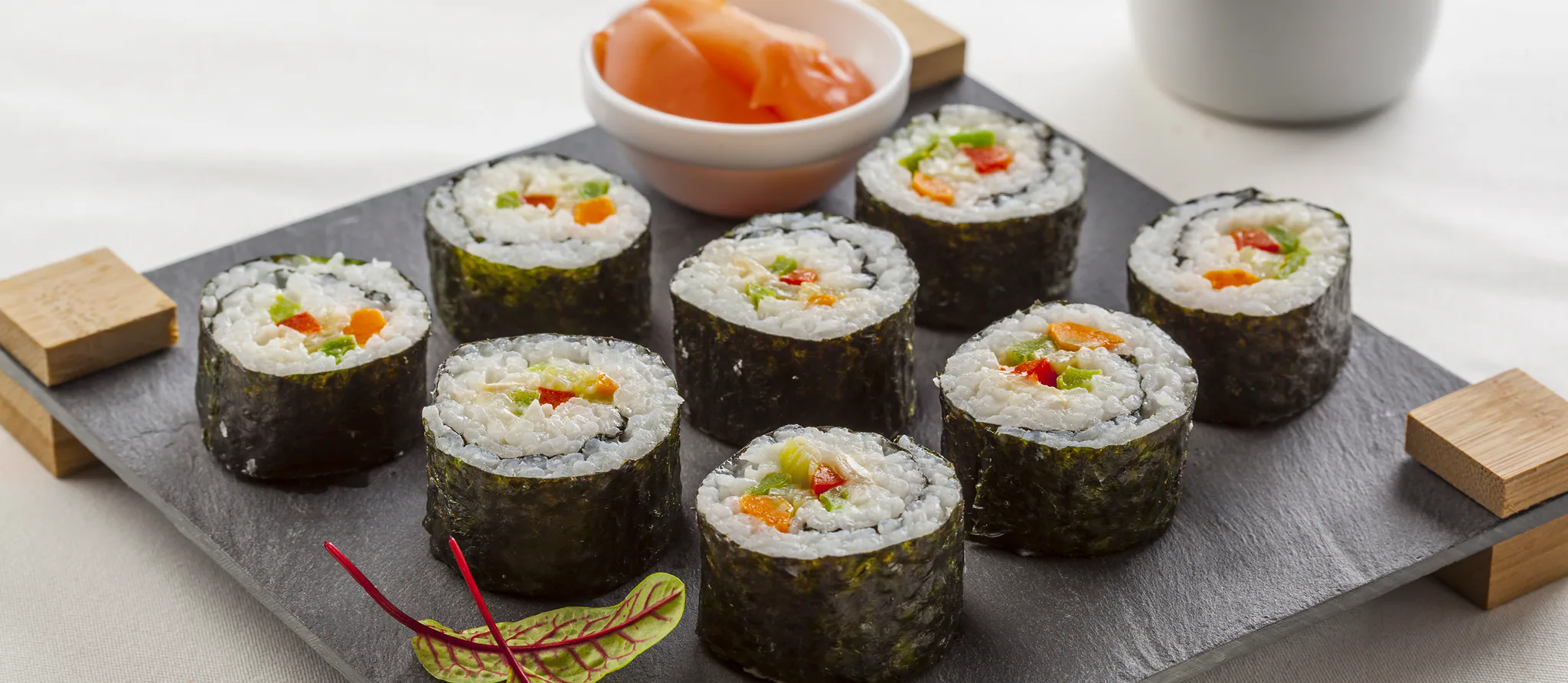
Fat sushi rolls of vinegared rice and a whole sheet of nori wrapped around a colourful row of fillings: sweet simmered kanpyō gourd and shiitake, rolled omelette, spinach and cucumber. Each slice shows a neat mosaic of colours, and the rolls are a Kansai favourite for picnics and festivals.
Futomaki (thick sushi rolls) is a Japanese rice dish, ready in about 2 hours and made with short-grain rice, kanpyō (dried gourd strips) and nori. It serves 4 and is rated intermediate to cook.
- Prep
- 50 min
- Cook
- 40 min
- Rest
- 30 min
- Total
- 2 h
- Serves
- 4
- Level
- Intermediate
- Calories
- 586
Plus 1 hour soaking the dried shiitake, which can run alongside cooking the rice.
Main ingredients
Ingredients
For the sushi rice
For the simmered fillings
For the omelette
For the vegetables
For rolling
Method
Sushi rice
35 minStep 1
Soak the rinsed rice in the water for 30 minutes, then bring to the boil, cover and cook on the lowest heat for 13 minutes. Turn off the heat and leave covered for 10 minutes (or use a rice cooker).
- 25 min
- low heat
- Saucepan (opens in a new tab)
Food safety: Cooked rice can carry Bacillus cereus spores that survive cooking; keep sushi rice at room temperature for no more than a few hours and refrigerate other leftover rice within an hour.
Step 2
Warm the rice vinegar (opens in a new tab), 2 tbsp sugar (opens in a new tab) and 1½ tsp salt until dissolved. Tip the hot rice into a wide bowl, sprinkle over the vinegar and cut it through with a spatula while fanning it, until glossy and cooled to body temperature. Cover with a damp cloth.
How it looks · Photo: Klaus Nielsen on Pexels
Simmered fillings
15 minStep 3
Put the kanpyō (opens in a new tab) and shiitake (opens in a new tab) in a small pan with the dashi (opens in a new tab), soy sauce (opens in a new tab), 2 tbsp sugar (opens in a new tab) and mirin (opens in a new tab). Simmer gently for 15 minutes until the liquid has almost gone and the fillings are glossy and well coloured. Cool.
- 15 min
- medium-low heat
- Saucepan (opens in a new tab)
How it looks · Photo: Bachir Mamud on Pexels
Omelette
8 minStep 4
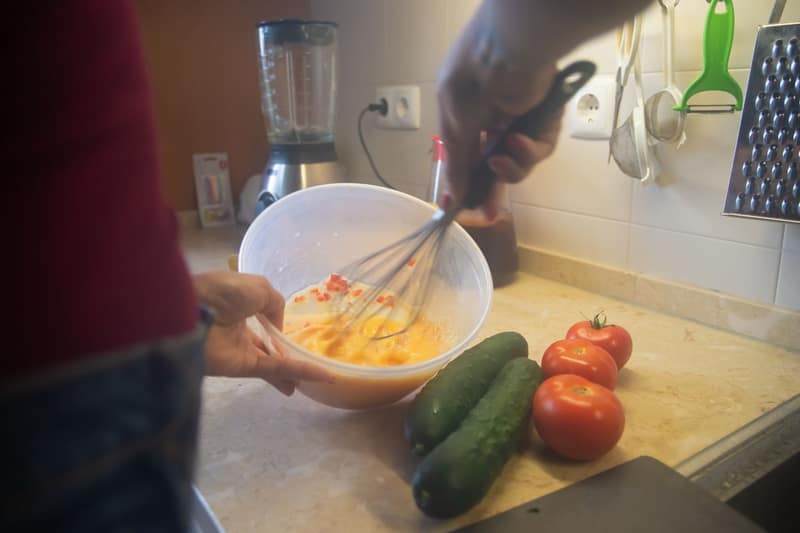
Beat the eggs (opens in a new tab) with 1 tbsp sugar (opens in a new tab) and a pinch of salt. Cook in an oiled frying pan over medium-low heat as a thick omelette, rolling it up in layers as for tamagoyaki. Cool and cut into 4 long batons about 1.5 cm thick.
- 8 min
- medium-low heat
- Frying pan / skillet (opens in a new tab)
How it looks · Photo: Kampus Production on Pexels
Vegetables
5 minStep 5
Squeeze the blanched spinach (opens in a new tab) dry and divide it into 4 portions. Have the cucumber (opens in a new tab) batons, omelette, kanpyō (opens in a new tab) and shiitake (opens in a new tab) ready in a row.
- 5 min
Rolling
17 minStep 6
Lay a nori (opens in a new tab) sheet, shiny side down and long side towards you, on a bamboo rolling mat. With damp hands spread a quarter of the rice evenly over the nori, leaving a 3 cm strip bare at the far edge.
- 3 min
Step 7
Lay a quarter of each filling in neat parallel lines across the middle of the rice. Lift the near edge of the mat and roll it over the fillings so the rice edges meet, press firmly, then continue rolling to seal on the bare strip of nori (opens in a new tab). Repeat to make 4 rolls.
- 10 min
Squeeze the roll gently through the mat to make it firm and even; a tight roll slices cleanly.
Step 8
Rest the rolls seam-side down for a few minutes, then cut each into 8 slices with a sharp, wet knife, wiping it between cuts.
At a glance
1 · Sushi rice in a pot
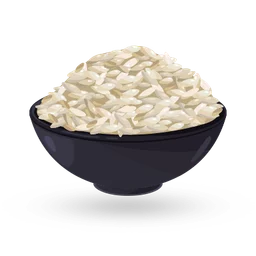 Short-grain rice
 Rice vinegar
 Sugar
 Salt
then put
2 · Simmered fillings in a pan
- Kanpyō (dried gourd strips)
 Shiitake mushrooms
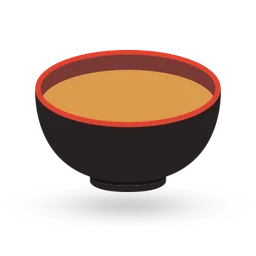 Dashi
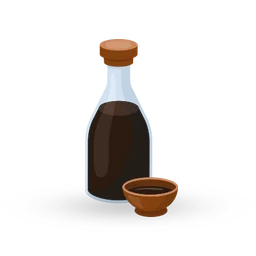 Soy sauce
- Sugar
 Mirin
then beat
3 · Omelette in a pan
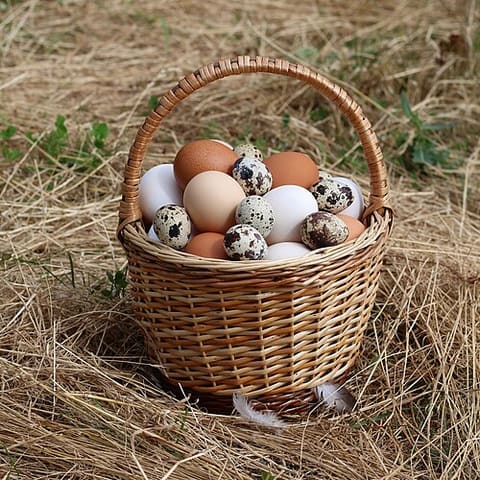 Egg
- Sugar
- Salt
 Neutral vegetable oil
then squeeze
4 · Vegetables in a pan
 Spinach
 Cucumber
then lay
5 · Rolling in a bowl
 Nori
About this dish
- Origin
- Kansai (Osaka), Japan · Well documentedThick rolls of this kind became popular in the Osaka area in the Edo and Meiji periods. Eating a whole uncut futomaki in silence on Setsubun (ehōmaki) is an Osaka custom that spread nationwide from the 1990s through convenience stores.More food from Japan
Japan - Dish
- Lunch · Dinner · Rice dishes · Main courses
- Cooking method
- Boiled, Simmered, Pan-fried, No-cook
- Taste
- sweet & savoury, umami, tangy, fresh
- Diet
- Pescatarian · Dairy-free · No nut ingredientsWorked out from the ingredients. How labels work
All labels
Pescatarian · Non-vegetarian · Flexitarian-friendly · Dairy-free · No nut ingredients · Pork-free · Beef-free · Low-fat - Good for
- Festive & celebration · Portable / lunchbox · Make-ahead
- Cook more with
- Short-grain rice · Nori · Rice vinegar · Sugar · Shiitake mushrooms · Dashi
- Techniques
- Pan-frying · Boiling · Simmering · Blanching
Allergens
- Contains: Eggsfrom egg
- Contains: Fishfrom dashi
- Contains: Wheatfrom soy sauce
- Contains: Glutenfrom soy sauce
- Contains: Soyfrom soy sauce
Based on typical versions of these ingredients and not verified allergen-free. Brands differ and cross-contact happens, so always check labels. For severe allergies, follow your clinician’s advice.
Nutrition
586 kcal per serving
Estimated1 serving ≈ 527 g · recipe makes 4
Where the energy comes from
- Protein 12%
- Carbohydrate 78%
- Fat 10%
| Nutrient | Per serving | Per 100 g* |
|---|---|---|
| Energy | 586 kcal | 111 kcal |
| Protein | 17 g | 3.2 g |
| Carbohydrate | 111.6 g | 21.2 g |
| Net carbohydrate | — | — |
| Sugars | — | — |
| Added sugars | — | — |
| Fibre | — | — |
| Fat | 6.2 g | 1.2 g |
| Saturated fat | — | — |
| Trans fat | — | — |
| Cholesterol | — | — |
| Sodium | 1813 mg | 344 mg |
| Salt equivalent | 4.5 g | 0.9 g |
Vitamins & minerals per serving
- Potassium
- 728 mg
- Calcium
- 106 mg
- Iron
- 3.4 mg
- Magnesium
- 99 mg
- Vitamin A (RAE)
- —
- Vitamin C
- —
- Vitamin D
- 0.9 µg
- Vitamin B12
- —
- Folate (DFE)
- 136 µg
How these numbers were made
- Calculated from USDA FoodData Central (SR Legacy) per-100 g values and the listed quantities.
- *Per 100 g of combined raw ingredients; the cooked dish may weigh more or less.
- Rice vinegar: Distilled vinegar (FDC 172237) used as a stand-in for unseasoned rice vinegar.
- Kanpyō (dried gourd strips): Raw calabash gourd (FDC 169232) used as a stand-in for kanpyō, which is the same gourd shaved and dried; the dried strips are more concentrated, partly allowed for with factor 2.
- Dashi: Home-prepared fish stock (FDC 172885) used as a stand-in for katsuobushi-kombu dashi; both are very low in energy.
- Mirin: Sake (FDC 167723) used as a stand-in; true mirin is sweeter, so sugar is underestimated.
- “—” means the value isn’t known for enough of the ingredients; it is never zero by default.
- Values are estimates for guidance, not for medical dosing. U.S. Department of Agriculture, Agricultural Research Service. FoodData Central, 2019. fdc.nal.usda.gov.
Good to know
Tips
- Wipe the knife with a damp cloth between every cut so the rice does not drag.
- Keep the fillings fairly dry; wet spinach or omelette makes the nori soggy.
Common mistakes
- Spreading the rice too thickly, which leaves no room for the fillings and makes the roll split.
- Refrigerating the finished rolls — the rice hardens; eat them the same day.
Serve with
- With pickled ginger, soy sauce and a bowl of miso soup.
- Packed into a bento box or a picnic hamper.
Food safety
- Cooked rice can carry Bacillus cereus spores that survive cooking; keep sushi rice at room temperature for no more than a few hours and refrigerate other leftover rice within an hour.
Storage
- Best eaten within a few hours at cool room temperature. If you must refrigerate them, wrap tightly and let them come back to room temperature before eating.
Variations
- Ehōmaki: An uncut futomaki, often with seven fillings for the seven gods of fortune, eaten in silence facing the year's lucky direction on Setsubun.
- Futomaki with eel or seafood: Simmered or grilled eel (unagi), crab stick, prawn or sweet fish flakes (sakura denbu) replace some of the vegetables.
- Kazari-maki: Decorative rolls whose fillings form flowers or faces when sliced, a Chiba speciality.
Original editorial recipe · FriendsPantry editorial · source: TasteAtlas (dish facts) · Not yet independently reviewed · Added
Recipe DNA
How this dish is built
Reviews & corrections
Reviews come from signed-in cooks and appear after a moderator checks them. We never show made-up ratings.
You might also like
Tamagoyaki
 Japanese · 15 min · 228 kcal
Nigiri sushi
Japanese · 1 h 50 min · 468 kcal
Kimbap
 Korean · 1 h · 384 kcal
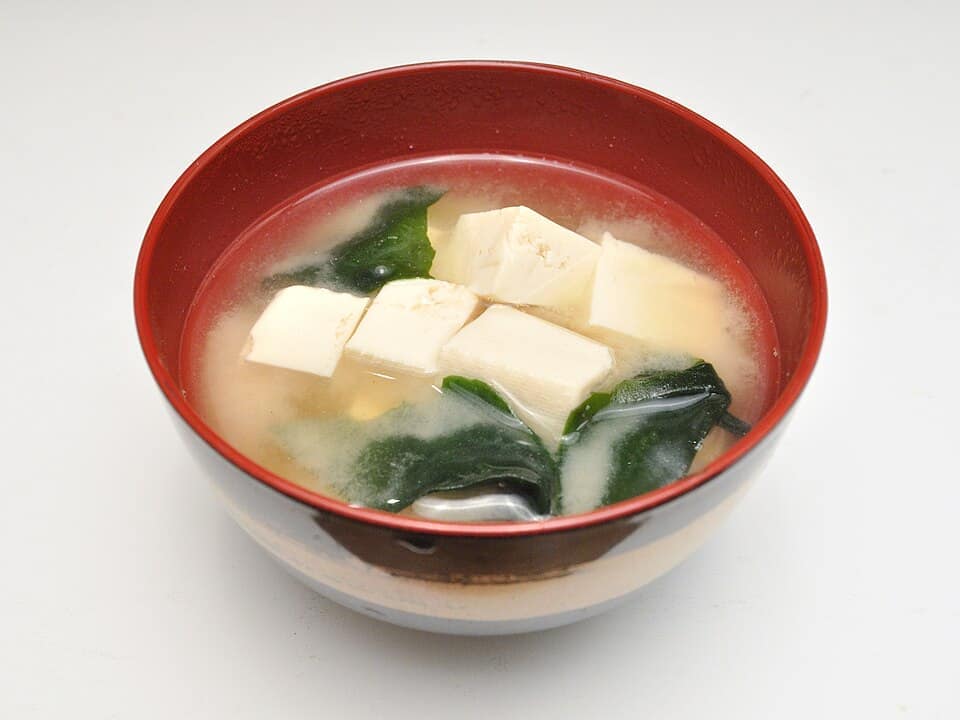
Miso soup with tofu and wakame
Japanese · 13 min · 84 kcal