
 Greek · Mediterranean · Appetizers & starters
Saganaki (pan-fried Greek cheese)
Vegetarian
Σαγανάκι · saganáki
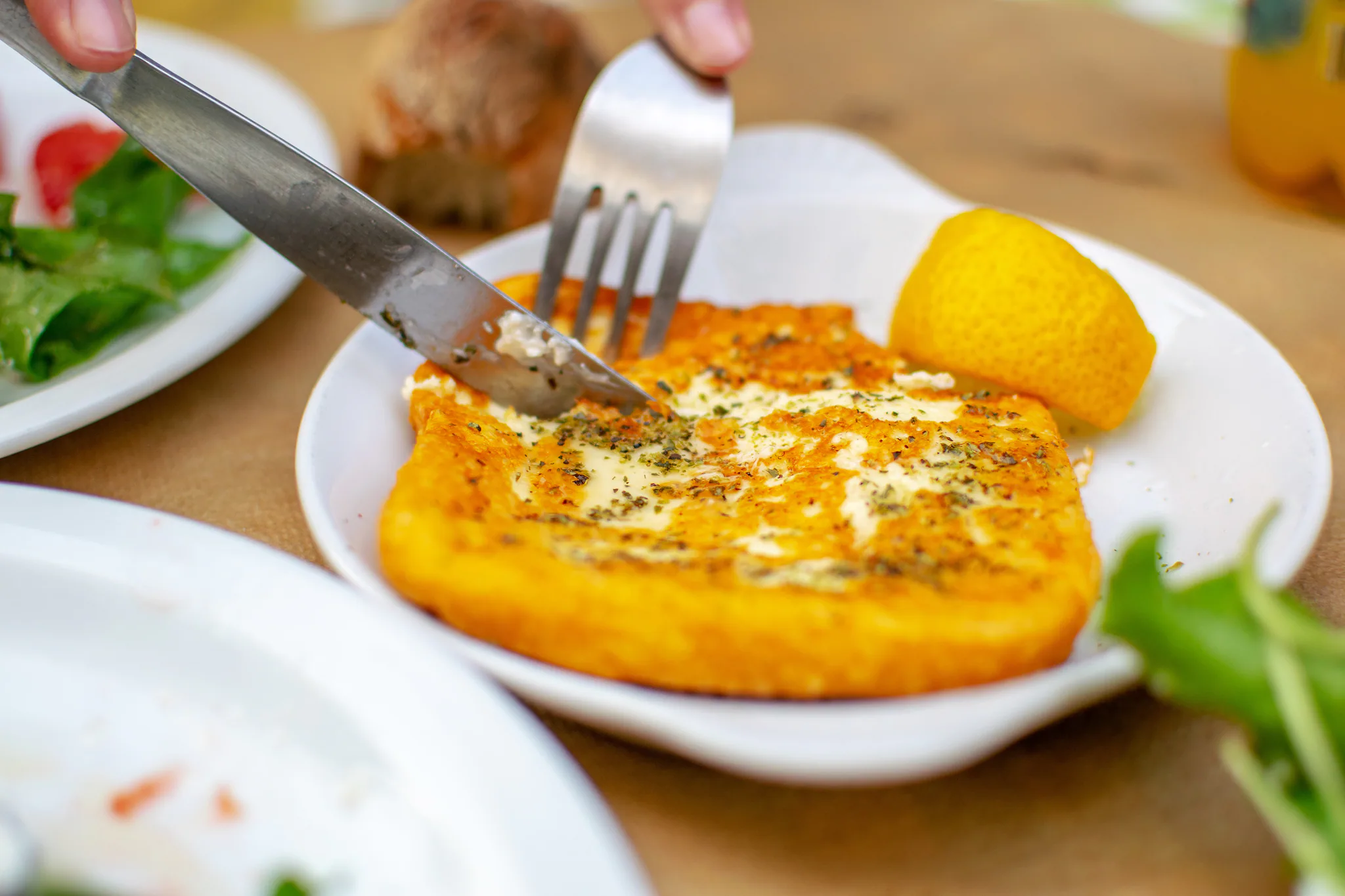
A thick slab of hard, salty Greek cheese such as kefalotyri, graviera or kasseri, dusted in flour and fried in a small pan until golden and crusted outside and soft inside. Finished with lemon and eaten hot as a meze.
Saganaki (pan-fried Greek cheese) is a Greek starter from Greece, ready in about 10 minutes and made with kefalotyri cheese, all-purpose flour and lemon. It serves 2 and is rated easy to cook.
- Prep
- 5 min
- Cook
- 5 min
- Total
- 10 min
- Serves
- 2
- Level
- Easy
- Calories
- 729
Main ingredients
Method
Step 1
Run the slab of cheese briefly under cold water (or brush it with the water), then dredge it in the flour on all sides and shake off the excess.
- 2 min
The damp surface helps the flour stick and form a crust that holds the melting cheese.
Step 2
Heat the olive oil (opens in a new tab) in a small heavy pan over medium-high heat until shimmering. Fry the cheese for 1–2 minutes per side until deep golden and crusty and the middle feels soft when pressed.
- 4 min
- medium-high heat
- Cast-iron skillet (opens in a new tab)
- Spatula (opens in a new tab)
Food safety: Damp cheese spits in hot oil; lower it in gently, away from you.
Step 3
Squeeze lemon (opens in a new tab) over the hot cheese, grind over some pepper (opens in a new tab) and sprinkle with oregano (opens in a new tab). Serve at once in the pan with the remaining lemon wedges.
- 1 min
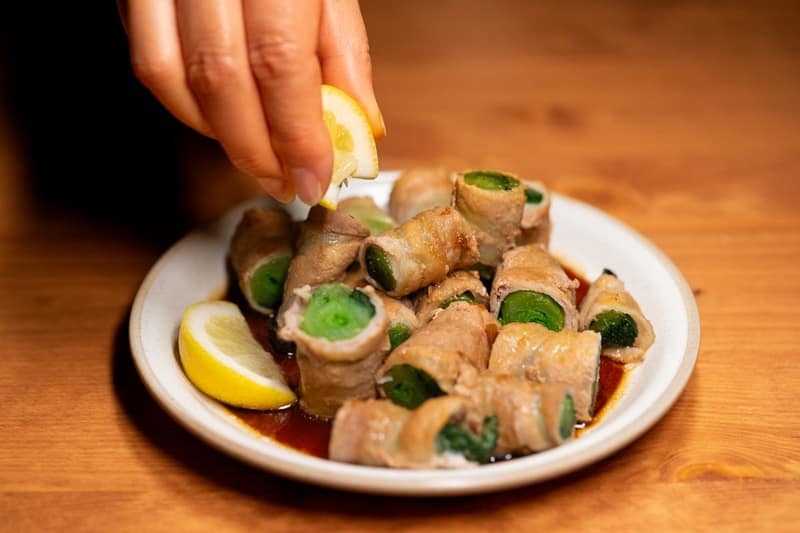
How it looks · Photo: Gu Ko on Pexels
At a glance
 Kefalotyri cheese
 All-purpose flour
 Olive oil
 Lemon
 Black pepper
 Dried oregano
About this dish
- Origin
- Greece · Well documentedNamed after the sagani, the small two-handled frying pan it is cooked and served in; the word also covers shrimp and mussel dishes cooked in the same pan. Flaming it at the table ('opa!') began in Greek restaurants in Chicago in the 1960s.Also popular in Cyprus, United StatesMore food from Greece
Greece - Dish
- Lunch · Dinner · Snack · Appetizers & starters
- Cooking method
- Pan-fried
- Taste
- salty, savoury, citrusy
- Diet
- Vegetarian (lacto-ovo) · No nut ingredients · Low-carb · High-proteinWorked out from the ingredients. How labels work
All labels
Vegetarian (lacto-ovo) · Eggetarian · Lacto-vegetarian · Pescatarian · Flexitarian-friendly · Egg-free · No nut ingredients · No added sugar · Alcohol-free · Pork-free · Beef-free · Low-carb · High-protein - Good for
- Everyday · Minimal cleanup
- Cook more with
- Kefalotyri cheese · All-purpose flour · Lemon
- Techniques
- Pan-frying
Allergens
- Contains: Milkfrom kefalotyri cheese
- Contains: Wheatfrom all-purpose flour
- Contains: Glutenfrom all-purpose flour
Based on typical versions of these ingredients and not verified allergen-free. Brands differ and cross-contact happens, so always check labels. For severe allergies, follow your clinician’s advice.
Nutrition
729 kcal per serving
Estimated1 serving ≈ 217 g · recipe makes 2
Where the energy comes from
- Protein 23%
- Carbohydrate 11%
- Fat 66%
| Nutrient | Per serving | Per 100 g* |
|---|---|---|
| Energy | 729 kcal | 335 kcal |
| Protein | 41.8 g | 19.2 g |
| Carbohydrate | 19.9 g | 9.2 g |
| Net carbohydrate | 18.4 g | 8.4 g |
| Sugars | 2 g | 0.9 g |
| Added sugars | 0 g | 0 g |
| Fibre | 1.6 g | 0.7 g |
| Fat | 54.1 g | 24.9 g |
| Saturated fat | 24.2 g | 11.1 g |
| Trans fat | — | — |
| Cholesterol | 130 mg | 60 mg |
| Sodium | 1793 mg | 825 mg |
| Salt equivalent | 4.5 g | 2.1 g |
Vitamins & minerals per serving
- Potassium
- 182 mg
- Calcium
- 1345 mg
- Iron
- 2 mg
- Magnesium
- 58 mg
- Vitamin A (RAE)
- 120 µg
- Vitamin C
- 23 mg
- Vitamin D
- 0.6 µg
- Vitamin B12
- 1.4 µg
- Folate (DFE)
- 57 µg
How these numbers were made
- Calculated from USDA FoodData Central (SR Legacy) per-100 g values and the listed quantities.
- *Per 100 g of combined raw ingredients; the cooked dish may weigh more or less.
- Optional ingredients are not included: dried oregano.
- Not counted (tiny amounts or “to taste”): black pepper.
- Kefalotyri cheese: Pecorino Romano used as a stand-in; kefalotyri is a similar hard, salty sheep's- and goat's-milk cheese.
- “—” means the value isn’t known for enough of the ingredients; it is never zero by default.
- Values are estimates for guidance, not for medical dosing. U.S. Department of Agriculture, Agricultural Research Service. FoodData Central, 2019. fdc.nal.usda.gov.
Good to know
Tips
- Freeze the cheese slab for 15 minutes before flouring so it keeps its shape in the pan.
Common mistakes
- Using soft cheese such as feta without a coating — it melts away in the pan.
- Letting it cool: saganaki turns rubbery within a few minutes.
Serve with
- Serve with crusty bread, olives and a glass of ouzo or chilled white wine.
Food safety
- When flambéing, take the pan off the heat before adding the alcohol, keep your face and sleeves back, never pour straight from the bottle, and have a lid nearby to smother the flames.
Storage
- Eat immediately; it does not keep.
Variations
- Flaming saganaki: Restaurant style: the hot cheese is doused with a splash of brandy or ouzo and lit at the table before the lemon is squeezed over.
- Feta saganaki: Feta wrapped in filo or coated in egg and sesame, then fried and drizzled with honey.
- Shrimp saganaki: Shrimp cooked in the sagani with tomato, ouzo and crumbled feta.
Original editorial recipe · FriendsPantry editorial · source: TasteAtlas (dish facts) · Not yet independently reviewed · Added
Recipe DNA
How this dish is built
Grouped by each ingredient’s role in the dish. Each band’s width is its share of the dish by weight. Choose a component to see what it does.
What the dish is built around
Main ingredient
- Kefalotyri cheese, one slab about 1.5 cm thick250 g
- All-purpose flour30 g
- Lemon, cut into wedges1 piece · 85 g
Reviews & corrections
Reviews come from signed-in cooks and appear after a moderator checks them. We never show made-up ratings.
You might also like
Grilled halloumi with watermelon and mint
 Cypriot · 10 min · 260 kcal · Vegetarian
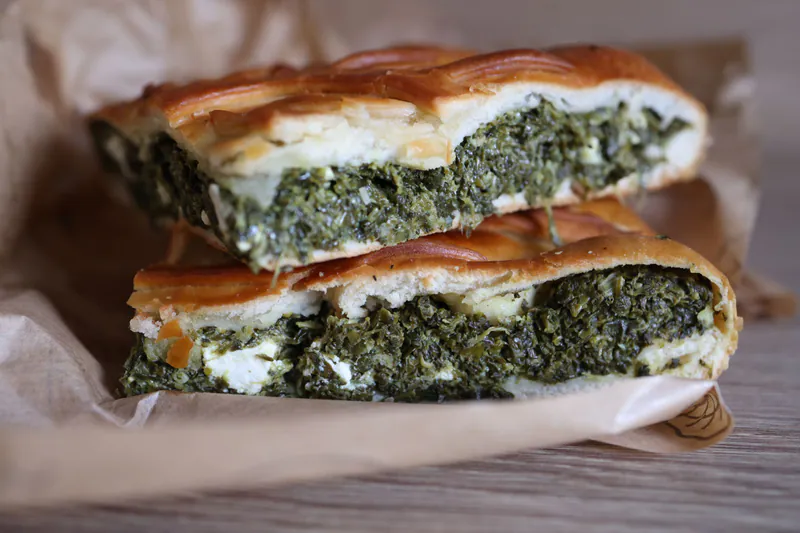
Spanakopita
Greek · 1 h 40 min · 307 kcal · Contains egg
Dolmadakia (rice-stuffed vine leaves)
Greek · 2 h 45 min · 382 kcal · Vegetarian
Kalamarakia tiganita (Greek fried calamari)
Greek · 40 min · 463 kcal