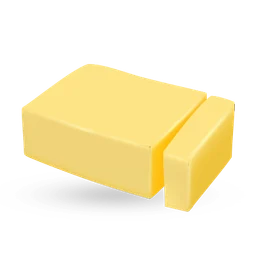
An artisan butter from Saint-Malo in Brittany, made from cultured cream sourced from local farms. After churning it is kneaded by hand with wooden paddles, a nineteenth-century method that works out excess water and gives it a distinctive texture; flavoured versions are also made.
PDO · AOPProtected Designation of Origin (locally AOP)Butter
Butter made from the milk and cream of cows grazing the chalky, clay pastures around the Baie des Veys in Normandy, with no colouring or other additions allowed. Rich in carotene from the grass, it is naturally golden, and it tastes sweet and creamy with a faint hazelnut note.
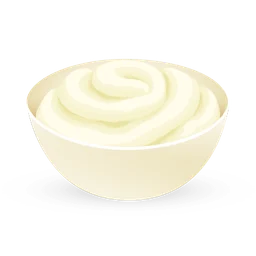
A French cultured cream thickened by adding lactic bacteria, which gives it a mild tang without real sourness. Traditionally linked to Normandy and other northern regions, it ferments for as long as 20 hours and is used in sauces, soups, baking and spooned over fruit.
India's everyday curd is made by adding a culture to warm milk, which ferments the lactose into lactic acid and thickens it with a tangy taste. It is eaten plain, turned into raita or lassi, and used to marinate meat and vegetables.
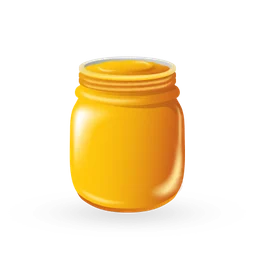
Indian clarified butter, simmered for a long time until almost all water and milk solids are removed. Clarifying made butter stable in a hot climate, and the finished fat contains very little lactose or casein; it also has a role in religious rituals, including ceremonial lamps.
Traditional Indian white butter made by churning fresh cream (malai) collected over several days, or yoghurt, usually with a wooden churner. It is unsalted, rich and creamy with a mild taste and is a staple, especially in rural kitchens.
Turkish kaymak is a thick, velvety cream made by boiling and gently simmering fresh milk, then skimming and chilling the cream that forms. Water buffalo milk is the traditional choice for its richness, though milk from cows, goats and sheep is used as well.
A Turkish butter from the Yakcukur area of Trabzon province, made from pasteurised cow's cream and butter cultures. It is washed in ice-cold water and worked at length with a wooden spoon, marked with spoon cuts on top, and mostly eaten at breakfast.
Rich Cornish cows' milk is heat-treated to make this thick cream, which forms a golden crust that seals the softer layer below. Its colour ranges from cream to golden thanks to carotene-rich grazing, and it is the classic partner for scones and strawberry jam.
Devon's very thick cream has a butterfat content of around 64%. Traditionally raw milk or cream was warmed in shallow pans and then cooled so the thin milk sank and could be drained off, leaving the clotted layer; today centrifuges are used.
A fermented dairy food made by letting bacteria sour milk, with a characteristically gentle tang. Its thickness and texture depend on the milk used and the method, and one popular account holds that it was discovered when milk carried in animal skins curdled.
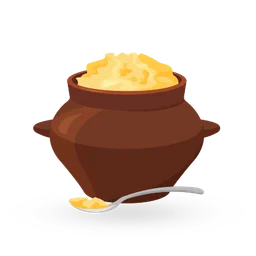
Ethiopian and Eritrean spiced clarified butter, called tesmi in Eritrea, made by gently cooking butter with onion, garlic, ginger and spices such as cardamom, fenugreek and turmeric. Removing the water and milk solids helps it keep, and it serves as both fat and seasoning in stews.
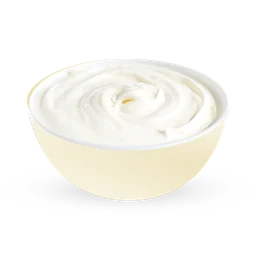
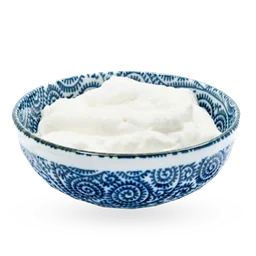
Cultured milk is strained through cloth or fine mesh until the whey drains away, leaving a yogurt that is thicker and creamier than the usual kind. White, smooth and lightly tart, it spreads easily and works in both sweet and savoury dishes.
Golden butter churned from the milk of Irish cows that spend much of the year out on rain-fed grass pastures. That grass diet raises its natural carotene, giving a deep yellow colour and a creamy, full flavour.
PDO · DOPProtected Designation of Origin (locally DOP)Butter
Butter from Portugal's Azores islands, made from the milk of cows grazing on green, varied pastures in a mild climate well suited to dairying. It has a rich, creamy flavour with a light salty edge.
Spanish certified farm milk comes from pure-bred cows on small farms that follow strict quality rules. It is handled as little as possible, being pasteurised and packed on the farm, and thanks to high hygiene standards it may also be sold raw.
What PDO, PGI and TSG mean
These are the European Union’s protected food names (the UK and Switzerland run matching schemes). A registered name can only go on products made the registered way — so “Parmigiano Reggiano” on a label is a promise about place and method, not just a style.
PDOProtected Designation of OriginProtected Designation of Origin
Every stage — producing the raw material, processing and preparing it — happens in one defined area, following a registered method. The strongest link between a food and its place.
At least one stage of making the food happens in the named area, and its reputation or character comes from that place. Raw materials may come from elsewhere.
Protects a traditional recipe or method rather than a place: it can be made anywhere, as long as the registered method is followed.
On packs you will often see the local abbreviation instead: DOP (Italy, Spain, Portugal), AOP or AOC (France, Switzerland), IGP for PGI, and wine terms such as DOC and DOCG. We show both. Slow Food Presidia and the Ark of Taste are listed too: they mark endangered traditional foods, not legal name protection.

 Saint-Malo,France