
 Tunisian · Maghrebi · Desserts
Assidat zgougou (Tunisian Aleppo pine seed pudding)
Contains egg (no meat or fish)
عصيدة الزقوقو · ʿaṣīdat zgougou
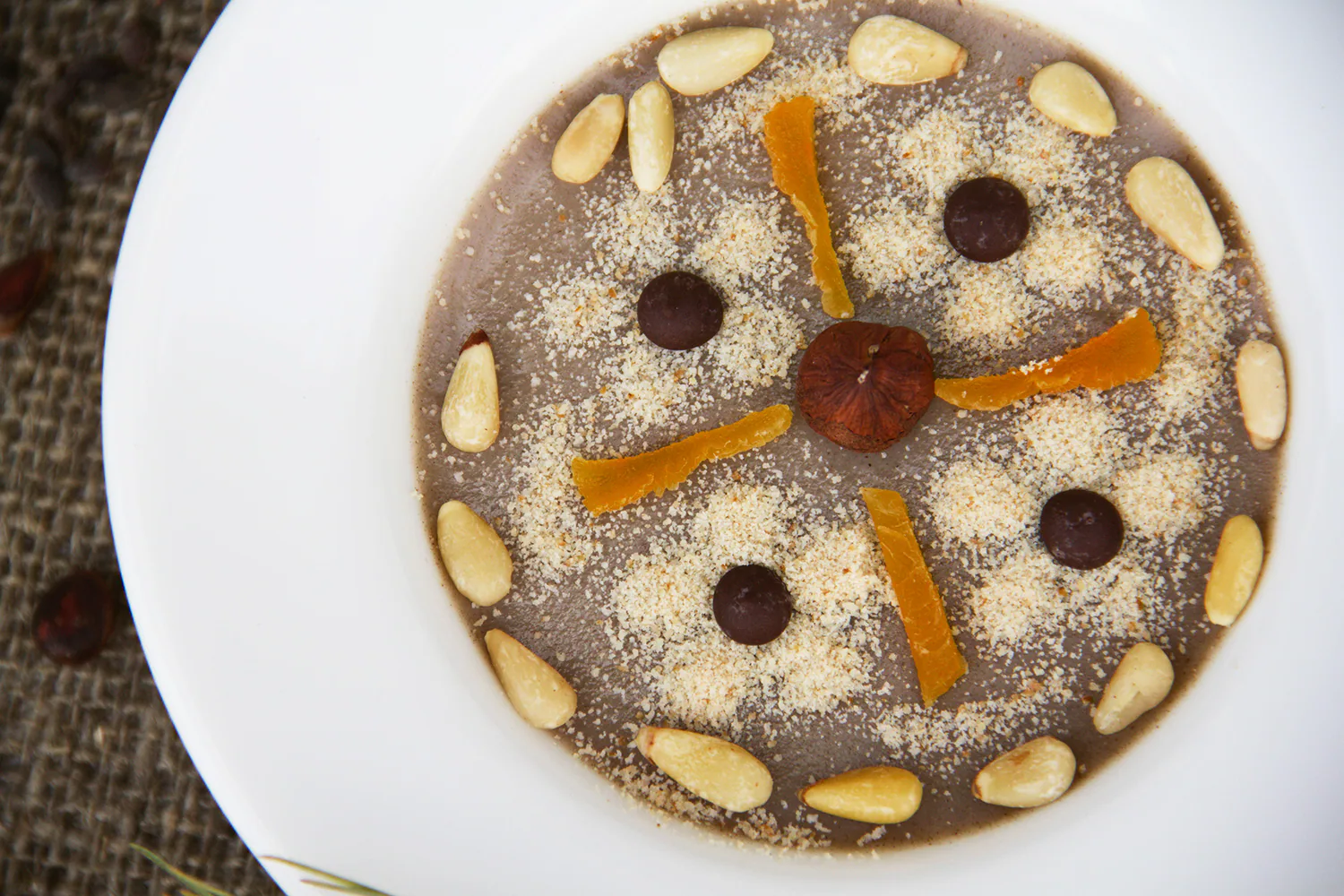
A dark, nutty pudding of ground Aleppo pine seeds cooked with flour, sugar and water, covered with a rose-scented vanilla custard and decorated with nuts. Tunisian families make it in glasses for the Prophet's birthday (Mouled).
Assidat zgougou (Tunisian Aleppo pine seed pudding) is a Tunisian dessert, ready in about 4 hours 10 minutes and made with zgougou (aleppo pine seed paste), milk and rose water. It serves 8 and is rated intermediate to cook.
- Prep
- 20 min
- Cook
- 50 min
- Rest
- 3 h
- Total
- 4 h 10 min
- Serves
- 8
- Level
- Intermediate
- Calories
- 507
Main ingredients
Ingredients
For the zgougou layer
For the custard
For decorating
Method
Zgougou layer
45 minStep 1
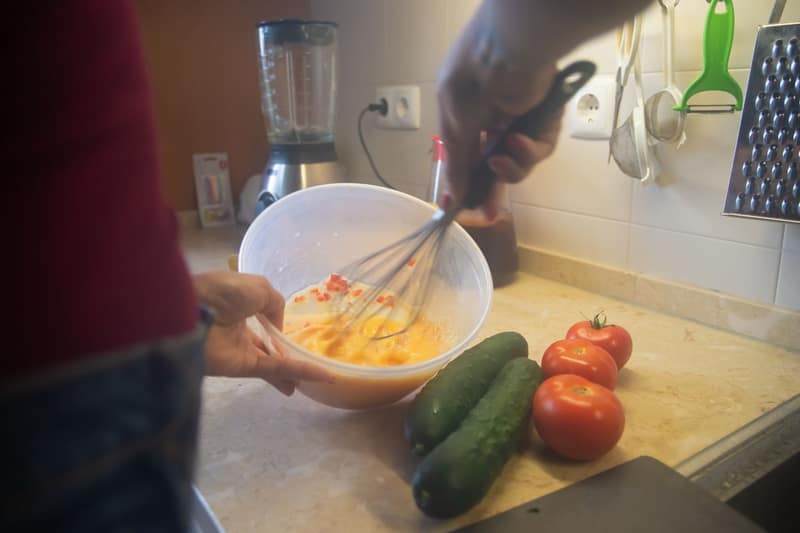
Whisk (opens in a new tab) the zgougou paste (opens in a new tab) with 600 ml of the water, then pass it through a fine sieve, pressing to extract all the dark liquid. Return the residue to the sieve, pour the rest of the water through it and press again. Discard the husky residue.
Straining is what makes the pudding silky; ground zgougou contains bits of shell.
How it looks · Photo: Kampus Production on Pexels Step 2
Whisk (opens in a new tab) the flour, 1 tbsp cornstarch (opens in a new tab) and 150 g sugar (opens in a new tab) into the zgougou (opens in a new tab) liquid in a saucepan (opens in a new tab). Cook over low heat, stirring constantly with a wooden spoon (opens in a new tab), for 25–30 minutes until it thickens to a heavy, glossy cream. Stir in the rose water (opens in a new tab).
Step 3
Divide the hot zgougou (opens in a new tab) between 8 glasses or bowls, filling them about halfway. Leave to set while you make the custard.
- 5 min
Custard
15 minStep 4
Whisk (opens in a new tab) the egg yolks (opens in a new tab), 100 g sugar (opens in a new tab), 45 g cornstarch (opens in a new tab) and a ladle of the cold milk (opens in a new tab) to a smooth paste. Heat the remaining milk, pour it over the paste while whisking, return to the pan and cook, whisking, until thick, about 5 minutes. Off the heat, stir in the vanilla (opens in a new tab) and rose water (opens in a new tab).
- 10 min
- medium-low heat
- Saucepan (opens in a new tab)
- Whisk (opens in a new tab)
Step 5
Let the custard cool for 5 minutes, then spoon it gently over the zgougou (opens in a new tab) to cover it in a smooth white layer. Chill for at least 3 hours.
- 5 min
Decorating
10 minStep 6
Before serving, decorate the tops with the nuts in patterns, as elaborate as you like.
- 10 min
At a glance
1 · Zgougou layer in a bowl
 Zgougou (Aleppo pine seed paste)
 All-purpose flour
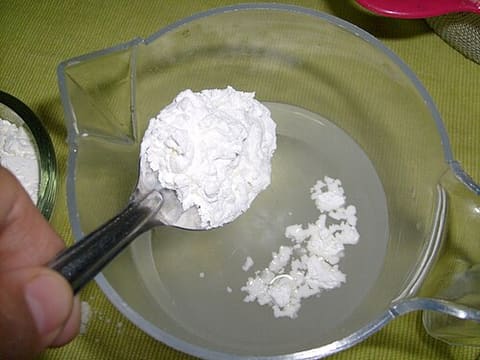 Cornstarch
 Sugar
 Rose water
then whisk
2 · Custard in a bowl
 Milk
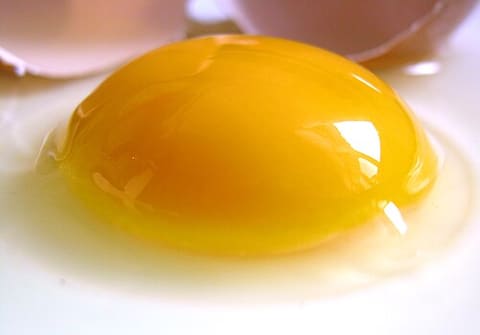 Egg yolk
- Sugar
- Cornstarch
 Vanilla extract
- Rose water
then decorate
3 · Decorating in a bowl
 Almonds
 Pistachios
 Hazelnuts
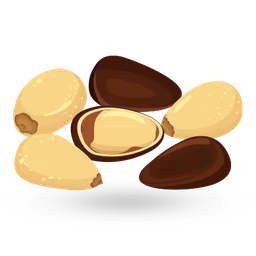 Pine nuts
About this dish
- Origin
- Tunisia · Well documentedZgougou is said to have spread as a food of hard times in the 19th century, when the seeds of Aleppo pines in the north-west replaced grain; it became the signature sweet of Mouled across Tunisia.More food from Tunisia
Tunisia - Dish
- Dessert · Breakfast · Desserts · Puddings & custards
- Cooking method
- Simmered, Boiled
- Taste
- nutty, sweet, creamy, aromatic / warmly spiced
- Diet
- Vegetarian (lacto-ovo)Worked out from the ingredients. How labels work
All labels
Vegetarian (lacto-ovo) · Eggetarian · Pescatarian · Flexitarian-friendly · Pork-free · Beef-free · Low-sodium · DASH-style - Good for
- Festive & celebration · Make-ahead
- Cook more with
- Milk · Rose water · All-purpose flour · Cornstarch · Sugar · Egg yolk
Allergens
- Contains: Milkfrom milk
- Contains: Eggsfrom egg yolk
- Contains: Tree nutsfrom zgougou (aleppo pine seed paste), almonds, pistachios, hazelnuts, pine nuts
- Contains: Wheatfrom all-purpose flour
- Contains: Glutenfrom all-purpose flour
Based on typical versions of these ingredients and not verified allergen-free. Brands differ and cross-contact happens, so always check labels. For severe allergies, follow your clinician’s advice.
Nutrition
507 kcal per serving
Estimated1 serving ≈ 339 g · recipe makes 8
Where the energy comes from
- Protein 8%
- Carbohydrate 41%
- Fat 51%
| Nutrient | Per serving | Per 100 g* |
|---|---|---|
| Energy | 507 kcal | 150 kcal |
| Protein | 10.7 g | 3.1 g |
| Carbohydrate | 53.9 g | 15.9 g |
| Net carbohydrate | 51.6 g | 15.2 g |
| Sugars | 37.8 g | 11.1 g |
| Added sugars | 31.3 g | 9.2 g |
| Fibre | 2.3 g | 0.7 g |
| Fat | 29.8 g | 8.8 g |
| Saturated fat | 4.3 g | 1.3 g |
| Trans fat | — | — |
| Cholesterol | 79 mg | 23 mg |
| Sodium | 49 mg | 15 mg |
| Salt equivalent | 0.1 g | 0 g |
Vitamins & minerals per serving
- Potassium
- 397 mg
- Calcium
- 153 mg
- Iron
- 2.6 mg
- Magnesium
- 108 mg
- Vitamin A (RAE)
- 70 µg
- Vitamin C
- 0 mg
- Vitamin D
- 1.6 µg
- Vitamin B12
- 0.6 µg
- Folate (DFE)
- 50 µg
How these numbers were made
- Calculated from USDA FoodData Central (SR Legacy) per-100 g values and the listed quantities.
- *Per 100 g of combined raw ingredients; the cooked dish may weigh more or less.
- Optional ingredients are not included: rose water, hazelnuts, pine nuts.
- Zgougou (Aleppo pine seed paste): Dried pine nuts (FDC 170591) used as a stand-in; zgougou is the tiny dark seed of the Aleppo pine, sold in Tunisia whole or ground to a paste, and is similarly rich in fat.
- Rose water: Water (FDC 174158); rose water is a distillate with negligible nutrients.
- “—” means the value isn’t known for enough of the ingredients; it is never zero by default.
- Values are estimates for guidance, not for medical dosing. U.S. Department of Agriculture, Agricultural Research Service. FoodData Central, 2019. fdc.nal.usda.gov.
Good to know
Tips
- Zgougou paste is sold in Tunisian and North African shops; if you only find whole seeds, grind them as finely as possible in a spice grinder before straining.
Common mistakes
- Stopping stirring — the zgougou cream catches on the bottom of the pan very easily.
- Pouring the custard on while it is too hot, which mixes the two layers.
Serve with
- Serve chilled in glasses, decorated with nuts, sugared almonds or coloured dragées.
Food safety
- Refrigerate the puddings within 2 hours of making them; the egg custard is perishable.
Storage
- Keeps 3 days covered in the fridge.
Variations
- Assida bidha: A white semolina or flour pudding with butter and honey, the everyday assida.
- Hazelnut assida: Where zgougou is too expensive, some families make the dark layer with ground hazelnuts or a mix of nuts.
Original editorial recipe · FriendsPantry editorial · source: TasteAtlas (dish facts) · Not yet independently reviewed · Added
Recipe DNA
How this dish is built
Built from the recipe’s own sections. Each band’s width is its share of the dish by weight. Choose a component to see what it does.
The body of the dish
For the custard
- Milk750 ml · 773 g
- Egg yolk3 piece · 51 g
- Sugar100 g
- Cornstarch45 g
- Vanilla extract1 tsp · 4.3 g
- Rose water1 tbsp · 15 g
Reviews & corrections
Reviews come from signed-in cooks and appear after a moderator checks them. We never show made-up ratings.
You might also like
Makroud el louse (Algerian almond cookies)
 Algerian · 1 h 55 min · 474 kcal · Contains egg

Bambalouni (Tunisian sugared doughnuts)
Tunisian · 2 h 45 min · 316 kcal · Vegan
Kaak warka (Tunisian almond-paste rings)
Tunisian · 1 h 55 min · 252 kcal · Vegetarian
Paris-Brest
 French · 3 h 25 min · 630 kcal · Contains egg