
Cooking in fat · intermediate
Stir-frying
Also: chao
Cooking small, evenly cut pieces quickly over very high heat while tossing them constantly.
What it is
Stir-frying is a Chinese technique for cooking bite-sized ingredients in a wok with a little oil over high heat, adding ingredients in order of cooking time and finishing with a sauce. Indo-Chinese dishes and many Southeast Asian dishes use it too.
Why cooks use it: Very fast cooking keeps vegetables crisp and meat tender, and the wok's hot sides give lightly charred, smoky notes often called wok hei.
The science
The thin, curved wok gives an intensely hot base and cooler sides; tossing moves food through hot and cool zones so it sears without stewing. Wok hei is associated with oil droplets and food vaporising and partly burning in the flame above the wok, which a home burner only partly reproduces.
How heat moves into foodThe Maillard reactionSmoke point of fatsChanging texture: tenderising and crisping
Step by step
Cut everything into similar, small pieces and mix the sauce before you start.
Heat the wok until it just smokes, then add a little high-smoke-point oil.
Add aromatics (garlic, ginger, chilli) for a few seconds.
Add protein in a single layer, let it sear briefly, then toss; remove if cooking in stages.
Add vegetables in order from hardest to softest, tossing constantly.
Return the protein, add the sauce down the hot sides, toss to coat and serve at once.
Heat and timing
- Stir-frying 200–300 °C · Wok surface roughly 200–300 °C on a strong burner; home burners are often at the lower end.
Time: 3–8 minutes in total.
How you know it’s right
- Loud, continuous sizzle
- Vegetables bright and crisp-tender
- Sauce glossy and clinging, not pooling
Common mistakes
- Overloading the wok so food stews
- Cutting pieces unevenly
- Adding wet vegetables
- Getting ingredients ready during cooking
Troubleshooting
- Watery, steamed vegetables
- Cook in smaller batches and dry washed vegetables thoroughly.
- Meat tough
- Slice across the grain and marinate briefly with a little cornflour (velveting).
Restaurant DNA
How professionals do it
Chinese restaurant kitchens use jet-burner wok ranges with far more output than home stoves, and cooks often pass meat through warm oil or water first (velveting) before the final fast toss.
At home
Cook in small batches, get the wok smoking hot each time, and use a carbon-steel wok or a wide cast-iron pan; a cast-iron pan holds heat better on a weak burner.
General professional practice — not any particular restaurant’s recipe.
Food safety
- Hot oil spatters; keep sleeves clear.
- Cooked rice for fried rice must have been cooled within 1 hour and refrigerated.
Practise it
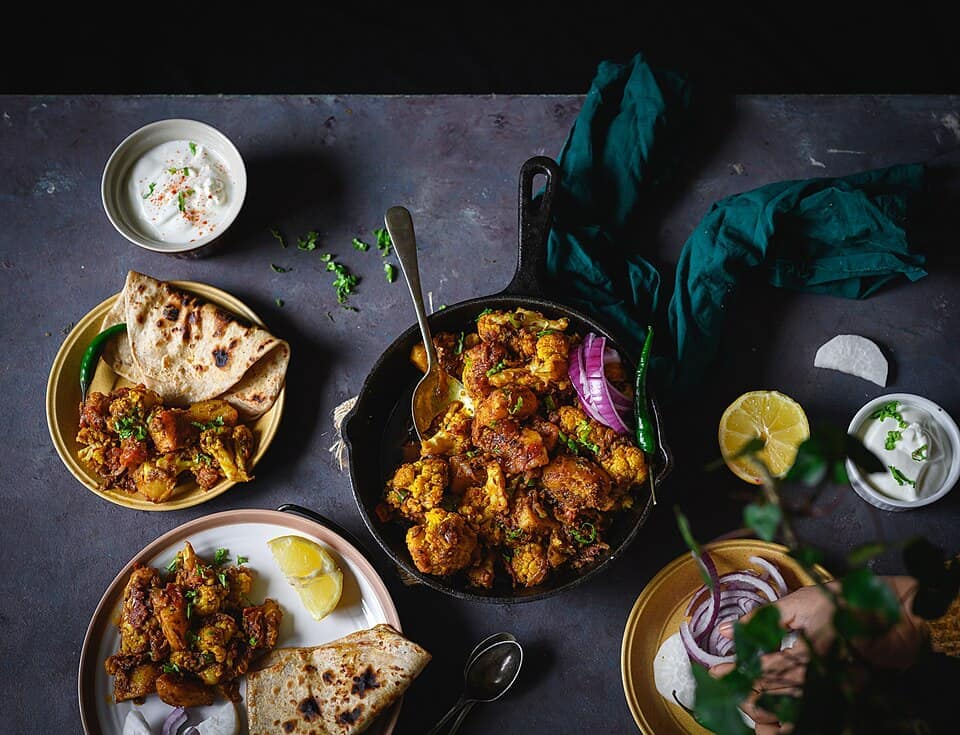
Aloo gobi
 Punjabi · 45 min · 238 kcal · Vegan
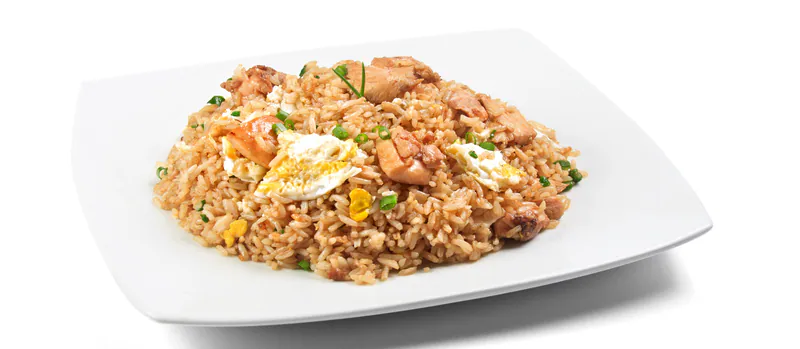
Arroz chaufa (Peruvian Chinese fried rice)
 Peruvian · 35 min · 614 kcal
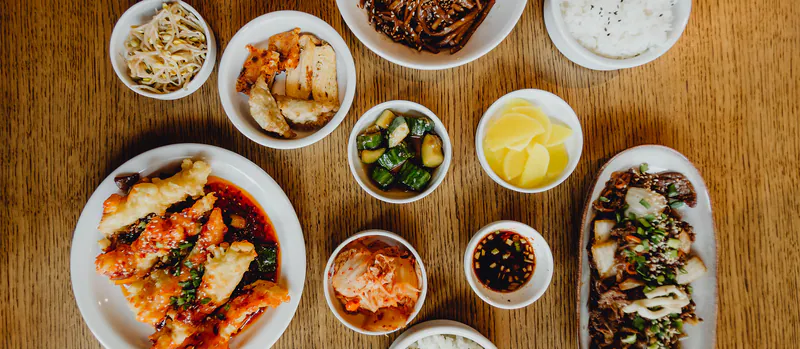
Banchan (Korean side-dish spread)
 Korean · 50 min · 229 kcal
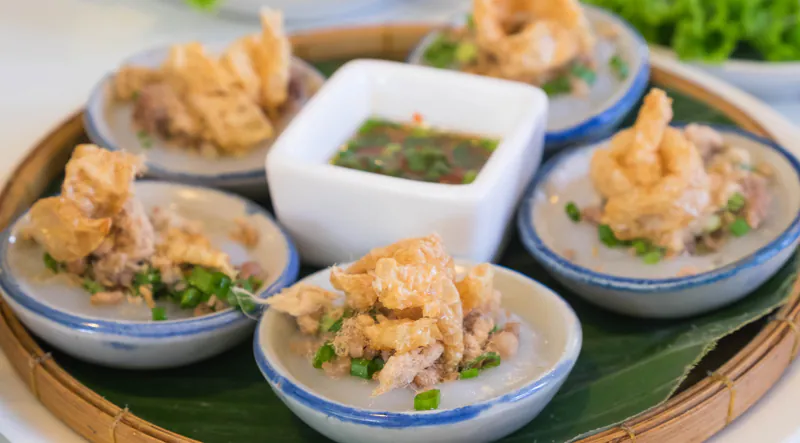
Bánh bèo (Huế steamed rice cakes with shrimp)
 Vietnamese · 2 h 10 min · 484 kcal
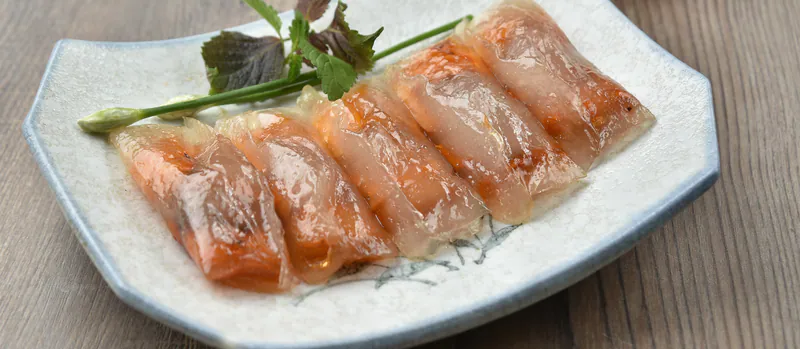
Bánh bột lọc (Huế tapioca dumplings with shrimp and pork)
Vietnamese · 1 h 25 min · 745 kcal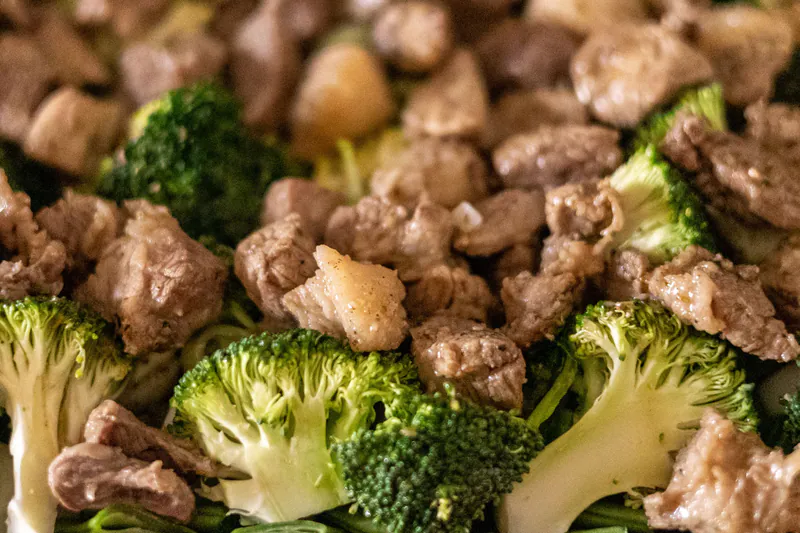
Beef and broccoli stir-fry
 Cantonese · 30 min · 309 kcal
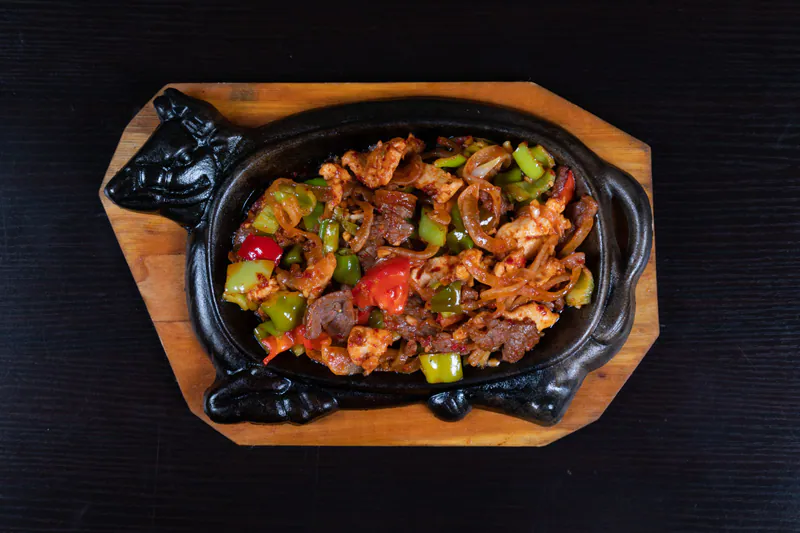
Beef and Pepper Stir-Fry
International · 23 min · 371 kcal
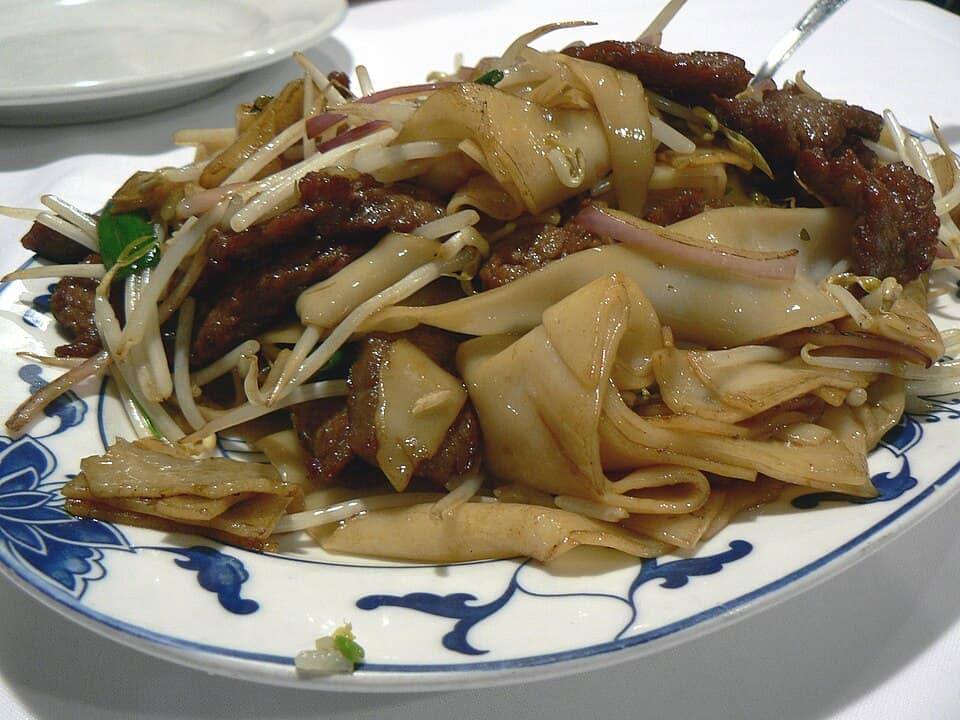
Beef chow fun
Cantonese · 30 min · 772 kcal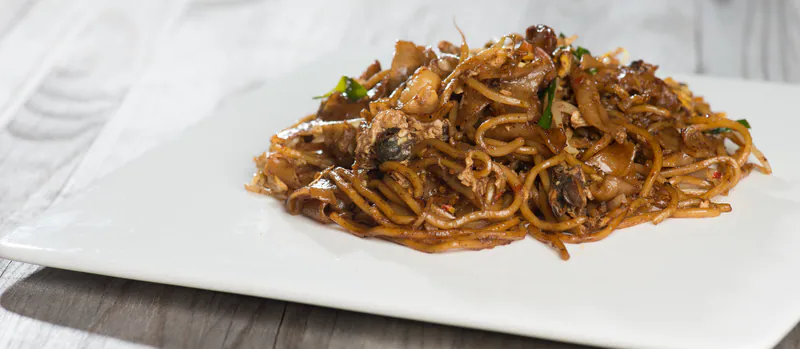
Beef kway teow (Singapore beef hor fun in gravy)
 Singaporean · 55 min · 658 kcal
120 more
- Beef lok lak · Cambodian
- Beef tibs · Ethiopian
- Bhindi masala · Indian
- Bibimbap · Korean
- Black bean sauce · Cantonese
- Black pepper crab (Singapore) · Singaporean
- Bò lúc lắc (shaking beef) · Vietnamese
- Bún ốc (Hanoi snail noodle soup) · Vietnamese
- Cabbage-carrot sambharo · Gujarati
- Carne desmenuzada (Nicaraguan shredded beef) · Nicaraguan
- Carne en su jugo (Guadalajara beef in its juices) · Mexican
- Cereal prawns · Singaporean
- Chamchi gimbap (Korean tuna mayo rice rolls) · Korean
- Char kway teow · Malaysian
- Chicken 65 · South Indian
- Chicken and Vegetable Stir-Fry · International
- Chicken balti · British
- Chicken chow mein · Cantonese
- Chicken karahi · Pakistani
- Chicken kottu roti · Sri Lankan
- Chongqing chilli chicken · Sichuan
- Cơm chiên (Vietnamese fried rice) · Vietnamese
- Crispy Tofu and Vegetable Stir-Fry · International
- Da pan ji (Xinjiang big plate chicken) · Chinese
- Dakgalbi · Korean
- Dal pitha (Bihari rice dumplings) · Indian
- Dan dan noodles · Sichuan
- Derek tibs (Ethiopian dry-fried beef) · Ethiopian
- Di san xian (Dongbei eggplant, potato and pepper) · Chinese
- Egg fried rice · Chinese
- Faraa (steamed rice-flour dumplings) · Indian
- Fatira (Ethiopian crisp pancake with egg and honey) · Ethiopian
- Fried carrot cake (chai tow kway) · Singaporean
- Garlic bok choy stir-fry · Chinese
- Gobi manchurian · Indian
- Guo bao rou (Dongbei sweet and sour crispy pork) · Chinese
- Hiroshima-style okonomiyaki · Japanese
- Hokkien prawn mee · Singaporean
- Home-style tofu · Sichuan
- Hot and sour shredded potatoes · Chinese
- Hunan farmhouse stir-fried pork with green chillies · Chinese
- Japchae · Korean
- Jeyuk bokkeum · Korean
- Jiao yan you yu (Cantonese salt-and-pepper squid) · Cantonese
- Jjajangmyeon (Korean black bean noodles) · Korean
- Kadai paneer · Punjabi
- Kangkung belacan · Malaysian
- Katong laksa (Singapore coconut prawn laksa) · Singaporean
- Kebda eskandarani (Alexandrian spiced fried liver) · Egyptian
- Kenchin-jiru · Japanese
- Kepiting saus Padang (crab in Padang sauce) · Indonesian
- Khao op sapparot (Thai pineapple fried rice) · Thai
- Khao pad (Thai fried rice) · Thai
- Kimbap · Korean
- Kimchi fried rice · Korean
- Kung pao chicken · Sichuan
- Kuurma lagman · Kyrgyz
- Lard na (Lao rice noodles in gravy) · Lao
- Lemon rice · South Indian
- Lemper ayam (sticky rice rolls with spiced chicken) · Indonesian
- Lomo saltado · Peruvian
- Manchow soup · Indian
- Mapo tofu · Sichuan
- Mee goreng mamak · Malaysian
- Meygoo polo (southern Iranian shrimp rice) · Iranian
- Mì Quảng (Quang-style turmeric noodles with pork and shrimp) · Vietnamese
- Minchi (Macanese minced meat with potatoes) · Portuguese
- Miso ramen (Sapporo-style) · Japanese
- Miyeok guk · Korean
- Muthia (Gujarati steamed dumplings) · Gujarati
- Nasi goreng · Indonesian
- Nasi goreng ayam (chicken fried rice) · Indonesian
- Nasi goreng kampung (village-style fried rice) · Malaysian
- Nigerian fried rice · Nigerian
- Nikujaga · Japanese
- Omurice · Japanese
- Pad kee mao (drunken noodles) · Thai
- Pad kra pao gai · Thai
- Pad pak boong fai daeng · Thai
- Pad see ew · Thai
- Pad Thai · Thai
- Pancit canton · Filipino
- Papaya sambharo · Gujarati
- Penang Hokkien mee (Penang prawn noodle soup) · Malaysian
- Popiah (Singapore fresh spring rolls) · Singaporean
- Pulihora (Andhra tamarind rice) · South Indian
- Rau muống xào tỏi (morning glory stir-fried with garlic) · Vietnamese
- Rawon (East Javanese black beef soup) · Indonesian
- Salt and pepper tofu · Cantonese
- Sarawak laksa (Kuching laksa) · Malaysian
- Satay celup (Malacca steamboat satay) · Malaysian
- Shanghai fried noodles · Chinese
- Shuizhu rou pian (Sichuan water-boiled pork) · Sichuan
- Sichuan dry-fried green beans · Sichuan
- Sichuan hotpot (mala huoguo) · Sichuan
- Singapore chilli crab · Singaporean
- Soto Lamongan (East Javanese chicken soup with koya) · Indonesian
- Spice bag (Irish takeaway chicken and chips) · Irish
- Sukuma wiki · Kenyan
- Suqaar · Somali
- Sweet and sour pork · Cantonese
- Sweet corn soup (Indo-Chinese) · Indian
- Talumein soup · Indian
- Tantuni (Mersin beef wrap) · Turkish
- Tapsilog (beef tapa with garlic rice and fried egg) · Filipino
- Thai basil eggplant stir-fry · Thai
- Three-cup chicken · Taiwanese
- Tomato and egg stir-fry · Chinese
- Tsuivan (Mongolian steamed noodles with meat) · Mongolian
- Tumpeng (Javanese yellow rice cone feast) · Indonesian
- Twice-cooked pork · Sichuan
- Vegetable pulao · Indian
- Vinegar-glazed napa cabbage · Chinese
- Wali wa kukaanga (Kenyan fried rice) · Kenyan
- Xaak bhaji (Assamese stir-fried greens) · Indian
- Yakisoba · Japanese
- Yangzhou fried rice · Chinese
- You bao xia (Shanghai oil-exploded shrimp) · Chinese
- Yúxiāng sauce (Sichuan fish-fragrant sauce) · Sichuan
- Zhajiangmian (Beijing fried sauce noodles) · Chinese