
Sarawak laksa (Kuching laksa)
Non-vegetarian
Laksa Sarawak
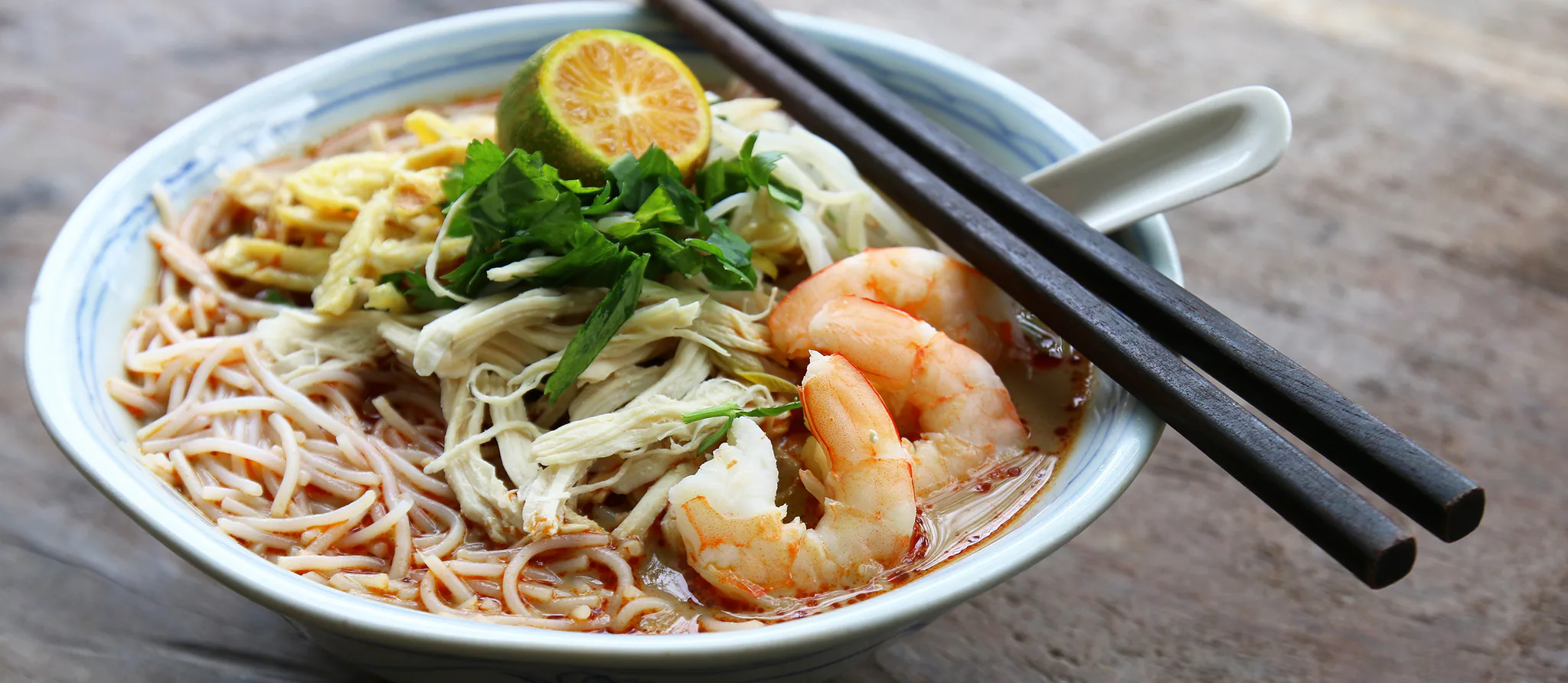
Thin rice vermicelli in a mellow, spice-heavy broth of chicken and prawn stock, laksa paste, tamarind and a little coconut milk, topped with prawns, shredded chicken, omelette strips and coriander. Kuching's breakfast laksa is gentler and more aromatic than most, with sambal belacan and lime on the side.
Sarawak laksa (Kuching laksa) is a Malaysian soup, ready in about 2 hours and made with coriander seeds, chicken breast and prawns / shrimp. It serves 4 and is rated advanced to cook.
- Prep
- 40 min
- Cook
- 1 h 20 min
- Total
- 2 h
- Serves
- 4
- Level
- Advanced
- Calories
- 1057
Main ingredients
Ingredients
For the laksa paste
For the broth
To serve
For the sambal belacan
Method
Laksa paste
30 minStep 1
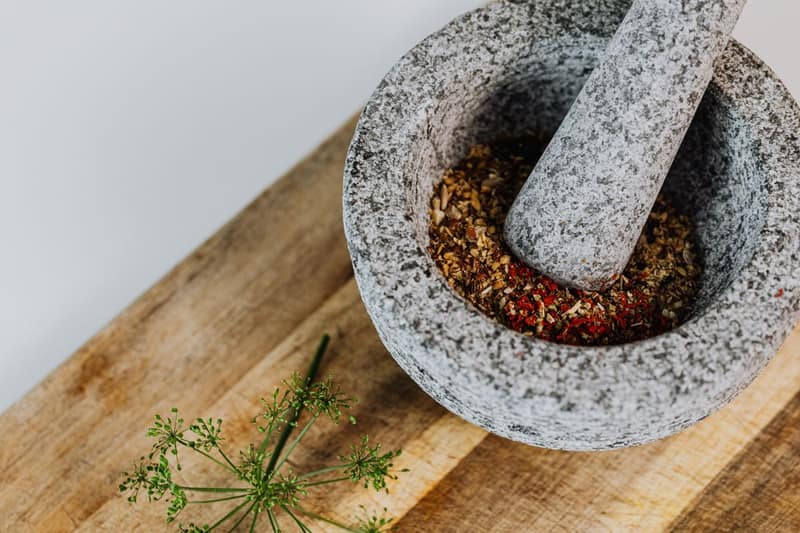
Grind the toasted coriander, cumin, fennel, star anise (opens in a new tab), cloves (opens in a new tab), cinnamon, nutmeg (opens in a new tab), sesame (opens in a new tab) and peanuts (opens in a new tab) to a powder. Blend with the soaked chillies, shallots (opens in a new tab), garlic (opens in a new tab), galangal (opens in a new tab), lemongrass (opens in a new tab) and candlenuts (opens in a new tab) to a smooth paste, adding a splash of water if needed.
How it looks · Photo: https://kaboompics.com/ on Pexels Step 2
Fry the paste in the oil over medium-low heat, stirring constantly, for 15–20 minutes until it darkens, smells toasty and the oil separates.
- 18 min
- medium-low heat
- Wok (opens in a new tab)
Frying the paste slowly is what gives the soup its depth; rushing it leaves a raw, harsh taste.
Broth
1 h 2 minStep 3
Poach the chicken in the water for 20 minutes, add the prawns (opens in a new tab) for the last 3 minutes, then lift both out. Peel the prawns and return the shells and heads to the pot. Shred the chicken and return any bones too.
- 25 min
- medium-low heat
- Stockpot / large pot (opens in a new tab)
Food safety: Cook chicken until it reaches 74 °C in the thickest part, and keep raw chicken and its juices away from ready-to-eat food.
Step 4
Add the fried paste to the stock and simmer for 30 minutes. Strain through a fine sieve, pressing on the solids, and return the broth to the pot.
- 32 min
- low heat
- Sieve / strainer (opens in a new tab)
Step 5
Stir in the tamarind, coconut milk (opens in a new tab), palm sugar (opens in a new tab) and salt and simmer gently for 5 minutes; do not boil hard once the coconut milk is in.
- 5 min
- low heat
To serve
8 minStep 6
Soak or boil the vermicelli according to the packet until just tender and drain. Make a thin omelette with the eggs (opens in a new tab) and cut it into strips.
Sambal belacan
8 minStep 7
For the sambal belacan, pound the chillies with the toasted shrimp paste (opens in a new tab) to a rough paste and squeeze in a little of the lime (opens in a new tab) juice.
Step 8
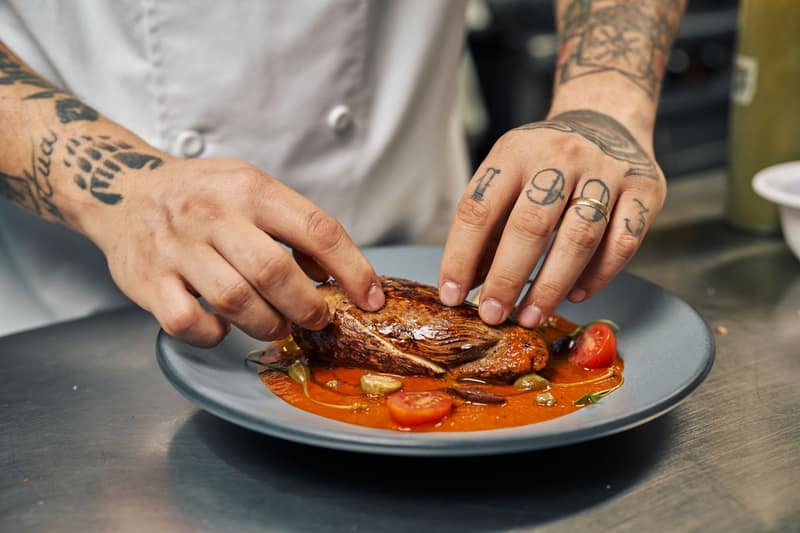
Divide the noodles and bean sprouts (opens in a new tab) among bowls, ladle over the hot broth and top with shredded chicken, prawns (opens in a new tab), omelette strips and coriander. Serve with lime (opens in a new tab) and sambal belacan (opens in a new tab).
- 4 min
How it looks · Photo: Willians Huerta on Pexels
At a glance
1 · Laksa paste in a bowl
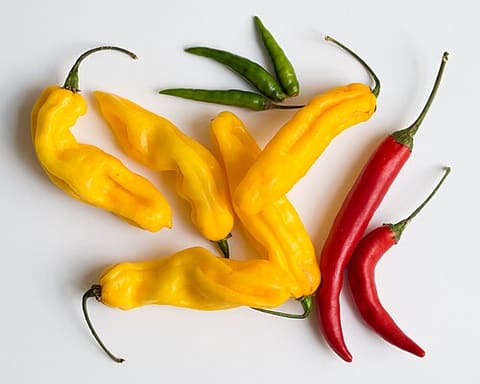 Dried whole chillies
 Shallot
 Garlic
 Galangal
 Lemongrass
 Candlenut
 Coriander seeds
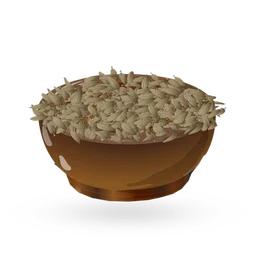 Cumin seeds
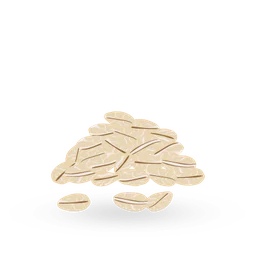 Fennel seeds
 Star anise / anise
 Cloves
 Cinnamon stick
 Nutmeg
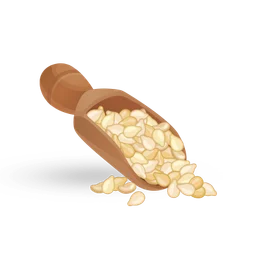 Sesame seeds
 Peanuts
 Neutral vegetable oil
then poach
2 · Broth in a pot
 Chicken breast
 Prawns / shrimp
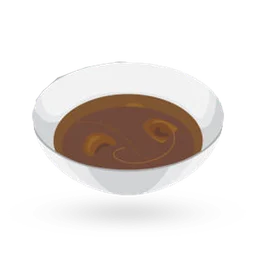 Tamarind paste
 Coconut milk
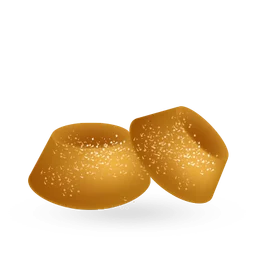 Jaggery / palm sugar
 Salt
then soak
3 · To serve in a pot
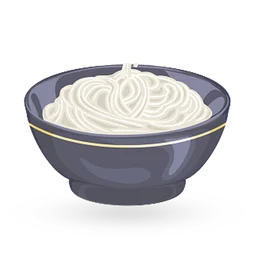 Rice noodles
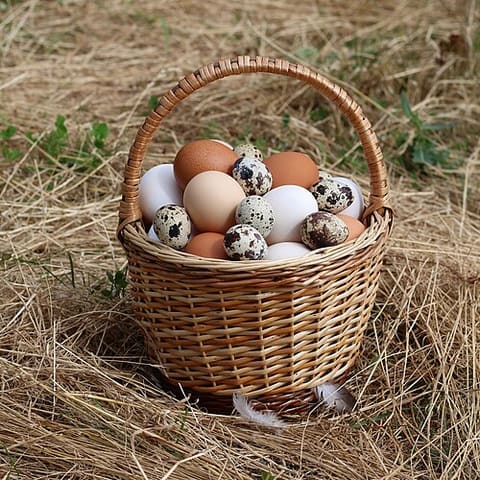 Egg
 Bean sprouts
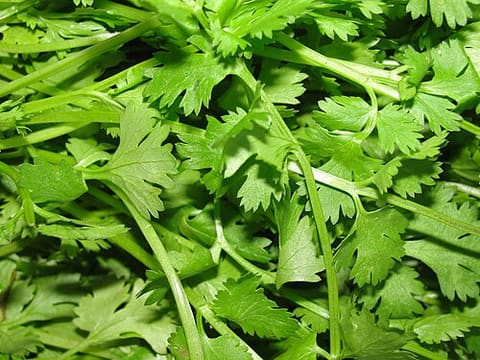 Coriander leaves
 Lime
then pound
4 · Sambal belacan in a pot
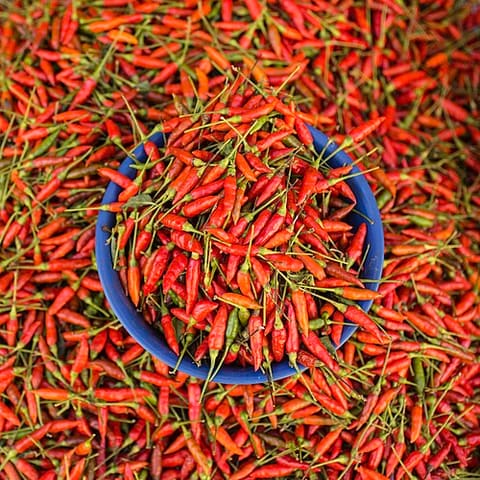 Fresh red chilli
 Shrimp paste
About this dish
- Origin
- Kuching, Sarawak, Malaysia · Commonly attributedIts exact origin is uncertain, though it is credited to Kuching's Chinese hawkers; most cooks use a ready-made Sarawak laksa paste, but a homemade paste is given here.Also popular in Brunei, SingaporeMore food from Malaysia
Malaysia - Dish
- Breakfast · Lunch · Soups · Noodles · Main courses · Breakfast dishes · Noodle soups
- Cooking method
- Simmered, Boiled, Stir-fried
- Taste
- aromatic / warmly spiced, savoury, tangy, spicy (chilli heat), creamy
- Diet
- No gluten ingredients · Dairy-free · High-proteinWorked out from the ingredients. How labels work
All labels
Non-vegetarian · No gluten ingredients · Dairy-free · Alcohol-free · Pork-free · Beef-free · High-protein - Good for
- Batch cooking
- Cook more with
- Coriander seeds · Chicken breast · Prawns / shrimp · Rice noodles · Dried whole chillies · Shallot
- Techniques
- Stir-frying · Boiling · Simmering · Poaching · Bhunao
Allergens
- Contains: Eggsfrom egg
- Contains: Crustaceansfrom prawns / shrimp, shrimp paste
- Contains: Peanutsfrom peanuts
- May contain: Tree nutsfrom candlenut
- Contains: Sesamefrom sesame seeds
Based on typical versions of these ingredients and not verified allergen-free. Brands differ and cross-contact happens, so always check labels. For severe allergies, follow your clinician’s advice.
Nutrition
1057 kcal per serving
Estimated1 serving ≈ 1104 g · recipe makes 4
Where the energy comes from
- Protein 23%
- Carbohydrate 44%
- Fat 33%
| Nutrient | Per serving | Per 100 g* |
|---|---|---|
| Energy | 1057 kcal | 96 kcal |
| Protein | 61.2 g | 5.5 g |
| Carbohydrate | 119.6 g | 10.8 g |
| Net carbohydrate | — | — |
| Sugars | — | — |
| Added sugars | 3.2 g | 0.3 g |
| Fibre | — | — |
| Fat | 39.2 g | 3.6 g |
| Saturated fat | 13 g | 1.2 g |
| Trans fat | — | — |
| Cholesterol | 327 mg | 30 mg |
| Sodium | 1471 mg | 133 mg |
| Salt equivalent | 3.7 g | 0.3 g |
Vitamins & minerals per serving
- Potassium
- 1580 mg
- Calcium
- 307 mg
- Iron
- 9.1 mg
- Magnesium
- 207 mg
- Vitamin A (RAE)
- —
- Vitamin C
- —
- Vitamin D
- —
- Vitamin B12
- —
- Folate (DFE)
- —
How these numbers were made
- Calculated from USDA FoodData Central (SR Legacy) per-100 g values and the listed quantities.
- *Per 100 g of combined raw ingredients; the cooked dish may weigh more or less.
- Galangal: Fresh ginger used as a stand-in: no galangal entry in FDC SR Legacy, and galangal is a closely related rhizome used in similar small amounts.
- Candlenut: English walnuts (FDC 170187) used as a stand-in: candlenuts are similarly oil-rich (about 60–65 % fat); no candlenut entry exists in FDC SR Legacy.
- Star anise / anise: Anise seed (FDC 171316) used as a stand-in for star anise.
- Tamarind paste: Raw tamarind pulp (FDC 167763). Commercial concentrates vary in water content.
- Jaggery / palm sugar: Brown sugar (FDC 168833) used as a stand-in for unrefined cane jaggery and palm sugar.
- Shrimp paste: Fish sauce (FDC 174531) at 1.5× as a stand-in salted fermented seafood condiment; protein is understated.
- “—” means the value isn’t known for enough of the ingredients; it is never zero by default.
- Values are estimates for guidance, not for medical dosing. U.S. Department of Agriculture, Agricultural Research Service. FoodData Central, 2019. fdc.nal.usda.gov.
Good to know
Tips
- Make double the paste and freeze it in portions; it keeps 3 months.
Common mistakes
- Adding too much coconut milk, which turns it into a curry laksa; Sarawak laksa should taste of spices and stock first.
Serve with
- Eat for breakfast, as Kuching does, with a glass of iced milk tea (teh C peng).
Food safety
- Cook chicken until it reaches 74 °C in the thickest part, and keep raw chicken and its juices away from ready-to-eat food.
Storage
- Broth keeps 3 days refrigerated or 3 months frozen; store noodles and toppings separately.
Reheating
- Bring the broth back to a gentle simmer before pouring it over freshly blanched noodles.
Variations
- With ready-made paste: Most Sarawakian homes use a bottled Sarawak laksa paste, simmered with the stock; it cuts the cooking time by half.
Original editorial recipe · FriendsPantry editorial · source: TasteAtlas (dish facts) · Not yet independently reviewed · Added
Sauces, chutneys & dips for this dish
Recipe DNA
How this dish is built
Built from the recipe’s own sections. Each band’s width is its share of the dish by weight. Choose a component to see what it does.
The spice and seasoning backbone
For the laksa paste
- Dried whole chillies, seeded, soaked in hot water and drained10 piece · 20 g
- Shallot8 piece · 240 g
- Garlic5 clove · 20 g
- Galangal, sliced30 g
- Lemongrass, tender part, sliced3 stalk · 60 g
- Candlenut4 piece · 16 g
- Coriander seeds, toasted2 tbsp · 11 g
- Cumin seeds, toasted1 tsp · 2.1 g
- Fennel seeds, toasted1 tsp · 2 g
- Star anise / anise2 piece · 1 g
- Cloves4 piece · 0.4 g
- Cinnamon stick, 5 cm piece1 piece · 3 g
- Nutmeg, grated0.25 tsp · 0.6 g
- Sesame seeds, toasted1 tbsp · 9 g
- Peanuts, roasted30 g
- Neutral vegetable oil4 tbsp · 54 g
Reviews & corrections
Reviews come from signed-in cooks and appear after a moderator checks them. We never show made-up ratings.
You might also like
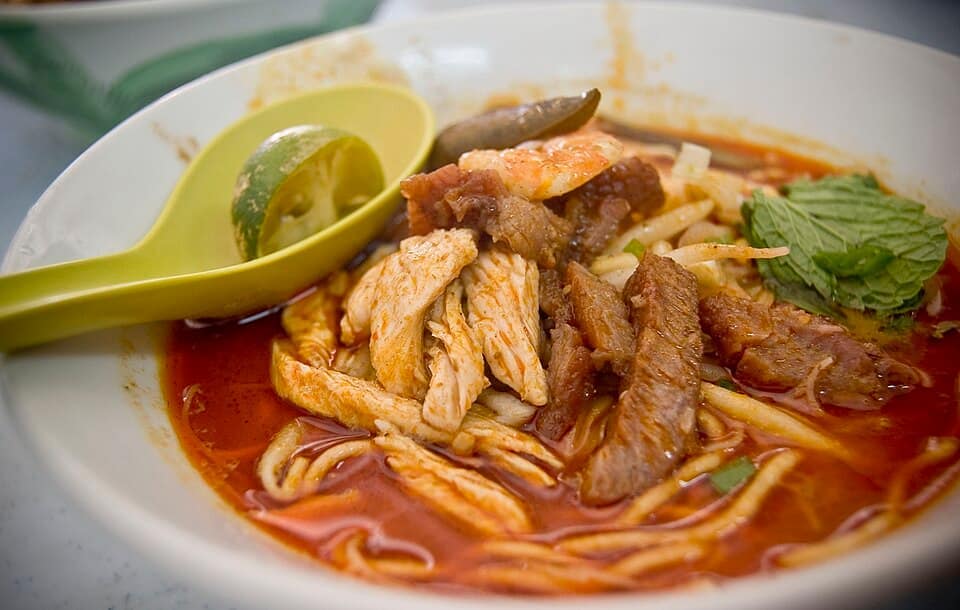
Curry laksa
 Malaysian · 1 h 5 min · 950 kcal
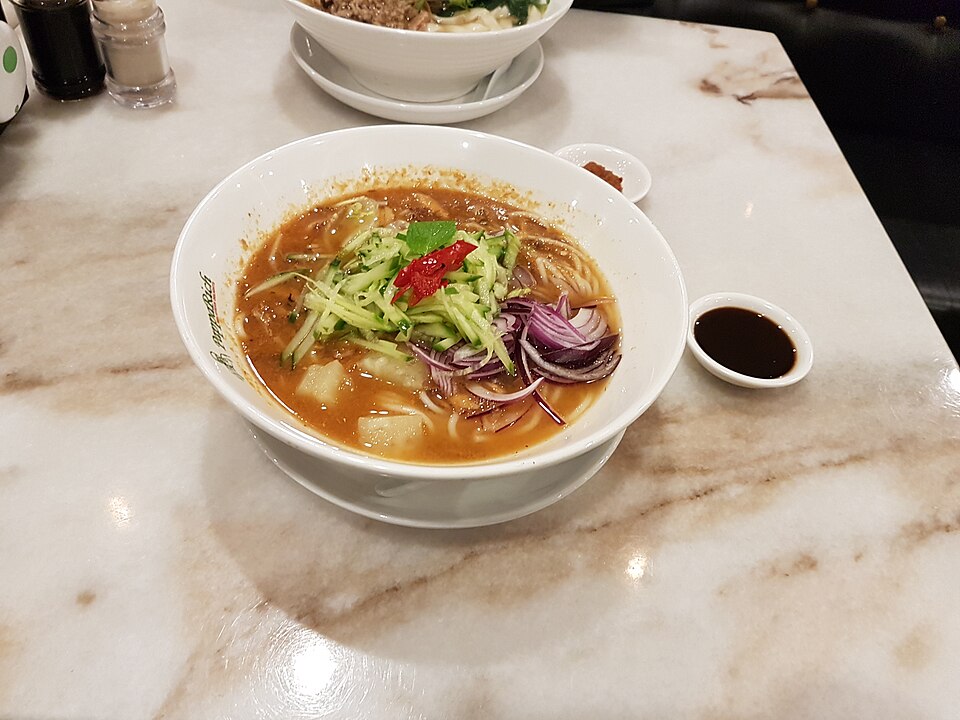
Penang assam laksa
Malaysian · 1 h 15 min · 673 kcal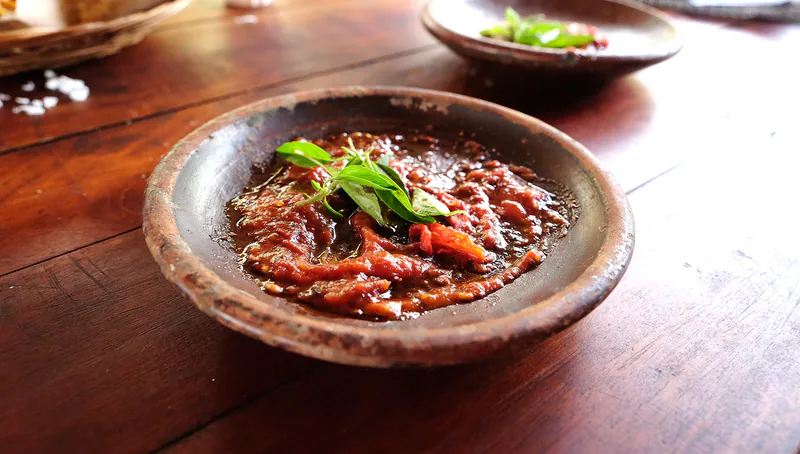
Sambal belacan
Malaysian · 20 min · 8 kcal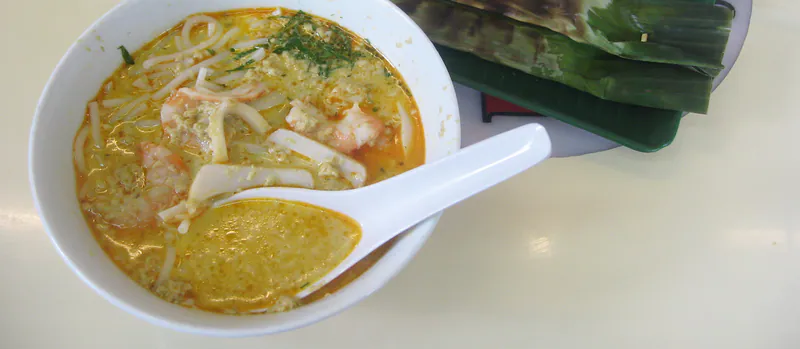
Katong laksa (Singapore coconut prawn laksa)
 Singaporean · 1 h 30 min · 1241 kcal