
Banchan (Korean side-dish spread)
Non-vegetarian
반찬 · banchan
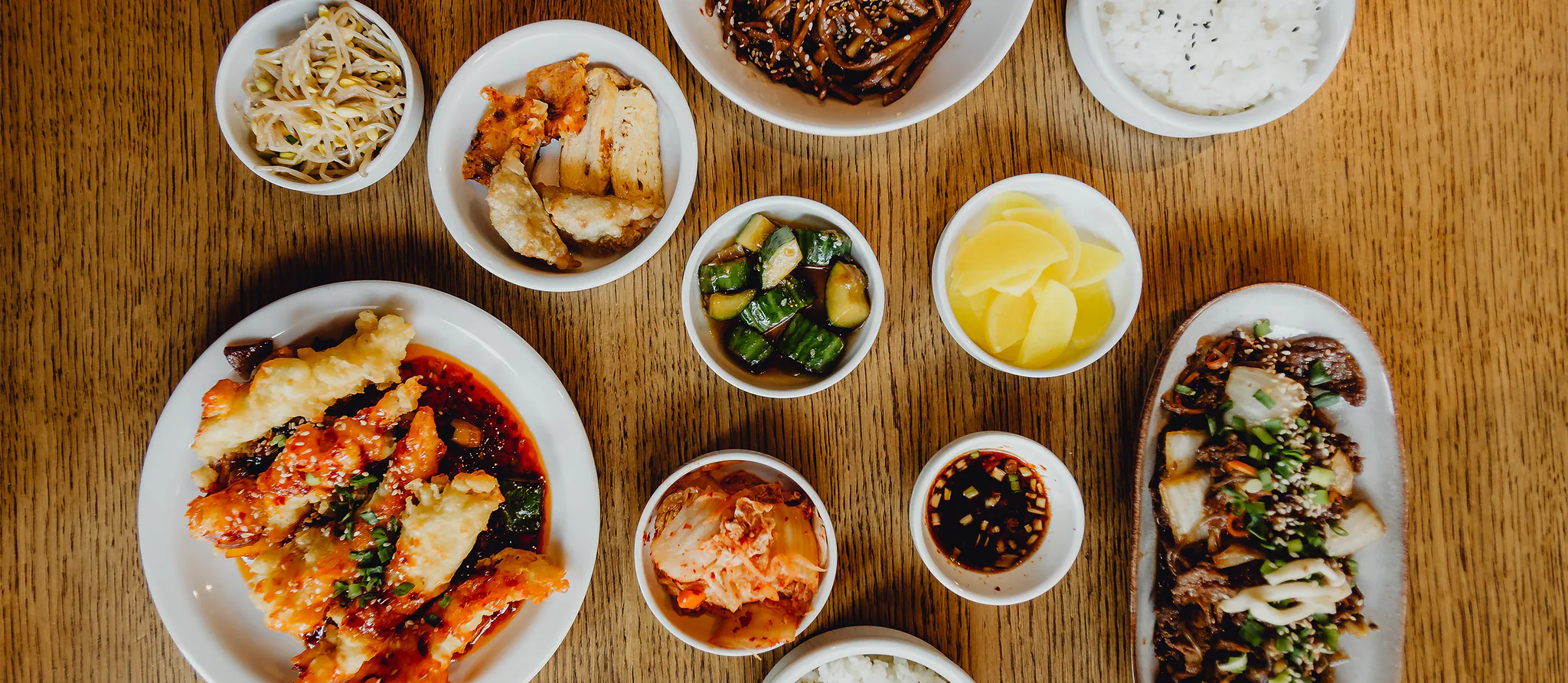
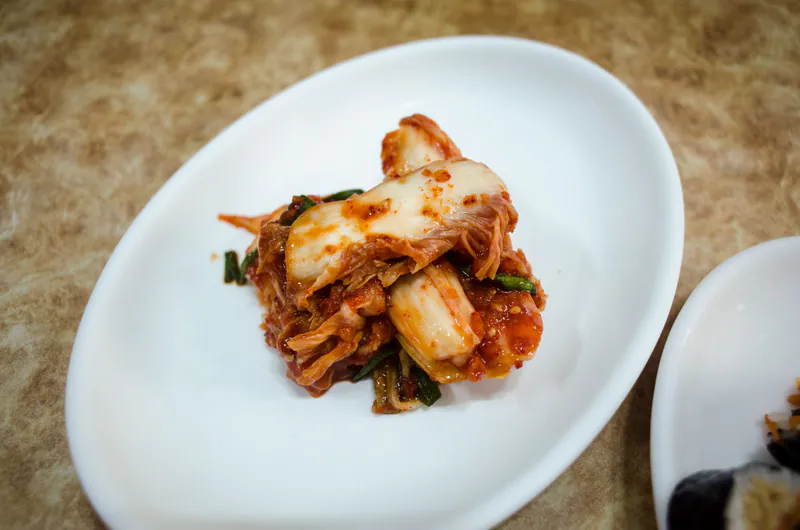
Banchan are the small shared side dishes set out with rice at every Korean meal; this home spread makes three quick ones — garlicky mung bean sprouts, sesame-glazed courgette and sweet-spicy fish cake. Traditionally laid out in odd numbers around rice, a stew and kimchi.
Banchan (Korean side-dish spread) is a Korean side dish from South Korea, ready in about 50 minutes and made with bean sprouts, toasted sesame oil and zucchini. It serves 4 and is rated easy to cook.
- Prep
- 20 min
- Cook
- 20 min
- Rest
- 10 min
- Total
- 50 min
- Serves
- 4
- Level
- Easy
- Calories
- 229
Main ingredients
Ingredients
For the sukju namul (mung bean sprouts)
For the hobak bokkeum (courgette)
For the eomuk bokkeum (fish cake)
Method
Sukju namul (mung bean sprouts)
8 minStep 1
Sukju namul: bring a pan of salted water to the boil, add the bean sprouts (opens in a new tab), cover and cook for 2 minutes until just tender but still crunchy. Drain, rinse under cold water and squeeze out the excess water gently.
Step 2
Toss the sprouts in a bowl with the grated garlic (opens in a new tab), chopped spring onion (opens in a new tab), sesame oil (opens in a new tab), crushed sesame seeds (opens in a new tab) and salt, using your fingertips so every sprout is coated. Taste and add a pinch more salt if needed.
Hobak bokkeum (courgette)
7 minStep 3
Hobak bokkeum: toss the courgette (opens in a new tab) slices with the salt and leave for 10 minutes until they soften and weep. Pat dry with a clean towel.
- 2 min
Salting first keeps the courgette from going watery in the pan.
Step 4
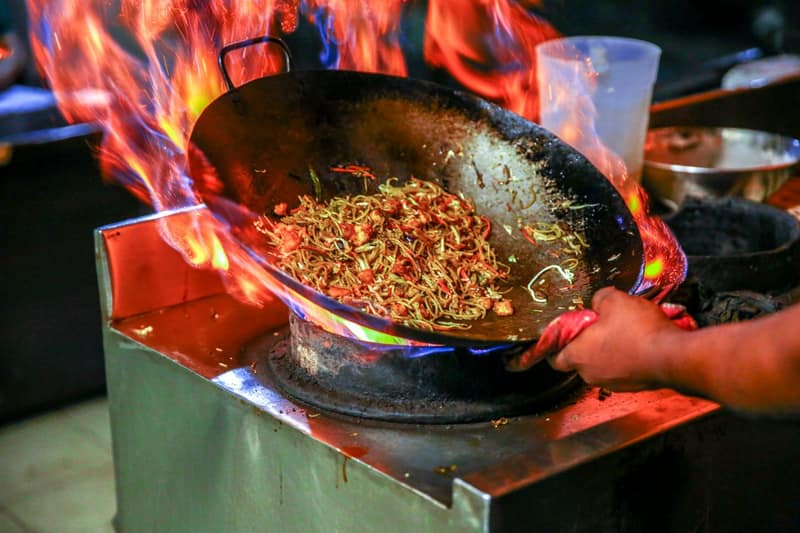
Heat the oil in a frying pan over medium-high heat, add the courgette (opens in a new tab) and garlic (opens in a new tab) and stir-fry for 3–4 minutes until the slices are bright green and just tender. Off the heat, toss with the sesame oil (opens in a new tab) and sesame seeds (opens in a new tab).
- 5 min
- medium-high heat
- Frying pan / skillet (opens in a new tab)
How it looks · Photo: Aesthos AR. Photography on Pexels
Eomuk bokkeum (fish cake)
10 minStep 5
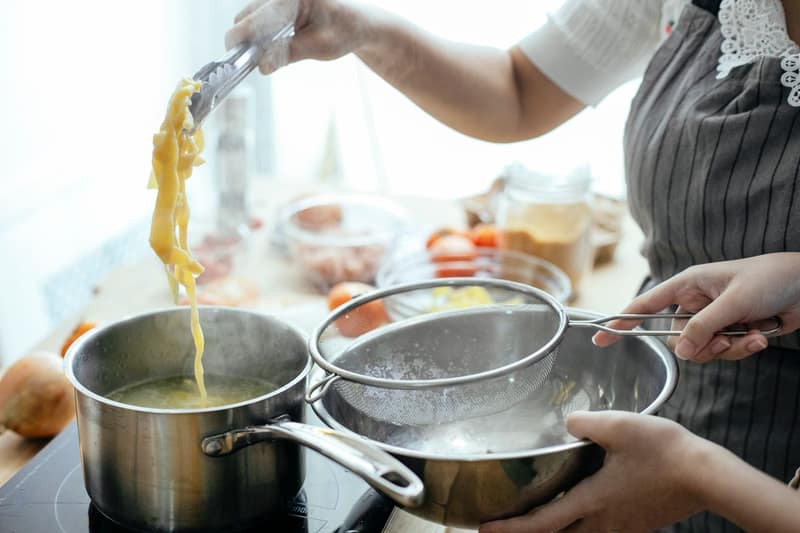
Eomuk bokkeum: pour boiling water over the fish cake (opens in a new tab) strips in a colander (opens in a new tab) to rinse off excess oil. Wipe out the pan, heat the oil and stir-fry the onion (opens in a new tab) for 1 minute, then add the fish cake and fry for 2 minutes.
- 5 min
- medium-high heat
- Frying pan / skillet (opens in a new tab)
- Colander (opens in a new tab)
How it looks · Photo: Katerina Holmes on Pexels Step 6
Add the soy sauce (opens in a new tab), sugar (opens in a new tab), gochugaru (opens in a new tab), water and garlic (opens in a new tab) and stir until the liquid has reduced to a sticky glaze, 2–3 minutes. Toss in the spring onion (opens in a new tab) and sesame oil (opens in a new tab) and take off the heat.
- 4 min
- medium heat
Step 7
Arrange the three banchan in small dishes in the middle of the table, with individual bowls of rice, kimchi and a stew or soup.
- 1 min
At a glance
1 · Sukju namul (mung bean sprouts) in a bowl
 Bean sprouts
 Garlic
 Spring onion
 Toasted sesame oil
 Sesame seeds
 Salt
then hobak
2 · Hobak bokkeum (courgette) in a pan
 Zucchini
- Salt
 Neutral vegetable oil
- Garlic
- Toasted sesame oil
- Sesame seeds
then eomuk
3 · Eomuk bokkeum (fish cake) in a pan
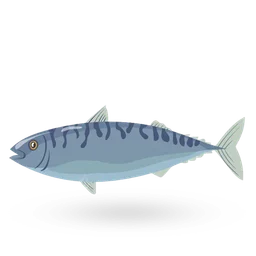 Fish cake (eomuk / fish cake slices)
- Onion
- Neutral vegetable oil
 Soy sauce
 Sugar
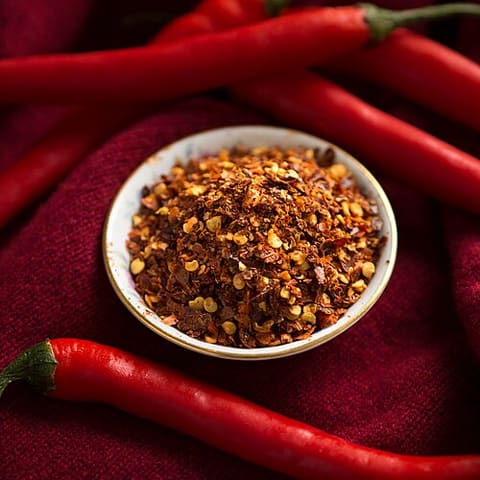 Gochugaru (Korean chilli flakes)
- Garlic
- Spring onion
- Toasted sesame oil
About this dish
- Origin
- Korea, South Korea · Well documentedBanchan is a category rather than one dish; the number and choice of dishes vary by household, season and occasion, from three at a simple home meal to a dozen or more in royal-court style.Also popular in North KoreaMore food from South Korea
South Korea - Dish
- Lunch · Dinner · Side dishes
- Cooking method
- Blanched, Stir-fried
- Taste
- savoury, nutty, garlicky, sweet & spicy
- Diet
- Pescatarian · Dairy-free · No nut ingredients · Low-carbWorked out from the ingredients. How labels work
All labels
Pescatarian · Non-vegetarian · Flexitarian-friendly · Dairy-free · Egg-free · No nut ingredients · Alcohol-free · Pork-free · Beef-free · Low-carb - Good for
- Make-ahead · Meal-prep friendly · Budget-friendly
- Cook more with
- Bean sprouts · Toasted sesame oil · Zucchini · Fish cake (eomuk / fish cake slices) · Garlic · Spring onion
- Techniques
- Stir-frying · Boiling · Blanching · Reduction
Allergens
- May contain: Eggsfrom fish cake (eomuk / fish cake slices)
- Contains: Fishfrom fish cake (eomuk / fish cake slices)
- Contains: Wheatfrom fish cake (eomuk / fish cake slices), soy sauce
- Contains: Glutenfrom fish cake (eomuk / fish cake slices), soy sauce
- Contains: Soyfrom fish cake (eomuk / fish cake slices), soy sauce
- Contains: Sesamefrom toasted sesame oil, sesame seeds
Based on typical versions of these ingredients and not verified allergen-free. Brands differ and cross-contact happens, so always check labels. For severe allergies, follow your clinician’s advice.
Nutrition
229 kcal per serving
Estimated1 serving ≈ 236 g · recipe makes 4
Where the energy comes from
- Protein 20%
- Carbohydrate 27%
- Fat 53%
| Nutrient | Per serving | Per 100 g* |
|---|---|---|
| Energy | 229 kcal | 97 kcal |
| Protein | 11.8 g | 5 g |
| Carbohydrate | 16.3 g | 6.9 g |
| Net carbohydrate | 13.6 g | 5.8 g |
| Sugars | 8.4 g | 3.5 g |
| Added sugars | 3.1 g | 1.3 g |
| Fibre | 2.7 g | 1.1 g |
| Fat | 14.1 g | 6 g |
| Saturated fat | 1.6 g | 0.7 g |
| Trans fat | — | — |
| Cholesterol | 15 mg | 6 mg |
| Sodium | 1016 mg | 431 mg |
| Salt equivalent | 2.5 g | 1.1 g |
Vitamins & minerals per serving
- Potassium
- 396 mg
- Calcium
- 55 mg
- Iron
- 1.5 mg
- Magnesium
- 61 mg
- Vitamin A (RAE)
- 30 µg
- Vitamin C
- 23 mg
- Vitamin D
- —
- Vitamin B12
- 0.8 µg
- Folate (DFE)
- 69 µg
How these numbers were made
- Calculated from USDA FoodData Central (SR Legacy) per-100 g values and the listed quantities.
- *Per 100 g of combined raw ingredients; the cooked dish may weigh more or less.
- Fish cake (eomuk / fish cake slices): Surimi used as a stand-in; ready-made fish cakes are surimi bound with starch or flour and are often fried, so a little higher in fat and carbohydrate.
- Gochugaru (Korean chilli flakes): Ground red (cayenne) pepper used as a stand-in: no gochugaru entry in FDC SR Legacy; both are dried, ground Capsicum annuum used in spoon amounts.
- “—” means the value isn’t known for enough of the ingredients; it is never zero by default.
- Values are estimates for guidance, not for medical dosing. U.S. Department of Agriculture, Agricultural Research Service. FoodData Central, 2019. fdc.nal.usda.gov.
Good to know
Tips
- Banchan are made to be prepared ahead: a few batches at the weekend cover several weekday meals.
- Keep the seasoning of each dish distinct — one nutty, one fresh, one sweet-spicy — so the spread feels varied.
Common mistakes
- Overcooking the bean sprouts, which turns them limp and gives them a raw-bean smell if under-blanched — 2 minutes covered is the sweet spot.
Serve with
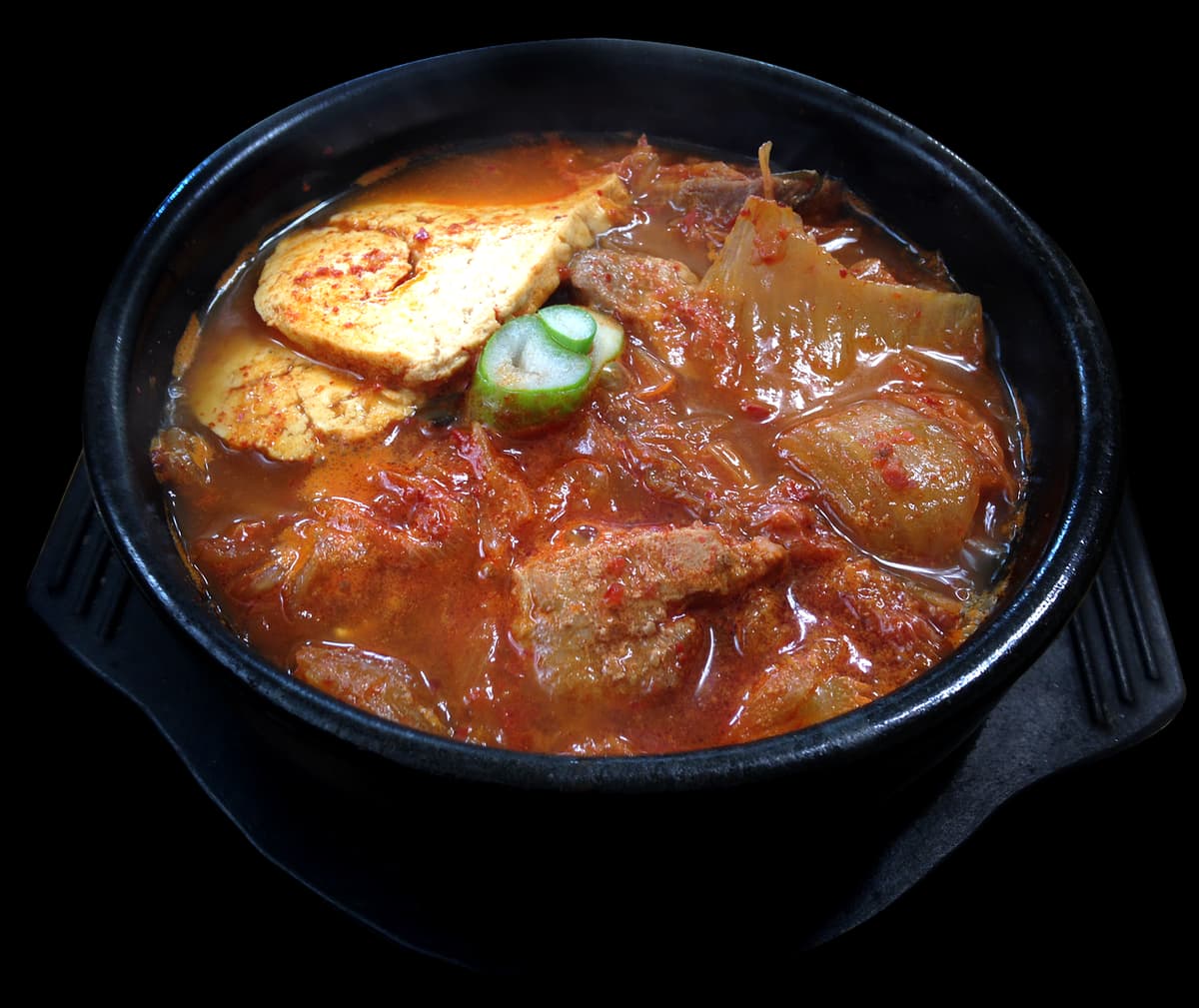
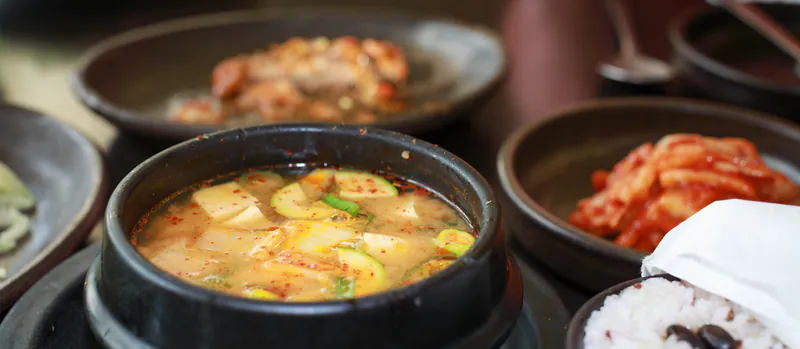
- Serve with steamed short-grain rice, baechu kimchi and kimchi jjigae or doenjang jjigae.
- Add spinach namul, cucumber muchim or soy-braised potatoes for a five-dish spread.
Storage
- The fish cake and courgette keep 3–4 days refrigerated in airtight containers; the bean sprouts are best within 2 days.
Reheating
- Banchan are usually eaten cold or at room temperature.
Variations
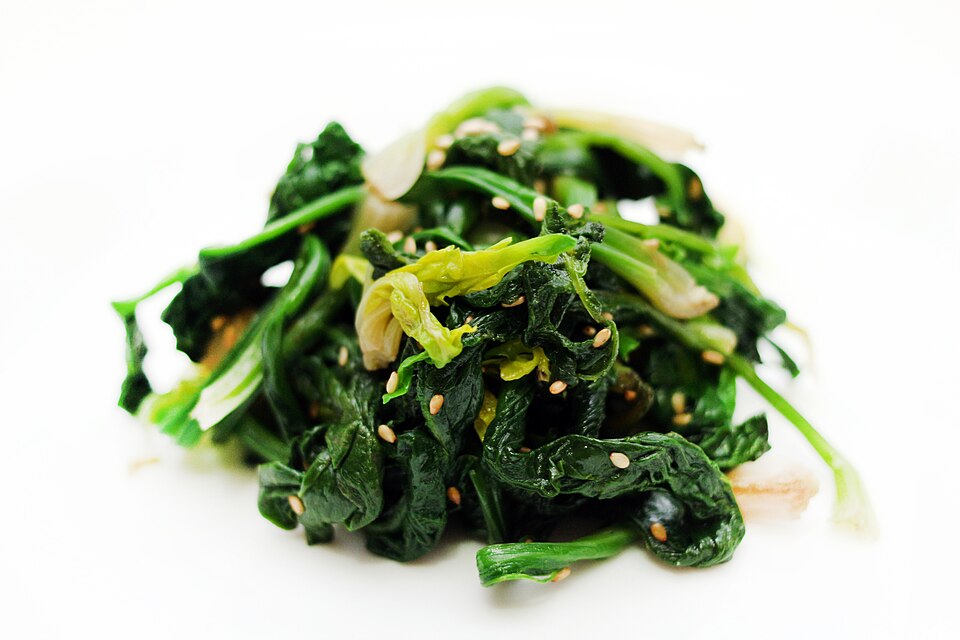
- Sigeumchi namul: Blanched spinach seasoned with soy sauce, garlic and sesame oil.
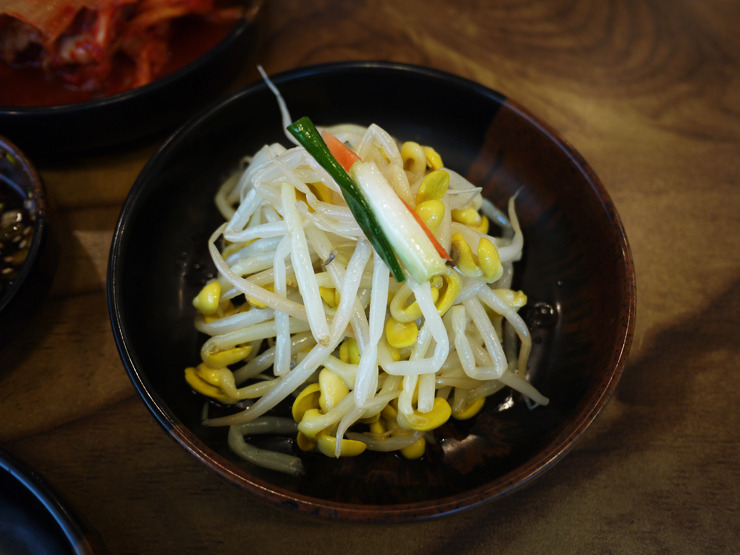
- Kongnamul muchim: Soybean sprouts instead of mung bean sprouts, often with a little gochugaru.
- Myeolchi bokkeum: Tiny dried anchovies stir-fried with soy, sugar and rice syrup until crunchy.
Why are banchan served in odd numbers?
Odd numbers are traditionally considered luckier in Korea, so home tables usually carry three, five or seven side dishes.
Original editorial recipe · FriendsPantry editorial · source: TasteAtlas (dish facts) · Not yet independently reviewed · Added
Recipe DNA
How this dish is built
Built from the recipe’s own sections. Each band’s width is its share of the dish by weight. Choose a component to see what it does.
What the dish is built around
For the eomuk bokkeum (fish cake)
- Fish cake (eomuk / fish cake slices), flat Korean fish cake sheets, cut into strips 1 cm wide200 g
- Onion, thinly sliced0.5 piece · 55 g
- Neutral vegetable oil1 tbsp · 14 g
- Soy sauce1.5 tbsp · 26 g
- Sugar1 tbsp · 13 g
- Gochugaru (Korean chilli flakes)1 tsp · 2 g
- Water3 tbsp · 44 g
- Garlic, minced1 clove · 4 g
- Spring onion, cut into 3 cm lengths1 piece · 15 g
- Toasted sesame oil1 tsp · 4.5 g
Reviews & corrections
Reviews come from signed-in cooks and appear after a moderator checks them. We never show made-up ratings.
You might also like
Sigeumchi namul
 Korean · 8 min · 54 kcal · Vegan
Kongnamul muchim
Korean · 11 min · 129 kcal · Vegan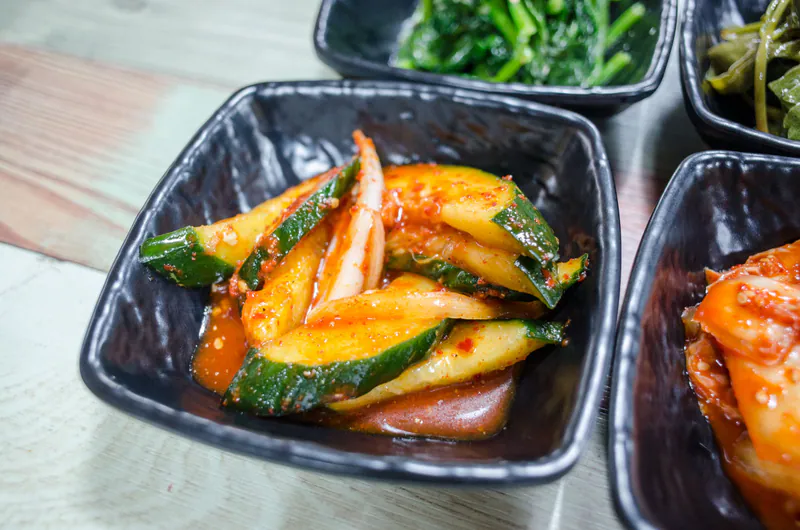
Oi muchim (spicy cucumber salad)
Korean · 15 min · 49 kcal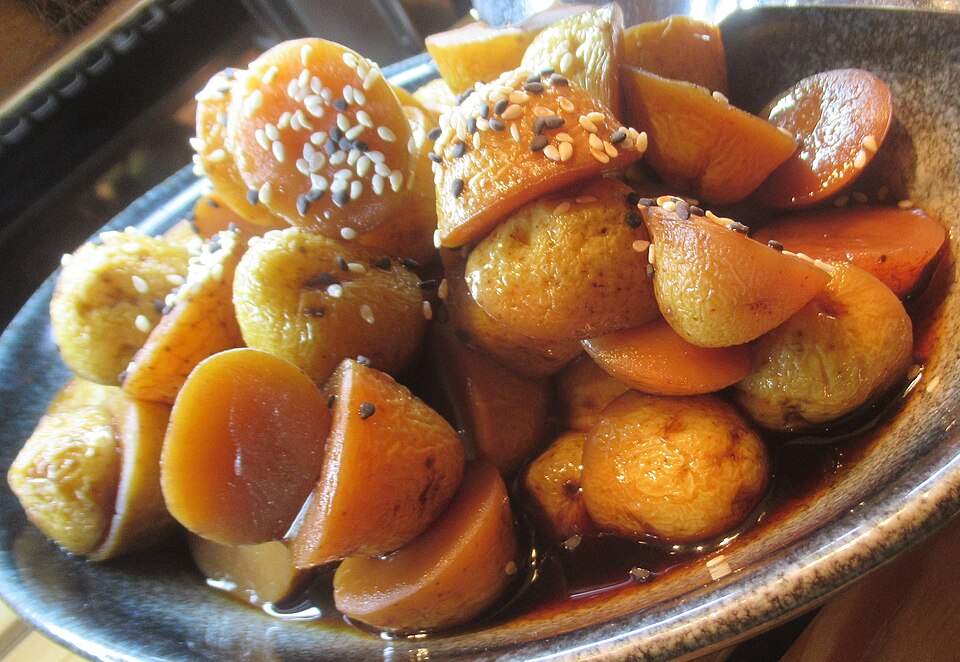
Gamja jorim (soy-braised potatoes)
Korean · 30 min · 169 kcal · Vegan