
Bibimbap
Non-vegetarian
비빔밥 · bibimbap
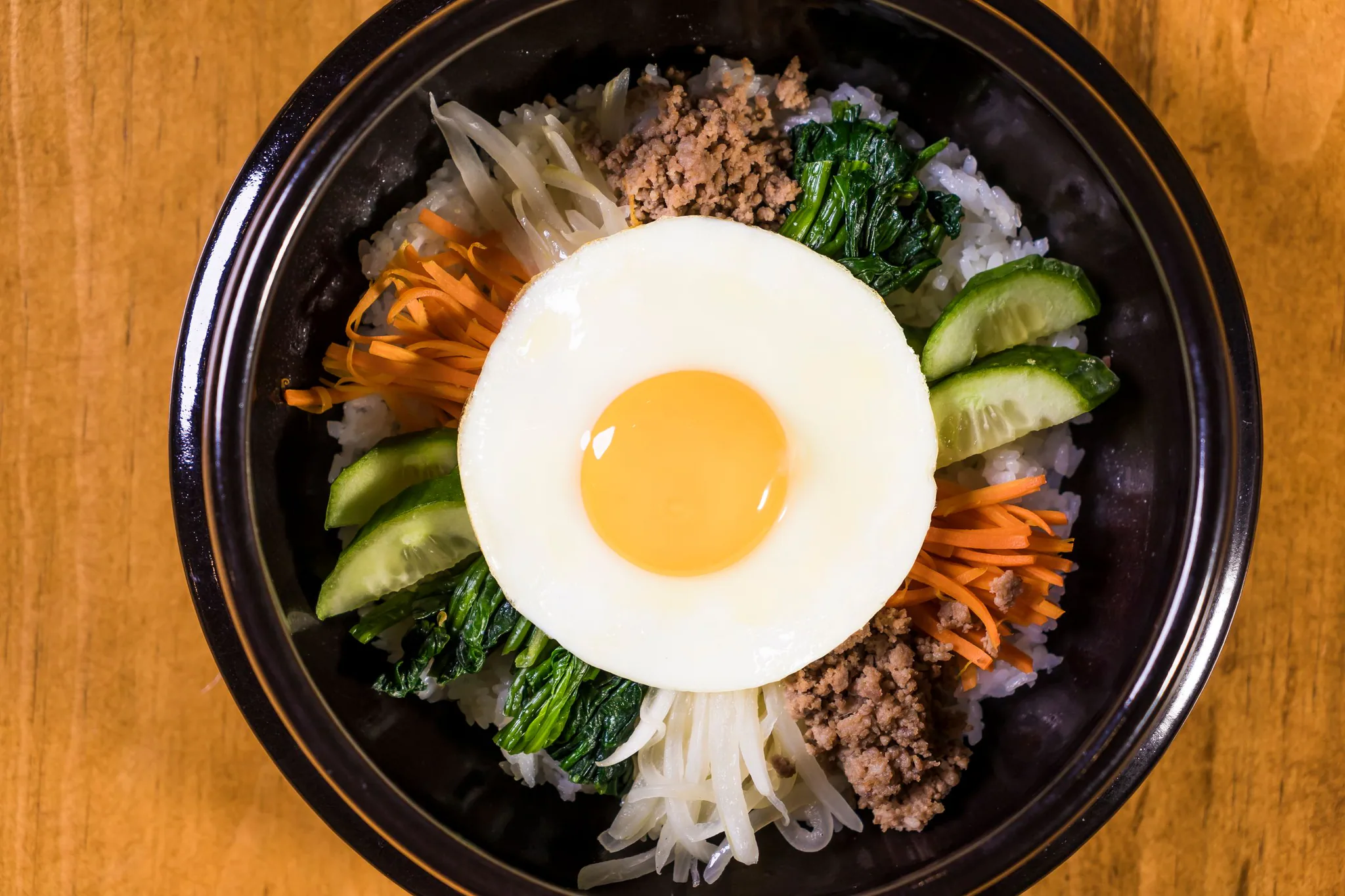
A bowl of rice topped with seasoned vegetables, marinated beef and a fried egg, mixed at the table with a sweet-spicy gochujang sauce.
Bibimbap is a Korean rice dish from South Korea, ready in about 1 hour and made with short-grain rice and gochujang. It serves 4 and is rated intermediate to cook.
- Prep
- 30 min
- Cook
- 30 min
- Total
- 1 h
- Serves
- 4
- Level
- Intermediate
- Calories
- 657
Main ingredients

Ingredients
Beef
Beef & vegetables
Vegetables
Sauce
Method
Sauce
10 minStep 1
Rinse and cook the rice in a rice cooker (opens in a new tab) or covered pan until tender. Meanwhile toss the beef with soy sauce (opens in a new tab), sugar (opens in a new tab) and a third of the garlic (opens in a new tab); leave while you prepare the vegetables. Stir the sauce ingredients together.
Food safety: Keep raw beef apart from vegetables that will not be cooked further.
Vegetables
13 minStep 2
Blanch the spinach (opens in a new tab) for 30 seconds and the bean sprouts (opens in a new tab) for 2 minutes in boiling water. Drain, squeeze the spinach, and season each with a little salt, sesame oil (opens in a new tab) and garlic (opens in a new tab).
- 6 min
- high heat
- Saucepan (opens in a new tab)
Step 3
In a lightly oiled pan, stir-fry the carrot (opens in a new tab), zucchini (opens in a new tab) and mushrooms one at a time for 1–2 minutes each, seasoning with a pinch of salt.
- 7 min
- medium-high heat
- Frying pan / skillet (opens in a new tab)
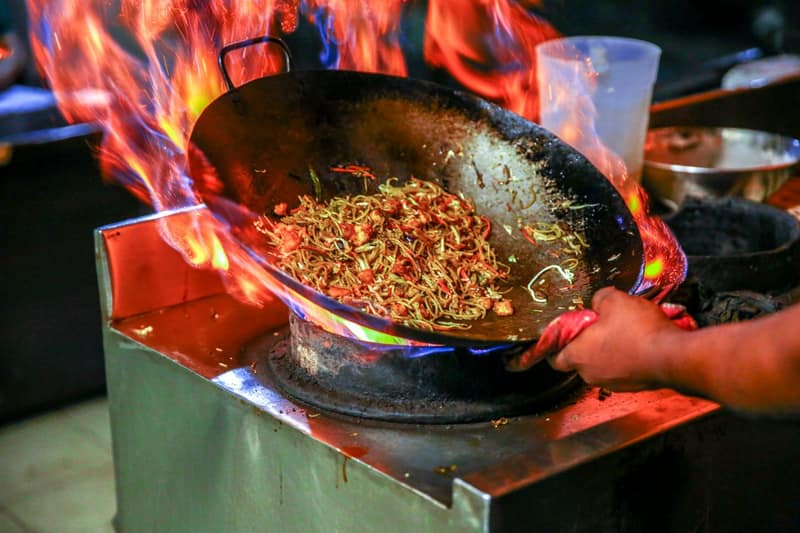
How it looks · Photo: Aesthos AR. Photography on Pexels
Beef
9 minStep 4
Stir-fry the beef over high heat until just cooked.
- 3 min
- high heat
Step 5
Fry the eggs (opens in a new tab) sunny-side up in the remaining oil.
- 3 min
- medium heat
Food safety: Cook the yolk firm if serving vulnerable people.
Step 6
Fill bowls with rice, arrange the vegetables and beef in sections, top with an egg (opens in a new tab) and sesame seeds (opens in a new tab), and serve with the sauce to mix in.
- 3 min
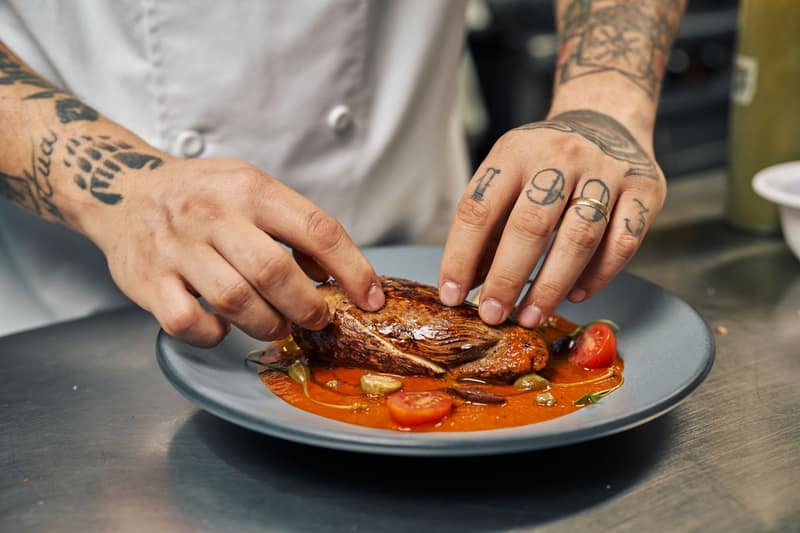
How it looks · Photo: Willians Huerta on Pexels
At a glance
1 · Sauce in a pan
 Gochujang
 Toasted sesame oil
 Sugar
 Rice vinegar
then blanch
2 · Vegetables in a pan
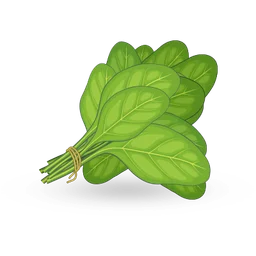 Spinach
 Bean sprouts
 Carrot
 Zucchini
 Shiitake mushrooms
 Salt
- Toasted sesame oil
then stir-fry
3 · Beef in a pan
 Beef sirloin steak
 Soy sauce
- Sugar
About this dish
- Origin
- South Korea · Well documentedJeonju is particularly famous for its version.Also popular in Japan, United StatesMore food from South Korea
South Korea - Dish
- Lunch · Dinner · Rice dishes · Main courses
- Cooking method
- Stir-fried, Blanched, Pan-fried
- Taste
- sweet & spicy, savoury, nutty, spicy (chilli heat)
- Diet
- Dairy-free · No nut ingredients · High-proteinWith the listed swaps: Vegetarian (lacto-ovo), Eggetarian, Ovo-vegetarian, Pescatarian, Beef-freeWorked out from the ingredients. How labels work
All labels
Non-vegetarian · Flexitarian-friendly · Dairy-free · No nut ingredients · Alcohol-free · Pork-free · High-protein - Good for
- Meal-prep friendly · Uses leftovers
- Cook more with
- Short-grain rice · Gochujang · Beef sirloin steak · Soy sauce · Sugar · Garlic
- Techniques
- Pan-frying · Stir-frying · Boiling · Blanching
Allergens
- Contains: Eggsfrom egg
- Contains: Wheatfrom soy sauce, gochujang
- Contains: Glutenfrom soy sauce, gochujang
- Contains: Soyfrom soy sauce, gochujang
- Contains: Sesamefrom toasted sesame oil, sesame seeds
Based on typical versions of these ingredients and not verified allergen-free. Brands differ and cross-contact happens, so always check labels. For severe allergies, follow your clinician’s advice.
Nutrition
657 kcal per serving
Estimated1 serving ≈ 382 g · recipe makes 4
Where the energy comes from
- Protein 17%
- Carbohydrate 47%
- Fat 36%
| Nutrient | Per serving | Per 100 g* |
|---|---|---|
| Energy | 657 kcal | 172 kcal |
| Protein | 28.5 g | 7.4 g |
| Carbohydrate | 76.9 g | 20.1 g |
| Net carbohydrate | — | — |
| Sugars | — | — |
| Added sugars | — | — |
| Fibre | — | — |
| Fat | 26.3 g | 6.9 g |
| Saturated fat | 4.7 g | 1.2 g |
| Trans fat | — | — |
| Cholesterol | 216 mg | 57 mg |
| Sodium | 1586 mg | 415 mg |
| Salt equivalent | 4 g | 1 g |
Vitamins & minerals per serving
- Potassium
- 914 mg
- Calcium
- 139 mg
- Iron
- 4.9 mg
- Magnesium
- 112 mg
- Vitamin A (RAE)
- —
- Vitamin C
- 28 mg
- Vitamin D
- 1.1 µg
- Vitamin B12
- 1 µg
- Folate (DFE)
- 174 µg
How these numbers were made
- Calculated from USDA FoodData Central (SR Legacy) per-100 g values and the listed quantities.
- *Per 100 g of combined raw ingredients; the cooked dish may weigh more or less.
- Gochujang: Miso (FDC 172442) as a stand-in fermented soy paste; gochujang is sweeter (rice syrup) and hotter, so carbohydrate is understated.
- Rice vinegar: Distilled vinegar (FDC 172237) used as a stand-in for unseasoned rice vinegar.
- “—” means the value isn’t known for enough of the ingredients; it is never zero by default.
- Values are estimates for guidance, not for medical dosing. U.S. Department of Agriculture, Agricultural Research Service. FoodData Central, 2019. fdc.nal.usda.gov.
Good to know
Tips
- Prepare the vegetable toppings (namul) a day ahead to make assembly fast.
Common mistakes
- Cooking all the vegetables together: each is seasoned and cooked separately so it keeps its own colour and texture.
- Not squeezing the blanched spinach — the water dilutes the seasoning and makes the bowl soggy.
Serve with
- Serve with kimchi and a simple soup.
Storage
- Keep toppings separately in the fridge for up to 3 days.
Reheating
- Reheat rice until steaming; toppings can be served cold or warmed.
Variations
- Dolsot bibimbap: Served in a sizzling hot stone bowl so the rice forms a crisp crust.
Original editorial recipe · FriendsPantry editorial · Not yet independently reviewed · Added
Recipe DNA
How this dish is built
Built from the recipe’s own sections. Each band’s width is its share of the dish by weight. Choose a component to see what it does.
What the dish is built around
Beef
- Beef sirloin steak, thinly sliced into strips200 g
- Soy sauce1.5 tbsp · 26 g
- Sugar1 tsp · 4.2 g
Reviews & corrections
Reviews come from signed-in cooks and appear after a moderator checks them. We never show made-up ratings.
You might also like
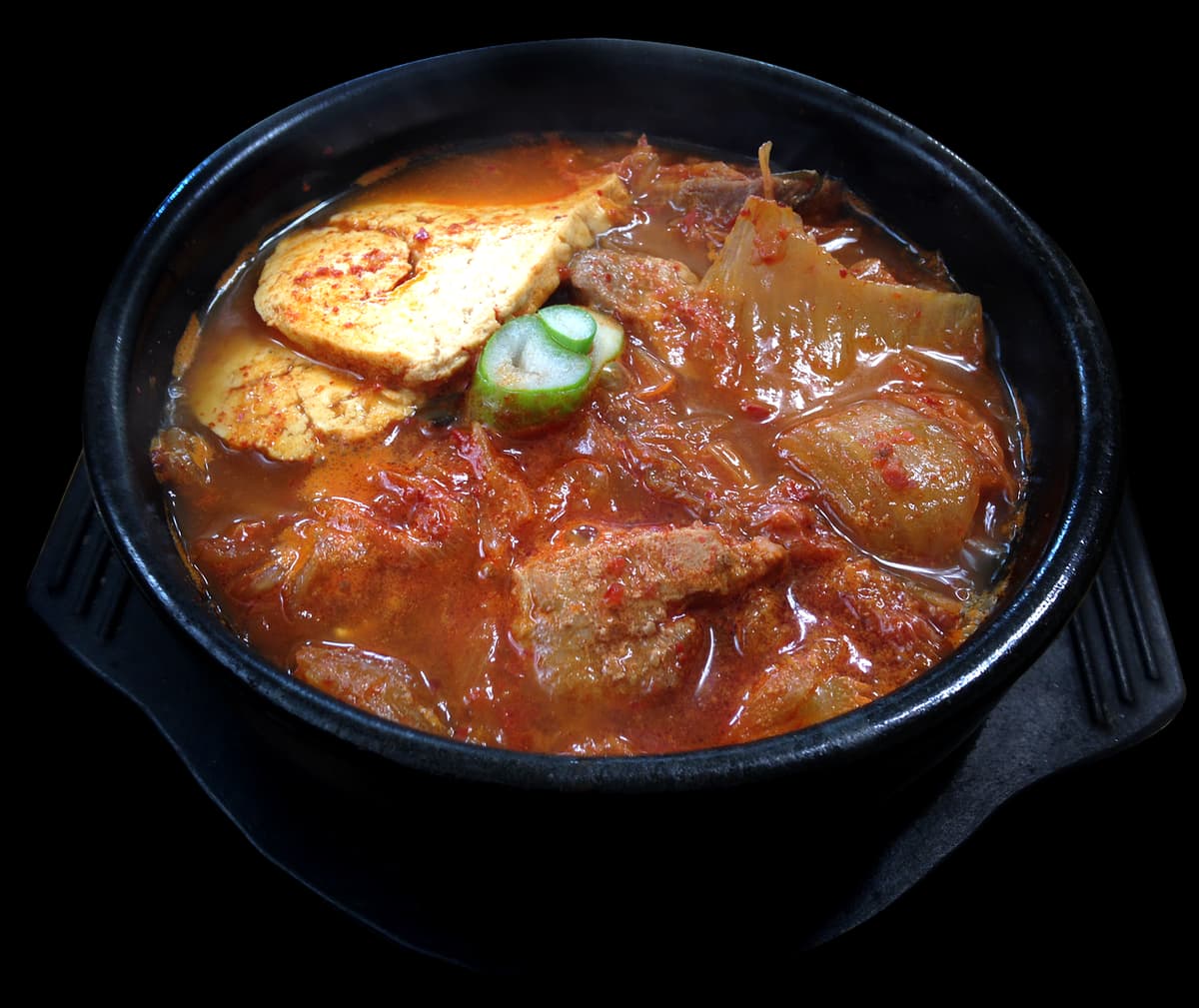
Kimchi jjigae
 Korean · 40 min · 426 kcal
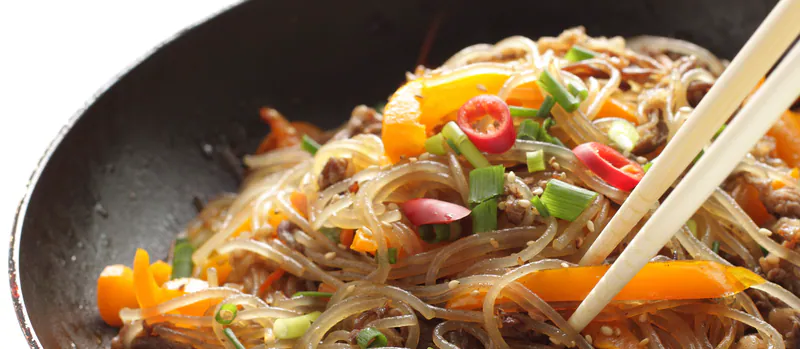
Japchae
Korean · 45 min · 464 kcal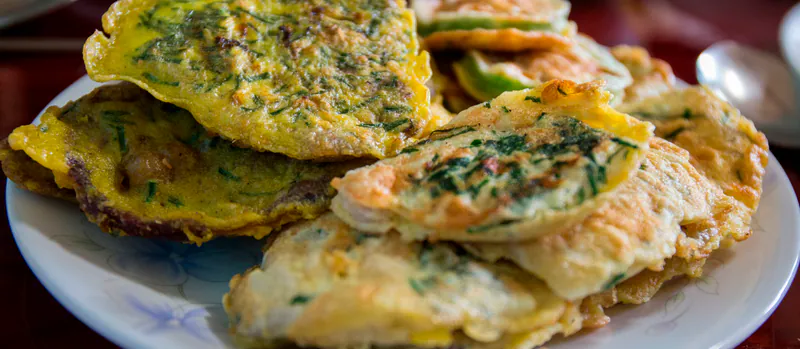
Jeon (assorted Korean pan-fried morsels)
Korean · 1 h · 509 kcal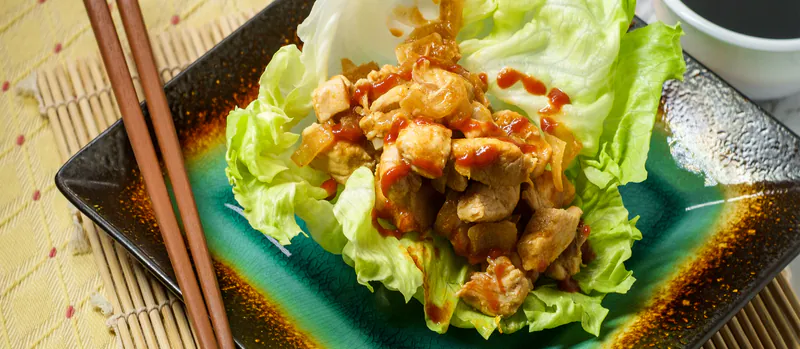
Sangchu ssam (Korean lettuce wraps with pork belly)
Korean · 50 min · 1196 kcal