
Samgyeopsal (Korean grilled pork belly)
Non-vegetarian
삼겹살 · samgyeopsal
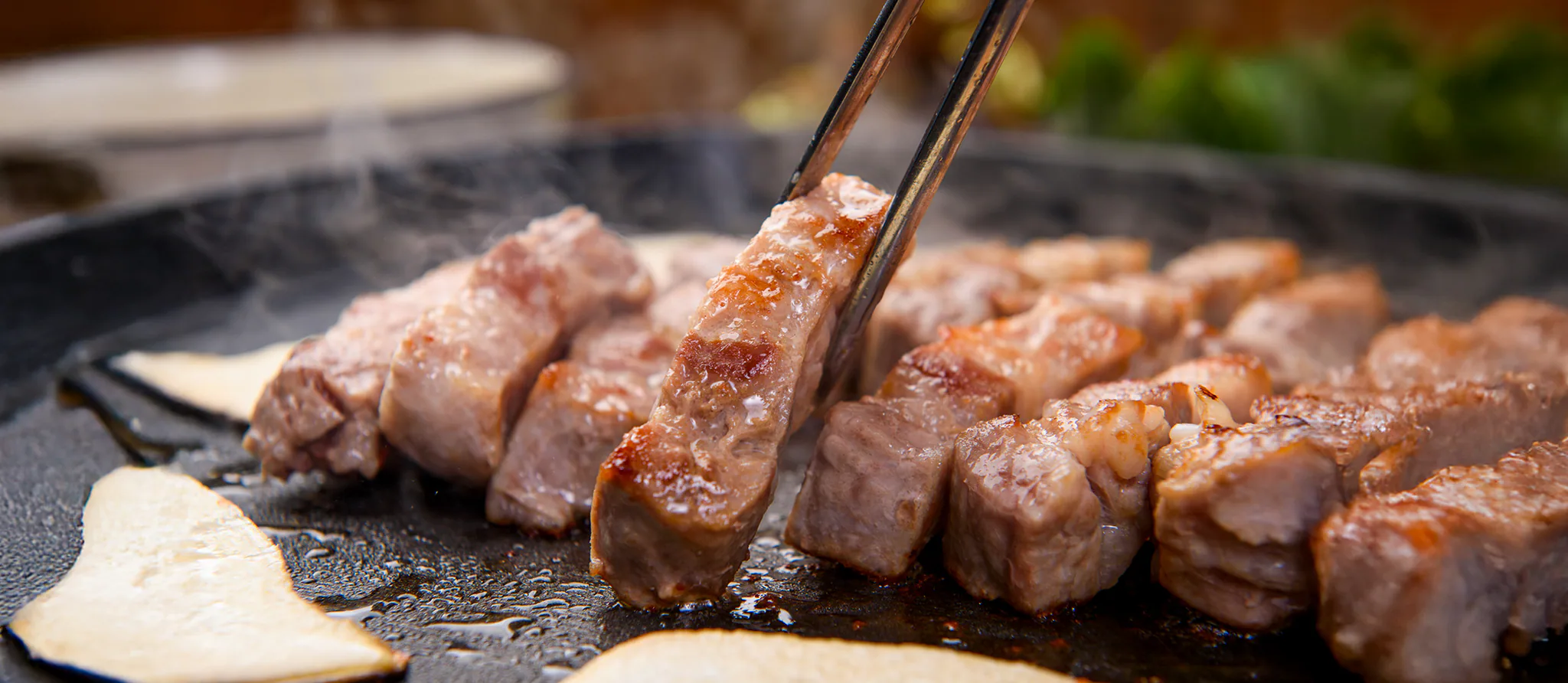
Thick slices of unmarinated pork belly grilled at the table until crisp and golden, cut into bites with scissors and wrapped in lettuce with grilled kimchi, garlic, chilli and ssamjang. Korea's favourite barbecue meal, usually shared with friends over soju.
Samgyeopsal (Korean grilled pork belly) is a Korean main course from South Korea, ready in about 45 minutes and made with pork belly, kimchi and gochujang. It serves 4 and is rated easy to cook.
- Prep
- 20 min
- Cook
- 25 min
- Total
- 45 min
- Serves
- 4
- Level
- Easy
- Calories
- 1276
Main ingredients
Ingredients
For the grill
For the sesame salt dip (gireumjang)
For the ssamjang
For the spring onion salad (pa-muchim)
For wrapping
Method
Ssamjang
4 minStep 1
Make the dips: stir the sesame oil (opens in a new tab), salt and pepper (opens in a new tab) together in small saucers for gireumjang, and mix the gochujang (opens in a new tab), miso (opens in a new tab), sesame oil, sugar (opens in a new tab) and sesame seeds (opens in a new tab) for the ssamjang.
Spring onion salad (pa-muchim)
3 minStep 2
Drain the spring onion (opens in a new tab) shreds, pat dry and toss with the gochugaru (opens in a new tab), vinegar, sugar (opens in a new tab) and sesame oil (opens in a new tab) just before serving.
- 3 min
Wrapping
5 minStep 3
Arrange the lettuce (opens in a new tab), sliced chillies and garlic (opens in a new tab) on the table. Heat a tabletop grill, ridged grill pan (opens in a new tab) or cast-iron skillet (opens in a new tab) over medium-high heat — no oil is needed.
- 5 min
- medium-high heat
- Grill pan (opens in a new tab)
- Cast-iron skillet (opens in a new tab)
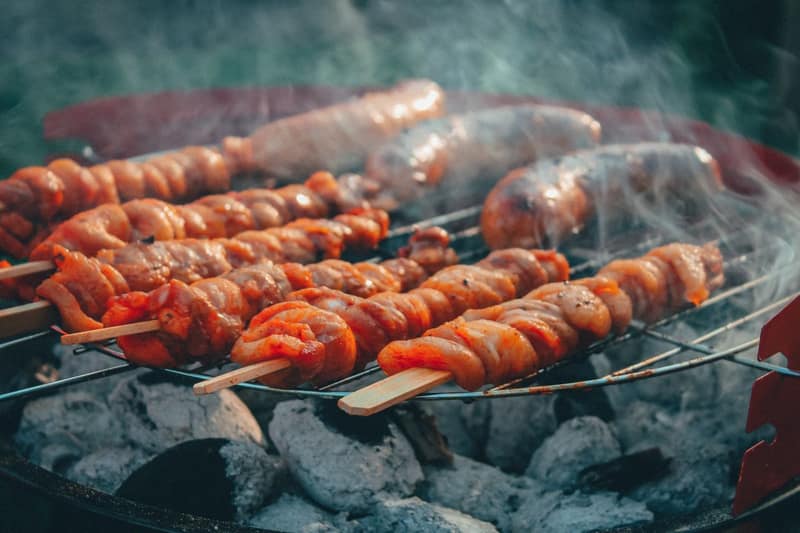
How it looks · Photo: Malte Luk on Pexels
Grill
14 minStep 4
Lay the pork belly (opens in a new tab) slices on the hot grill and cook without moving for 3–4 minutes until golden and crisp underneath. Turn and cook the other side for 3 minutes.
- 8 min
- medium-high heat
- Tongs (opens in a new tab)
Food safety: Cook pork until the centre reaches at least 63 °C (145 °F) and rest it for 3 minutes; cook minced or marinated chopped pork to 71 °C (160 °F).
Step 5
Cut the pork into bite-size pieces with scissors and keep cooking until browned on all cut edges. Put the kimchi (opens in a new tab), garlic (opens in a new tab) slices and mushrooms (opens in a new tab) in the rendered fat to grill alongside.
Tilt the pan or spoon off excess fat if it starts to smoke.
Step 6
To eat, take a lettuce (opens in a new tab) leaf, add a piece of pork dipped in sesame (opens in a new tab) salt, a little ssamjang, grilled kimchi (opens in a new tab), garlic (opens in a new tab), chilli and spring onion (opens in a new tab) salad, then fold and eat in one bite. Grill more pork in batches as you go.
At a glance
1 · Ssamjang in a bowl
 Gochujang
 Miso
 Toasted sesame oil
 Sugar
 Sesame seeds
then drain
2 · Spring onion salad (pa-muchim) in a bowl
 Spring onion
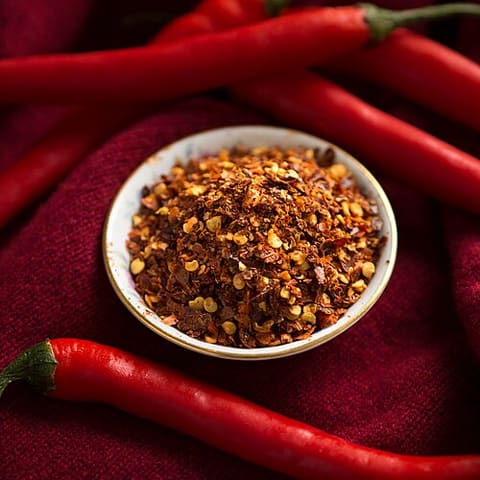 Gochugaru (Korean chilli flakes)
 Rice vinegar
- Sugar
- Toasted sesame oil
then arrange
3 · Wrapping in a pan
 Lettuce
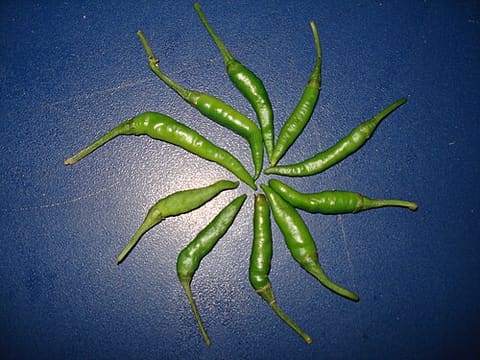 Green chilli
then lay
4 · Grill in a pan
 Pork belly
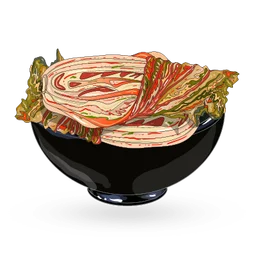 Kimchi
 Garlic
 Mushrooms
About this dish
- Origin
- South Korea · Commonly attributedSamgyeopsal ('three layers', after the stripes of fat and lean) became a mass-market favourite in South Korea in the 1970s–80s as pork became affordable and tabletop grills spread. 3 March (3/3) is celebrated as Samgyeopsal Day.More food from South Korea
South Korea - Dish
- Dinner · Main courses · Grills & kebabs · Barbecue & smoked
- Cooking method
- Grilled, Pan-fried
- Taste
- savoury, rich, spicy (chilli heat), garlicky, fresh
- Diet
- Dairy-free · No nut ingredients · Low-carb · High-proteinWorked out from the ingredients. How labels work
All labels
Non-vegetarian · Dairy-free · Egg-free · No nut ingredients · Alcohol-free · Beef-free · Low-carb · High-protein - Good for
- Festive & celebration · One-pan
- Cook more with
- Pork belly · Kimchi · Gochujang · Garlic · Toasted sesame oil · Miso
- Techniques
- Grilling · Charcoal grilling · Pan-frying
Allergens
- Contains: Fishfrom kimchi
- Contains: Crustaceansfrom kimchi
- Contains: Wheatfrom gochujang
- Contains: Glutenfrom gochujang, miso
- Contains: Soyfrom gochujang, miso
- Contains: Sesamefrom toasted sesame oil, sesame seeds
Based on typical versions of these ingredients and not verified allergen-free. Brands differ and cross-contact happens, so always check labels. For severe allergies, follow your clinician’s advice.
Nutrition
1276 kcal per serving
Estimated1 serving ≈ 474 g · recipe makes 4
Where the energy comes from
- Protein 8%
- Carbohydrate 6%
- Fat 86%
| Nutrient | Per serving | Per 100 g* |
|---|---|---|
| Energy | 1276 kcal | 269 kcal |
| Protein | 24.9 g | 5.3 g |
| Carbohydrate | 18.5 g | 3.9 g |
| Net carbohydrate | 12.5 g | 2.6 g |
| Sugars | 6.5 g | 1.4 g |
| Added sugars | — | — |
| Fibre | 5.9 g | 1.3 g |
| Fat | 123.4 g | 26 g |
| Saturated fat | 41.2 g | 8.7 g |
| Trans fat | — | — |
| Cholesterol | 144 mg | 30 mg |
| Sodium | 1841 mg | 388 mg |
| Salt equivalent | 4.6 g | 1 g |
Vitamins & minerals per serving
- Potassium
- 949 mg
- Calcium
- 125 mg
- Iron
- 5.3 mg
- Magnesium
- 57 mg
- Vitamin A (RAE)
- 577 µg
- Vitamin C
- 26 mg
- Vitamin D
- —
- Vitamin B12
- 1.7 µg
- Folate (DFE)
- 228 µg
How these numbers were made
- Calculated from USDA FoodData Central (SR Legacy) per-100 g values and the listed quantities.
- *Per 100 g of combined raw ingredients; the cooked dish may weigh more or less.
- Optional ingredients are not included: mushrooms.
- Gochujang: Miso (FDC 172442) as a stand-in fermented soy paste; gochujang is sweeter (rice syrup) and hotter, so carbohydrate is understated.
- Gochugaru (Korean chilli flakes): Ground red (cayenne) pepper used as a stand-in: no gochugaru entry in FDC SR Legacy; both are dried, ground Capsicum annuum used in spoon amounts.
- Rice vinegar: Distilled vinegar (FDC 172237) used as a stand-in for unseasoned rice vinegar.
- “—” means the value isn’t known for enough of the ingredients; it is never zero by default.
- Values are estimates for guidance, not for medical dosing. U.S. Department of Agriculture, Agricultural Research Service. FoodData Central, 2019. fdc.nal.usda.gov.
Good to know
Tips
- Thicker slices (1–1.5 cm) stay juicy inside while the outside crisps.
- Finish the meal Korean-style by frying leftover rice with chopped kimchi in the pork fat on the grill.
Common mistakes
- Moving the pork too early, before it releases and crisps.
- Marinating it — samgyeopsal is about plain pork and the dips.
Serve with
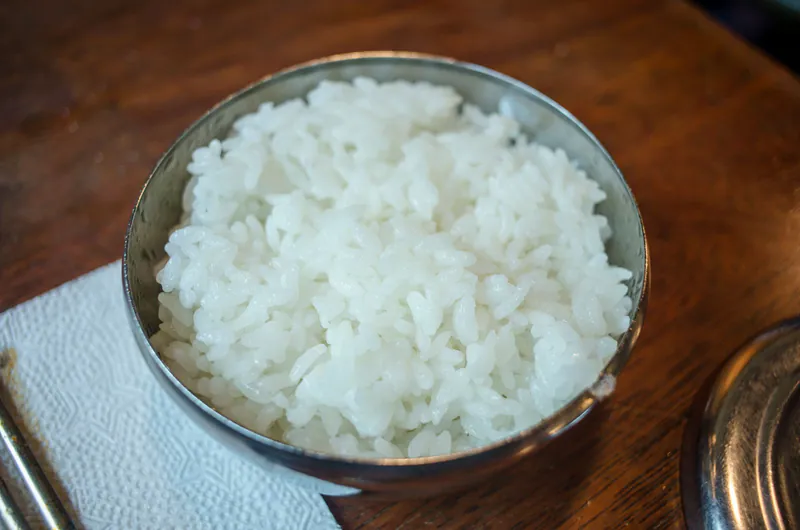
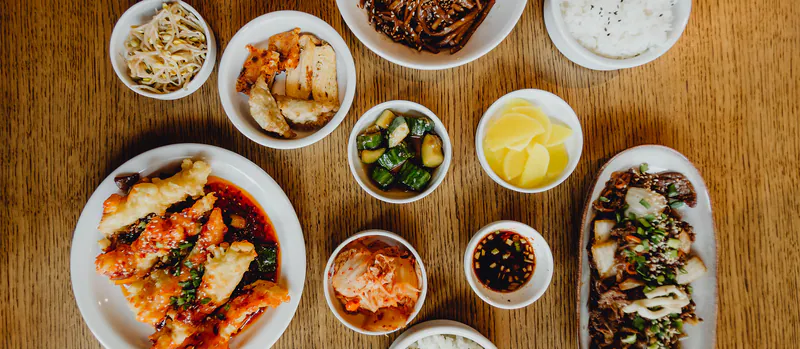
- With steamed rice, doenjang-jjigae and banchan such as kongnamul-muchim.
- With soju or beer.
Food safety
- Cook pork until the centre reaches at least 63 °C (145 °F) and rest it for 3 minutes; cook minced or marinated chopped pork to 71 °C (160 °F).
Storage
- Raw sliced pork belly keeps 2 days refrigerated. Cooked leftovers keep 2 days refrigerated.
Reheating
- Re-crisp leftovers in a hot dry pan.
Variations
- Ogyeopsal: Pork belly with the skin on ('five layers'), especially popular on Jeju Island with black pork.
- Wine samgyeopsal: Pork belly marinated in red wine, a modern restaurant trend.
- Daepae samgyeopsal: Paper-thin frozen slices that cook in seconds.
Original editorial recipe · FriendsPantry editorial · source: TasteAtlas (dish facts) · Not yet independently reviewed · Added
Sauces, chutneys & dips for this dish
Recipe DNA
How this dish is built
Built from the recipe’s own sections. Each band’s width is its share of the dish by weight. Choose a component to see what it does.
Reviews & corrections
Reviews come from signed-in cooks and appear after a moderator checks them. We never show made-up ratings.
You might also like
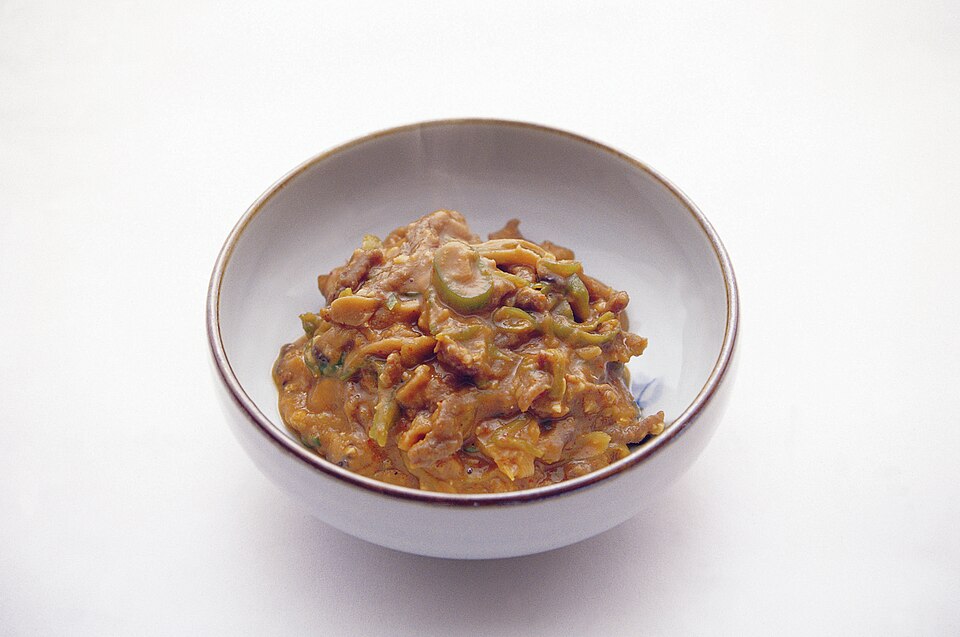
Ssamjang
 Korean · 5 min · 51 kcal · Vegan
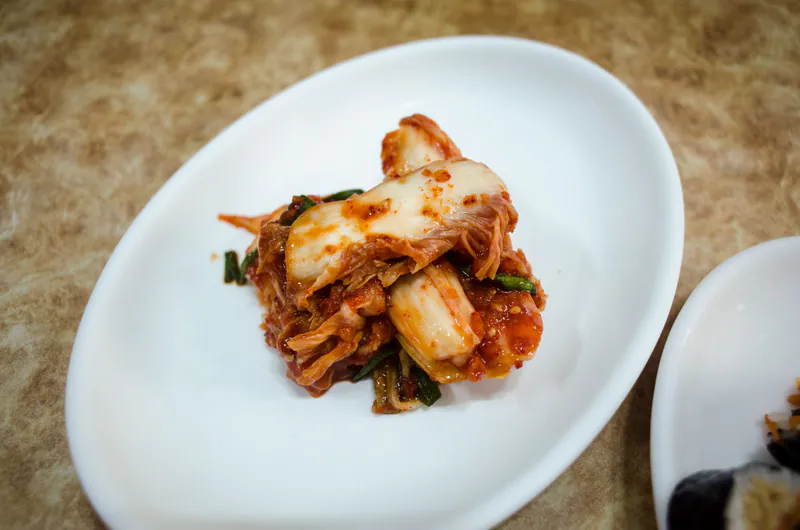
Baechu kimchi (napa cabbage kimchi)
Korean · 7 h 5 min · 44 kcal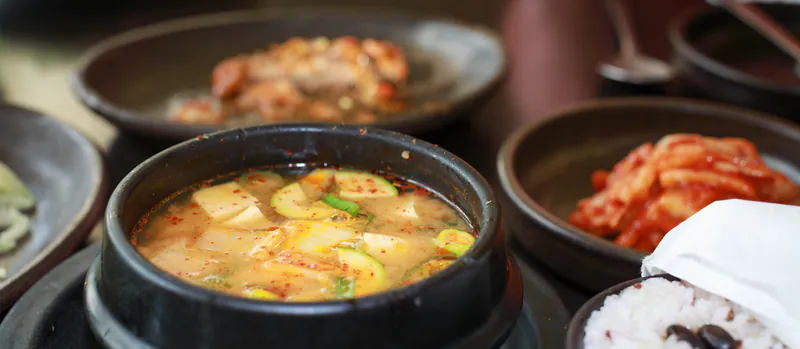
Doenjang jjigae
Korean · 30 min · 210 kcal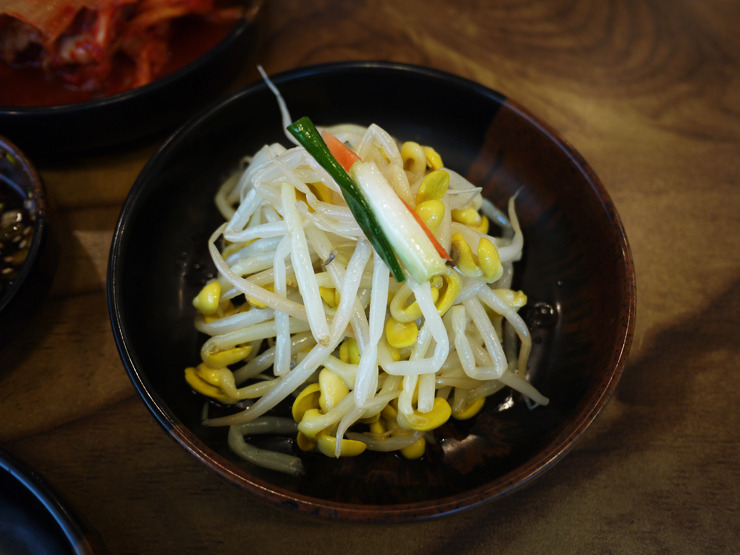
Kongnamul muchim
Korean · 11 min · 129 kcal · Vegan