
Gudeg (Yogyakarta young jackfruit stew)
Non-vegetarian
Gudeg
Young green jackfruit cooked for hours in coconut milk with palm sugar, galangal and salam leaves until it turns mahogany, sweet and almost meaty, with eggs and chicken braised in the same pot. It is the signature dish of Yogyakarta, made dry (kering) for keeping or saucy (basah) for eating fresh.
Gudeg (Yogyakarta young jackfruit stew) is an Indonesian stew, ready in about 4 hours 30 minutes and made with young green jackfruit, salam leaves (indonesian bay leaves) and jaggery / palm sugar. It serves 6 and is rated intermediate to cook.
No licensed photograph of this dish yet.
- Prep
- 30 min
- Cook
- 4 h
- Total
- 4 h 30 min
- Serves
- 6
- Level
- Intermediate
- Calories
- 698
Main ingredients

Ingredients
For the gudeg
For the spice paste
Method
Gudeg
20 minStep 1
If using fresh jackfruit (opens in a new tab), oil your hands and knife (the sap is sticky), peel and cut it, then boil for 15 minutes and drain. Canned jackfruit only needs rinsing.
- 20 min
- high heat
- Saucepan (opens in a new tab)
Spice paste
4 h 3 minStep 2
Pound the shallots (opens in a new tab), garlic (opens in a new tab), candlenuts (opens in a new tab) and coriander seeds (opens in a new tab) to a paste.
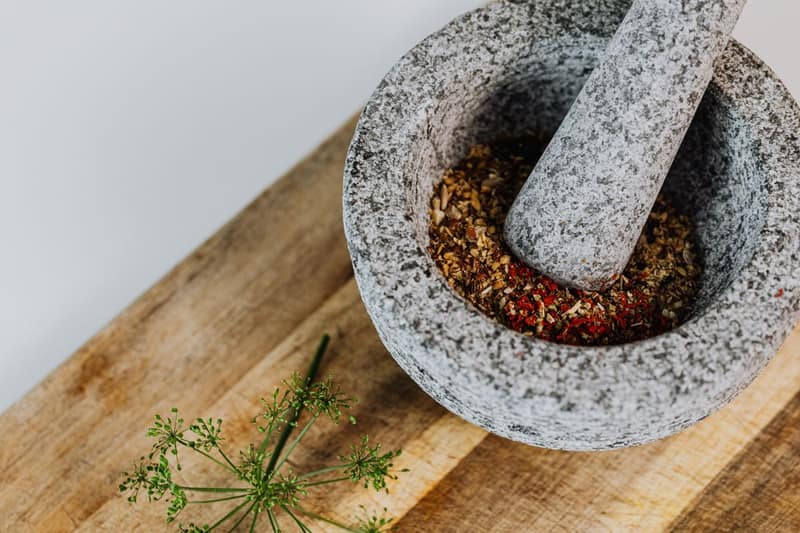
How it looks · Photo: https://kaboompics.com/ on Pexels Step 3
Line a heavy pot with the salam leaves (opens in a new tab), lime leaves, galangal (opens in a new tab) and lemongrass (opens in a new tab). Add the jackfruit (opens in a new tab), eggs (opens in a new tab), chicken (if using) and spice paste, then the palm sugar (opens in a new tab), tamarind, salt and the thin coconut milk (opens in a new tab) (or 800 ml of the coconut milk). The liquid should just cover everything.
Food safety: Cook chicken until it reaches 74 °C in the thickest part, and keep raw chicken and its juices away from ready-to-eat food.
Step 4
Bring to a simmer, then cover and cook on the lowest heat for 3 hours, stirring gently from the bottom every 30 minutes, until the jackfruit (opens in a new tab) is soft and deep reddish-brown.
- 180 min
- low heat
- Dutch oven / casserole pot (opens in a new tab)
Gudeg is traditionally cooked in a clay pot over a wood fire overnight; a low oven (140 °C) also works.
Step 5
Add the remaining thick coconut milk (opens in a new tab) and simmer uncovered for 30–60 minutes more, stirring carefully, until the sauce has reduced to a thick coating (basah) or almost entirely evaporated (kering).
- 50 min
- low heat
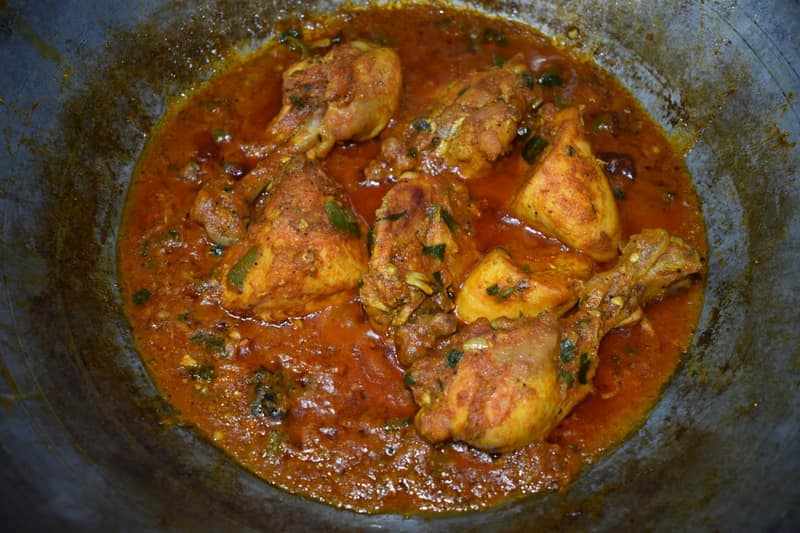
How it looks · Photo: Bachir Mamud on Pexels
At a glance
1 · Gudeg in a pot
- Young green jackfruit
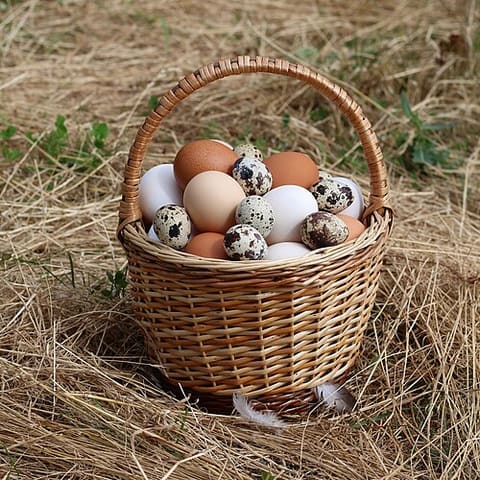 Egg
 Chicken pieces, skin-on
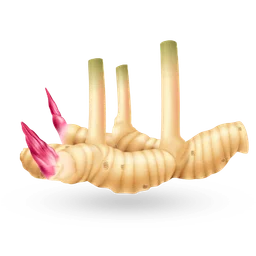 Galangal
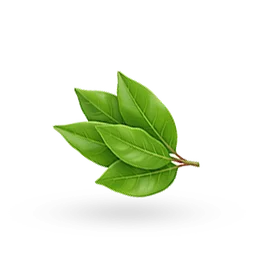 Salam leaves (Indonesian bay leaves)
 Makrut lime leaves
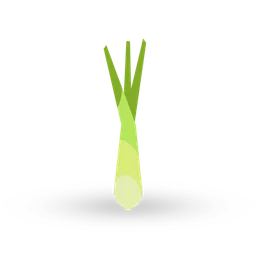 Lemongrass
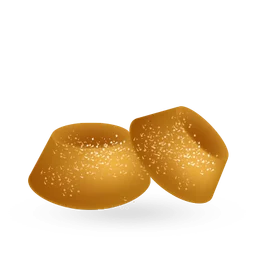 Jaggery / palm sugar
 Tamarind paste
 Salt
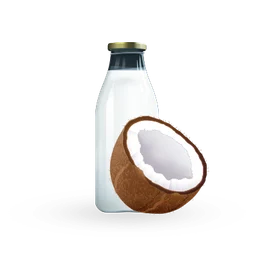 Coconut milk
then pound
2 · Spice paste in a bowl
 Shallot
 Garlic
 Candlenut
 Coriander seeds
About this dish
- Origin
- Yogyakarta and Central Java, Indonesia · Well documentedTeak leaves are traditionally added for the deep red-brown colour; Solo's gudeg is usually wetter and paler than Yogyakarta's.More food from Indonesia
Indonesia - Dish
- Breakfast · Lunch · Dinner · Stews & braises · Main courses · Street food · Breakfast dishes
- Cooking method
- Slow-cooked, Simmered, Braised
- Taste
- sweet & savoury, creamy, aromatic / warmly spiced, rich
- Diet
- No gluten ingredients · Dairy-freeWithout the optional extras: Vegetarian (lacto-ovo), Eggetarian, Ovo-vegetarian, Pescatarian, Flexitarian-friendlyWorked out from the ingredients. How labels work
All labels
Non-vegetarian · Whole-food focused · Paleo-style · No gluten ingredients · Dairy-free · Alcohol-free · Pork-free · Beef-free - Good for
- Batch cooking · Make-ahead
- Cook more with
- Young green jackfruit · Salam leaves (Indonesian bay leaves) · Jaggery / palm sugar · Coconut milk · Egg · Shallot
- Techniques
- Boiling · Simmering · Braising · Slow-cooked gravy · Reduction
Allergens
- Contains: Eggsfrom egg
- May contain: Tree nutsfrom candlenut
Based on typical versions of these ingredients and not verified allergen-free. Brands differ and cross-contact happens, so always check labels. For severe allergies, follow your clinician’s advice.
Nutrition
698 kcal per serving
Estimated1 serving ≈ 496 g · recipe makes 6
Where the energy comes from
- Protein 9%
- Carbohydrate 31%
- Fat 59%
| Nutrient | Per serving | Per 100 g* |
|---|---|---|
| Energy | 698 kcal | 141 kcal |
| Protein | 17.7 g | 3.6 g |
| Carbohydrate | 58.7 g | 11.8 g |
| Net carbohydrate | — | — |
| Sugars | — | — |
| Added sugars | 24.3 g | 4.9 g |
| Fibre | — | — |
| Fat | 49.3 g | 9.9 g |
| Saturated fat | 38.9 g | 7.8 g |
| Trans fat | — | — |
| Cholesterol | 186 mg | 37 mg |
| Sodium | 1044 mg | 210 mg |
| Salt equivalent | 2.6 g | 0.5 g |
Vitamins & minerals per serving
- Potassium
- 1371 mg
- Calcium
- 193 mg
- Iron
- 10.8 mg
- Magnesium
- 220 mg
- Vitamin A (RAE)
- 82 µg
- Vitamin C
- 26 mg
- Vitamin D
- 1 µg
- Vitamin B12
- 0.4 µg
- Folate (DFE)
- 185 µg
How these numbers were made
- Calculated from USDA FoodData Central (SR Legacy) per-100 g values and the listed quantities.
- *Per 100 g of combined raw ingredients; the cooked dish may weigh more or less.
- Optional ingredients are not included: chicken pieces, skin-on, tamarind paste.
- Not counted (tiny amounts or “to taste”): salam leaves (indonesian bay leaves), makrut lime leaves.
- Young green jackfruit: Raw globe artichoke (FDC 169205) used as a stand-in; unripe jackfruit is similarly low in sugar and high in fibre (roughly 40–50 kcal per 100 g), unlike sweet ripe jackfruit.
- Candlenut: English walnuts (FDC 170187) used as a stand-in: candlenuts are similarly oil-rich (about 60–65 % fat); no candlenut entry exists in FDC SR Legacy.
- Galangal: Fresh ginger used as a stand-in: no galangal entry in FDC SR Legacy, and galangal is a closely related rhizome used in similar small amounts.
- Jaggery / palm sugar: Brown sugar (FDC 168833) used as a stand-in for unrefined cane jaggery and palm sugar.
- “—” means the value isn’t known for enough of the ingredients; it is never zero by default.
- Values are estimates for guidance, not for medical dosing. U.S. Department of Agriculture, Agricultural Research Service. FoodData Central, 2019. fdc.nal.usda.gov.
Good to know
Tips
- Gudeg tastes better a day after cooking, once the sweetness and spices have soaked into the jackfruit.
Common mistakes
- Stirring too hard, which breaks the jackfruit into mush; turn it gently.
Serve with
- Serve with rice, the braised eggs and chicken, sambal goreng krecek (spicy beef skin in coconut) and areh, a thick, reduced coconut cream sauce.
Food safety
- Cook chicken until it reaches 74 °C in the thickest part, and keep raw chicken and its juices away from ready-to-eat food.
Storage
- Wet gudeg keeps 3 days refrigerated; dry gudeg keeps 2 days at cool room temperature or a week refrigerated.
Reheating
- Reheat gently in a covered pan with a splash of water.
Variations
- Gudeg kering: Cooked until almost dry and very dark; the Yogyakarta style sold in boxes and clay pots (kendil) to travel.
- Gudeg basah (Solo style): Wetter, lighter in colour and served with plenty of areh coconut sauce.
Original editorial recipe · FriendsPantry editorial · source: TasteAtlas (dish facts) · Not yet independently reviewed · Added
Recipe DNA
How this dish is built
Built from the recipe’s own sections. Each band’s width is its share of the dish by weight. Choose a component to see what it does.
The spice and seasoning backbone
For the spice paste
- Shallot8 piece · 240 g
- Garlic6 clove · 24 g
- Candlenut, toasted5 piece · 20 g
- Coriander seeds, toasted1 tbsp · 5.6 g
Reviews & corrections
Reviews come from signed-in cooks and appear after a moderator checks them. We never show made-up ratings.
You might also like
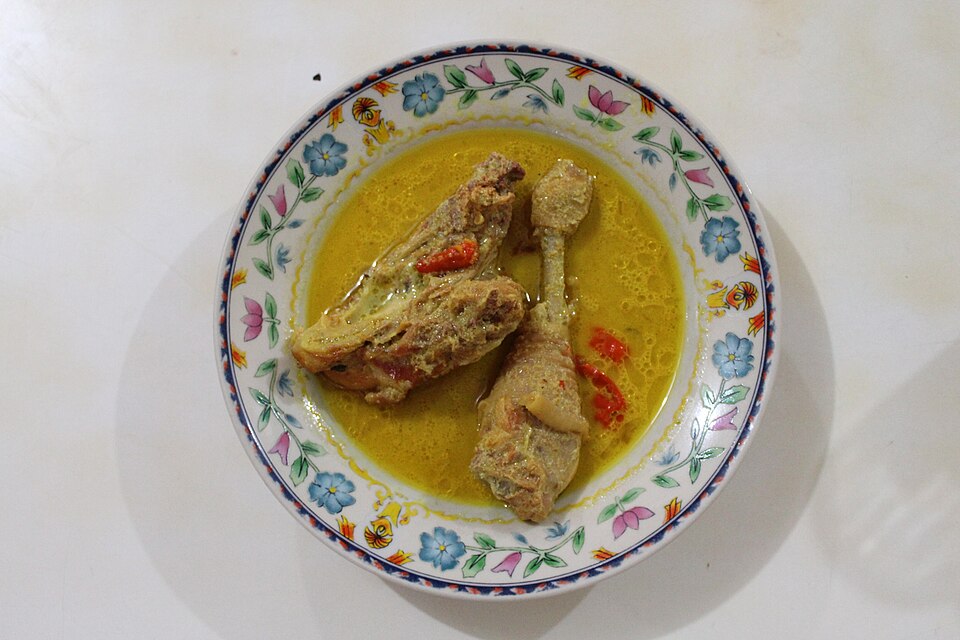
Opor ayam
 Indonesian · 1 h 10 min · 799 kcal
Tempe bacem
Indonesian · 55 min · 413 kcal · Vegan
Rawon (East Javanese black beef soup)
Indonesian · 3 h · 610 kcal
Soto Lamongan (East Javanese chicken soup with koya)
Indonesian · 1 h 55 min · 772 kcal