
Cassata siciliana
Contains egg (no meat or fish)
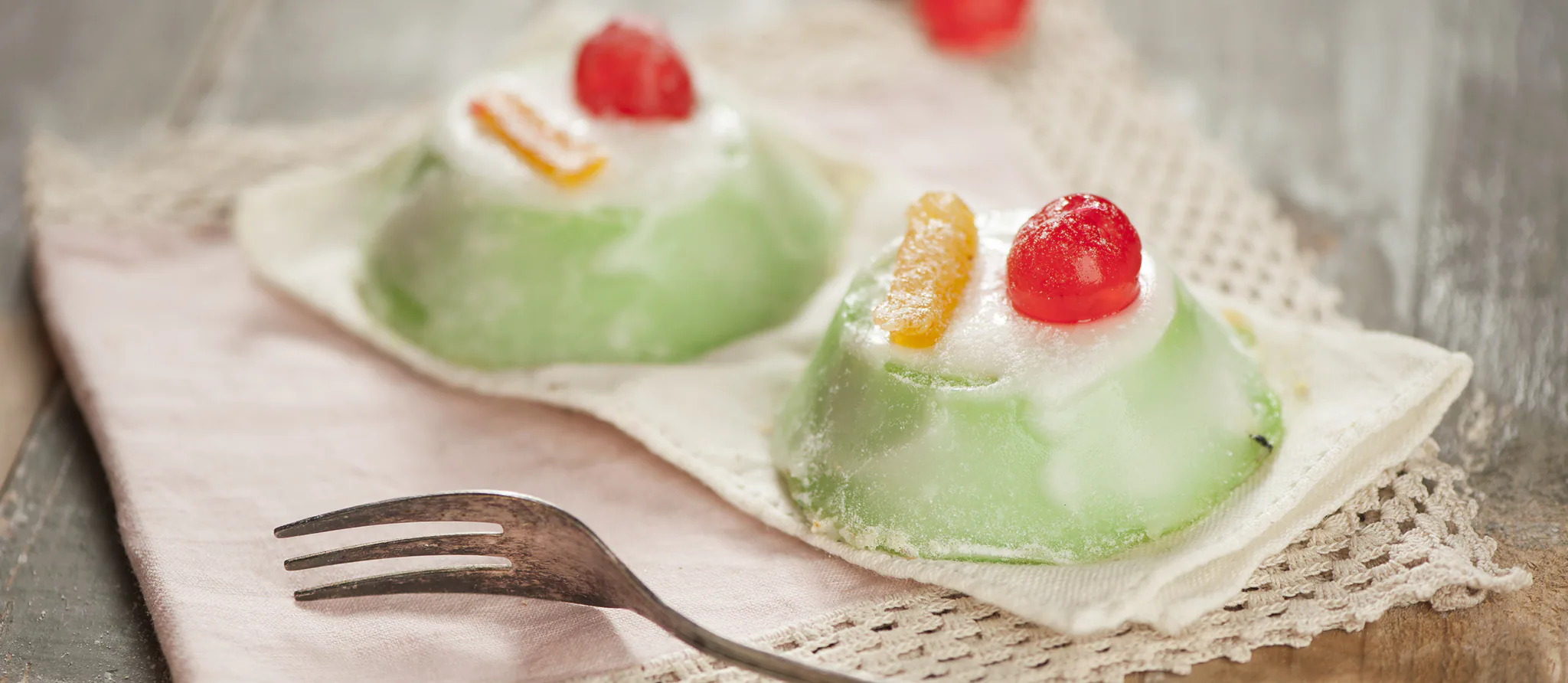
A dome of liqueur-soaked sponge filled with sweetened sheep's ricotta and chocolate, wrapped in pale green marzipan, glazed with white icing and crowned with glossy candied fruit. Sicily's showpiece Easter cake, as much about decoration as flavour.
Cassata siciliana is an Italian cake from Italy, ready in about 8 hours 5 minutes and made with ricotta, marzipan and candied fruit / peel. It serves 12 and is rated advanced to cook.
- Prep
- 1 h 30 min
- Cook
- 35 min
- Rest
- 6 h
- Total
- 8 h 5 min
- Serves
- 12
- Level
- Advanced
- Calories
- 564
Plus overnight draining of the ricotta.
Main ingredients
Ingredients
For the sponge (pan di Spagna)
For the ricotta filling
For the syrup
For the decoration
Method
Sponge (pan di Spagna)
47 minStep 1
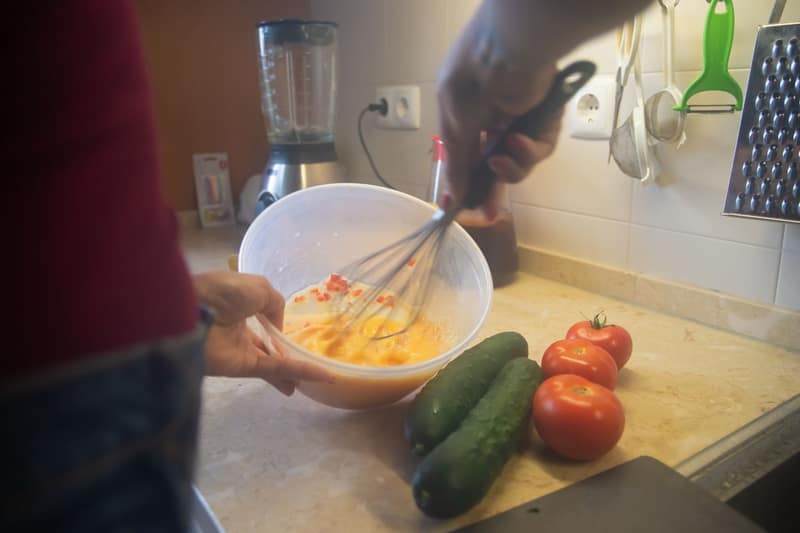
Heat the oven (opens in a new tab) to 180 °C and grease and flour a 22 cm springform tin. Whisk the eggs (opens in a new tab) and sugar (opens in a new tab) in a stand mixer (opens in a new tab) on high for 10–12 minutes until pale, tripled in volume and a ribbon holds on the surface. Add the vanilla (opens in a new tab).
How it looks · Photo: Kampus Production on Pexels Step 2
Sift the flour and cornstarch (opens in a new tab) over the eggs (opens in a new tab) in three additions, folding gently with a spatula after each so the mixture keeps its air. Pour into the tin and bake until golden and springy, 30–35 minutes. Cool completely.
Do not open the oven in the first 20 minutes or the sponge may sink.
Ricotta filling
10 minStep 3
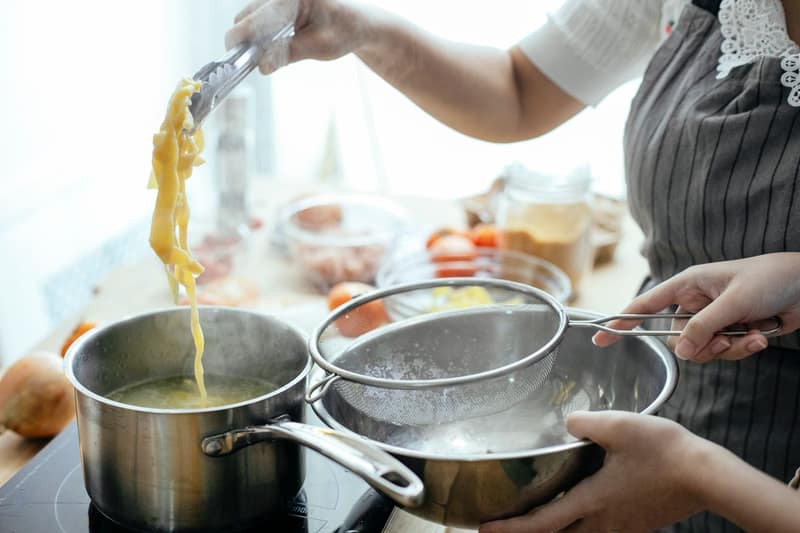
Press the drained ricotta (opens in a new tab) through a fine sieve for a silky texture. Beat in the 180 g icing sugar (opens in a new tab), then fold in the chocolate (opens in a new tab) and diced candied peel. Chill.
How it looks · Photo: Katerina Holmes on Pexels
Syrup
40 minStep 4
Boil the water and sugar (opens in a new tab) for the syrup for 1 minute, take off the heat and add the Marsala (opens in a new tab). Knead the ground pistachios (opens in a new tab) into the marzipan (opens in a new tab) (or tint it with a drop of green colouring) and roll it out 3 mm thick between sheets of baking paper. Cut it into strips 5 cm wide.

How it looks · Photo: Klaus Nielsen on Pexels Step 5
Line a 22 cm sloping cassata tin or a wide bowl with cling film. Slice the sponge horizontally into three discs about 1 cm thick. Line the sides of the tin with alternating strips of marzipan (opens in a new tab) and sponge cut into trapezoids, and lay a sponge disc on the base. Brush the sponge with syrup.
- 20 min
Step 6
Spread the ricotta (opens in a new tab) filling inside, cover with the last sponge disc, brush it with syrup and press gently. Cover and refrigerate for at least 4 hours, or overnight, to set.
- 5 min
Decoration
20 minStep 7
Turn the cassata out onto a serving plate and peel off the film. Mix the 200 g icing sugar (opens in a new tab) with the lemon juice (opens in a new tab) to a thick glaze, warm it for a few seconds so it pours, and spread it over the top, letting it run slightly down the sides.
Step 8
Decorate the top with candied fruit in a symmetrical pattern, with a whole candied orange or cherry in the centre. Chill for another 2 hours before slicing.
- 10 min
At a glance
1 · Sponge (pan di Spagna) in a bowl
 Egg
 Sugar
 All-purpose flour
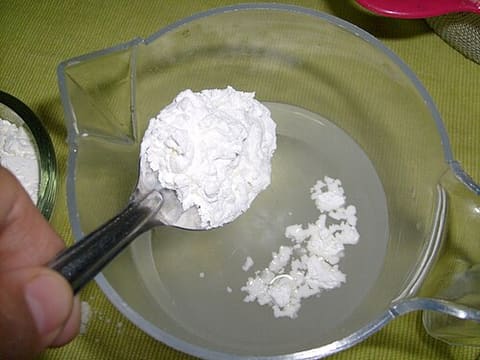 Cornstarch
 Vanilla extract
then press
2 · Ricotta filling in a bowl
 Ricotta
 Icing sugar
 Dark chocolate (70–85%)
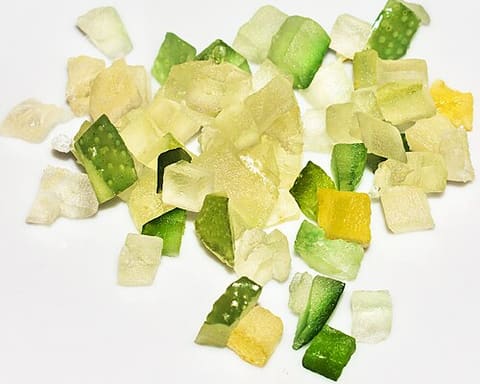 Candied mixed peel
then boil
3 · Syrup in a pot
- Sugar
 Marsala wine
then turn
4 · Decoration in a bowl
- Marzipan
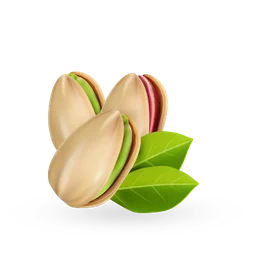 Pistachios
- Icing sugar
 Lemon juice
 Candied fruit / peel
About this dish
- Origin
- Sicily (Palermo), Italy · Commonly attributedThe name is often traced to the Arabic qas'ah, a bowl, from the period of Arab rule; the baroque decoration was developed by Palermo convents. A simpler baked cassata also exists.More food from Italy
Italy - Dish
- Dessert · Cakes · Desserts
- Cooking method
- Oven-baked, Whipped, No-cook
- Taste
- sweet, creamy, fruity, nutty
- Diet
- Vegetarian (lacto-ovo)Worked out from the ingredients. How labels work
All labels
Vegetarian (lacto-ovo) · Eggetarian · Pescatarian · Flexitarian-friendly · Pork-free · Beef-free · Low-sodium - Good for
- Festive & celebration · Make-ahead
- Cook more with
- Ricotta · Marzipan · Candied fruit / peel · Egg · Sugar · All-purpose flour
- Techniques
- Baking · Kneading · Emulsification
Allergens
- Contains: Milkfrom ricotta, dark chocolate (70–85%)
- Contains: Eggsfrom egg
- May contain: Peanutsfrom dark chocolate (70–85%)
- Contains: Tree nutsfrom dark chocolate (70–85%), marzipan, pistachios
- Contains: Wheatfrom all-purpose flour
- Contains: Glutenfrom all-purpose flour
- May contain: Soyfrom dark chocolate (70–85%)
- Contains, can be adapted: Sulphitesfrom candied mixed peel, marsala wine, candied fruit / peel
Based on typical versions of these ingredients and not verified allergen-free. Brands differ and cross-contact happens, so always check labels. For severe allergies, follow your clinician’s advice.
Nutrition
564 kcal per serving
Estimated1 serving ≈ 202 g · recipe makes 12
Where the energy comes from
- Protein 8%
- Carbohydrate 59%
- Fat 33%
| Nutrient | Per serving | Per 100 g* |
|---|---|---|
| Energy | 564 kcal | 279 kcal |
| Protein | 12 g | 5.9 g |
| Carbohydrate | 84.2 g | 41.6 g |
| Net carbohydrate | 80.9 g | 40 g |
| Sugars | 66 g | 32.7 g |
| Added sugars | — | — |
| Fibre | 3.2 g | 1.6 g |
| Fat | 20.9 g | 10.4 g |
| Saturated fat | 6.7 g | 3.3 g |
| Trans fat | — | — |
| Cholesterol | 91 mg | 45 mg |
| Sodium | 115 mg | 57 mg |
| Salt equivalent | 0.3 g | 0.1 g |
Vitamins & minerals per serving
- Potassium
- 357 mg
- Calcium
- 188 mg
- Iron
- 2.2 mg
- Magnesium
- 86 mg
- Vitamin A (RAE)
- 97 µg
- Vitamin C
- 1 mg
- Vitamin D
- 0.5 µg
- Vitamin B12
- 0.7 µg
- Folate (DFE)
- 37 µg
How these numbers were made
- Calculated from USDA FoodData Central (SR Legacy) per-100 g values and the listed quantities.
- *Per 100 g of combined raw ingredients; the cooked dish may weigh more or less.
- Optional ingredients are not included: pistachios.
- Candied mixed peel: Generic candied fruit data used for candied citrus peel (orange, lemon, citron).
- Marsala wine: Sweet dessert wine (FDC 173176) used for Marsala, a fortified Sicilian wine.
- Marzipan: Blanched almonds (FDC 170568) at 0.8× as a rough stand-in; marzipan is roughly half ground almonds and half sugar, so fat and protein are overstated and carbohydrate understated.
- “—” means the value isn’t known for enough of the ingredients; it is never zero by default.
- Values are estimates for guidance, not for medical dosing. U.S. Department of Agriculture, Agricultural Research Service. FoodData Central, 2019. fdc.nal.usda.gov.
Good to know
Tips
- Drain the ricotta really well; wet ricotta makes the cake collapse.
- A shop-bought plain sponge or savoiardi can stand in for the pan di Spagna.
Common mistakes
- Skipping the sieving of the ricotta, which leaves a grainy filling.
Serve with
- Serve chilled in thin wedges with a small glass of Marsala or passito.
Food safety
- Ricotta fillings are perishable; keep the cassata refrigerated and do not leave it out for more than 2 hours.
Storage
- Keeps 3 days refrigerated, covered.
Variations
- Cassata al forno: A baked version: ricotta cream in a shortcrust shell, dusted with icing sugar.
- Cassatella di Sant'Agata: Small domed cassatas from Catania topped with a candied cherry.
Original editorial recipe · FriendsPantry editorial · source: TasteAtlas (dish facts) · Not yet independently reviewed · Added
Recipe DNA
How this dish is built
Built from the recipe’s own sections. Each band’s width is its share of the dish by weight. Choose a component to see what it does.
Reviews & corrections
Reviews come from signed-in cooks and appear after a moderator checks them. We never show made-up ratings.
You might also like
Cannoli siciliani
 Italian · 2 h 30 min · 205 kcal
Tiramisu
Italian · 6 h 45 min · 405 kcal · Contains egg
Sfogliatella riccia
Italian · 16 h 5 min · 291 kcal
Torta Savoia (Sicilian chocolate hazelnut layer cake)
Italian · 5 h 35 min · 538 kcal · Contains egg