
Bossam (Korean boiled pork wraps)
Non-vegetarian
보쌈 · bossam
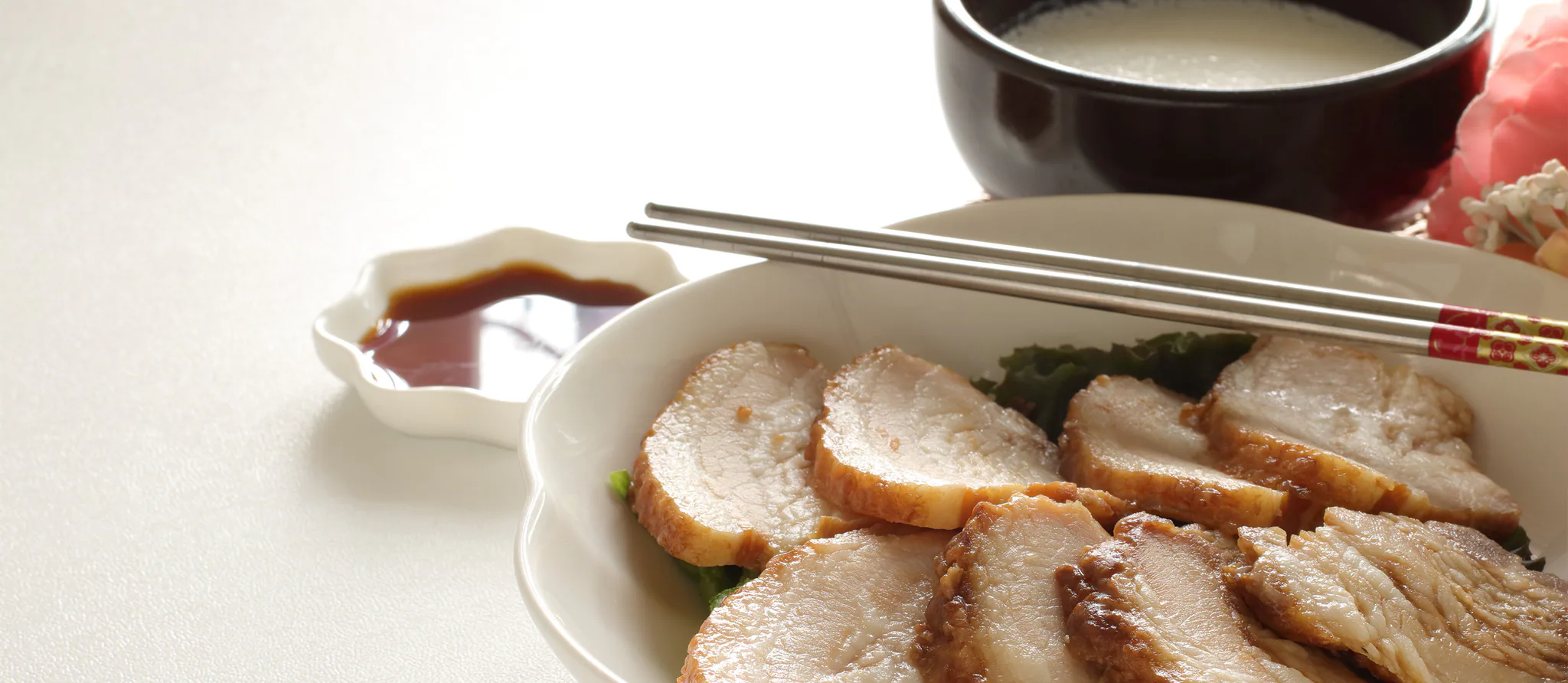
Pork belly simmered with aromatics until tender, sliced thinly and wrapped at the table in salted cabbage or lettuce leaves with spicy radish salad, salted shrimp and ssamjang. A sharing feast born of the autumn kimchi-making season.
Bossam (Korean boiled pork wraps) is a Korean main course from South Korea, ready in about 3 hours 40 minutes and made with pork belly, daikon and salted fermented shrimp (saeujeot). It serves 4 and is rated intermediate to cook.
- Prep
- 30 min
- Cook
- 1 h 10 min
- Rest
- 2 h
- Total
- 3 h 40 min
- Serves
- 4
- Level
- Intermediate
- Calories
- 1449
Main ingredients
Ingredients
For the pork
For the radish salad
To serve
For the ssamjang
Method
To serve
5 minStep 1
Separate the cabbage leaves, sprinkle the thick white parts with 3 tbsp salt and leave for 2 hours, turning once, until floppy. Rinse well and squeeze dry.
Pork
1 hStep 2
Bring the water to the boil with the miso (opens in a new tab), onion (opens in a new tab), garlic (opens in a new tab), ginger, spring onions (opens in a new tab), coffee, peppercorns (opens in a new tab) and bay leaves (opens in a new tab). Add the pork belly (opens in a new tab), return to the boil, then cover and simmer gently for 50–60 minutes until a chopstick slides through easily.
- 60 min
- medium-low heat
- Stockpot / large pot (opens in a new tab)
Food safety: Cook fresh pork and pork sausages until the centre reaches 71 °C and no pink remains.
Radish salad
20 minStep 3
Meanwhile, toss the radish with the salt and sugar (opens in a new tab) and leave for 15 minutes. Squeeze out the liquid, then mix with the gochugaru (opens in a new tab), fish sauce (opens in a new tab), garlic (opens in a new tab) and rice vinegar (opens in a new tab) until evenly red.
Ssamjang
12 minStep 4
Stir the miso (opens in a new tab), gochujang (opens in a new tab) and sesame oil (opens in a new tab) together for a quick ssamjang. Put the salted shrimp (opens in a new tab) in a small dish.
- 3 min
Step 5
Lift out the pork, rest it for 5 minutes, then slice across the grain into 5 mm slices. Arrange on a platter with the cabbage, lettuce (opens in a new tab), radish salad, chillies and sauces.
Step 6
To eat, lay a slice of pork on a cabbage or lettuce (opens in a new tab) leaf, add radish salad, a dab of ssamjang or a little salted shrimp (opens in a new tab) and a chilli slice, wrap and eat in one bite.
- 1 min
At a glance
1 · To serve in a bowl
 Napa cabbage
 Salt
 Lettuce
 Salted fermented shrimp (saeujeot)
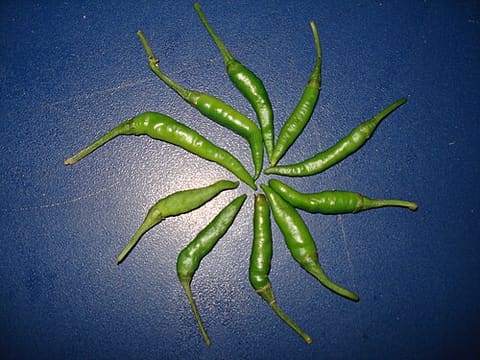 Green chilli
then bring
2 · Pork in a pan
 Pork belly
 Miso
 Onion
 Garlic
 Fresh ginger
- Spring onion
 Instant coffee
 Black peppercorns
 Bay leaves
then toss
3 · Radish salad in a bowl
 Daikon
- Salt
 Sugar
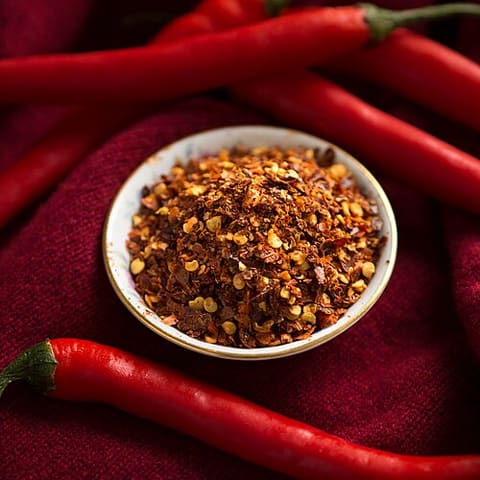 Gochugaru (Korean chilli flakes)
 Fish sauce
- Garlic
 Rice vinegar
then stir
4 · Ssamjang in a bowl
- Miso
 Gochujang
 Toasted sesame oil
About this dish
- Origin
- South Korea · Well documentedAssociated with gimjang, the communal autumn kimchi-making, when boiled pork was served with fresh cabbage and the newly mixed kimchi filling; today it is a popular takeaway and restaurant dish.More food from South Korea
South Korea - Dish
- Dinner · Main courses · Wraps & rolls
- Cooking method
- Boiled, Simmered, Raw
- Taste
- savoury, spicy (chilli heat), umami, fresh
- Diet
- Dairy-free · No nut ingredients · High-proteinWorked out from the ingredients. How labels work
All labels
Non-vegetarian · Dairy-free · Egg-free · No nut ingredients · Alcohol-free · Beef-free · High-protein - Good for
- Festive & celebration
- Cook more with
- Pork belly · Daikon · Salted fermented shrimp (saeujeot) · Miso · Onion · Garlic
Allergens
- Contains: Fishfrom fish sauce
- Contains: Crustaceansfrom fish sauce, salted fermented shrimp (saeujeot)
- Contains: Wheatfrom gochujang
- Contains: Glutenfrom miso, gochujang
- Contains: Soyfrom miso, gochujang
- Contains: Sesamefrom toasted sesame oil
Based on typical versions of these ingredients and not verified allergen-free. Brands differ and cross-contact happens, so always check labels. For severe allergies, follow your clinician’s advice.
Nutrition
1449 kcal per serving
Estimated1 serving ≈ 1208 g · recipe makes 4
Where the energy comes from
- Protein 8%
- Carbohydrate 8%
- Fat 84%
| Nutrient | Per serving | Per 100 g* |
|---|---|---|
| Energy | 1449 kcal | 120 kcal |
| Protein | 30.5 g | 2.5 g |
| Carbohydrate | 27.3 g | 2.3 g |
| Net carbohydrate | 21 g | 1.7 g |
| Sugars | 11.1 g | 0.9 g |
| Added sugars | — | — |
| Fibre | 6.3 g | 0.5 g |
| Fat | 136 g | 11.3 g |
| Saturated fat | 48.9 g | 4.1 g |
| Trans fat | — | — |
| Cholesterol | 180 mg | 15 mg |
| Sodium | 7743 mg | 641 mg |
| Salt equivalent | 19.4 g | 1.6 g |
Vitamins & minerals per serving
- Potassium
- 1262 mg
- Calcium
- 253 mg
- Iron
- 3.6 mg
- Magnesium
- 103 mg
- Vitamin A (RAE)
- 96 µg
- Vitamin C
- 70 mg
- Vitamin D
- —
- Vitamin B12
- 2.2 µg
- Folate (DFE)
- 148 µg
How these numbers were made
- Calculated from USDA FoodData Central (SR Legacy) per-100 g values and the listed quantities.
- *Per 100 g of combined raw ingredients; the cooked dish may weigh more or less.
- Optional ingredients are not included: instant coffee, lettuce.
- Gochugaru (Korean chilli flakes): Ground red (cayenne) pepper used as a stand-in: no gochugaru entry in FDC SR Legacy; both are dried, ground Capsicum annuum used in spoon amounts.
- Rice vinegar: Distilled vinegar (FDC 172237) used as a stand-in for unseasoned rice vinegar.
- Salted fermented shrimp (saeujeot): Fish sauce used as a stand-in for a very salty fermented seafood condiment; protein is understated, sodium is similar.
- Gochujang: Miso (FDC 172442) as a stand-in fermented soy paste; gochujang is sweeter (rice syrup) and hotter, so carbohydrate is understated.
- “—” means the value isn’t known for enough of the ingredients; it is never zero by default.
- Values are estimates for guidance, not for medical dosing. U.S. Department of Agriculture, Agricultural Research Service. FoodData Central, 2019. fdc.nal.usda.gov.
Good to know
Tips
- Slice the pork while still warm for the cleanest slices.
- The strained cooking broth makes a good base for doenjang soup.
Common mistakes
- Boiling the pork hard, which tightens the meat; keep it at a gentle simmer.
Serve with
- Serve with baechu kimchi, fresh oysters (a gimjang-season favourite), steamed rice and soju or makgeolli.
Food safety
- Cook fresh pork and pork sausages until the centre reaches 71 °C and no pink remains.
Storage
- Sliced pork keeps 3 days refrigerated; radish salad keeps 4 days.
Reheating
- Steam the sliced pork for 3–4 minutes until hot.
Variations
- Gul bossam: Served with fresh raw oysters tucked into the wraps, in the winter oyster season.
- Bo ssam (slow-roasted) (United States): A modern restaurant version of a whole pork shoulder cured in sugar and salt and slow-roasted.
Original editorial recipe · FriendsPantry editorial · source: TasteAtlas (dish facts) · Not yet independently reviewed · Added
Sauces, chutneys & dips for this dish
Recipe DNA
How this dish is built
Built from the recipe’s own sections. Each band’s width is its share of the dish by weight. Choose a component to see what it does.
What the dish is built around
For the pork
- Pork belly, skin-on or skinless, in one or two thick slabs1 kg · 1000 g
- Water2.5 l · 2500 g
- Miso2 tbsp · 34 g
- Onion, halved1 piece · 110 g
- Garlic, whole8 clove · 32 g
- Fresh ginger, sliced30 g
- Spring onion, whites and greens, halved3 piece · 45 g
- Instant coffee (optional)1 tbsp · 3 g
- Black peppercorns1 tsp · 3 g
- Bay leaves2 leaf · 0.4 g
Reviews & corrections
Reviews come from signed-in cooks and appear after a moderator checks them. We never show made-up ratings.
You might also like
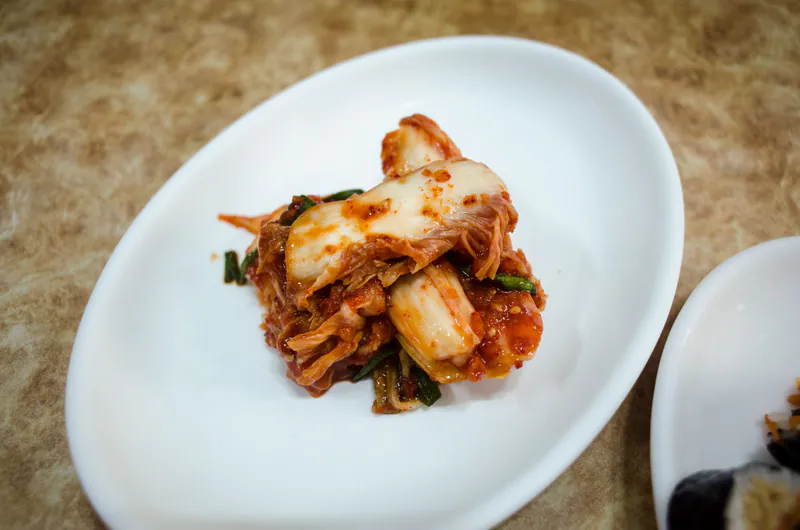
Baechu kimchi (napa cabbage kimchi)
 Korean · 7 h 5 min · 44 kcal
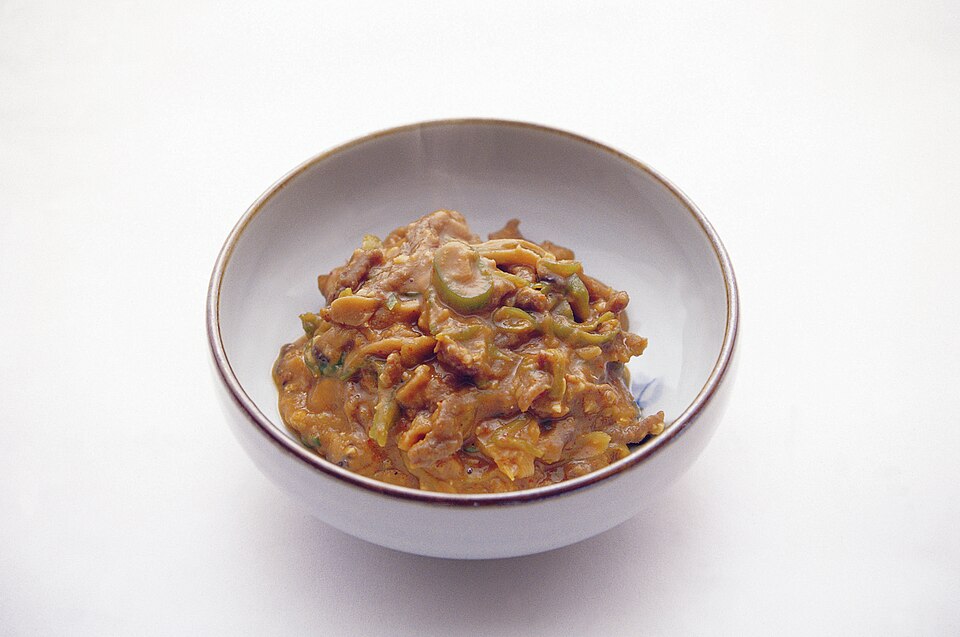
Ssamjang
Korean · 5 min · 51 kcal · Vegan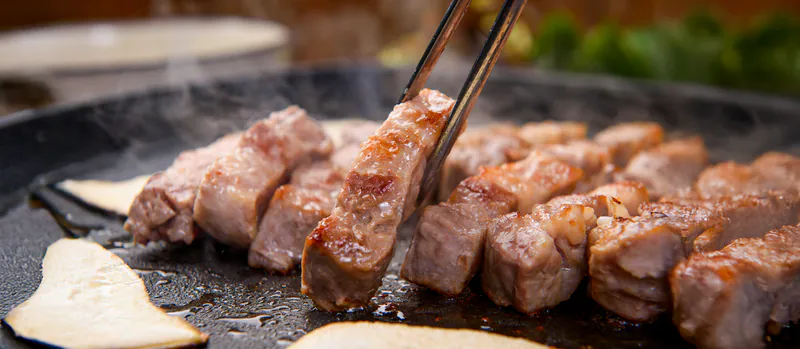
Samgyeopsal (Korean grilled pork belly)
Korean · 45 min · 1276 kcal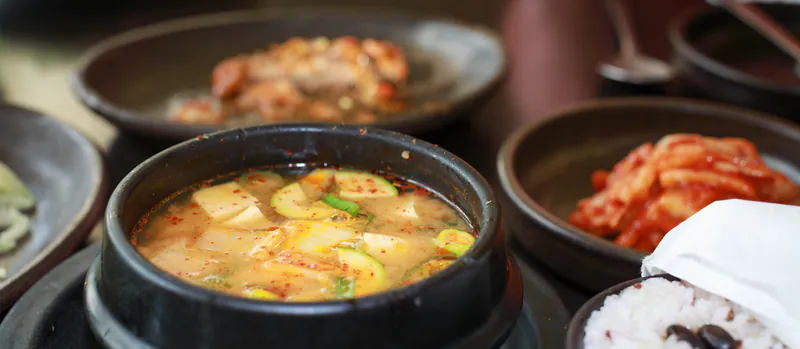
Doenjang jjigae
Korean · 30 min · 210 kcal