
Sauces and finishing · beginner
Deglazing
Adding liquid to a hot pan to dissolve the browned bits stuck to the base.
What it is
After searing or frying, browned residues (fond) stick to the pan. Pouring in wine, stock, water, vinegar or even tomato and scraping loosens them into the liquid, which becomes the base of a sauce or gravy.
Why cooks use it: Fond is concentrated Maillard flavour; dissolving it puts that flavour into the dish instead of leaving it to burn or be washed away.
The science
Most browned residues are water-soluble, so hot liquid dissolves them quickly. Alcohol and acids also help dissolve some flavour compounds.
Step by step
Remove the seared food and pour off excess fat, leaving a thin film.
Return the pan to medium heat; add aromatics if using.
Pour in a splash of liquid (it will steam and sizzle).
Scrape the base with a wooden spoon until all the browned bits dissolve.
Reduce, then build the sauce with stock, cream or butter.
Heat and timing
Time: 30 seconds to 2 minutes of scraping, then reduction.
How you know it’s right
- Pan base clean and the liquid brown
- Smell of alcohol fades when using wine
Common mistakes
- Deglazing burnt (black) residue, which makes the sauce bitter
- Using a non-stick pan where little fond forms
Troubleshooting
- Bitter sauce
- The fond was burnt; start the sauce fresh in a clean pan.
- Thin sauce
- Reduce further or mount with cold butter.
Restaurant DNA
How professionals do it
Line cooks deglaze every sauté pan used for proteins to make a pan sauce to order, usually finishing it with a knob of cold butter.
At home
Use stainless steel or cast iron, not non-stick, when you want fond.
General professional practice — not any particular restaurant’s recipe.
Food safety
- Take the pan off the flame before adding wine or spirits, to avoid flare-ups.
Practise it
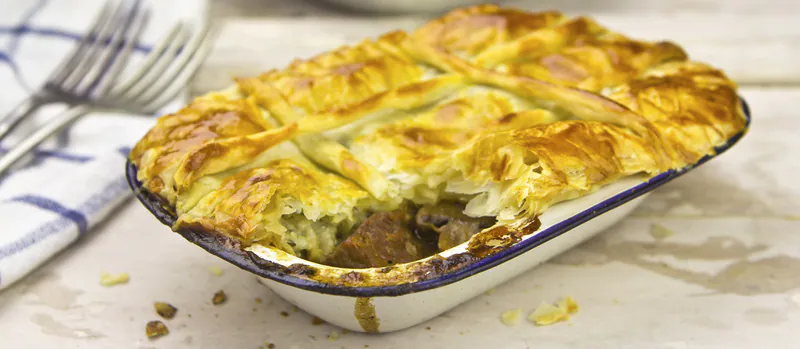
Beef and Guinness pie
 Irish · 4 h 55 min · 752 kcal
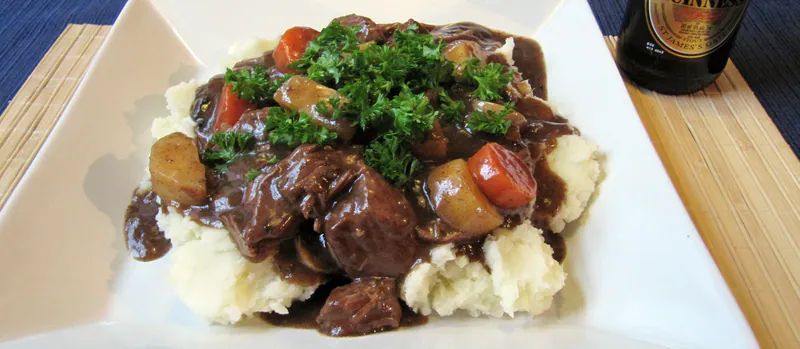
Beef and Guinness stew
Irish · 3 h 25 min · 549 kcal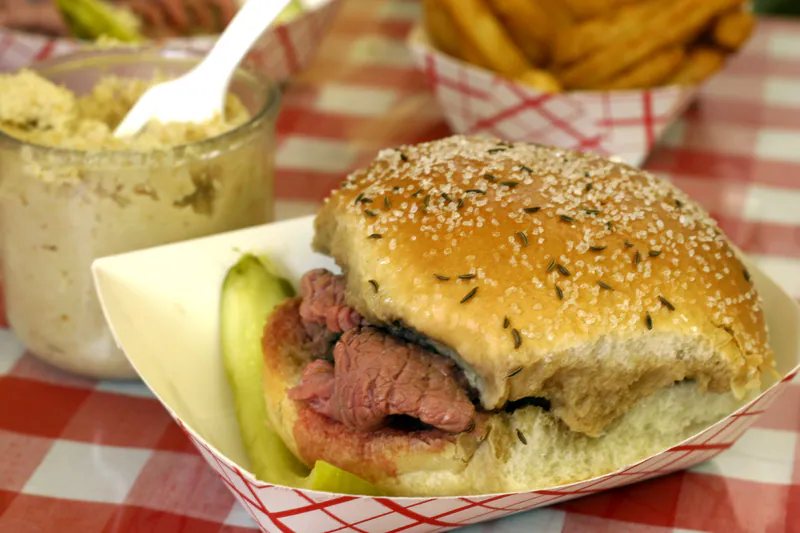
Beef on weck (Buffalo roast beef sandwich)
 American · 1 h 55 min · 480 kcal
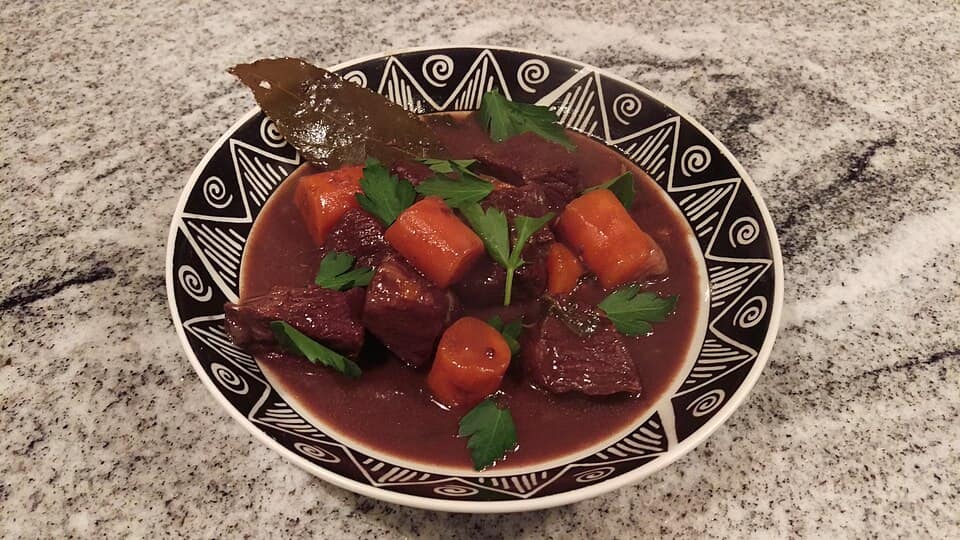
Boeuf bourguignon
 French · 4 h · 625 kcal
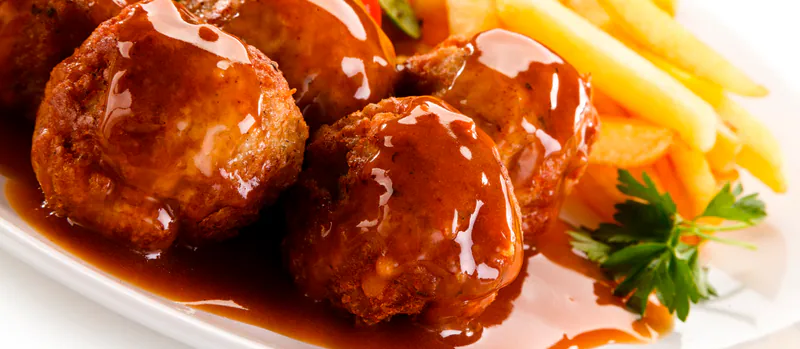
Boulets à la liégeoise (Liège meatballs in sweet-sour gravy)
 Belgian · 1 h 35 min · 895 kcal
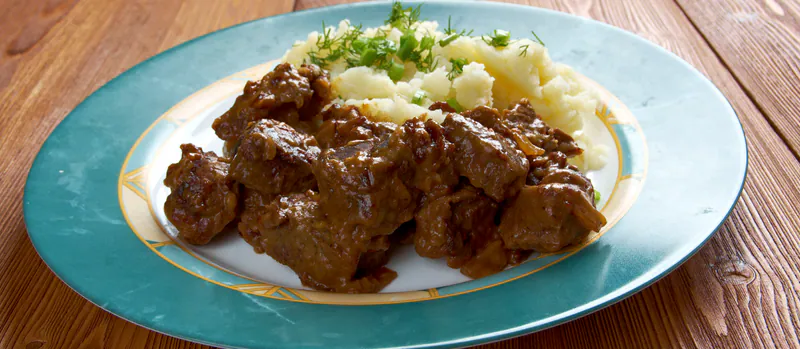
Carbonade flamande
Belgian · 3 h 20 min · 422 kcal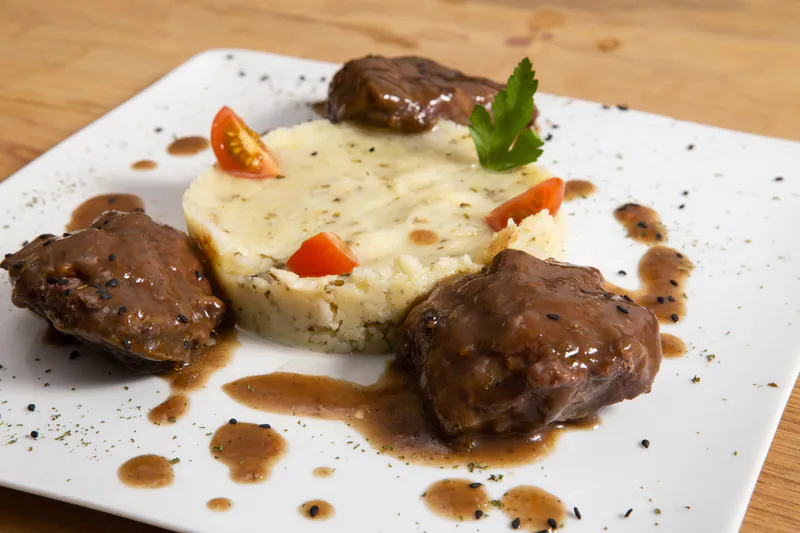
Carrillada (braised pork cheeks in red wine)
 Spanish · 3 h 10 min · 1080 kcal
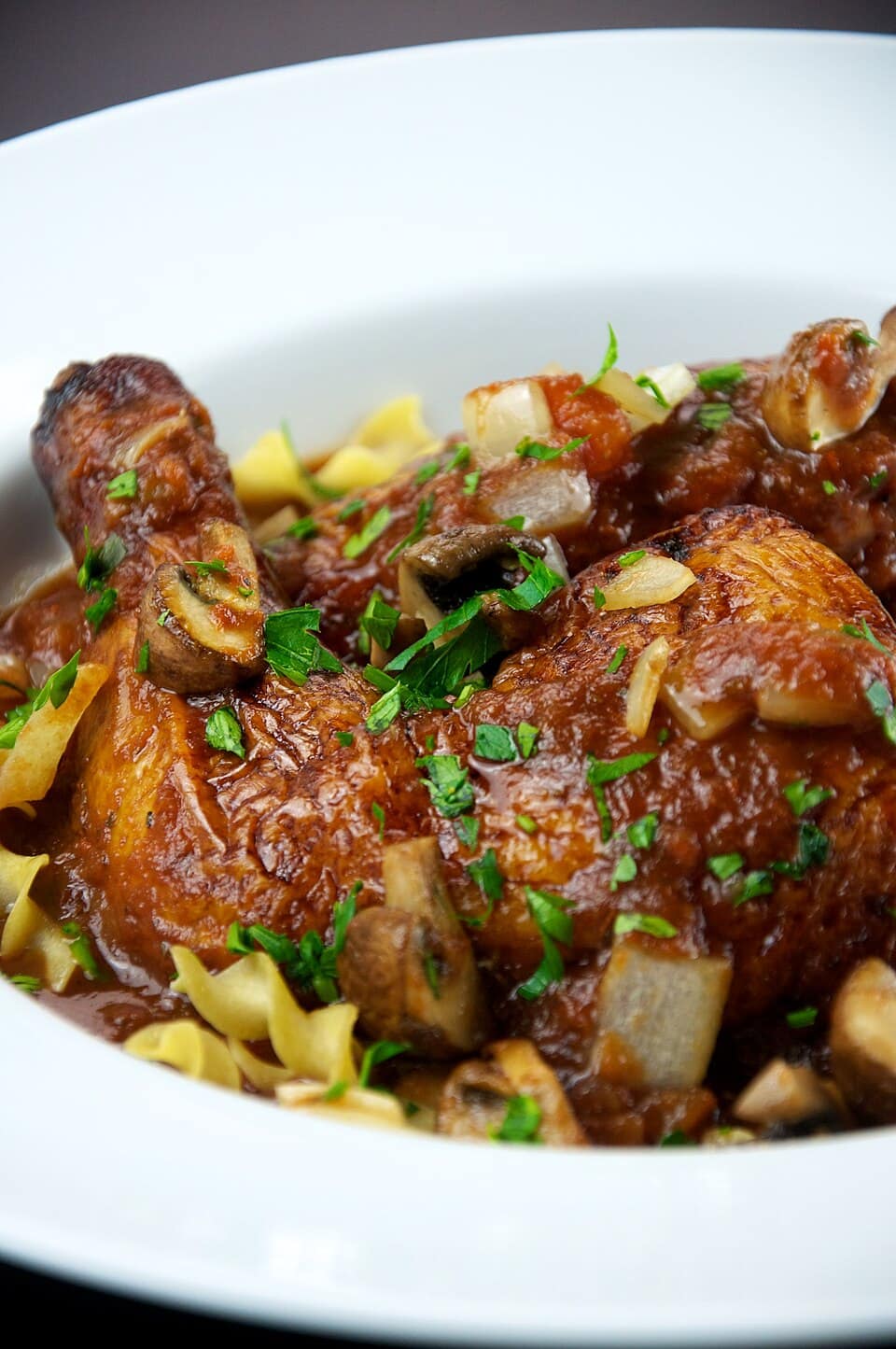
Chicken cacciatore
 Italian · 1 h 15 min · 574 kcal
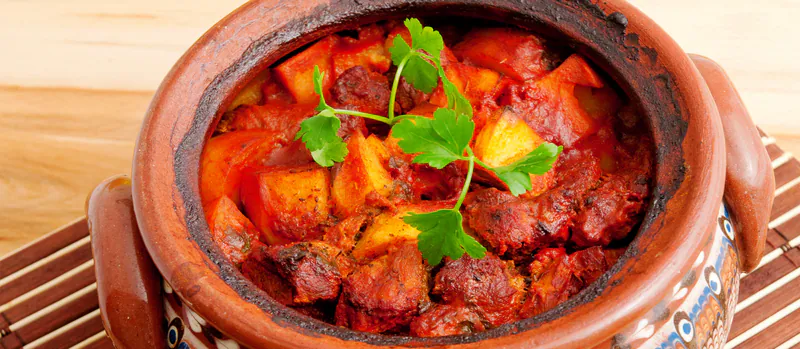
Chomlek (Macedonian veal and baby onion stew)
 Macedonian · 3 h 25 min · 437 kcal
22 more
- Chuletas de puerco (Cuban sour-orange pork chops) · Cuban
- Coq au vin jaune aux morilles (Jura chicken with yellow wine and morels) · French
- Foie de veau à la lyonnaise (calf's liver with onions) · French
- French onion soup · French
- Fricasé de pollo (Cuban chicken fricassee) · Cuban
- Gänsebraten (German roast goose) · German
- Giouvetsi (Greek baked orzo with beef) · Greek
- Italian beef (Chicago sandwich) · American
- Jägerschnitzel · German
- Kalops (Swedish allspice beef stew) · Swedish
- Kangaroo steak with red wine pan sauce · Australian
- Miso ramen (Sapporo-style) · Japanese
- Pollo al ajillo (Spanish garlic chicken) · Spanish
- Pollo arvejado (Chilean chicken and pea stew) · Chilean
- Pork saltimbocca · Italian
- Poulet rôti (French roast chicken) · French
- Purica s mlincima (Turkey with mlinci) · Croatian
- Salade lyonnaise · French
- Schweinebraten (Bavarian roast pork) · German
- Steak and ale pie · British
- Südtiroler Gulasch (South Tyrolean goulash) · Italian
- Zwiebelrostbraten (steak with crispy onions) · German