
 Greek · Mediterranean · Casseroles & bakes
Giouvetsi (Greek baked orzo with beef)
Non-vegetarian
Γιουβέτσι · giouvétsi
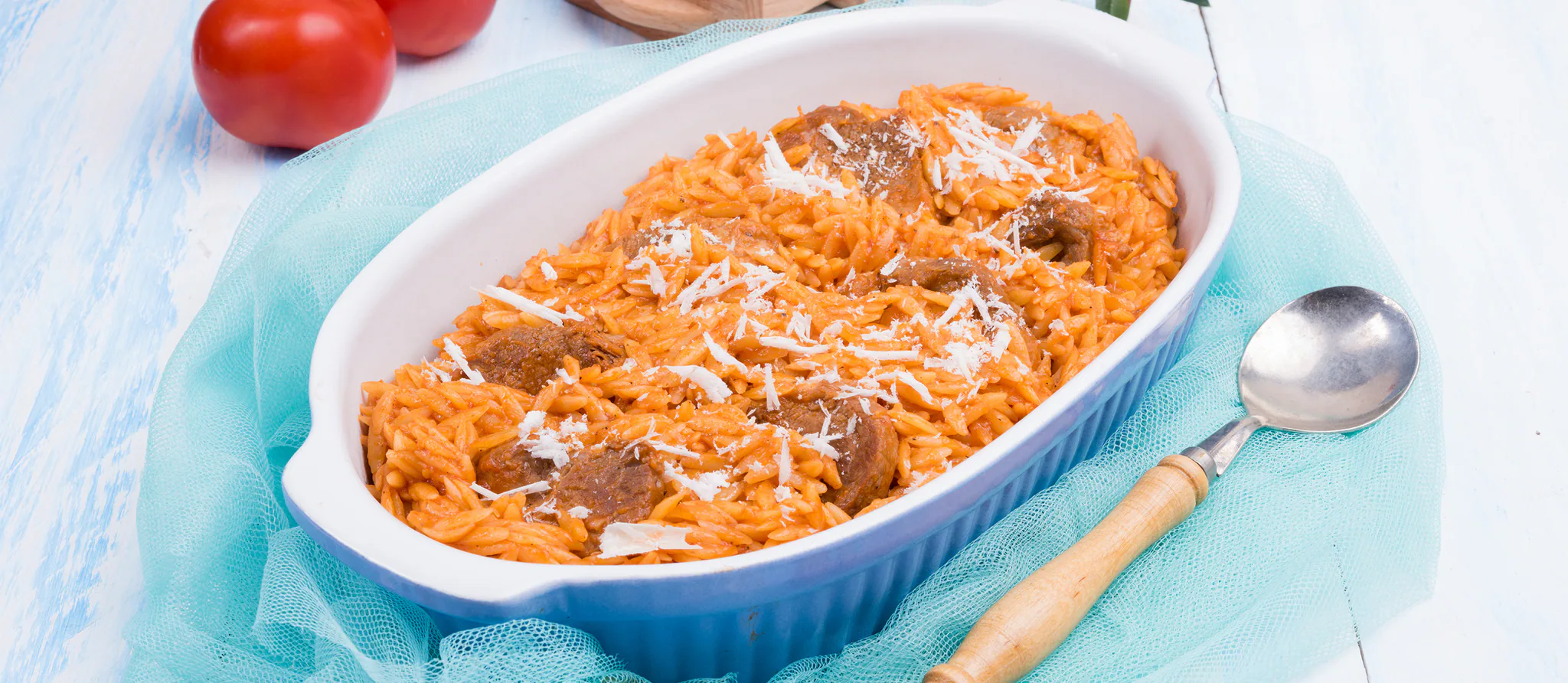
Chunks of beef or veal braised in a tomato and red wine sauce scented with cinnamon, allspice and cloves, then baked with orzo until the pasta drinks up the sauce. Finished with grated kefalotyri; a classic Greek Sunday dish named after the clay pot it is cooked in.
Giouvetsi (Greek baked orzo with beef) is a Greek bake from Greece, ready in about 2 hours 45 minutes and made with veal cutlet, canned tomatoes and dried pasta. It serves 6 and is rated easy to cook.
- Prep
- 20 min
- Cook
- 2 h 15 min
- Rest
- 10 min
- Total
- 2 h 45 min
- Serves
- 6
- Level
- Easy
- Calories
- 662
Main ingredients
Ingredients
For the braise
For baking
To finish
Method
Braise
2 h 1 minStep 1
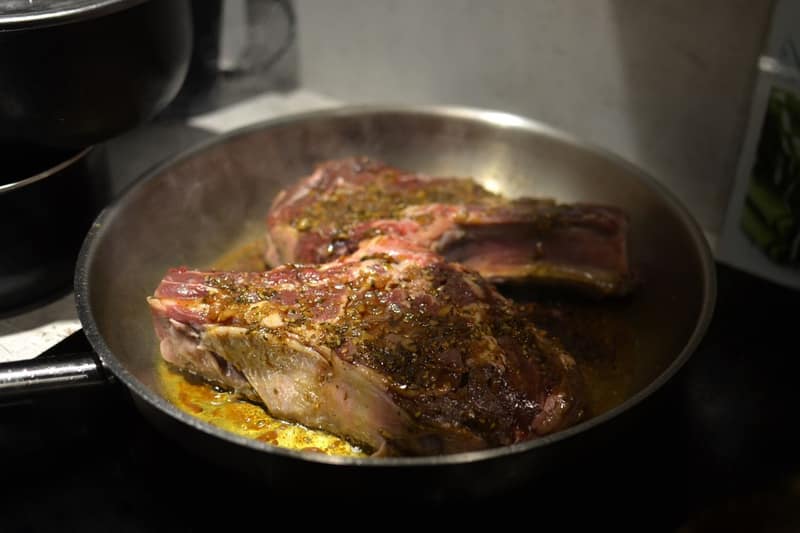
Pat the meat dry and season with half the salt. Heat 3 tbsp oil in a heavy casserole and brown the meat well on all sides in batches. Set aside.
- 15 min
- medium-high heat
- Dutch oven / casserole pot (opens in a new tab)
How it looks · Photo: Skylar Kang on Pexels Step 2
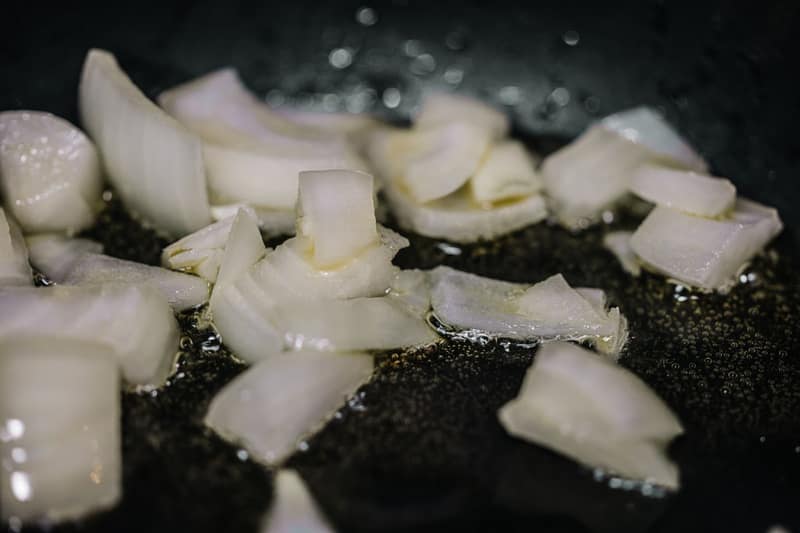
Lower the heat, add the remaining oil and the onions (opens in a new tab) and cook until soft, 8 minutes. Add the garlic (opens in a new tab) and tomato paste (opens in a new tab) and stir for a minute, then pour in the wine and let it bubble for 2 minutes, scraping up the browned bits.
- 11 min
- medium heat
How it looks · Photo: Magda Ehlers on Pexels Step 3
Return the meat with the tomatoes, cinnamon, allspice (opens in a new tab), cloves (opens in a new tab), bay leaves (opens in a new tab), sugar (opens in a new tab), hot water, remaining salt and the pepper (opens in a new tab). Cover and simmer gently until the meat is very tender, about 1½ hours.
- 90 min
- low heat
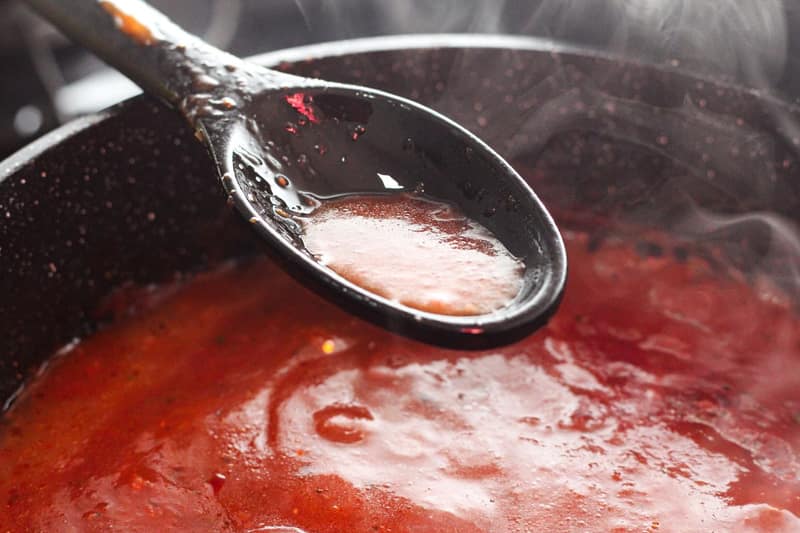
How it looks · Photo: Nanda Mends on Pexels Step 4
Heat the oven (opens in a new tab) to 200 °C. Transfer the meat and its sauce to a large baking dish (opens in a new tab) or clay giouvetsi pot (or keep it in the casserole if it is ovenproof). Fish out the whole spices if you like.
- 5 min
- 200°C
- Baking dish (opens in a new tab)
Baking
30 minStep 5
Stir in the orzo and the boiling stock so the pasta (opens in a new tab) is submerged. Bake uncovered for 25–30 minutes, stirring once or twice, until the orzo is tender and has absorbed most of the liquid; add a splash more hot water if it dries out before the pasta is cooked.
- 30 min
- 200°C
- Oven (opens in a new tab)
To finish
1 minStep 6
Scatter over the grated kefalotyri and rest for 10 minutes before serving; the orzo keeps absorbing sauce as it sits.
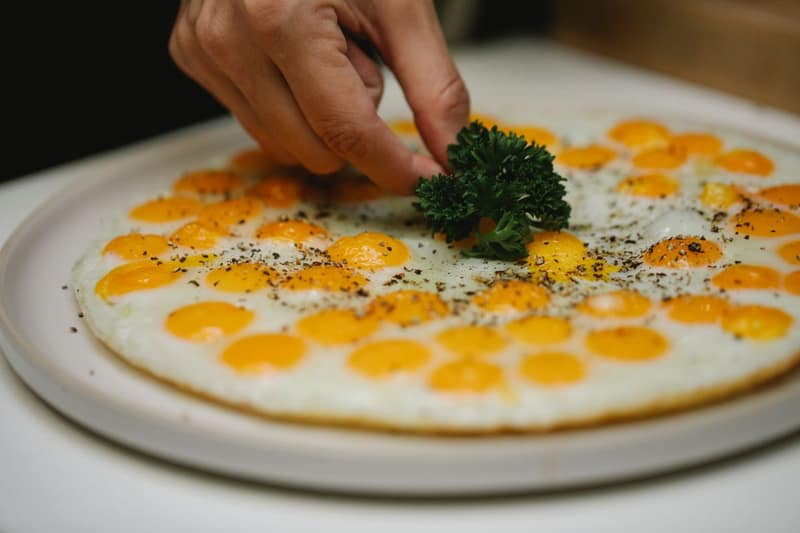
How it looks · Photo: Klaus Nielsen on Pexels
At a glance
1 · Braise in a pan
 Veal cutlet
 Olive oil
 Onion
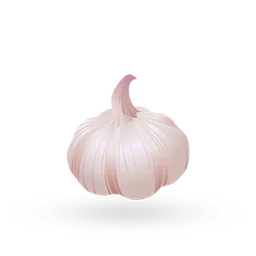 Garlic
 Tomato paste
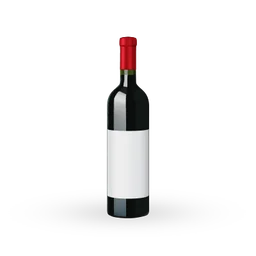 Dry red wine
 Canned tomatoes
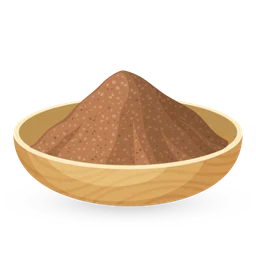 Cinnamon stick
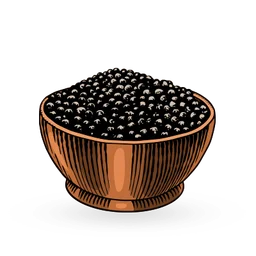 Allspice
 Cloves
 Bay leaves
 Sugar
 Salt
 Black pepper
then stir
2 · Baking in a pot
 Dried pasta
 Beef stock
then scatter
3 · To finish in a bowl
 Kefalotyri cheese
About this dish
- Origin
- Greece · Well documentedThe name comes from the Turkish güveç, the glazed clay pot used for oven dishes. Veal is traditional; lamb, beef and chicken versions are all common.Also popular in CyprusMore food from Greece
Greece - Dish
- Lunch · Dinner · Casseroles & bakes · Main courses · Pasta
- Cooking method
- Braised, Oven-baked
- Taste
- rich, aromatic / warmly spiced, savoury
- Diet
- No nut ingredients · High-proteinWorked out from the ingredients. How labels work
All labels
Non-vegetarian · Egg-free · No nut ingredients · Pork-free · High-protein - Good for
- One-pot · Festive & celebration · Uses leftovers
- Cook more with
- Veal cutlet · Canned tomatoes · Dried pasta · Onion · Garlic · Tomato paste
Allergens
- Contains: Milkfrom kefalotyri cheese
- May contain: Eggsfrom dried pasta
- Contains: Wheatfrom dried pasta
- Contains: Glutenfrom dried pasta
- May contain: Celeryfrom beef stock
- Contains: Sulphitesfrom dry red wine
Based on typical versions of these ingredients and not verified allergen-free. Brands differ and cross-contact happens, so always check labels. For severe allergies, follow your clinician’s advice.
Nutrition
662 kcal per serving
Estimated1 serving ≈ 638 g · recipe makes 6
Where the energy comes from
- Protein 34%
- Carbohydrate 39%
- Fat 28%
| Nutrient | Per serving | Per 100 g* |
|---|---|---|
| Energy | 662 kcal | 104 kcal |
| Protein | 54 g | 8.5 g |
| Carbohydrate | 61.8 g | 9.7 g |
| Net carbohydrate | 57.1 g | 8.9 g |
| Sugars | 7.5 g | 1.2 g |
| Added sugars | 0.7 g | 0.1 g |
| Fibre | 4.7 g | 0.7 g |
| Fat | 19.7 g | 3.1 g |
| Saturated fat | 5.5 g | 0.9 g |
| Trans fat | — | — |
| Cholesterol | 107 mg | 17 mg |
| Sodium | 1303 mg | 204 mg |
| Salt equivalent | 3.3 g | 0.5 g |
Vitamins & minerals per serving
- Potassium
- 1186 mg
- Calcium
- 230 mg
- Iron
- 5 mg
- Magnesium
- 121 mg
- Vitamin A (RAE)
- 31 µg
- Vitamin C
- 13 mg
- Vitamin D
- 1.1 µg
- Vitamin B12
- 3.6 µg
- Folate (DFE)
- 285 µg
How these numbers were made
- Calculated from USDA FoodData Central (SR Legacy) per-100 g values and the listed quantities.
- *Per 100 g of combined raw ingredients; the cooked dish may weigh more or less.
- Kefalotyri cheese: Pecorino Romano used as a stand-in; kefalotyri is a similar hard, salty sheep's- and goat's-milk cheese.
- “—” means the value isn’t known for enough of the ingredients; it is never zero by default.
- Values are estimates for guidance, not for medical dosing. U.S. Department of Agriculture, Agricultural Research Service. FoodData Central, 2019. fdc.nal.usda.gov.
Good to know
Tips
- Take the dish out while it is still a little saucy; it firms up as it rests.
Common mistakes
- Adding the orzo to a cold sauce, which makes it gummy — the stock must be boiling.
Storage
- Keeps 3 days in the fridge.
Reheating
- Reheat covered in a 180 °C oven with a splash of water until piping hot.
Variations
- Lamb giouvetsi: Lamb shoulder or shanks replace the veal, often for Easter or Sunday lunch.
- Chicken giouvetsi: Chicken thighs braised for just 30 minutes before the orzo goes in.
- Giouvetsi with hilopites: Small square egg noodles replace the orzo.
Original editorial recipe · FriendsPantry editorial · source: TasteAtlas (dish facts) · Not yet independently reviewed · Added
Recipe DNA
How this dish is built
Built from the recipe’s own sections. Each band’s width is its share of the dish by weight. Choose a component to see what it does.
Added at the end for aroma, freshness and richness
To finish
- Kefalotyri cheese, grated80 g
Reviews & corrections
Reviews come from signed-in cooks and appear after a moderator checks them. We never show made-up ratings.
You might also like
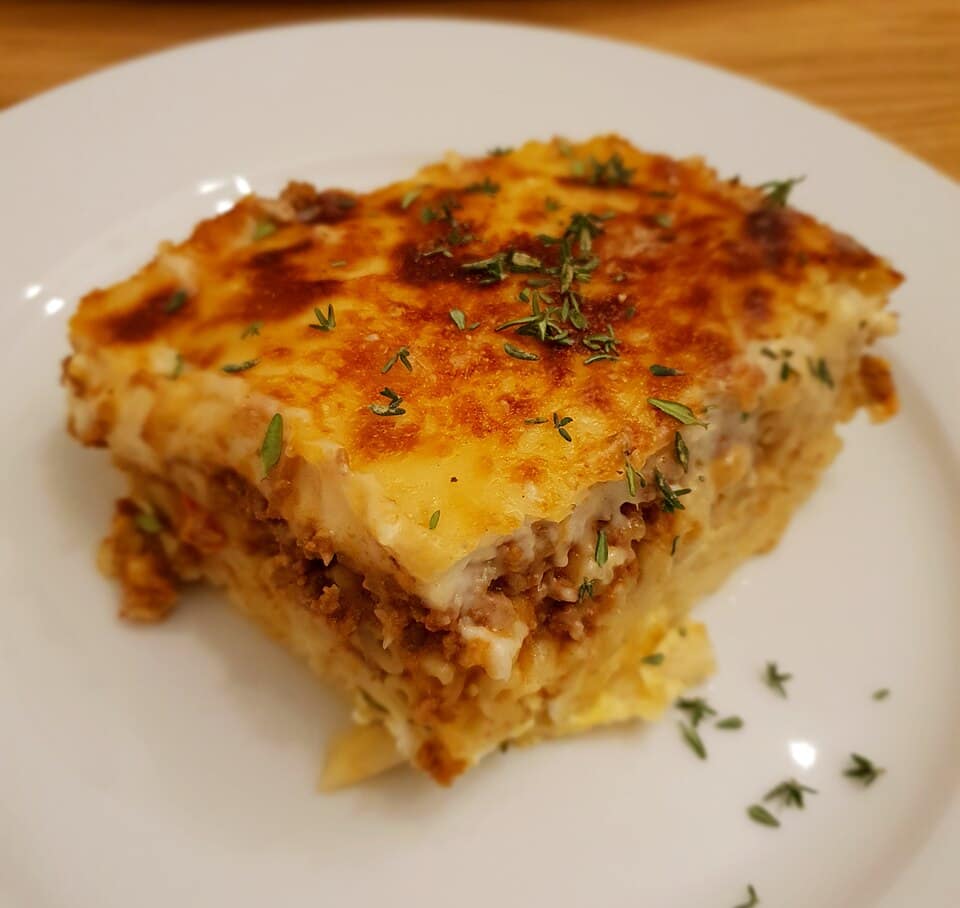
Pastitsio
Greek · 2 h 30 min · 689 kcal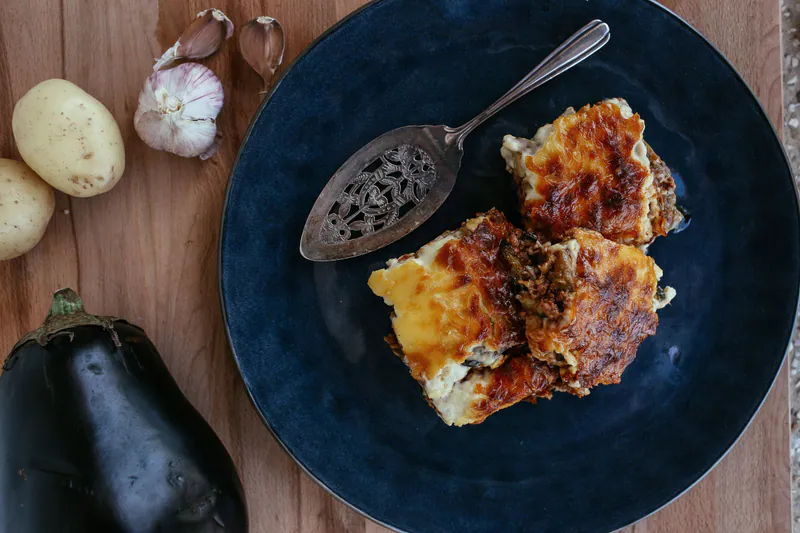
Moussaka
Greek · 2 h 40 min · 552 kcal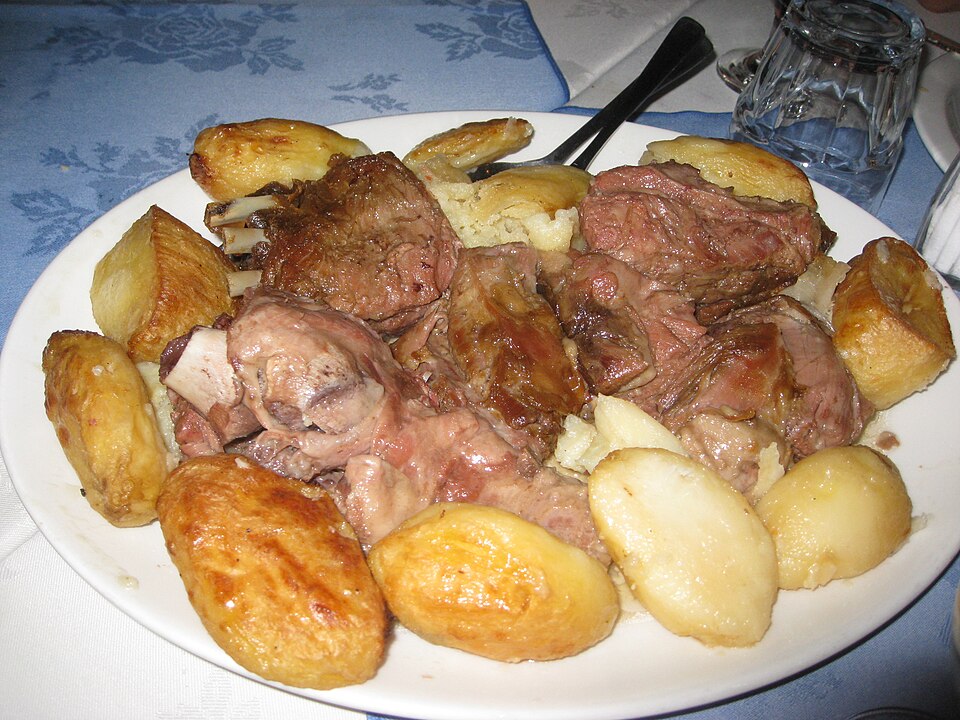
Kleftiko
 Cypriot · 4 h · 610 kcal
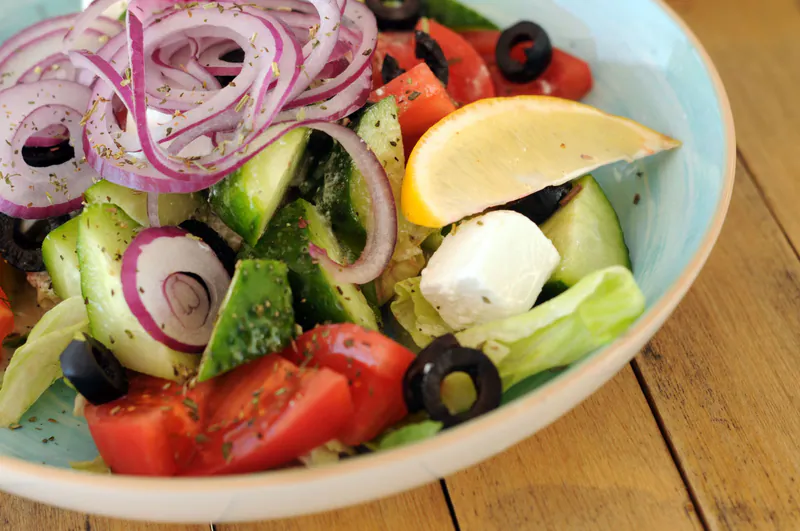
Greek village salad
Greek · 15 min · 314 kcal · Vegetarian