
Cantonese sweet and sour sauce
Vegetarian
糖醋汁 · tángcù zhī
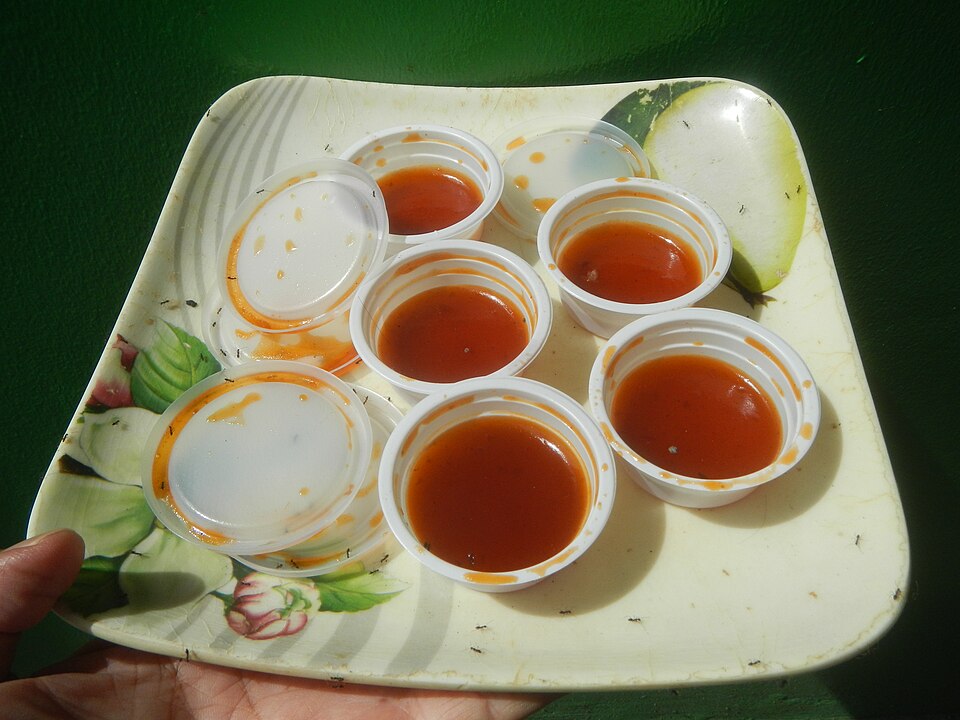
Rice vinegar, sugar and tomato ketchup, seasoned with soy sauce and thickened with cornflour into a glossy, bright red sauce. Toss it with crisp fried pork or chicken, or serve it as a dip.
Cantonese sweet and sour sauce is a Cantonese sauce from China, ready in about 8 minutes and made with rice vinegar, sugar and tomato ketchup. It serves 6 and is rated beginner to cook.
- Prep
- 3 min
- Cook
- 5 min
- Total
- 8 min
- Serves
- 6
- Level
- Beginner
- Calories
- 65
Main ingredients
Method
Step 1
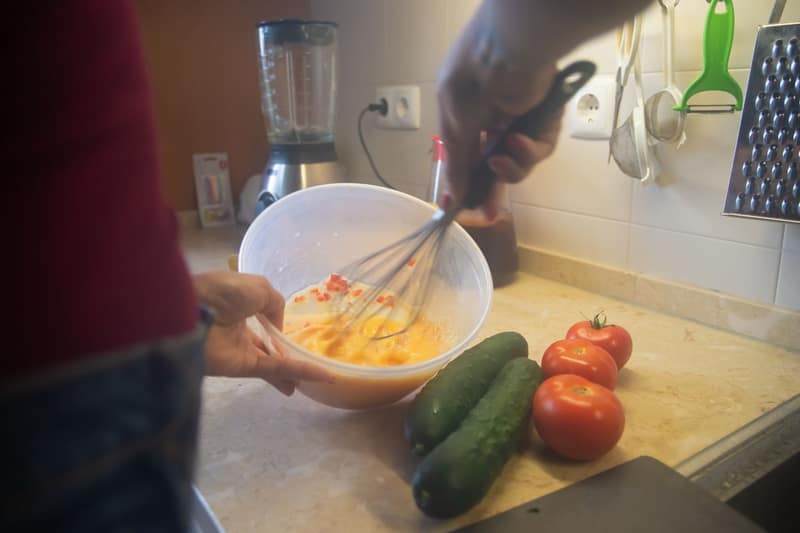
Whisk (opens in a new tab) the vinegar, sugar (opens in a new tab), ketchup (opens in a new tab), soy sauce (opens in a new tab), salt and 120 ml water in a small saucepan (opens in a new tab). Stir the cornflour (opens in a new tab) into the remaining 30 ml cold water until no lumps remain.
How it looks · Photo: Kampus Production on Pexels Step 2
Bring the sauce to the boil over medium heat, stirring until the sugar (opens in a new tab) dissolves, about 2 minutes. Taste and adjust: more sugar if too sharp, more vinegar if too sweet.
- 2 min
- medium heat
- Whisk (opens in a new tab)
Step 3
Stir the slurry again and pour it in while whisking. Simmer for 1 minute until the sauce turns from cloudy to clear, glossy and thick enough to coat a spoon. Use at once.
- 1 min
- medium heat
- Whisk (opens in a new tab)
At a glance
 Rice vinegar
 Sugar
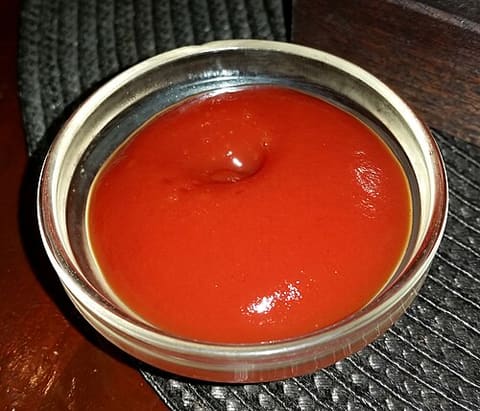 Tomato ketchup
 Soy sauce
 Salt
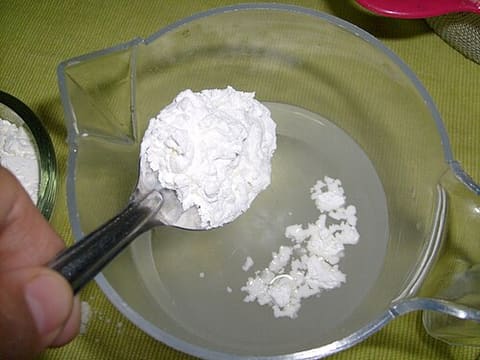 Cornstarch
About this dish
- Origin
- Guangdong, China · Commonly attributedTomato ketchup entered Cantonese cooking in the 20th century, giving gu lo yuk (sweet and sour pork) its colour. Older Chinese sweet-and-sour sauces (tangcu) use black vinegar and sugar with no tomato.Also popular in Hong Kong, United Kingdom, United States, PhilippinesMore food from China
China - Dish
- Lunch · Dinner · Sauces · Dips & spreads
- Cooking method
- Simmered
- Taste
- sweet & sour, tangy, fruity
- Diet
- Vegan · Dairy-free · No nut ingredients · Low-carbWorked out from the ingredients. How labels work
All labels
Vegan · Plant-based · Vegetarian (lacto-ovo) · Eggetarian · Lacto-vegetarian · Ovo-vegetarian · Pescatarian · Flexitarian-friendly · Dairy-free · Egg-free · No nut ingredients · Alcohol-free · Pork-free · Beef-free · Low-carb · Low-fat · DASH-style - Good for
- Everyday · Budget-friendly · Child-friendly
- Cook more with
- Rice vinegar · Sugar · Tomato ketchup · Soy sauce · Cornstarch
Allergens
- Contains: Wheatfrom soy sauce
- Contains: Glutenfrom soy sauce
- Contains: Soyfrom soy sauce
- May contain: Mustardfrom tomato ketchup
- May contain: Celeryfrom tomato ketchup
Based on typical versions of these ingredients and not verified allergen-free. Brands differ and cross-contact happens, so always check labels. For severe allergies, follow your clinician’s advice.
Nutrition
65 kcal per serving
Estimated1 serving ≈ 55 g · recipe makes 6
Where the energy comes from
- Protein 2%
- Carbohydrate 98%
- Fat 0%
| Nutrient | Per serving | Per 100 g |
|---|---|---|
| Energy | 65 kcal | 118 kcal |
| Protein | 0.3 g | 0.5 g |
| Carbohydrate | 16 g | 29.1 g |
| Net carbohydrate | 16 g | 29 g |
| Sugars | 13.8 g | 25.1 g |
| Added sugars | — | — |
| Fibre | 0.1 g | 0.1 g |
| Fat | 0 g | 0 g |
| Saturated fat | 0 g | 0 g |
| Trans fat | — | — |
| Cholesterol | 0 mg | 0 mg |
| Sodium | 262 mg | 476 mg |
| Salt equivalent | 0.7 g | 1.2 g |
Vitamins & minerals per serving
- Potassium
- 37 mg
- Calcium
- 6 mg
- Iron
- 0.1 mg
- Magnesium
- 3 mg
- Vitamin A (RAE)
- 3 µg
- Vitamin C
- 0 mg
- Vitamin D
- 0 µg
- Vitamin B12
- 0 µg
- Folate (DFE)
- 1 µg
How these numbers were made
- Calculated from USDA FoodData Central (SR Legacy) per-100 g values and the listed quantities.
- Rice vinegar: Distilled vinegar (FDC 172237) used as a stand-in for unseasoned rice vinegar.
- “—” means the value isn’t known for enough of the ingredients; it is never zero by default.
- Values are estimates for guidance, not for medical dosing. U.S. Department of Agriculture, Agricultural Research Service. FoodData Central, 2019. fdc.nal.usda.gov.
Good to know
Tips
- For sweet and sour pork, stir-fry pepper, onion and pineapple chunks first, add the sauce, then toss in the crisp fried pork at the last moment so the coating stays crunchy.
Common mistakes
- Adding cornflour straight to the hot sauce, which makes lumps.
- Boiling it for long after thickening; prolonged boiling thins a cornflour sauce again.
Serve with
- Sweet and sour pork (gu lo yuk) or chicken balls.
- Dip for spring rolls, prawn crackers and lumpia.
- Sauce for fried fish fillets.
Storage
- Refrigerate for up to 5 days; it may thin slightly when reheated.
Reheating
- Warm gently, whisking, until glossy again.
Variations
- Hong Kong style (Hong Kong): Adds a spoonful of plum sauce and a dash of Worcestershire sauce for depth.
- Zhejiang/Shanghai tangcu (China): Chinkiang black vinegar and sugar, with no tomato, for sweet and sour ribs and fish.
Original editorial recipe · FriendsPantry editorial · Not yet independently reviewed · Added
Goes with
Recipe DNA
How this dish is built
Make it milder, swap ingredients for your diet, change the batch size or thickness — the original stays as it is.
Customise in Sauce & DrizzleReviews & corrections
Reviews come from signed-in cooks and appear after a moderator checks them. We never show made-up ratings.
You might also like
Chinese plum sauce
 Cantonese · 1 h 15 min · 40 kcal · Vegan
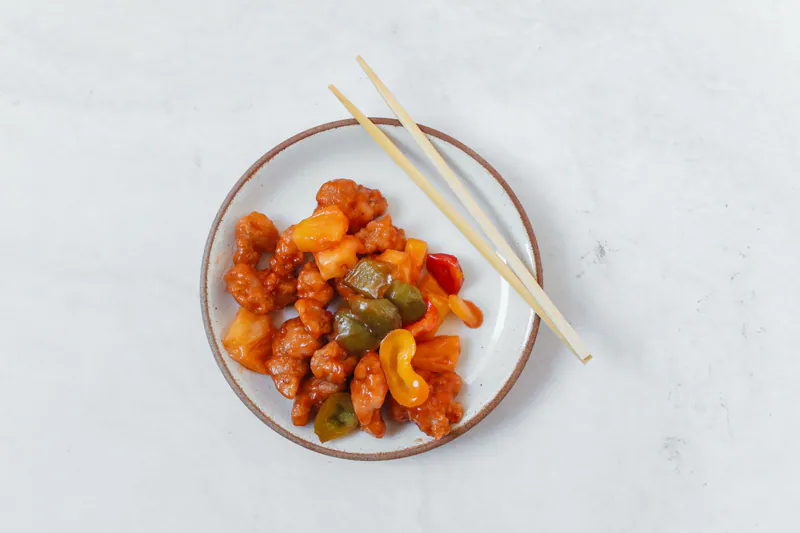
Sweet and sour pork
Cantonese · 55 min · 576 kcal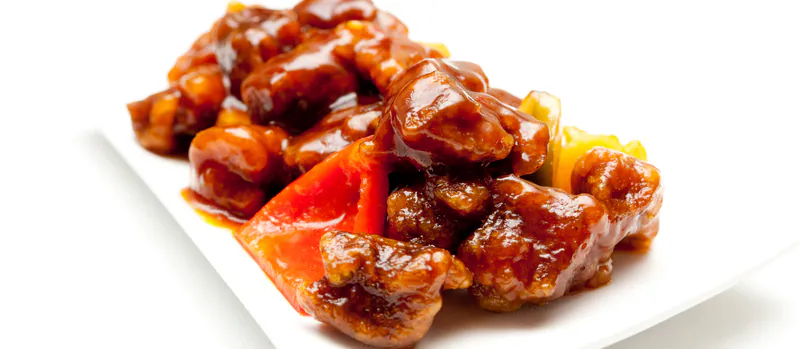
Tang cu pai gu (sweet and sour spare ribs)
Chinese · 1 h 20 min · 767 kcal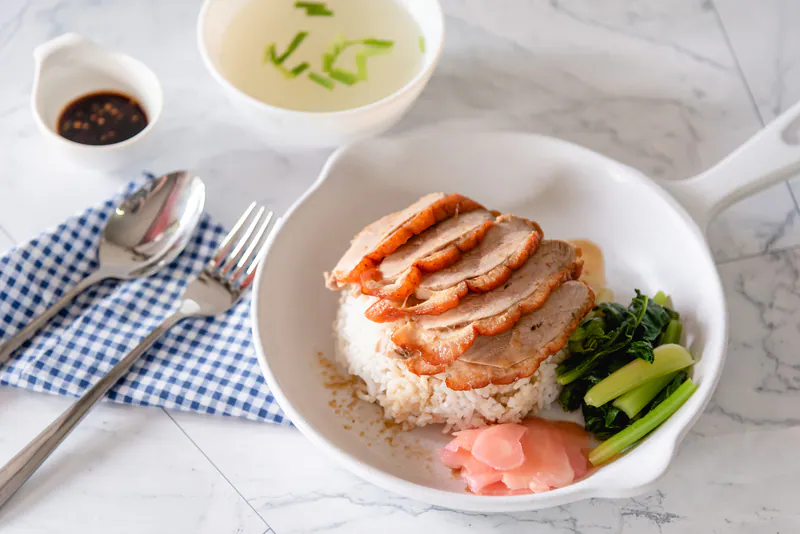
Roasted duck rice (Singapore)
 Singaporean · 14 h 30 min · 1267 kcal