
Sate babi (Indonesian pork satay)
Non-vegetarian
Sate babi
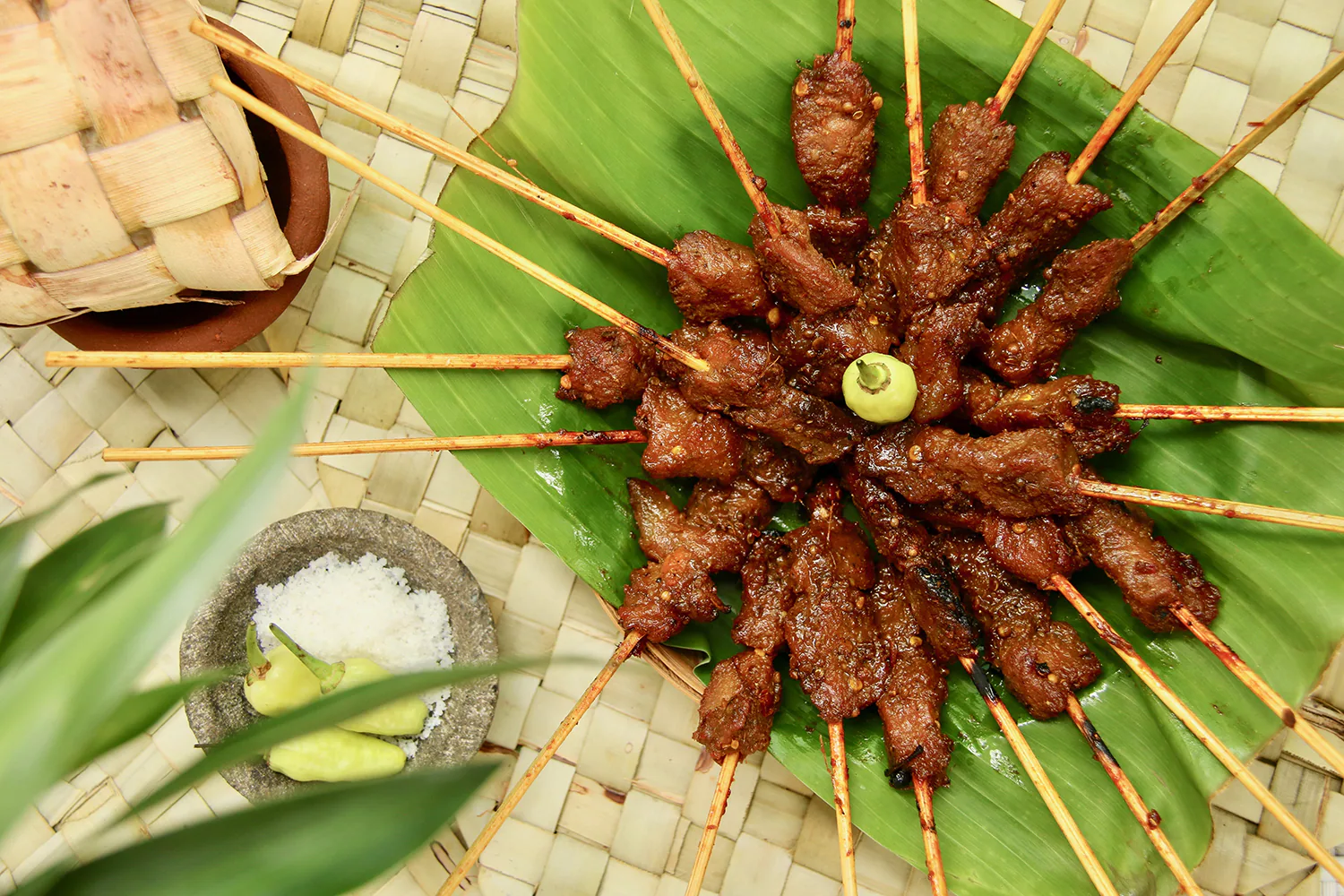
Small cubes of fatty pork marinated in sweet soy sauce, shallots, garlic, coriander and palm sugar, threaded onto skewers and grilled over charcoal until sticky and caramelised. A favourite of Bali, North Sulawesi and Chinese-Indonesian kitchens.
Sate babi (Indonesian pork satay) is an Indonesian street food, ready in about 2 hours 45 minutes and made with pork shoulder and kecap manis (sweet soy sauce). It serves 4 and is rated easy to cook.
- Prep
- 30 min
- Cook
- 15 min
- Rest
- 2 h
- Total
- 2 h 45 min
- Serves
- 4
- Level
- Easy
- Calories
- 688
Main ingredients
Ingredients
For the pork
For the marinade
For the sambal kecap
Method
Marinade
6 minStep 1
Blend the shallots (opens in a new tab), garlic (opens in a new tab) and ground coriander (opens in a new tab) to a paste, then mix with the kecap manis (opens in a new tab), soy sauce (opens in a new tab), palm sugar (opens in a new tab), lime juice (opens in a new tab), pepper (opens in a new tab), salt and coconut oil (opens in a new tab).
Pork
3 minStep 2
Toss the pork in the marinade, cover and refrigerate for at least 2 hours or overnight. Soak bamboo skewers (opens in a new tab) in water for 30 minutes.
Food safety: Wash hands, boards and knives after handling raw meat, and keep it apart from salad and other ready-to-eat food.
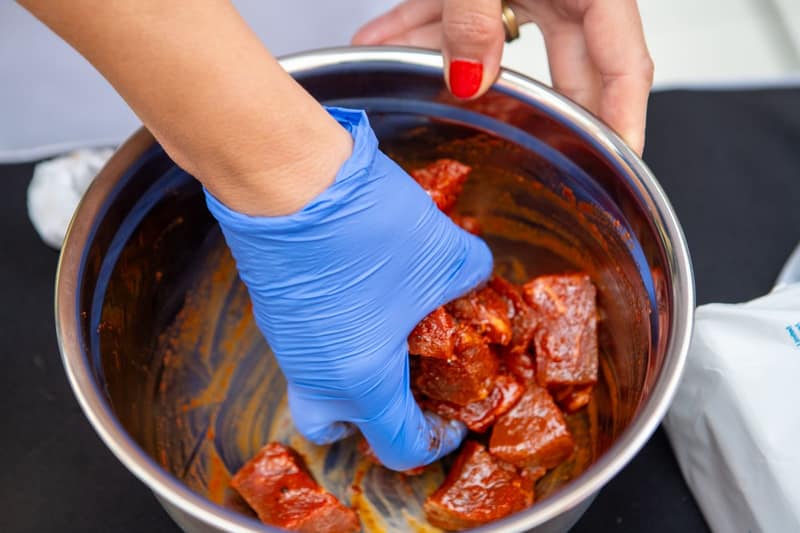
How it looks · Photo: Ip Photographer on Pexels
Sambal kecap
18 minStep 3
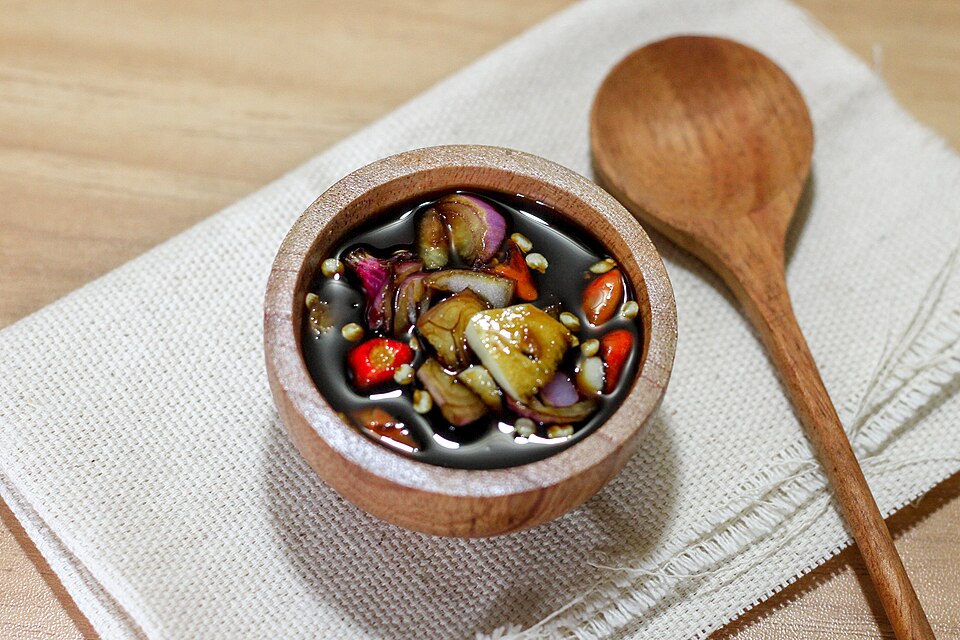
Mix the sambal kecap: kecap manis (opens in a new tab), sliced chillies, shallots (opens in a new tab) and lime juice (opens in a new tab).
- 3 min
Step 4
Thread 4–5 pieces of pork onto each skewer (opens in a new tab), pushing them close together. Grill over hot charcoal or on a very hot grill pan for 10–12 minutes, turning often and basting with the leftover marinade during the first half of cooking, until charred at the edges and cooked through.
Food safety: Cook pork until the juices run clear and the centre reaches at least 71 °C (63 °C for whole roasts, followed by a rest).
Stop basting with raw marinade a few minutes before the end so it cooks on.

How it looks · Photo: Malte Luk on Pexels
At a glance
1 · Marinade in a bowl
 Shallot
 Garlic
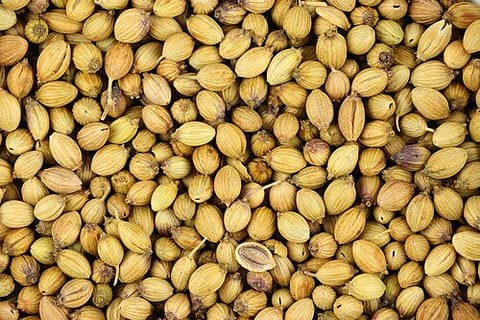 Ground coriander
 Kecap manis (sweet soy sauce)
 Soy sauce
 Jaggery / palm sugar
 Lime juice
 Black pepper
 Salt
 Coconut oil
then toss
2 · Pork in a pan
 Pork shoulder
then mix
3 · Sambal kecap in a bowl
- Kecap manis (sweet soy sauce)
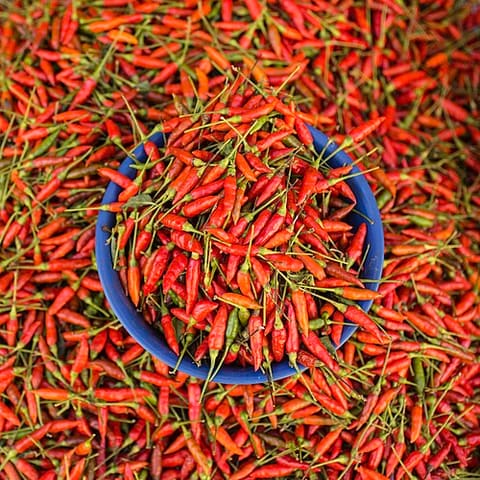 Fresh red chilli
- Shallot
- Lime juice
About this dish
- Origin
- Bali, North Sulawesi and Chinese-Indonesian communities, Indonesia · Commonly attributedMost Indonesian satay is chicken, beef or goat because of the Muslim majority; pork satay is eaten where pork is common, especially in Hindu Bali, Christian North Sulawesi and among Chinese-Indonesians.Also popular in NetherlandsMore food from Indonesia
Indonesia - Dish
- Lunch · Dinner · Snack · Street food · Grills & kebabs · Main courses
- Cooking method
- Grilled, Marinated / cured
- Taste
- sweet & savoury, smoky, umami, spicy (chilli heat)
- Diet
- Dairy-free · No nut ingredients · High-proteinWorked out from the ingredients. How labels work
All labels
Non-vegetarian · Dairy-free · Egg-free · No nut ingredients · Alcohol-free · Beef-free · High-protein - Good for
- Street food · Make-ahead
- Cook more with
- Pork shoulder · Kecap manis (sweet soy sauce) · Shallot · Garlic · Ground coriander · Soy sauce
- Techniques
- Grilling · Charcoal grilling · Dhungar (charcoal smoking) · Marinating · Curing
Allergens
- Contains: Wheatfrom kecap manis (sweet soy sauce), soy sauce
- Contains: Glutenfrom kecap manis (sweet soy sauce), soy sauce
- Contains: Soyfrom kecap manis (sweet soy sauce), soy sauce
Based on typical versions of these ingredients and not verified allergen-free. Brands differ and cross-contact happens, so always check labels. For severe allergies, follow your clinician’s advice.
Nutrition
688 kcal per serving
Estimated1 serving ≈ 323 g · recipe makes 4
Where the energy comes from
- Protein 22%
- Carbohydrate 20%
- Fat 58%
| Nutrient | Per serving | Per 100 g* |
|---|---|---|
| Energy | 688 kcal | 213 kcal |
| Protein | 37.7 g | 11.7 g |
| Carbohydrate | 33.6 g | 10.4 g |
| Net carbohydrate | 30.3 g | 9.4 g |
| Sugars | 19.8 g | 6.1 g |
| Added sugars | 24.1 g | 7.4 g |
| Fibre | 3.2 g | 1 g |
| Fat | 44.2 g | 13.7 g |
| Saturated fat | 18.3 g | 5.7 g |
| Trans fat | — | — |
| Cholesterol | 143 mg | 44 mg |
| Sodium | 1285 mg | 398 mg |
| Salt equivalent | 3.2 g | 1 g |
Vitamins & minerals per serving
- Potassium
- 895 mg
- Calcium
- 81 mg
- Iron
- 3.4 mg
- Magnesium
- 64 mg
- Vitamin A (RAE)
- 6 µg
- Vitamin C
- 14 mg
- Vitamin D
- 3.4 µg
- Vitamin B12
- 1.5 µg
- Folate (DFE)
- 39 µg
How these numbers were made
- Calculated from USDA FoodData Central (SR Legacy) per-100 g values and the listed quantities.
- *Per 100 g of combined raw ingredients; the cooked dish may weigh more or less.
- Kecap manis (sweet soy sauce): Hoisin sauce (FDC 172886) used as a stand-in for this thick palm-sugar-sweetened soy sauce; sugar and sodium differ by brand.
- Jaggery / palm sugar: Brown sugar (FDC 168833) used as a stand-in for unrefined cane jaggery and palm sugar.
- “—” means the value isn’t known for enough of the ingredients; it is never zero by default.
- Values are estimates for guidance, not for medical dosing. U.S. Department of Agriculture, Agricultural Research Service. FoodData Central, 2019. fdc.nal.usda.gov.
Good to know
Tips
- Keep some fat on the pork: it bastes the meat and gives the best caramelised edges.
Common mistakes
- Grilling over flames rather than glowing coals; the sugary marinade burns before the meat cooks.
Serve with
- With lontong or steamed rice, sambal kecap and sliced cucumber; in Bali often with sambal matah.
Food safety
- Cook pork until the juices run clear and the centre reaches at least 71 °C (63 °C for whole roasts, followed by a rest).
- Wash hands, boards and knives after handling raw meat, and keep it apart from salad and other ready-to-eat food.
Storage
- Cooked skewers keep 2 days refrigerated.
Reheating
- Reheat on a hot grill pan or under the grill for a few minutes per side.
Variations
- Sate babi Bali: Marinated in Balinese base genep spice paste with turmeric, galangal and candlenut.
- Peanut sauce (Netherlands): Served with peanut sauce, as in Dutch-Indonesian restaurants.
Original editorial recipe · FriendsPantry editorial · source: TasteAtlas (dish facts) · Not yet independently reviewed · Added
Sauces, chutneys & dips for this dish
Recipe DNA
How this dish is built
Built from the recipe’s own sections. Each band’s width is its share of the dish by weight. Choose a component to see what it does.
What the dish is built around
For the pork
- Pork shoulder, or pork neck or belly, with some fat, cut into 2 cm cubes800 g
Reviews & corrections
Reviews come from signed-in cooks and appear after a moderator checks them. We never show made-up ratings.
You might also like
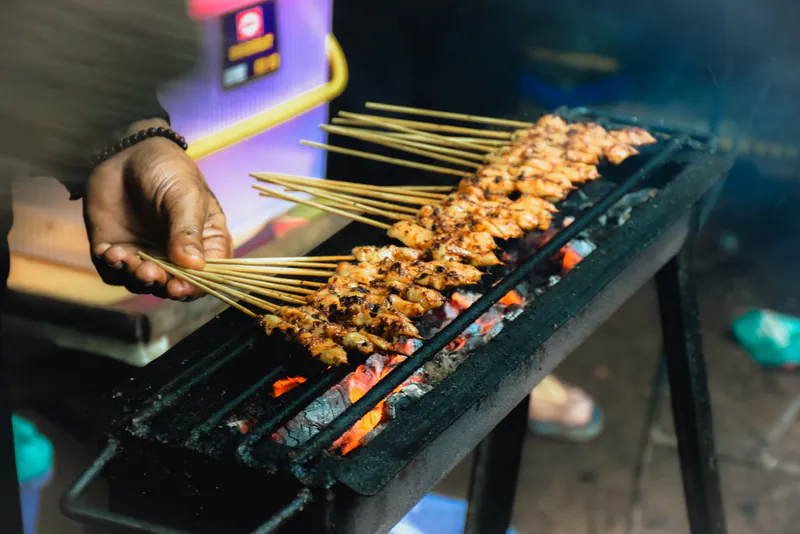
Sate ayam (chicken satay)
 Indonesian · 1 h 50 min · 473 kcal
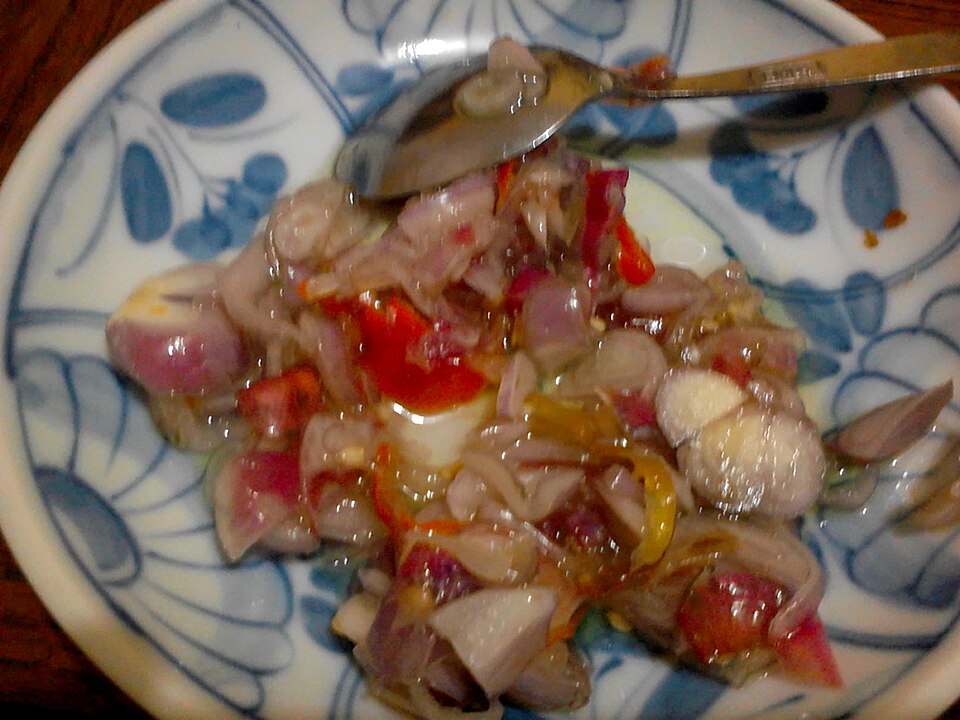
Sambal matah
Indonesian · 19 min · 105 kcal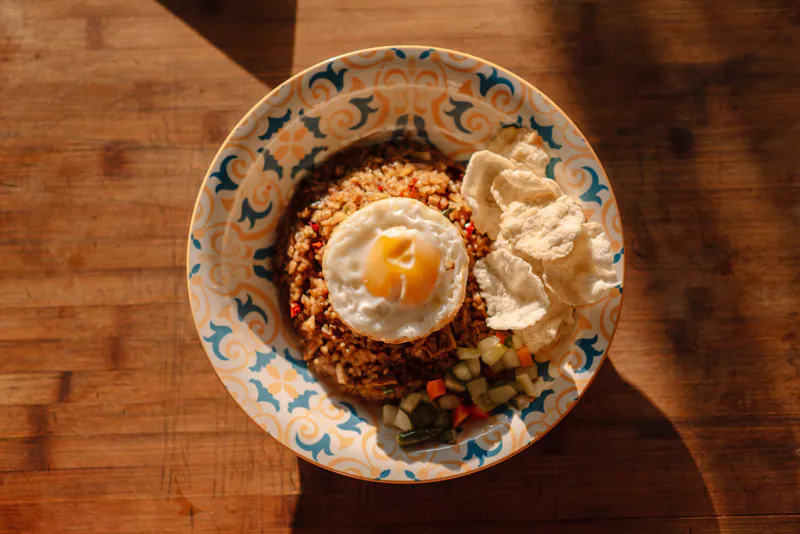
Nasi goreng
Indonesian · 22 min · 705 kcal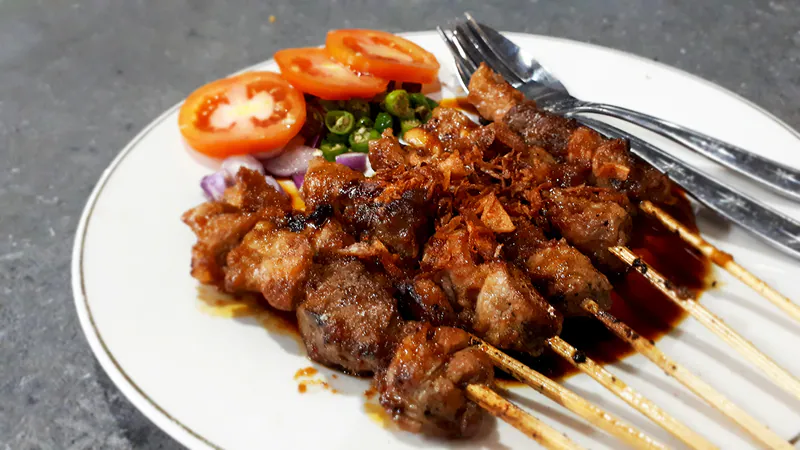
Sate kambing (Indonesian goat satay)
Indonesian · 2 h 45 min · 478 kcal