
Pão de ló de Ovar (soft-centred Portuguese sponge)
Contains egg (no meat or fish)
Pão de Ló de Ovar
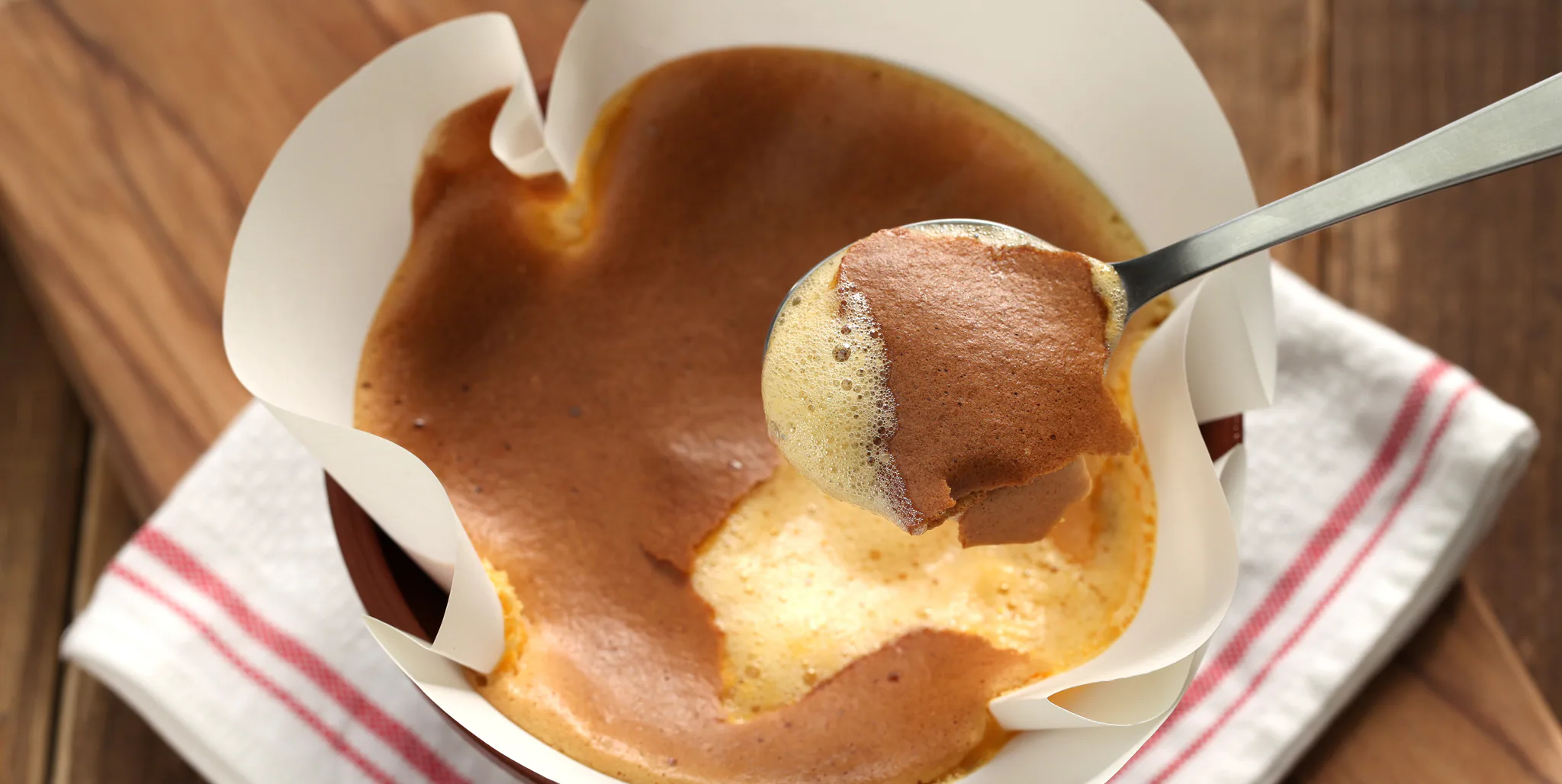
A tall, golden sponge made from little more than egg yolks, sugar and a spoonful of flour, baked briefly so the outside is set while the middle stays molten and custardy. The famous convent cake of Ovar, baked and served in its paper.
Pão de ló de Ovar (soft-centred Portuguese sponge) is a Portuguese cake from Portugal, ready in about 1 hour 15 minutes and made with egg yolk, egg and sugar. It serves 8 and is rated intermediate to cook.
- Prep
- 20 min
- Cook
- 25 min
- Rest
- 30 min
- Total
- 1 h 15 min
- Serves
- 8
- Level
- Intermediate
- Calories
- 219
Main ingredients
Method
Step 1
Heat the oven (opens in a new tab) to 200 °C. Line a 22–24 cm round tin (a clay pan is traditional) with a large sheet of crumpled, then flattened, baking paper so it comes well above the rim.
Step 2
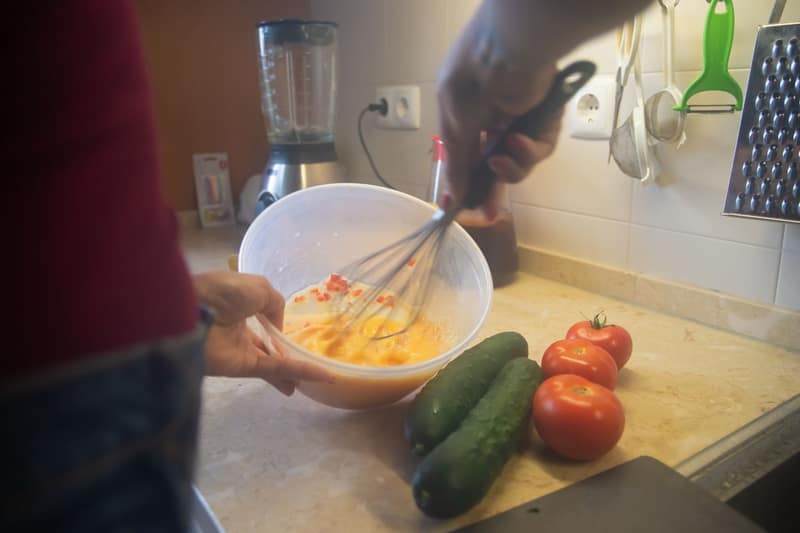
Whisk the yolks, whole eggs (opens in a new tab), sugar (opens in a new tab) and salt at high speed for 12–15 minutes until very thick, pale and tripled in volume; the batter should fall in a ribbon that sits on the surface for several seconds.
Do not shorten this step: all the rise comes from the air whisked in.
How it looks · Photo: Kampus Production on Pexels Step 3
Sift the flour over the batter and fold it in very gently by hand with a large spoon, just until no streaks remain.
Step 4
Pour into the lined tin and bake 20–25 minutes, until the top is deep golden and set but the cake still wobbles in the centre. Do not open the oven (opens in a new tab) during the first 15 minutes.
- 25 min
- 200°C
- Oven (opens in a new tab)
Step 5
Cool in the tin; the top will sink a little, which is expected. Serve lukewarm or at room temperature, peeling the paper back at the table and scooping out portions of cake with their creamy centre.
At a glance
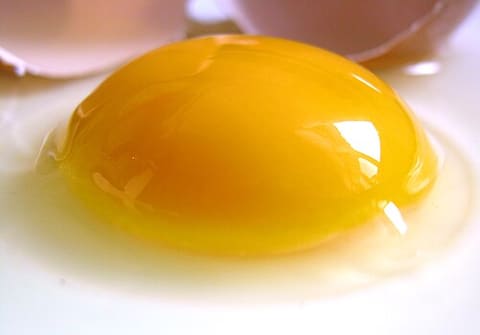 Egg yolk
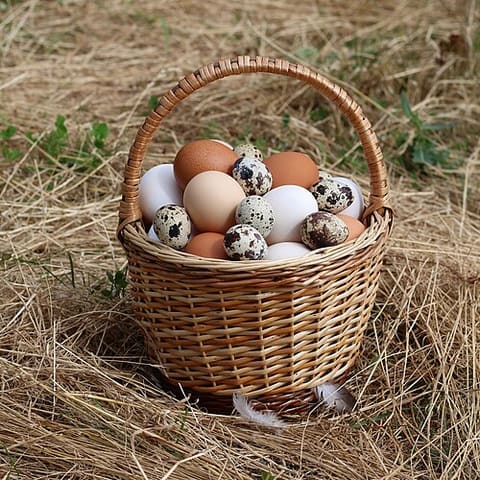 Egg
 Sugar
 All-purpose flour
 Salt
About this dish
- Origin
- Ovar, Aveiro district, Portugal · Well documentedRecorded in Ovar in 1781 as a sweet given at Holy Week processions; it now has protected geographical indication (IGP) status. Other Portuguese towns make firmer pão de ló.More food from Portugal
Portugal - Dish
- Dessert · Snack · Cakes · Desserts
- Cooking method
- Whipped, Oven-baked
- Taste
- sweet, creamy
- Diet
- Vegetarian (lacto-ovo) · Dairy-free · No nut ingredientsWorked out from the ingredients. How labels work
All labels
Vegetarian (lacto-ovo) · Eggetarian · Ovo-vegetarian · Pescatarian · Flexitarian-friendly · Dairy-free · No nut ingredients · Alcohol-free · Pork-free · Beef-free · Low-sodium - Good for
- Festive & celebration
- Cook more with
- Egg yolk · Egg · Sugar · All-purpose flour
- Techniques
- Baking · Emulsification
Allergens
- Contains: Eggsfrom egg yolk, egg
- Contains: Wheatfrom all-purpose flour
- Contains: Glutenfrom all-purpose flour
Based on typical versions of these ingredients and not verified allergen-free. Brands differ and cross-contact happens, so always check labels. For severe allergies, follow your clinician’s advice.
Nutrition
219 kcal per serving
Calculated1 serving ≈ 73 g · recipe makes 8
Where the energy comes from
- Protein 12%
- Carbohydrate 57%
- Fat 31%
| Nutrient | Per serving | Per 100 g* |
|---|---|---|
| Energy | 219 kcal | 302 kcal |
| Protein | 6.5 g | 9 g |
| Carbohydrate | 31.6 g | 43.6 g |
| Net carbohydrate | 31.4 g | 43.3 g |
| Sugars | 25.2 g | 34.7 g |
| Added sugars | 25 g | 34.5 g |
| Fibre | 0.2 g | 0.3 g |
| Fat | 7.5 g | 10.3 g |
| Saturated fat | 2.6 g | 3.6 g |
| Trans fat | — | — |
| Cholesterol | 300 mg | 414 mg |
| Sodium | 57 mg | 78 mg |
| Salt equivalent | 0.1 g | 0.2 g |
Vitamins & minerals per serving
- Potassium
- 58 mg
- Calcium
- 39 mg
- Iron
- 1.3 mg
- Magnesium
- 5 mg
- Vitamin A (RAE)
- 111 µg
- Vitamin C
- 0 mg
- Vitamin D
- 1.5 µg
- Vitamin B12
- 0.6 µg
- Folate (DFE)
- 62 µg
How these numbers were made
- Calculated from USDA FoodData Central (SR Legacy) per-100 g values and the listed quantities.
- *Per 100 g of combined raw ingredients; the cooked dish may weigh more or less.
- “—” means the value isn’t known for enough of the ingredients; it is never zero by default.
- Values are estimates for guidance, not for medical dosing. U.S. Department of Agriculture, Agricultural Research Service. FoodData Central, 2019. fdc.nal.usda.gov.
Good to know
Tips
- Bake a test cake in your oven first: ovens vary and a minute or two decides between molten and firm.
Common mistakes
- Overbaking until a skewer comes out clean, which gives an ordinary sponge rather than the soft Ovar style.
- Beating the flour in with the mixer, which knocks out the air.
Serve with
- Serve on its own with coffee or a glass of port.
- At Easter it is shared with family and given as a gift.
Food safety
- The centre is deliberately underbaked, so the eggs are not fully cooked; use pasteurised eggs for young children, pregnant people and anyone with a weakened immune system.
Storage
- Best on the day; keeps 2 days covered at cool room temperature or in the fridge.
Variations
- Pão de ló de Alfeizerão: An even runnier, almost liquid-centred version from the Oeste region.
- Pão de ló de Margaride: A taller, fully baked, drier sponge from Felgueiras in the north.
Original editorial recipe · FriendsPantry editorial · source: TasteAtlas (dish facts) · Not yet independently reviewed · Added
Recipe DNA
How this dish is built
Grouped by each ingredient’s role in the dish. Each band’s width is its share of the dish by weight. Choose a component to see what it does.
What the dish is built around
Main ingredient
- Egg yolk10 piece · 170 g
- Egg3 piece · 150 g
- All-purpose flour, sifted twice60 g
Reviews & corrections
Reviews come from signed-in cooks and appear after a moderator checks them. We never show made-up ratings.
You might also like
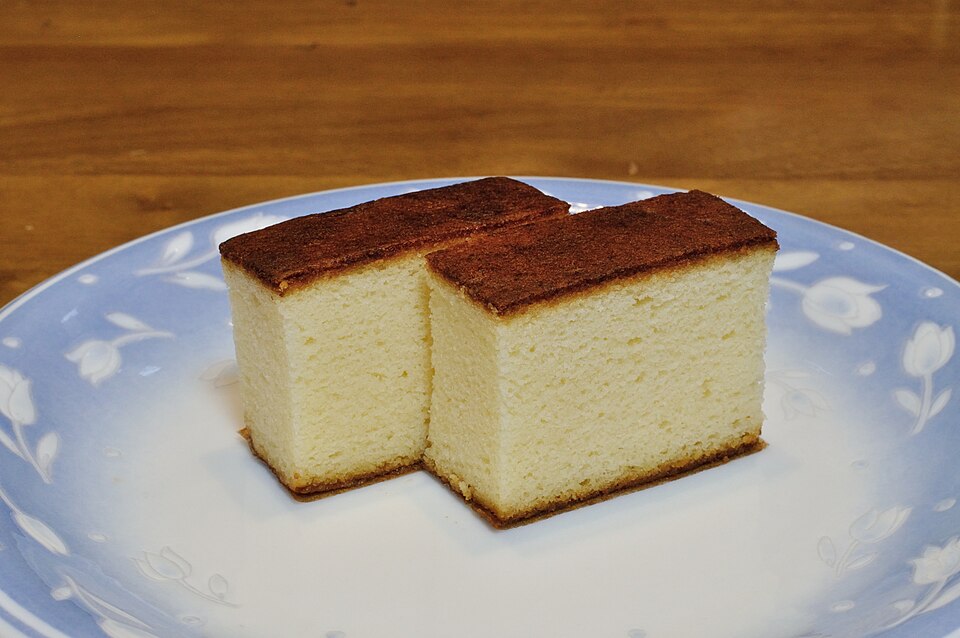
Castella (Nagasaki honey sponge)
 Japanese · 2 h 15 min · 150 kcal · Contains egg
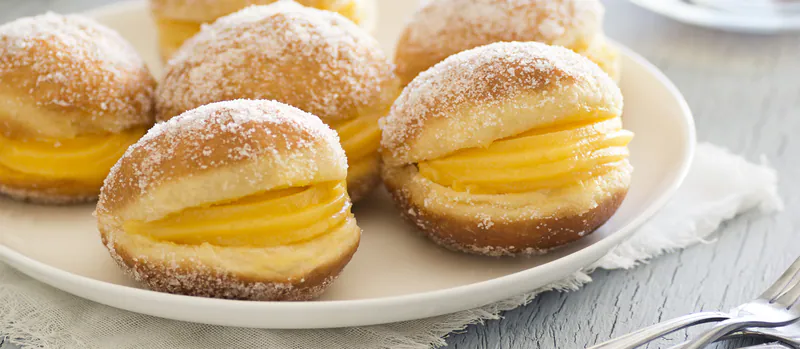
Bola de Berlim (Portuguese custard doughnuts)
 Portuguese · 3 h 40 min · 530 kcal · Contains egg
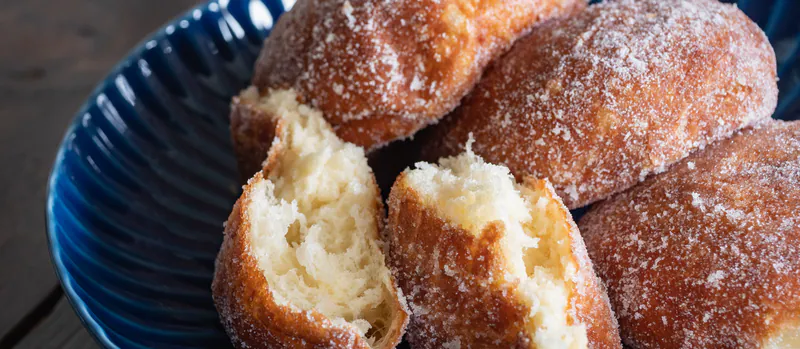
Malasadas (Portuguese sugar doughnuts)
Portuguese · 3 h 25 min · 578 kcal · Contains egg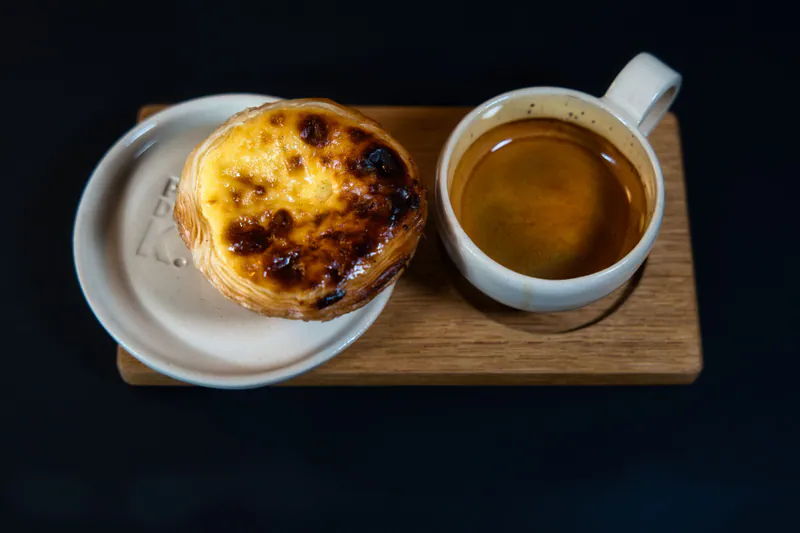
Pastéis de nata
Portuguese · 1 h 10 min · 263 kcal · Contains egg