

Bola de Berlim (Portuguese custard doughnuts)
Contains egg (no meat or fish)
Bola de Berlim · bola de berlim
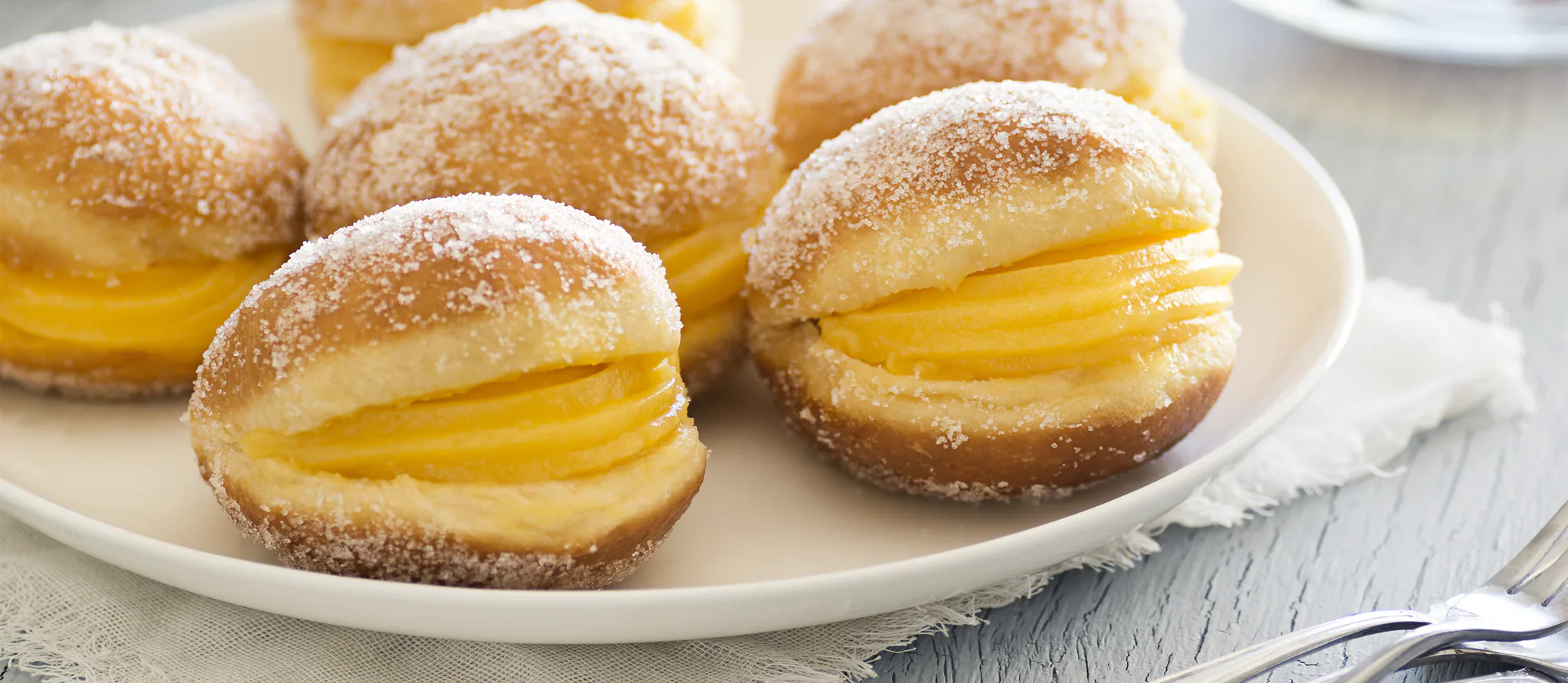
Big, soft yeast doughnuts rolled in sugar, split open and filled with a thick band of lemon-scented egg custard. A café staple in Portugal and the snack beach vendors carry along the sand all summer.
Bola de Berlim (Portuguese custard doughnuts) is a Portuguese pastry from Portugal, ready in about 3 hours 40 minutes and made with all-purpose flour and egg yolk. It serves 10 and is rated intermediate to cook.
- Prep
- 40 min
- Cook
- 30 min
- Rest
- 2 h 30 min
- Total
- 3 h 40 min
- Serves
- 10
- Level
- Intermediate
- Calories
- 530
Main ingredients
Ingredients
For the dough
For the custard (creme pasteleiro)
For frying
To finish
Method
Dough
15 minStep 1
Mix the flour, yeast, 70 g sugar (opens in a new tab), lemon zest (opens in a new tab) and salt. Add the eggs (opens in a new tab) and lukewarm milk (opens in a new tab) and knead for 8 minutes, then add the soft butter a piece at a time and knead until the dough is smooth, elastic and slightly sticky. Cover and leave until doubled, 1–1½ hours.

How it looks · Photo: Klaus Nielsen on Pexels
Custard (creme pasteleiro)
24 minStep 2
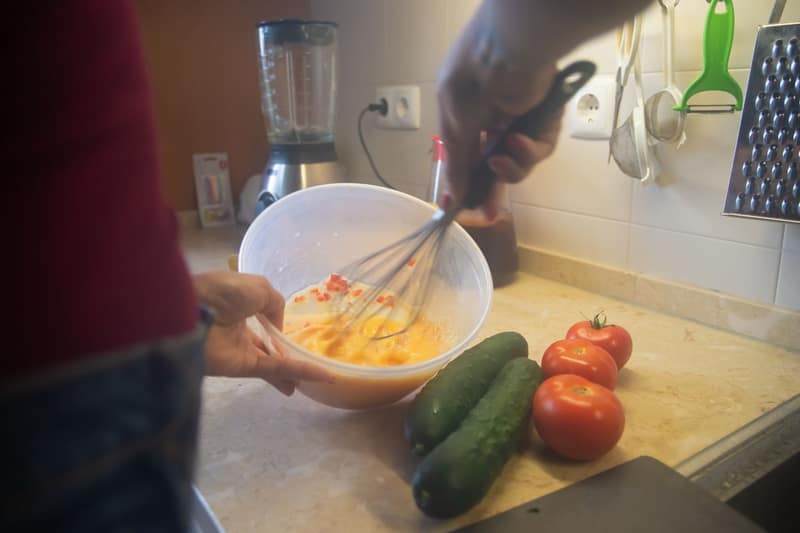
For the custard, heat 400 ml of the milk (opens in a new tab) with the lemon peel (opens in a new tab) until steaming. Whisk (opens in a new tab) the yolks, 120 g sugar (opens in a new tab), cornstarch (opens in a new tab) and remaining 100 ml milk in a bowl. Pour the hot milk over, whisking, then return everything to the pan.
- 8 min
- medium heat
- Saucepan (opens in a new tab)
- Whisk (opens in a new tab)
How it looks · Photo: Kampus Production on Pexels Step 3
Cook over medium-low heat, whisking constantly, until the custard boils and becomes very thick, then cook 1 minute more. Remove the peel, stir in the vanilla (opens in a new tab), press cling film on the surface and chill completely.
- 6 min
- medium-low heat
Food safety: Cook egg-yolk custards to at least 82 °C (they coat the back of a spoon) before chilling, and keep them refrigerated.
Step 4
Divide the dough into 10 pieces of about 90 g, shape into tight balls, flatten slightly and set on floured baking paper. Cover and rise for 45–60 minutes until puffy.
- 10 min
Frying
30 minStep 5
Heat the oil to 165 °C. Fry 3 balls at a time for about 3 minutes per side until deep golden. Drain briefly and, while still warm, roll in sugar (opens in a new tab).
- 20 min
- 165°C
- medium heat
- Dutch oven / casserole pot (opens in a new tab)
- Food thermometer (opens in a new tab)
- Slotted spoon (opens in a new tab)
Food safety: Never leave hot oil unattended; keep the pan's handle turned inwards and lower dough in gently, away from you.
Step 6
When cool, cut each doughnut across the side about two-thirds of the way through, open like a book and pipe in a generous band of custard.
At a glance
1 · Dough in a bowl
 All-purpose flour
 Instant yeast
 Milk
 Sugar
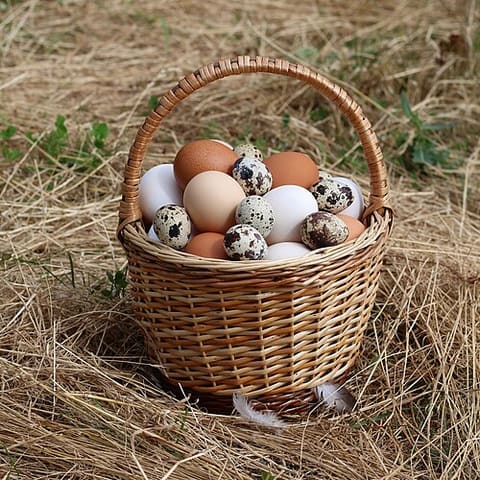 Egg
 Unsalted butter
 Lemon zest
 Salt
then heat
2 · Custard (creme pasteleiro) in a bowl
- Milk
 Egg yolk
- Sugar
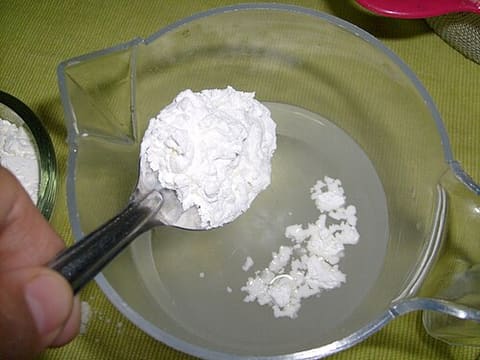 Cornstarch
- Lemon zest
 Vanilla extract
then heat
3 · Frying in a pan
 Sunflower oil
About this dish
- Origin
- Portugal · Commonly attributedAdapted from the German Berliner, reputedly brought by Jewish refugees from Central Europe in the 1930s–40s; the Portuguese version is split and filled with creme pasteleiro instead of jam.Also popular in BrazilMore food from Portugal
Portugal - Dish
- Snack · Breakfast · Pastries · Sweets & confectionery · Fried dough & doughnuts
- Cooking method
- Deep-fried, Simmered
- Taste
- sweet, creamy, citrusy
- Diet
- Vegetarian (lacto-ovo) · No nut ingredientsWorked out from the ingredients. How labels work
All labels
Vegetarian (lacto-ovo) · Eggetarian · Pescatarian · Flexitarian-friendly · No nut ingredients · Pork-free · Beef-free · Low-sodium - Good for
- Festive & celebration · Street food
- Cook more with
- All-purpose flour · Egg yolk · Instant yeast · Milk · Sugar · Egg
- Techniques
- Deep-frying · Simmering · Kneading · Fermentation
Allergens
- Contains: Milkfrom milk, unsalted butter
- Contains: Eggsfrom egg, egg yolk
- Contains: Wheatfrom all-purpose flour
- Contains: Glutenfrom all-purpose flour
Based on typical versions of these ingredients and not verified allergen-free. Brands differ and cross-contact happens, so always check labels. For severe allergies, follow your clinician’s advice.
Nutrition
530 kcal per serving
Calculated1 serving ≈ 192 g · recipe makes 10
Where the energy comes from
- Protein 8%
- Carbohydrate 57%
- Fat 35%
| Nutrient | Per serving | Per 100 g* |
|---|---|---|
| Energy | 530 kcal | 276 kcal |
| Protein | 10.5 g | 5.5 g |
| Carbohydrate | 75.2 g | 39.2 g |
| Net carbohydrate | 73.5 g | 38.3 g |
| Sugars | 32.9 g | 17.1 g |
| Added sugars | 29 g | 15.1 g |
| Fibre | 1.7 g | 0.9 g |
| Fat | 20.8 g | 10.8 g |
| Saturated fat | 7 g | 3.6 g |
| Trans fat | — | — |
| Cholesterol | 152 mg | 79 mg |
| Sodium | 169 mg | 88 mg |
| Salt equivalent | 0.4 g | 0.2 g |
Vitamins & minerals per serving
- Potassium
- 185 mg
- Calcium
- 109 mg
- Iron
- 2.8 mg
- Magnesium
- 21 mg
- Vitamin A (RAE)
- 129 µg
- Vitamin C
- 1 mg
- Vitamin D
- 1.6 µg
- Vitamin B12
- 0.6 µg
- Folate (DFE)
- 190 µg
How these numbers were made
- Calculated from USDA FoodData Central (SR Legacy) per-100 g values and the listed quantities.
- *Per 100 g of combined raw ingredients; the cooked dish may weigh more or less.
- “—” means the value isn’t known for enough of the ingredients; it is never zero by default.
- Values are estimates for guidance, not for medical dosing. U.S. Department of Agriculture, Agricultural Research Service. FoodData Central, 2019. fdc.nal.usda.gov.
Good to know
Tips
- Lift the balls into the oil on their square of baking paper; the paper comes free after a few seconds and the dough keeps its shape.
Common mistakes
- Filling the doughnuts while warm, which melts the custard and makes the dough soggy.
Serve with
- Eat with a galão or bica, or on the beach in summer, as the Portuguese do.
Food safety
- Cook egg-yolk custards to at least 82 °C (they coat the back of a spoon) before chilling, and keep them refrigerated.
- Never leave hot oil unattended; keep the pan's handle turned inwards and lower dough in gently, away from you.
Storage
- Best on the day. Filled doughnuts must be kept refrigerated and eaten within 24 hours; unfilled ones keep 1 day covered.
Variations
- Bola de Berlim sem creme: Left unfilled and simply rolled in sugar, or with a little chocolate cream.
- Sonhos: "Dreams": lighter fried puffs of choux-like dough rolled in cinnamon sugar, eaten at Christmas.
Original editorial recipe · FriendsPantry editorial · source: TasteAtlas (dish facts) · Not yet independently reviewed · Added
Recipe DNA
How this dish is built
Built from the recipe’s own sections. Each band’s width is its share of the dish by weight. Choose a component to see what it does.
The spice and seasoning backbone
For the custard (creme pasteleiro)
- Milk500 ml · 515 g
- Egg yolk5 piece · 85 g
- Sugar120 g
- Cornstarch40 g
- Lemon zest, in wide strips, peeled with a peeler2 tsp · 3.9 g
- Vanilla extract1 tsp · 4.3 g
Reviews & corrections
Reviews come from signed-in cooks and appear after a moderator checks them. We never show made-up ratings.
You might also like
Fánk (Hungarian carnival doughnuts)
 Hungarian · 2 h 30 min · 545 kcal · Contains egg
English egg custard tart
 British · 3 h 5 min · 384 kcal · Contains egg
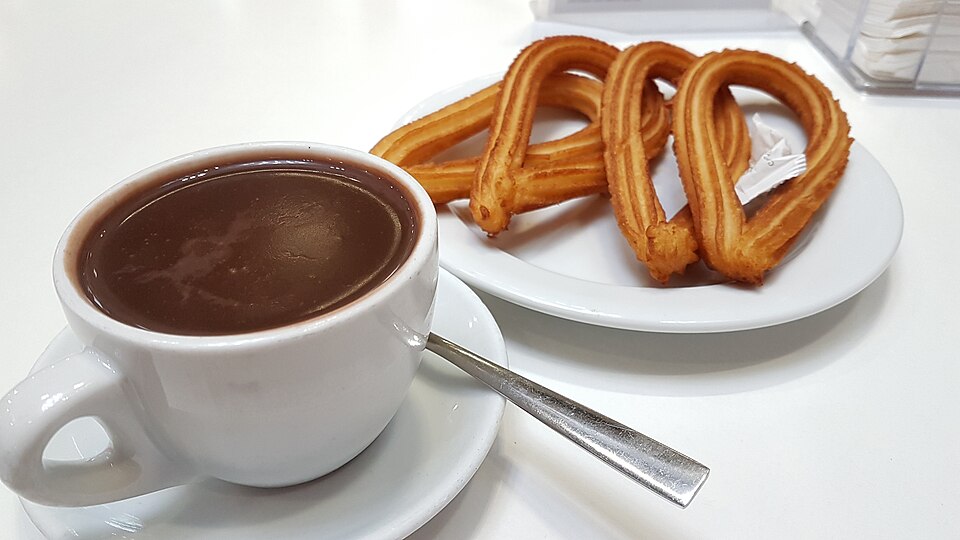
Churros con chocolate
 Spanish · 55 min · 683 kcal · Vegetarian
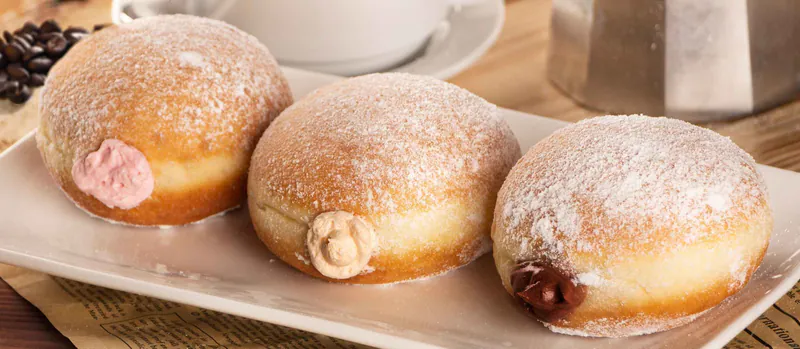
Bomboloni (Italian doughnuts)
 Italian · 4 h 20 min · 392 kcal · Contains egg