
Nasi kerabu (Kelantanese blue herb rice)
Non-vegetarian
nasi kerabu
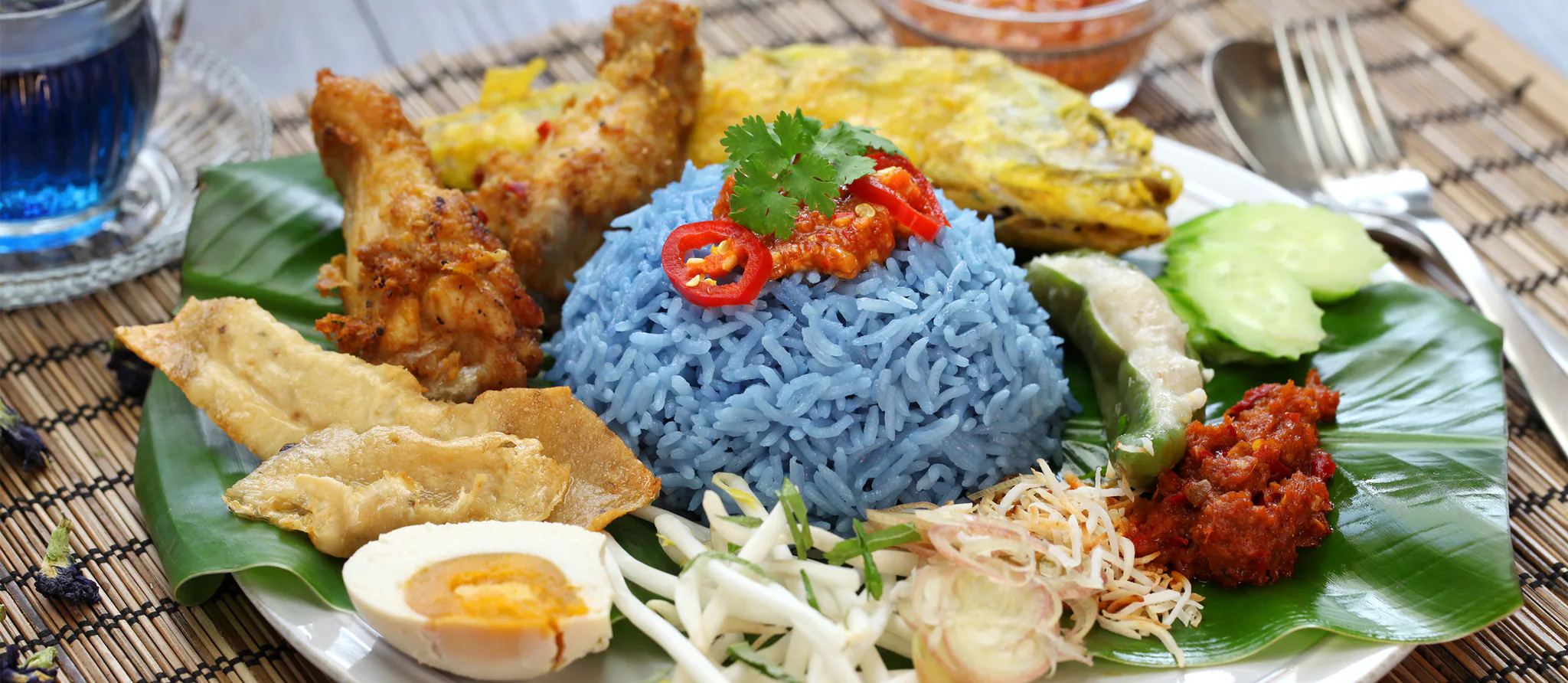
Rice dyed sky-blue with butterfly pea flowers and served with a heap of finely shredded raw herbs and vegetables, toasted coconut, fried fish and a sweet-salty fish sauce dressing, all tossed together before eating. The signature dish of Kelantan on Malaysia's east coast.
Nasi kerabu (Kelantanese blue herb rice) is a Malaysian rice dish, ready in about 1 hour 30 minutes and made with long-grain white rice, dried butterfly pea flowers and makrut lime leaves. It serves 4 and is rated intermediate to cook.
- Prep
- 45 min
- Cook
- 35 min
- Rest
- 10 min
- Total
- 1 h 30 min
- Serves
- 4
- Level
- Intermediate
- Calories
- 1109
Main ingredients
Ingredients
For the blue rice
For the toasted coconut (kerisik)
For the ulam (herbs and vegetables)
For the fried fish
For the dressing (budu-style)
Method
Blue rice
25 minStep 1
Steep the butterfly pea flowers (opens in a new tab) in the hot water for 10 minutes until it turns deep blue, then strain, squeezing the flowers. Cook the rice in the blue water with the bruised lemongrass (opens in a new tab) and salt, in a rice cooker (opens in a new tab) or a covered pan over very low heat, about 15 minutes. Rest for 10 minutes covered, then fluff.
- 25 min
- low heat
- Rice cooker (opens in a new tab)
Food safety: Cooked rice can carry Bacillus cereus spores that survive cooking; cool leftover rice quickly and refrigerate it within an hour.
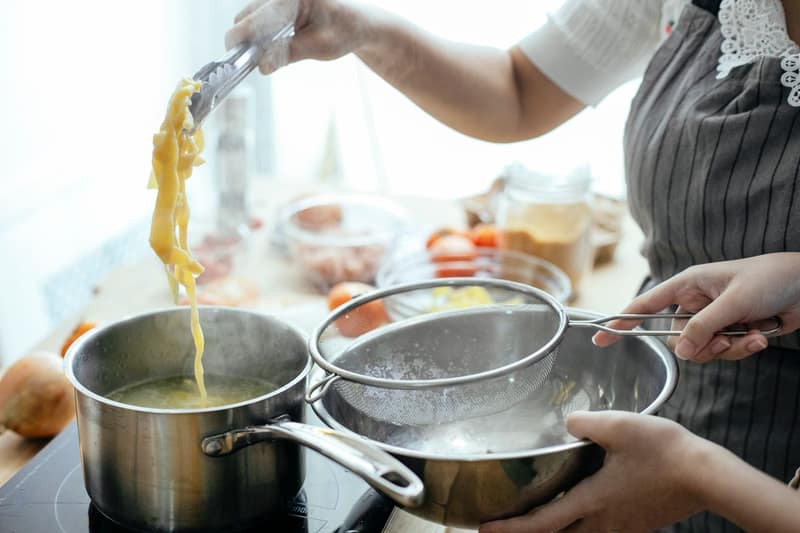
How it looks · Photo: Katerina Holmes on Pexels
Toasted coconut (kerisik)
10 minStep 2
For the kerisik, pound or blitz the dried shrimp (opens in a new tab) and shallots (opens in a new tab) to a coarse paste. Toast the coconut in a dry frying pan over medium-low heat, stirring constantly, until golden, about 6 minutes. Add the shrimp paste, pepper (opens in a new tab) and sugar (opens in a new tab) and toast for 2–3 minutes more until fragrant and dry.
- 10 min
- medium-low heat
- Food processor (opens in a new tab)
- Frying pan / skillet (opens in a new tab)
Fried fish
10 minStep 3
Rub the fish with turmeric (opens in a new tab) and salt. Heat the oil in a frying pan and fry the fish over medium-high heat until crisp and cooked through, 3–4 minutes a side. Drain on paper.
- 10 min
- medium-high heat
Food safety: Never leave hot oil unattended; keep the pan's handle turned inwards and lower food in gently, away from you.
Ulam (herbs and vegetables)
20 minStep 4
Shred all the herbs and vegetables as finely as you can: the cucumber (opens in a new tab), bean sprouts (opens in a new tab), beans, cabbage (opens in a new tab), lime leaves, lemongrass (opens in a new tab), laksa leaf (opens in a new tab), basil (opens in a new tab) and mint (opens in a new tab). Keep each in its own little pile.
The finer the herbs, the better they blend into the rice.
Dressing (budu-style)
6 minStep 5
Stir together the fish sauce (opens in a new tab), lime juice (opens in a new tab), sugar (opens in a new tab), chilli and sliced shallot (opens in a new tab) for the dressing.
- 3 min
Step 6
Mound the blue rice on plates and arrange the herbs and vegetables, kerisik and fish around it. Spoon over the dressing and toss everything together before eating.
- 3 min
At a glance
1 · Blue rice in a pot
 Long-grain white rice
- Dried butterfly pea flowers
 Lemongrass
 Salt
then pound
2 · Toasted coconut (kerisik) in a pan
 Desiccated coconut
 Dried shrimp
 Shallot
 Black pepper
 Sugar
then rub
3 · Fried fish in a pan
 Mackerel
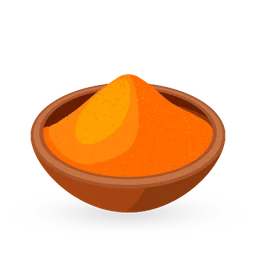 Turmeric
- Salt
 Neutral vegetable oil
then shred
4 · Ulam (herbs and vegetables) in a pan
 Cucumber
 Bean sprouts
 Green beans
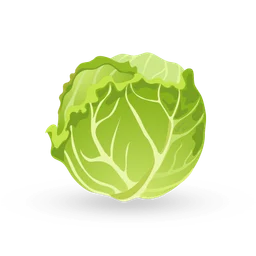 Cabbage
 Makrut lime leaves
- Lemongrass
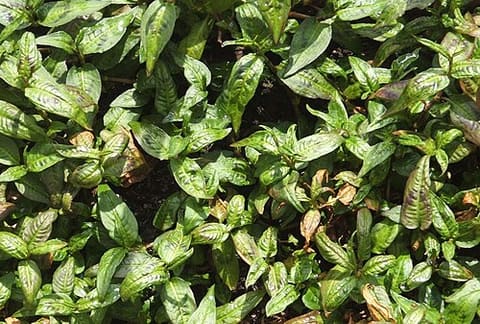 Laksa leaf (Vietnamese coriander)
 Basil
 Mint
then stir
5 · Dressing (budu-style) in a bowl
 Fish sauce
 Lime juice
- Sugar
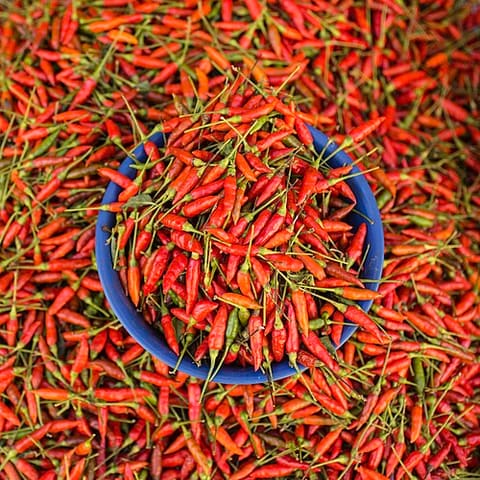 Fresh red chilli
- Shallot
About this dish
- Origin
- Kelantan and Terengganu, Malaysia · Well documentedA dish of Malaysia's north-east coast; the closely related khao yam (ข้าวยำ) is eaten in southern Thailand.Also popular in ThailandMore food from Malaysia
Malaysia - Dish
- Breakfast · Lunch · Rice dishes · Main courses · Breakfast dishes
- Cooking method
- Steamed, Toasted, Pan-fried, Raw
- Taste
- herby, fresh, umami, aromatic / warmly spiced
- Diet
- Pescatarian · No gluten ingredients · Dairy-free · No nut ingredients · High-proteinWorked out from the ingredients. How labels work
All labels
Pescatarian · Non-vegetarian · No gluten ingredients · Dairy-free · Egg-free · No nut ingredients · Alcohol-free · Pork-free · Beef-free · High-protein - Good for
- Festive & celebration
- Cook more with
- Long-grain white rice · Makrut lime leaves · Lemongrass · Desiccated coconut · Shallot · Sugar
- Techniques
- Toasting · Pan-frying · Steaming · Spice roasting (dry-roasting)
Allergens
- Contains: Fishfrom mackerel, fish sauce
- Contains, can be adapted: Crustaceansfrom dried shrimp, fish sauce
Based on typical versions of these ingredients and not verified allergen-free. Brands differ and cross-contact happens, so always check labels. For severe allergies, follow your clinician’s advice.
Nutrition
1109 kcal per serving
Estimated1 serving ≈ 672 g · recipe makes 4
Where the energy comes from
- Protein 24%
- Carbohydrate 29%
- Fat 47%
| Nutrient | Per serving | Per 100 g* |
|---|---|---|
| Energy | 1109 kcal | 165 kcal |
| Protein | 65.4 g | 9.7 g |
| Carbohydrate | 81.2 g | 12.1 g |
| Net carbohydrate | 75 g | 11.2 g |
| Sugars | 10.6 g | 1.6 g |
| Added sugars | 4.2 g | 0.6 g |
| Fibre | 6.2 g | 0.9 g |
| Fat | 57.2 g | 8.5 g |
| Saturated fat | 18.9 g | 2.8 g |
| Trans fat | — | — |
| Cholesterol | 210 mg | 31 mg |
| Sodium | 1922 mg | 286 mg |
| Salt equivalent | 4.8 g | 0.7 g |
Vitamins & minerals per serving
- Potassium
- 1522 mg
- Calcium
- 131 mg
- Iron
- 11.3 mg
- Magnesium
- 319 mg
- Vitamin A (RAE)
- 185 µg
- Vitamin C
- 25 mg
- Vitamin D
- 48.3 µg
- Vitamin B12
- 26.2 µg
- Folate (DFE)
- 353 µg
How these numbers were made
- Calculated from USDA FoodData Central (SR Legacy) per-100 g values and the listed quantities.
- *Per 100 g of combined raw ingredients; the cooked dish may weigh more or less.
- Optional ingredients are not included: dried shrimp.
- Not counted (tiny amounts or “to taste”): dried butterfly pea flowers, makrut lime leaves.
- Laksa leaf (Vietnamese coriander): Coriander leaves used as a stand-in for this leafy herb, eaten in similar small amounts.
- “—” means the value isn’t known for enough of the ingredients; it is never zero by default.
- Values are estimates for guidance, not for medical dosing. U.S. Department of Agriculture, Agricultural Research Service. FoodData Central, 2019. fdc.nal.usda.gov.
Good to know
Tips
- Squeeze a few drops of lime over the rice and it turns from blue to violet.
- Use as many different herbs as you can find: variety is what makes nasi kerabu.
Common mistakes
- Cutting the herbs coarsely; they should be almost thread-like.
Serve with
- Serve with salted duck eggs, sambal, keropok (fish crackers) and solok lada (stuffed green chillies) for the full spread.
- Fried or grilled chicken (ayam percik) is a popular alternative to fish.
Food safety
- Cooked rice can carry Bacillus cereus spores that survive cooking; cool leftover rice quickly and refrigerate it within an hour.
Storage
- Rice keeps 1 day refrigerated; the shredded herbs are best on the day. Kerisik keeps 1 week in a jar.
Reheating
- Steam or microwave the rice until piping hot.
Variations
- Khao yam (Thailand): The southern Thai version: often plain or naturally tinted rice with toasted coconut, herbs and a sweetened budu sauce.
- Nasi kerabu putih and kuning: White or turmeric-yellow rice is used instead of blue in some homes.
Original editorial recipe · FriendsPantry editorial · source: TasteAtlas (dish facts) · Not yet independently reviewed · Added
Sauces, chutneys & dips for this dish
Recipe DNA
How this dish is built
Built from the recipe’s own sections. Each band’s width is its share of the dish by weight. Choose a component to see what it does.
Reviews & corrections
Reviews come from signed-in cooks and appear after a moderator checks them. We never show made-up ratings.
You might also like
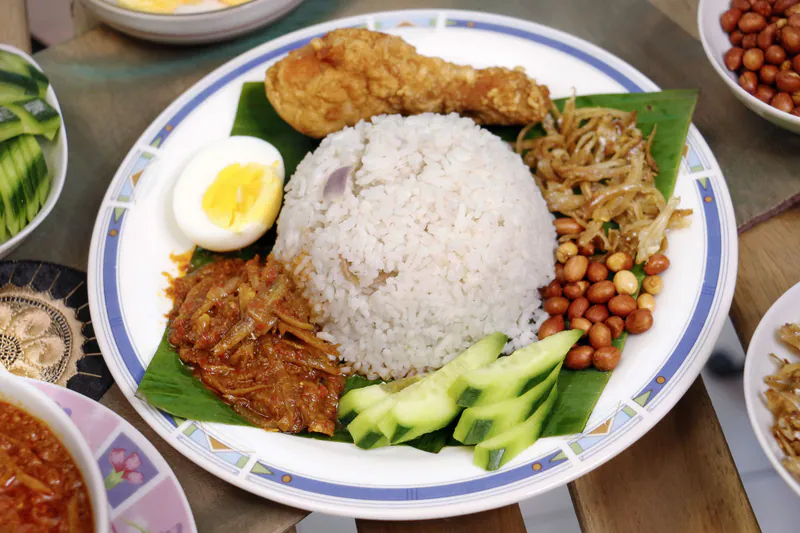
Nasi lemak
 Malaysian · 1 h 25 min · 963 kcal
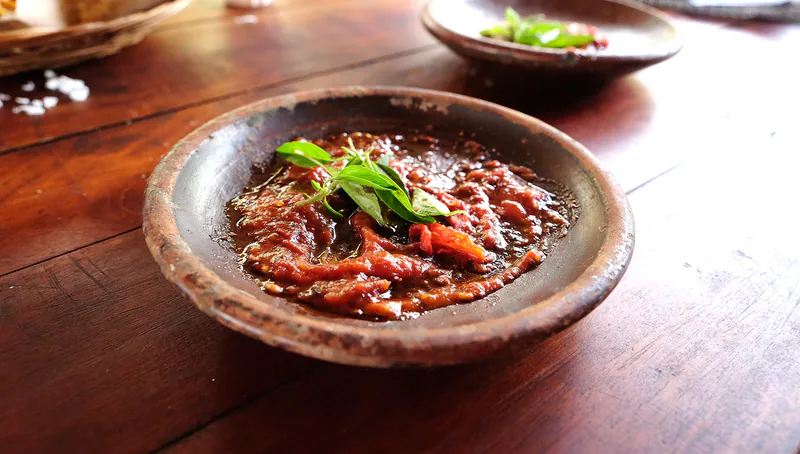
Sambal belacan
Malaysian · 20 min · 8 kcal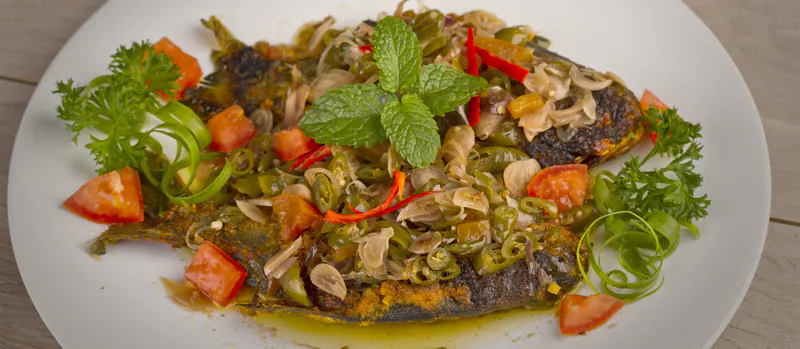
Ikan bakar (Indonesian grilled fish)
 Indonesian · 1 h 25 min · 410 kcal
Nasi kuning (Indonesian turmeric coconut rice)
Indonesian · 1 h 5 min · 730 kcal · Contains egg