
 Indonesian · Malaysian · Rice dishes
Nasi kuning (Indonesian turmeric coconut rice)
Contains egg (no meat or fish)
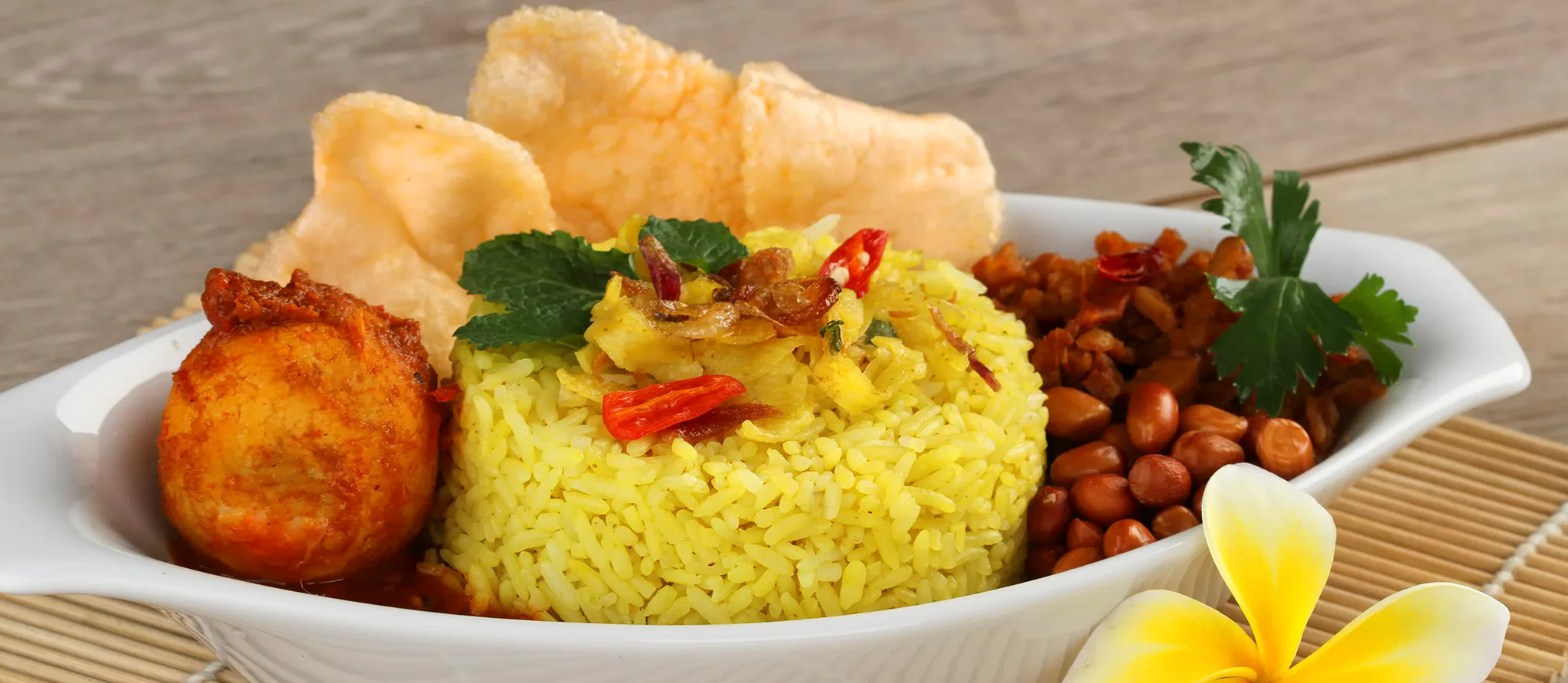
Nasi kuning
Rice cooked in coconut milk with turmeric, lemongrass, salam and lime leaves and pandan until fragrant, glossy and sunshine yellow. Shaped into a cone it becomes tumpeng, the centrepiece of Indonesian celebrations, surrounded by fried chicken, omelette, tempeh and sambal.
Nasi kuning (Indonesian turmeric coconut rice) is an Indonesian rice dish, ready in about 1 hour 5 minutes and made with long-grain white rice, coconut milk and turmeric. It serves 4 and is rated easy to cook.
- Prep
- 15 min
- Cook
- 40 min
- Rest
- 10 min
- Total
- 1 h 5 min
- Serves
- 4
- Level
- Easy
- Calories
- 730
Main ingredients
Ingredients
For the rice
For the toppings
Method
Rice
40 minStep 1
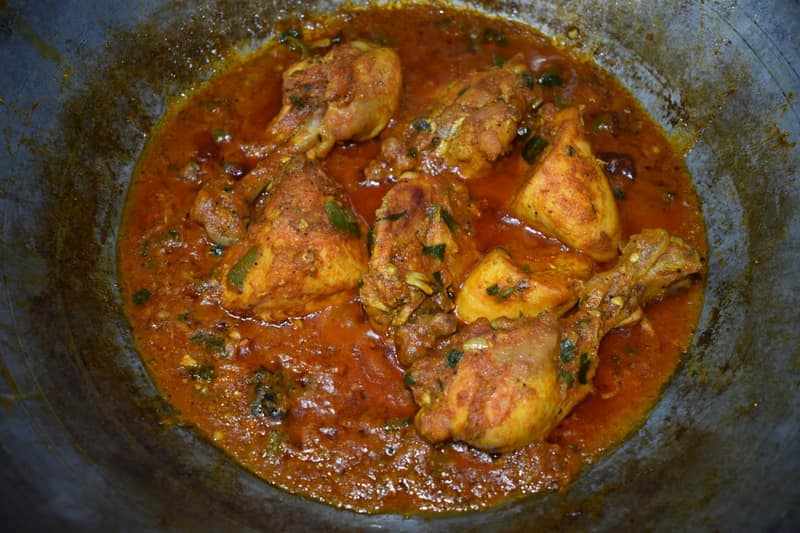
Put the coconut milk (opens in a new tab), water, turmeric (opens in a new tab), lemongrass (opens in a new tab), salam leaves (opens in a new tab), lime leaves, pandan (opens in a new tab) and salt in a saucepan (opens in a new tab) and bring just to a simmer, stirring.
- 5 min
- medium heat
- Saucepan (opens in a new tab)
How it looks · Photo: Bachir Mamud on Pexels Step 2
Add the rice and simmer, stirring often so it does not catch, until all the liquid is absorbed and the rice is half-cooked, about 10 minutes.
- 10 min
- medium-low heat
Coconut milk scorches easily; keep the heat gentle and stir from the bottom.
Step 3
Transfer the rice and aromatics to a steamer (opens in a new tab) lined with a cloth or banana leaf and steam over boiling water for 20–25 minutes until tender. (Or cover the pan tightly and cook on the lowest heat for 15 minutes.) Rest 10 minutes, then remove the leaves and lemongrass (opens in a new tab).
- 25 min
- medium heat
- Steamer (opens in a new tab)
Food safety: Cooked rice can carry Bacillus cereus spores that survive cooking; cool leftover rice quickly and refrigerate it within an hour.
Toppings
15 minStep 4
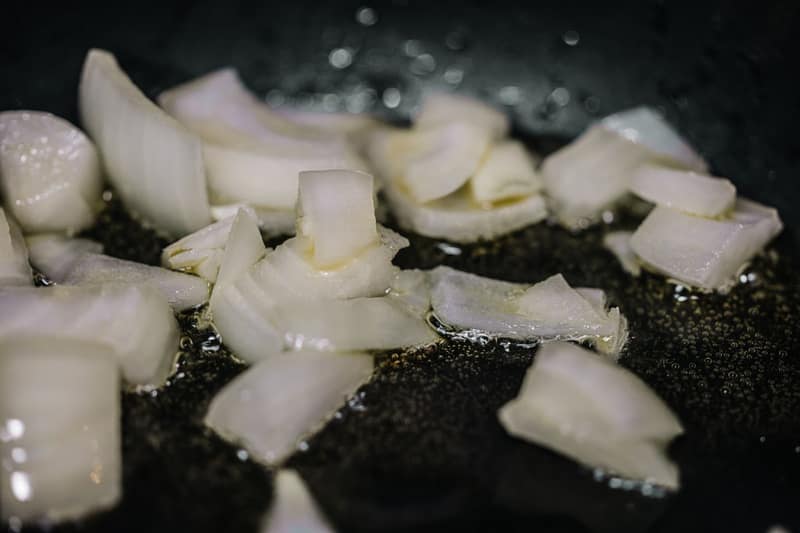
Meanwhile fry the sliced shallots (opens in a new tab) in the oil over medium-low heat until golden and crisp; drain. Pour off most of the oil and cook the egg (opens in a new tab) as a thin omelette, then roll and slice into ribbons.
- 12 min
- medium-low heat
- Frying pan / skillet (opens in a new tab)
How it looks · Photo: Magda Ehlers on Pexels Step 5
Pile or mould the rice on a platter and top with the omelette ribbons and fried shallots (opens in a new tab). Arrange the cucumber (opens in a new tab) alongside.
- 3 min
At a glance
1 · Rice in a pot
 Long-grain white rice
 Coconut milk
 Turmeric
 Lemongrass
 Salam leaves (Indonesian bay leaves)
 Makrut lime leaves
 Pandan leaves
 Salt
then fry
2 · Toppings in a pan
 Egg
 Neutral vegetable oil
 Shallot
 Cucumber
About this dish
- Origin
- Java, Indonesia · Well documentedYellow symbolises wealth and good fortune in Javanese tradition; nasi kunyit is the Malay name, and Manado and Banjar versions are popular breakfasts.Also popular in Malaysia, Singapore, BruneiMore food from Indonesia
Indonesia - Dish
- Breakfast · Lunch · Rice dishes · Main courses · Breakfast dishes
- Cooking method
- Simmered, Steamed, Pan-fried
- Taste
- aromatic / warmly spiced, creamy, mild, savoury
- Diet
- Vegetarian (lacto-ovo) · No gluten ingredients · Dairy-free · No nut ingredientsWorked out from the ingredients. How labels work
All labels
Vegetarian (lacto-ovo) · Eggetarian · Ovo-vegetarian · Pescatarian · Flexitarian-friendly · No gluten ingredients · Dairy-free · No nut ingredients · No added sugar · Alcohol-free · Pork-free · Beef-free - Good for
- Festive & celebration
- Cook more with
- Long-grain white rice · Coconut milk · Turmeric · Lemongrass · Salam leaves (Indonesian bay leaves) · Makrut lime leaves
- Techniques
- Pan-frying · Boiling · Simmering · Steaming
Allergens
- Contains: Eggsfrom egg
Based on typical versions of these ingredients and not verified allergen-free. Brands differ and cross-contact happens, so always check labels. For severe allergies, follow your clinician’s advice.
Nutrition
730 kcal per serving
Estimated1 serving ≈ 413 g · recipe makes 4
Where the energy comes from
- Protein 7%
- Carbohydrate 51%
- Fat 42%
| Nutrient | Per serving | Per 100 g* |
|---|---|---|
| Energy | 730 kcal | 177 kcal |
| Protein | 13.8 g | 3.3 g |
| Carbohydrate | 94 g | 22.7 g |
| Net carbohydrate | — | — |
| Sugars | — | — |
| Added sugars | 0 g | 0 g |
| Fibre | — | — |
| Fat | 34.3 g | 8.3 g |
| Saturated fat | 20.3 g | 4.9 g |
| Trans fat | — | — |
| Cholesterol | 93 mg | 22 mg |
| Sodium | 643 mg | 156 mg |
| Salt equivalent | 1.6 g | 0.4 g |
Vitamins & minerals per serving
- Potassium
- 673 mg
- Calcium
- 98 mg
- Iron
- 10 mg
- Magnesium
- 99 mg
- Vitamin A (RAE)
- 44 µg
- Vitamin C
- 6 mg
- Vitamin D
- 0.5 µg
- Vitamin B12
- 0.2 µg
- Folate (DFE)
- 436 µg
How these numbers were made
- Calculated from USDA FoodData Central (SR Legacy) per-100 g values and the listed quantities.
- *Per 100 g of combined raw ingredients; the cooked dish may weigh more or less.
- Optional ingredients are not included: pandan leaves.
- Not counted (tiny amounts or “to taste”): salam leaves (indonesian bay leaves), makrut lime leaves.
- “—” means the value isn’t known for enough of the ingredients; it is never zero by default.
- Values are estimates for guidance, not for medical dosing. U.S. Department of Agriculture, Agricultural Research Service. FoodData Central, 2019. fdc.nal.usda.gov.
Good to know
Tips
- A rice cooker works too: put everything in, cook as normal and fluff once with a fork.
Common mistakes
- Boiling the coconut milk hard, which makes it split and the rice oily.
Serve with
- Serve with ayam goreng, perkedel kentang, tempe orek or tempe bacem, serundeng (spiced fried coconut) and sambal.
Food safety
- Cooked rice can carry Bacillus cereus spores that survive cooking; cool leftover rice quickly and refrigerate it within an hour.
Storage
- Keeps 1 day refrigerated.
Reheating
- Steam or microwave with a sprinkle of water until steaming hot.
Variations
- Nasi tumpeng: The rice is pressed into a tall cone and surrounded by side dishes for ceremonies.
- Nasi kunyit (Malaysia) (Malaysia): Made with glutinous rice soaked in turmeric water and steamed with coconut milk, often served with chicken curry or rendang.
Original editorial recipe · FriendsPantry editorial · source: TasteAtlas (dish facts) · Not yet independently reviewed · Added
Recipe DNA
How this dish is built
Built from the recipe’s own sections. Each band’s width is its share of the dish by weight. Choose a component to see what it does.
The staple
For the rice
- Long-grain white rice, long-grain or jasmine, rinsed until the water runs clear400 g
- Coconut milk400 ml · 392 g
- Water250 ml · 250 g
- Turmeric1.5 tsp · 4.7 g
- Lemongrass, bruised and knotted2 stalk · 40 g
- Salam leaves (Indonesian bay leaves)3 leaf · 0.9 g
- Makrut lime leaves, torn4 leaf · 1.2 g
- Pandan leaves, knotted (optional)2 leaf · 6 g
- Salt1 tsp · 6 g
Reviews & corrections
Reviews come from signed-in cooks and appear after a moderator checks them. We never show made-up ratings.
You might also like
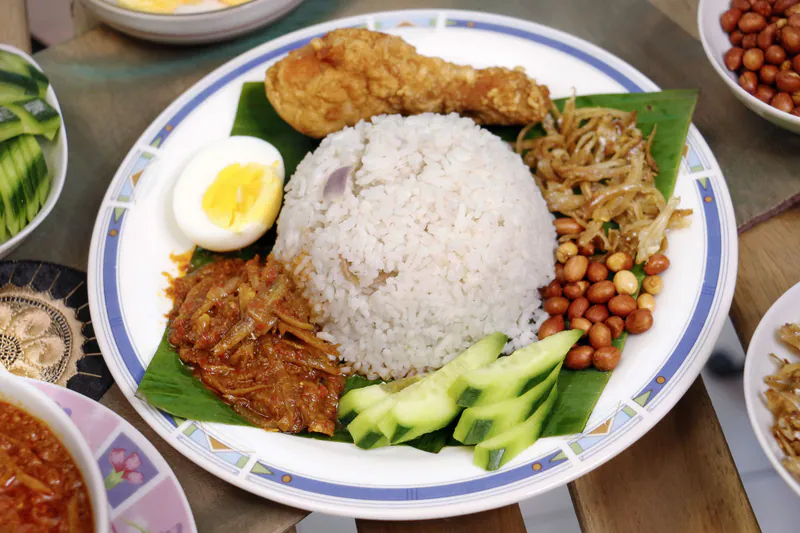
Nasi lemak
 Malaysian · 1 h 25 min · 963 kcal
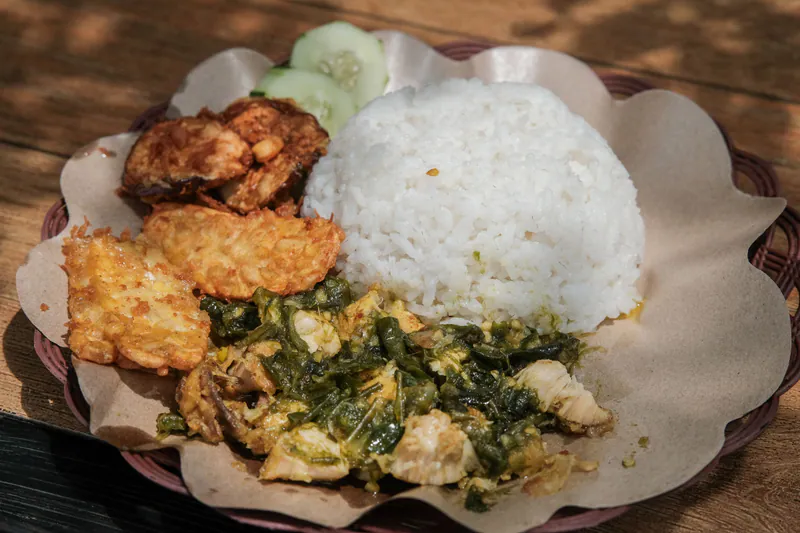
Ayam goreng kuning
Indonesian · 1 h 10 min · 639 kcal
Perkedel kentang
Indonesian · 55 min · 256 kcal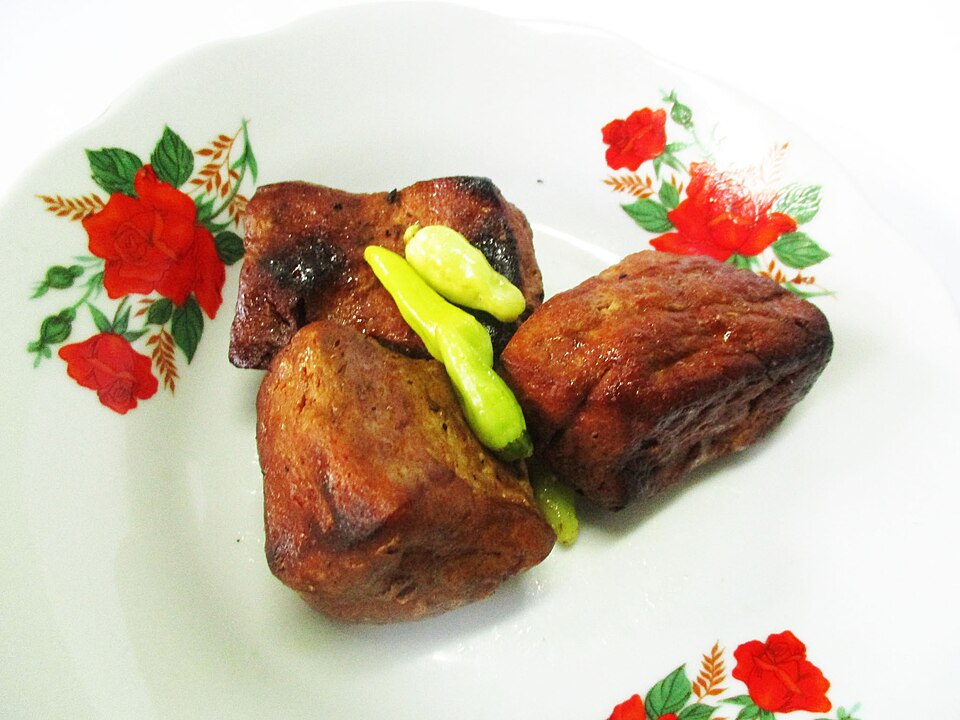
Tempe bacem
Indonesian · 55 min · 413 kcal · Vegan