
Majadito (Bolivian rice with charque)
Non-vegetarian
Majadito
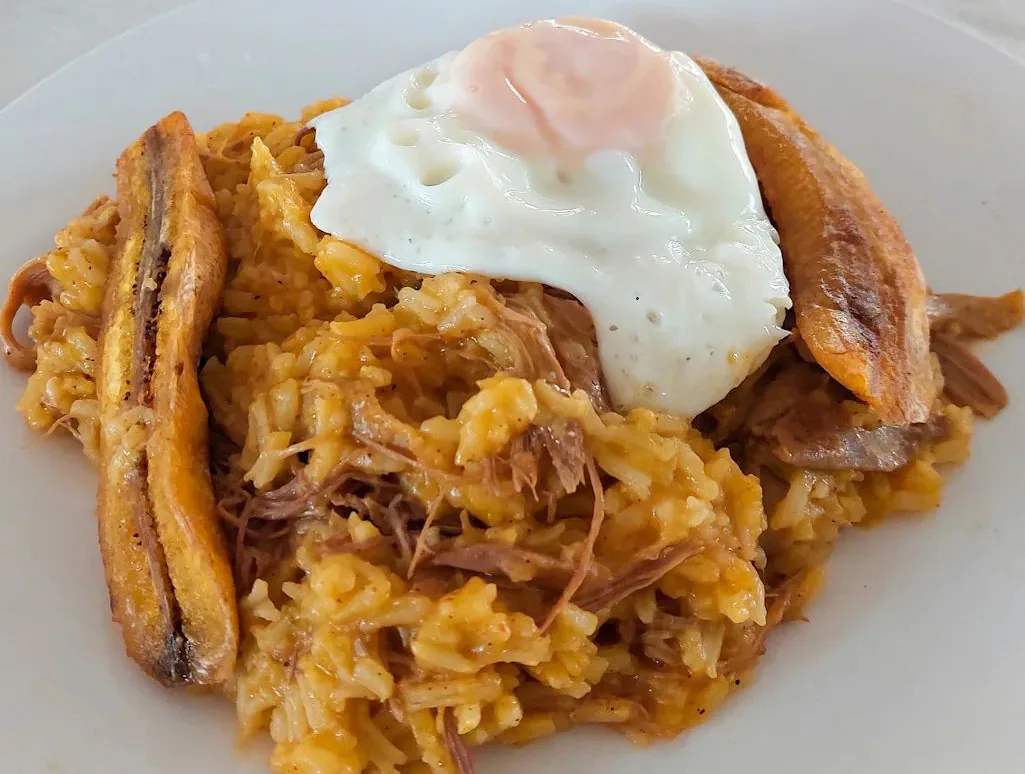
Rice cooked in a golden sofrito of onion, tomato, pepper and annatto with pounded, shredded charque (dried salted beef), from Santa Cruz in eastern Bolivia. It is nearly always crowned with a fried egg and served with fried ripe plantain and boiled cassava.
Majadito (Bolivian rice with charque) is a Bolivian rice dish, ready in about 3 hours 40 minutes and made with charque (dried salted beef), annatto (achiote) seeds / ground and long-grain white rice. It serves 4 and is rated intermediate to cook.
- Prep
- 25 min
- Cook
- 1 h 10 min
- Rest
- 5 min
- Total
- 3 h 40 min
- Serves
- 4
- Level
- Intermediate
- Calories
- 993
Plus 2 hours soaking the charque.
Main ingredients
Ingredients
For the charque
For the rice
To serve
Method
Charque
35 minStep 1
Drain the soaked charque (opens in a new tab), cover with fresh water and simmer for 25–30 minutes until tender. Drain (keep the water if it is not too salty), cool slightly, then pound in a mortar or with a mallet and pull into fine shreds.
- 35 min
- medium-low heat
- Saucepan (opens in a new tab)
- Mortar and pestle (opens in a new tab)
Rice
35 minStep 2
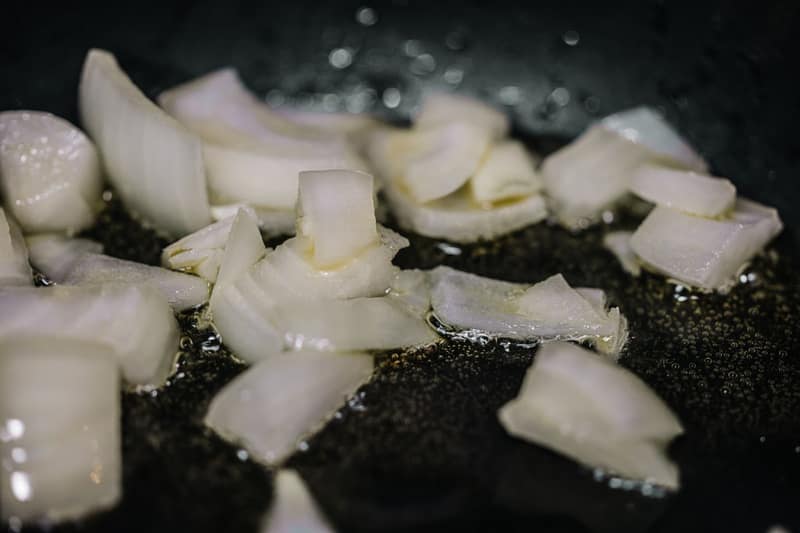
Heat the oil in a heavy pot and cook the onion (opens in a new tab) and red pepper (opens in a new tab) until soft, 6 minutes. Add the garlic (opens in a new tab), tomato (opens in a new tab), annatto, turmeric (opens in a new tab), cumin and paprika (opens in a new tab) and cook to a thick, deep orange sofrito, about 5 minutes.
- 11 min
- medium heat
- Dutch oven / casserole pot (opens in a new tab)
How it looks · Photo: Magda Ehlers on Pexels Step 3
Stir in the shredded charque (opens in a new tab) and fry for 2 minutes, then the rice, stirring until coated. Pour in the hot stock, add the pepper (opens in a new tab), taste and add salt only if needed.
- 4 min
- medium heat
Step 4
Bring to a boil, cover and cook over low heat for 18–20 minutes until the rice is tender and the liquid absorbed. The finished majadito should be moist; some cooks like it slightly creamy ('batido'). Stir in the parsley (opens in a new tab) and rest 5 minutes.
- 20 min
- low heat
Food safety: Cooked rice can carry Bacillus cereus spores that survive cooking; cool leftovers quickly and refrigerate within an hour.
To serve
14 minStep 5
Meanwhile fry the plantain (opens in a new tab) slices in half the oil until caramelised, 3 minutes per side, then fry the eggs (opens in a new tab) sunny side up in the rest.
Step 6
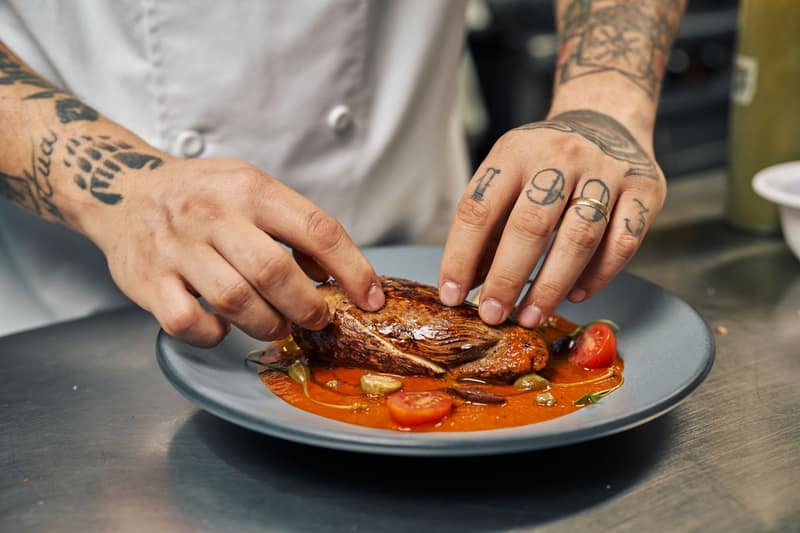
Serve the majadito topped with a fried egg (opens in a new tab), with fried plantain (opens in a new tab) and boiled cassava (opens in a new tab) alongside.
- 2 min
How it looks · Photo: Willians Huerta on Pexels
At a glance
1 · Charque in a pan
 Charque (dried salted beef)
then heat
2 · Rice in a pot
 Neutral vegetable oil
 Onion
 Red bell pepper
 Garlic
 Tomato
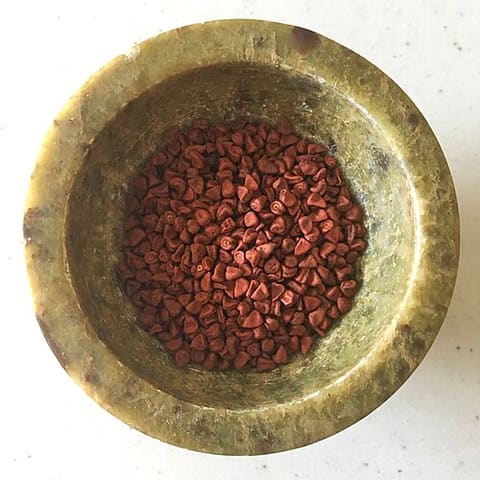 Annatto (achiote) seeds / ground
 Turmeric
 Ground cumin
 Paprika
 Long-grain white rice
 Chicken stock
 Black pepper
 Salt
 Parsley
then fry
3 · To serve in a pan
 Plantain
- Neutral vegetable oil
 Egg
 Cassava
About this dish
- Origin
- Santa Cruz de la Sierra, Bolivia · Well documentedThe name comes from 'majar', to pound, after the way the dried meat is beaten into shreds. Chicken or duck (majadito de pato) are also used today.More food from Bolivia
Bolivia - Dish
- Breakfast · Lunch · Dinner · Rice dishes · Main courses · Breakfast dishes
- Cooking method
- Boiled, Sautéed, Simmered, Pan-fried
- Taste
- savoury, salty, smoky
- Diet
- No gluten ingredients · Dairy-free · No nut ingredients · High-proteinWorked out from the ingredients. How labels work
All labels
Non-vegetarian · No gluten ingredients · Dairy-free · No nut ingredients · No added sugar · Alcohol-free · Pork-free · High-protein · Low-sodium - Good for
- Everyday
- Cook more with
- Annatto (achiote) seeds / ground · Long-grain white rice · Onion · Red bell pepper · Garlic · Tomato
- Techniques
- Pan-frying · Sautéing · Boiling · Simmering
Allergens
- Contains: Eggsfrom egg
- May contain: Celeryfrom chicken stock
Based on typical versions of these ingredients and not verified allergen-free. Brands differ and cross-contact happens, so always check labels. For severe allergies, follow your clinician’s advice.
Nutrition
993 kcal per serving
Estimated1 serving ≈ 1005 g · recipe makes 4
Where the energy comes from
- Protein 21%
- Carbohydrate 42%
- Fat 38%
| Nutrient | Per serving | Per 100 g* |
|---|---|---|
| Energy | 993 kcal | 99 kcal |
| Protein | 51.7 g | 5.1 g |
| Carbohydrate | 104.3 g | 10.4 g |
| Net carbohydrate | 99.6 g | 9.9 g |
| Sugars | 23.1 g | 2.3 g |
| Added sugars | 0 g | 0 g |
| Fibre | 4.7 g | 0.5 g |
| Fat | 42.1 g | 4.2 g |
| Saturated fat | 7.2 g | 0.7 g |
| Trans fat | — | — |
| Cholesterol | 288 mg | 29 mg |
| Sodium | 773 mg | 77 mg |
| Salt equivalent | 1.9 g | 0.2 g |
Vitamins & minerals per serving
- Potassium
- 1632 mg
- Calcium
- 143 mg
- Iron
- 9.1 mg
- Magnesium
- 121 mg
- Vitamin A (RAE)
- 225 µg
- Vitamin C
- 70 mg
- Vitamin D
- 1.2 µg
- Vitamin B12
- 3.9 µg
- Folate (DFE)
- 380 µg
How these numbers were made
- Calculated from USDA FoodData Central (SR Legacy) per-100 g values and the listed quantities.
- *Per 100 g of combined raw ingredients; the cooked dish may weigh more or less.
- Optional ingredients are not included: cassava.
- Not counted (tiny amounts or “to taste”): annatto (achiote) seeds / ground.
- Charque (dried salted beef): Raw beef chuck (FDC 171206) at 2× as a rough stand-in; charque is beef that has been salted and sun-dried, so it is far more concentrated and salty than fresh meat.
- “—” means the value isn’t known for enough of the ingredients; it is never zero by default.
- Values are estimates for guidance, not for medical dosing. U.S. Department of Agriculture, Agricultural Research Service. FoodData Central, 2019. fdc.nal.usda.gov.
Good to know
Tips
- Charque varies in saltiness; taste the soaking water and soak longer if it is very salty.
Serve with
- Serve with fried plantain, boiled cassava (yuca) and a spoon of llajua (Bolivian tomato–chilli salsa).
Food safety
- Cooked rice can carry Bacillus cereus spores that survive cooking; cool leftovers quickly and refrigerate within an hour.
- Always cook cassava thoroughly; raw cassava contains natural compounds that release cyanide.
Storage
- Keeps 1 day refrigerated.
Reheating
- Reheat with a splash of water, covered, until piping hot.
Variations
- Majadito batido: Cooked with extra liquid and stirred until creamy, like a risotto.
- Majadito de pato: Made with shredded duck instead of charque.
- Majadito de pollo: A milder version with shredded chicken.
Original editorial recipe · FriendsPantry editorial · source: TasteAtlas (dish facts) · Not yet independently reviewed · Added
Recipe DNA
How this dish is built
Built from the recipe’s own sections. Each band’s width is its share of the dish by weight. Choose a component to see what it does.
The staple
For the rice
- Neutral vegetable oil4 tbsp · 54 g
- Onion, finely chopped1 piece · 110 g
- Red bell pepper, finely chopped1 piece · 120 g
- Garlic, chopped3 clove · 12 g
- Tomato, peeled and chopped2 piece · 240 g
- Annatto (achiote) seeds / ground, ground (urucú)1 tsp · 2.5 g
- Turmeric0.25 tsp · 0.8 g
- Ground cumin0.5 tsp · 1.1 g
- Paprika0.5 tsp · 1.1 g
- Long-grain white rice, rinsed300 g
- Chicken stock750 ml · 750 g
- Black pepper0.5 tsp · 1.2 g
- Salt0.5 tsp · 3 g
- Parsley, chopped10 g
Reviews & corrections
Reviews come from signed-in cooks and appear after a moderator checks them. We never show made-up ratings.
You might also like
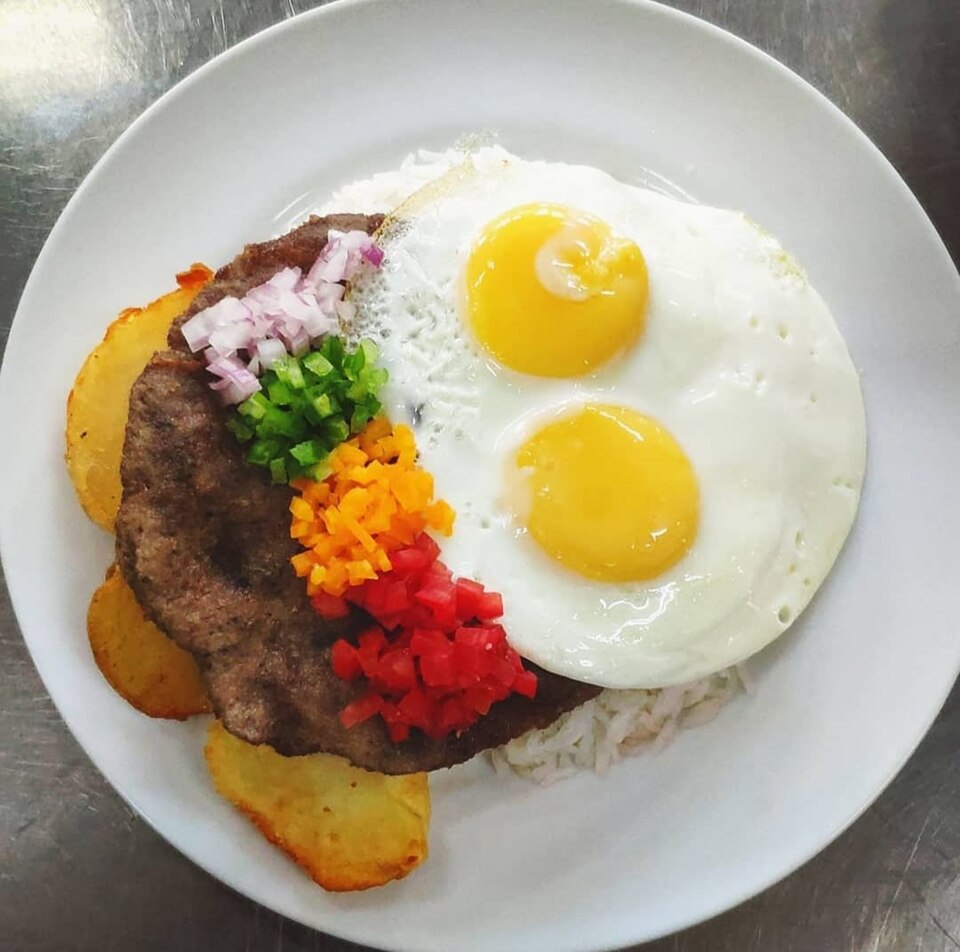
Silpancho
 Bolivian · 1 h 5 min · 909 kcal
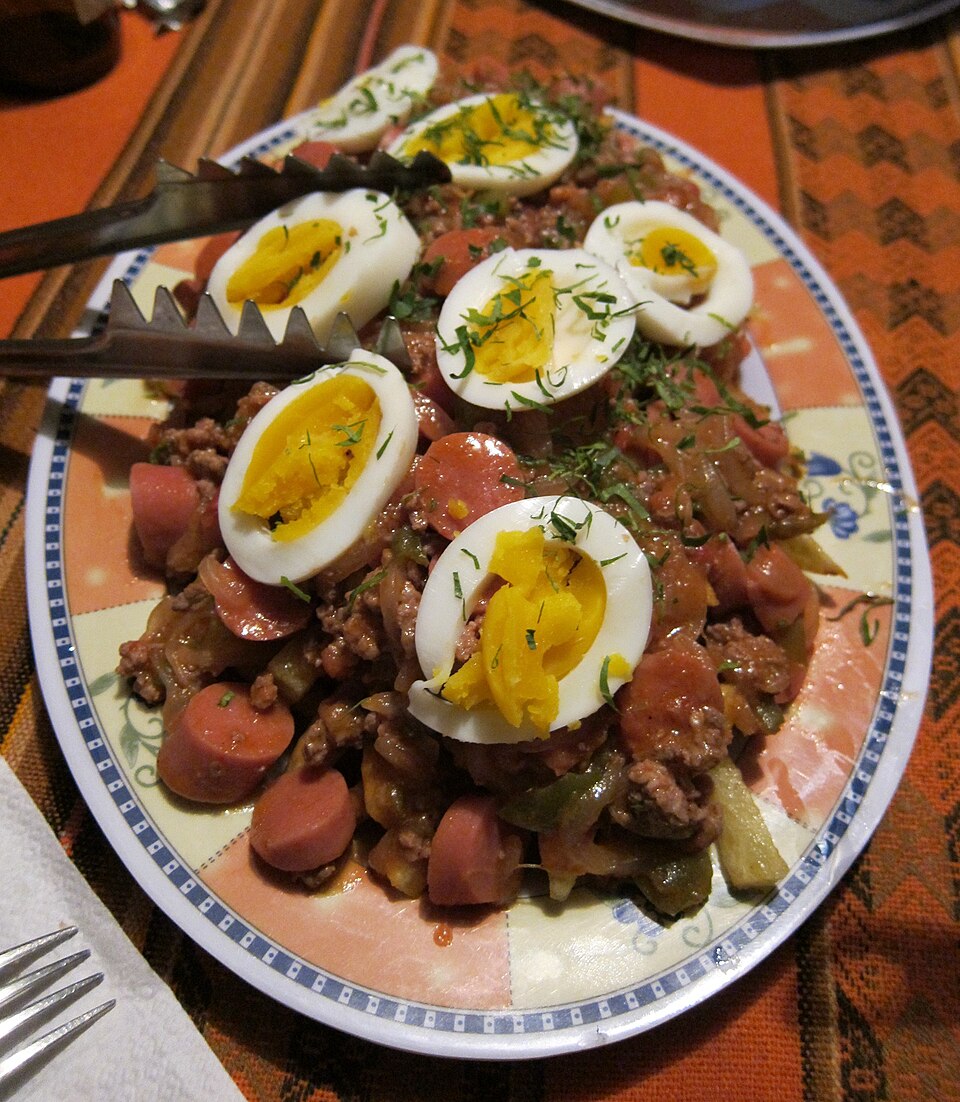
Pique macho
Bolivian · 55 min · 843 kcal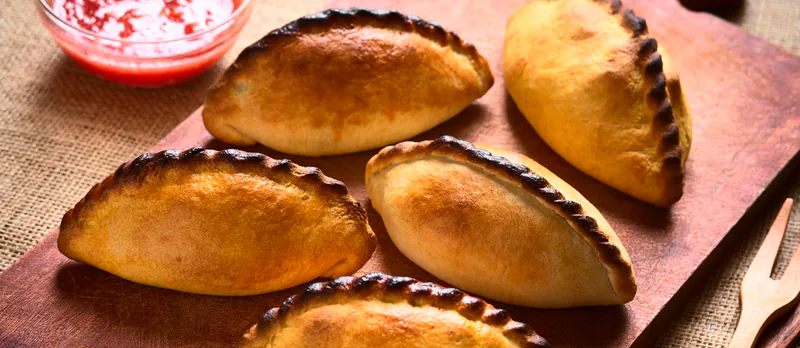
Salteñas
Bolivian · 6 h 15 min · 646 kcal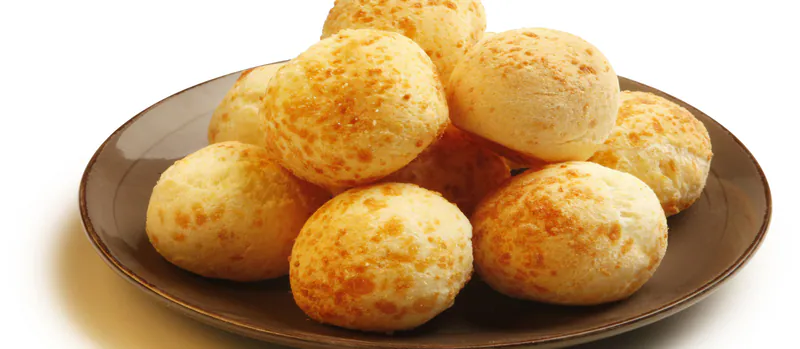
Cuñapé (Bolivian cassava-starch cheese buns)
Bolivian · 40 min · 353 kcal · Contains egg