
 Bolivian · Breads & flatbreads
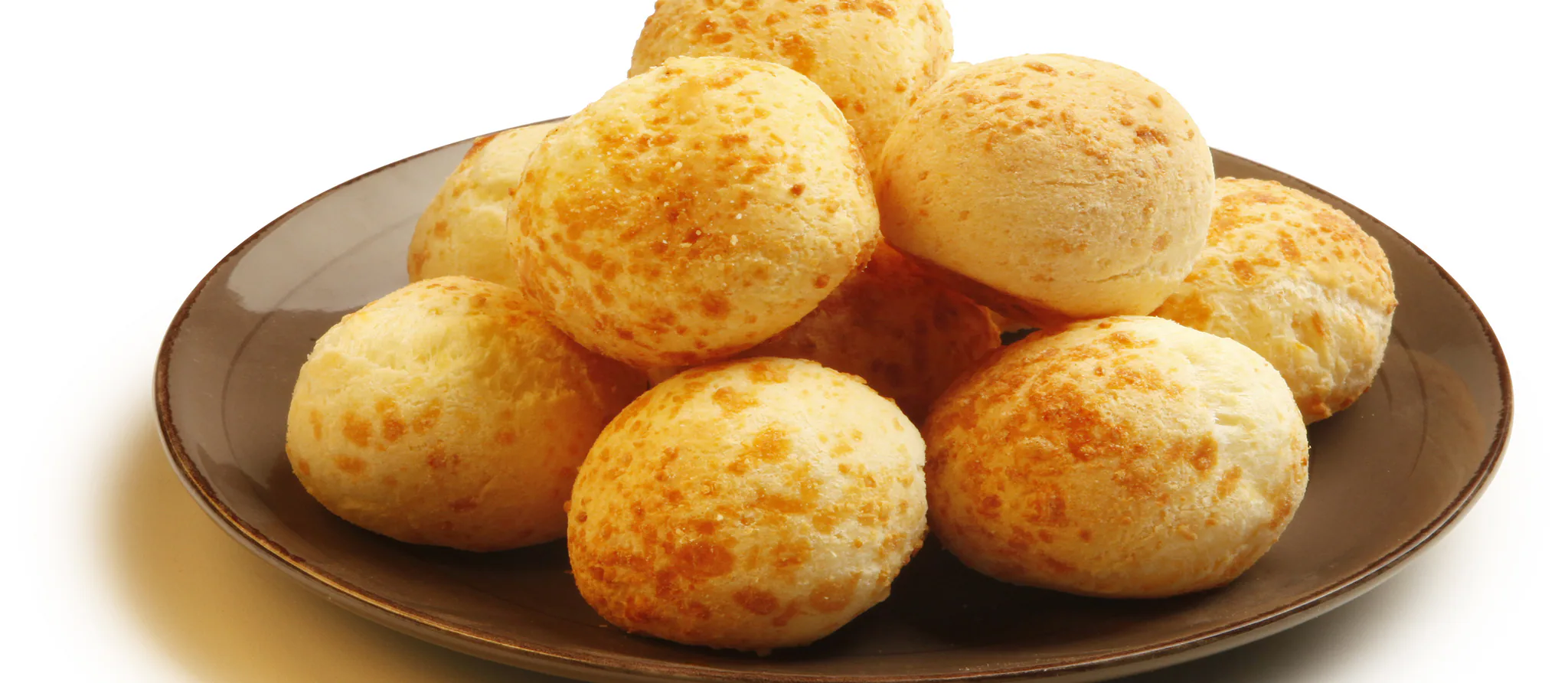
Cuñapé (Bolivian cassava-starch cheese buns)
Contains egg (no meat or fish)
Cuñapé
Little golden buns of cassava starch and plenty of fresh white cheese, bound with egg, butter and milk and baked until crisp outside and stretchy inside. The classic afternoon snack of Santa Cruz and the Bolivian lowlands.
Cuñapé (Bolivian cassava-starch cheese buns) is a Bolivian bread, ready in about 40 minutes and made with tapioca starch and queso fresco. It serves 6 and is rated easy to cook.
- Prep
- 15 min
- Cook
- 20 min
- Rest
- 5 min
- Total
- 40 min
- Serves
- 6
- Level
- Easy
- Calories
- 353
Main ingredients
Method
Step 1
Heat the oven (opens in a new tab) to 200 °C and line a baking tray. Mix the cassava starch (opens in a new tab), cheese, baking powder (opens in a new tab) and salt in a bowl, rubbing the cheese into the starch with your fingers.
- 4 min
- 200°C
- Mixing bowl (opens in a new tab)
Step 2
Add the egg (opens in a new tab) and soft butter (opens in a new tab) and knead, adding milk (opens in a new tab) a spoonful at a time, until the dough is smooth, soft and pliable and no longer cracks when pressed. It should not stick to your hands.
- 5 min
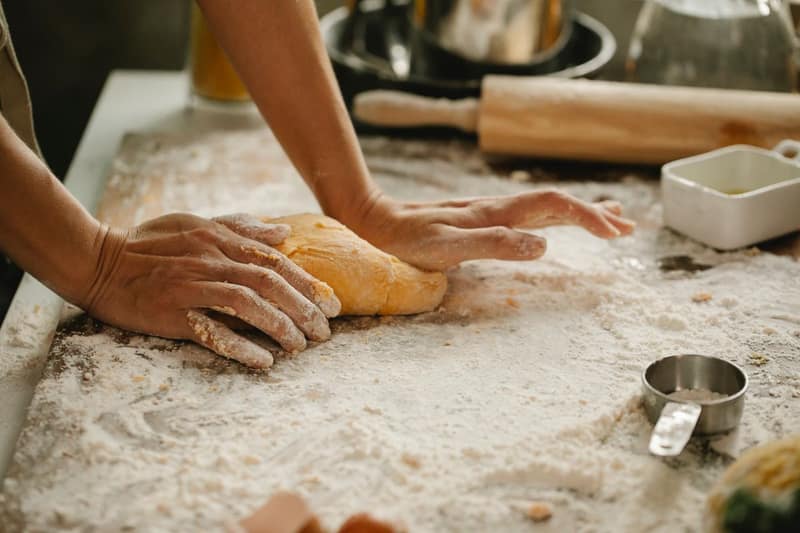
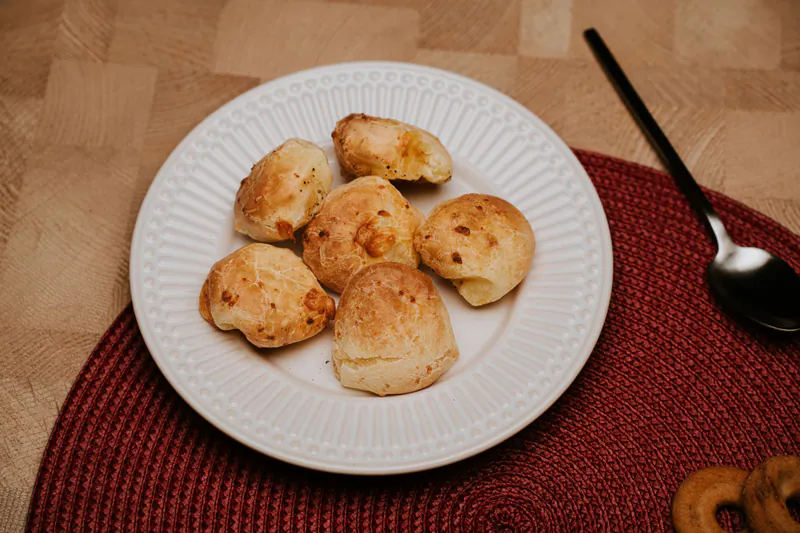
How it looks · Photo: Klaus Nielsen on Pexels Step 3
Roll into balls of about 25 g (walnut-sized), or into small rings, and set them on the tray 3 cm apart. Rest for 5 minutes while the oven (opens in a new tab) finishes heating.
Step 4
Bake for 15–20 minutes until puffed, cracked on top and golden at the base. Serve warm.
- 18 min
- 200°C
- Oven (opens in a new tab)
Cuñapés harden as they cool; eat them within the hour.
How it looks · Photo: Willians Huerta on Pexels
At a glance
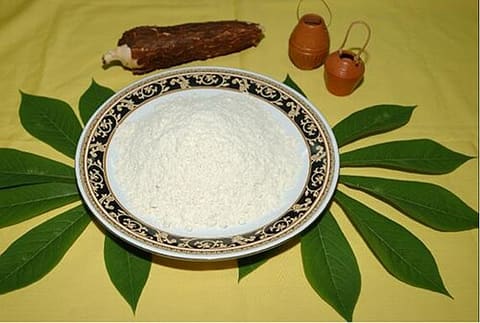 Tapioca starch
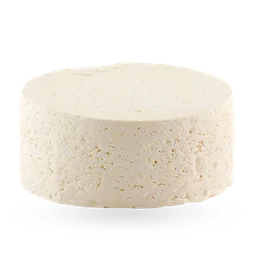 Queso fresco
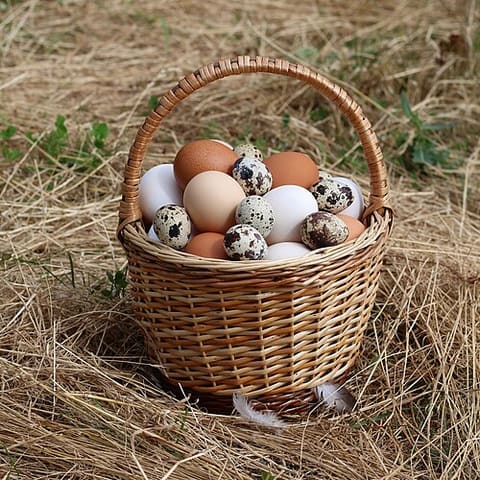 Egg
 Butter
 Baking powder
 Salt
 Milk
About this dish
- Origin
- Santa Cruz, Beni and Pando, Bolivia · Well documentedThe name is thought to come from Guaraní words for cassava and cheese; it is a close cousin of Brazilian pão de queijo and Paraguayan chipa.More food from Bolivia
Bolivia - Dish
- Breakfast · Snack · Breads & flatbreads · Finger food
- Cooking method
- Oven-baked
- Taste
- salty, savoury, creamy
- Diet
- Vegetarian (lacto-ovo) · No nut ingredientsWorked out from the ingredients. How labels work
All labels
Vegetarian (lacto-ovo) · Eggetarian · Pescatarian · Flexitarian-friendly · No nut ingredients · No added sugar · Alcohol-free · Pork-free · Beef-free - Good for
- Child-friendly · Freezer-friendly · Portable / lunchbox · Everyday
- Cook more with
- Tapioca starch · Queso fresco · Egg · Butter · Baking powder · Milk
Allergens
- Contains: Milkfrom queso fresco, butter, milk
- Contains: Eggsfrom egg
- May contain: Wheatfrom baking powder
- May contain: Glutenfrom baking powder
Based on typical versions of these ingredients and not verified allergen-free. Brands differ and cross-contact happens, so always check labels. For severe allergies, follow your clinician’s advice.
Nutrition
353 kcal per serving
Estimated1 serving ≈ 117 g · recipe makes 6
Where the energy comes from
- Protein 12%
- Carbohydrate 44%
- Fat 44%
| Nutrient | Per serving | Per 100 g* |
|---|---|---|
| Energy | 353 kcal | 303 kcal |
| Protein | 10.5 g | 9 g |
| Carbohydrate | 39.2 g | 33.6 g |
| Net carbohydrate | 38.8 g | 33.3 g |
| Sugars | 3.1 g | 2.7 g |
| Added sugars | 0 g | 0 g |
| Fibre | 0.4 g | 0.3 g |
| Fat | 17.1 g | 14.7 g |
| Saturated fat | 9.5 g | 8.1 g |
| Trans fat | — | — |
| Cholesterol | 77 mg | 66 mg |
| Sodium | 697 mg | 598 mg |
| Salt equivalent | 1.7 g | 1.5 g |
Vitamins & minerals per serving
- Potassium
- 96 mg
- Calcium
- 352 mg
- Iron
- 1 mg
- Magnesium
- 15 mg
- Vitamin A (RAE)
- 164 µg
- Vitamin C
- 0 mg
- Vitamin D
- 1.7 µg
- Vitamin B12
- 1 µg
- Folate (DFE)
- 10 µg
How these numbers were made
- Calculated from USDA FoodData Central (SR Legacy) per-100 g values and the listed quantities.
- *Per 100 g of combined raw ingredients; the cooked dish may weigh more or less.
- Tapioca starch: Dry pearl tapioca (FDC 169717) used as a stand-in; both are almost pure cassava starch.
- “—” means the value isn’t known for enough of the ingredients; it is never zero by default.
- Values are estimates for guidance, not for medical dosing. U.S. Department of Agriculture, Agricultural Research Service. FoodData Central, 2019. fdc.nal.usda.gov.
Good to know
Tips
- The drier and saltier the cheese, the less extra salt you need.
- Freeze unbaked balls on a tray, then bag them; bake from frozen for 5 extra minutes.
Common mistakes
- Adding too much milk; the buns spread flat instead of puffing.
Serve with
- Serve with api (hot purple corn drink), coffee or hot chocolate, as at the street stalls of Santa Cruz.
Storage
- Best freshly baked. Keep for 1 day in a bag at room temperature.
Reheating
- Warm in a 180 °C oven for 4–5 minutes to soften again.
Variations
- Cuñapé de horno de barro: Baked in a wood-fired clay oven for a smokier, crisper crust.
- Cuñapé relleno: Larger buns filled with extra cheese or dulce de leche.
Original editorial recipe · FriendsPantry editorial · source: TasteAtlas (dish facts) · Not yet independently reviewed · Added
Recipe DNA
How this dish is built
Reviews & corrections
Reviews come from signed-in cooks and appear after a moderator checks them. We never show made-up ratings.
You might also like
Pão de queijo
 Brazilian · 55 min · 86 kcal · Contains egg
Chipa
 Paraguayan · 50 min · 395 kcal · Contains egg
Pan de yuca (Colombian cassava cheese bread)
 Colombian · 38 min · 138 kcal · Contains egg
Pan de queso (Colombian cheese bread)
Colombian · 45 min · 381 kcal · Contains egg