
 Cantonese · Chinese · Sweets & confectionery
Jian dui (sesame balls)
Vegetarian
煎堆 · jiān duī
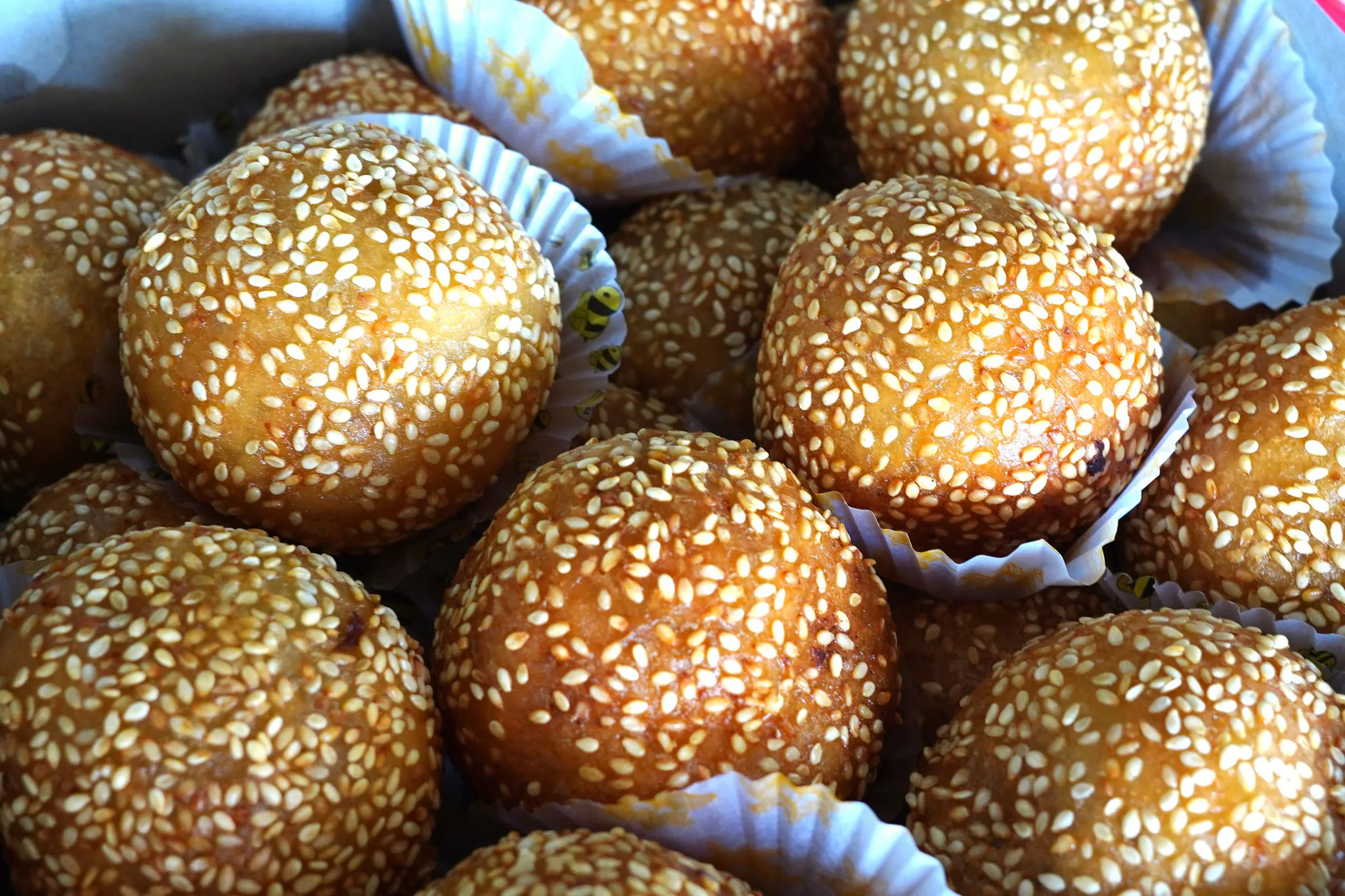
Golden, hollow balls of glutinous rice dough rolled in sesame seeds and deep-fried until crisp outside, chewy inside, around a sweet red-bean filling — a dim sum favourite.
Jian dui (sesame balls) is a Cantonese sweet from China, ready in about 1 hour 5 minutes and made with glutinous rice flour, sweet red bean paste and sesame seeds. It serves 16 and is rated advanced to cook.
- Prep
- 40 min
- Cook
- 25 min
- Total
- 1 h 5 min
- Serves
- 16
- Level
- Advanced
- Calories
- 150
Main ingredients
Method
Step 1
Dissolve the sugar (opens in a new tab) in the hot water, pour into the flour and mix, then knead into a smooth, soft dough.

How it looks · Photo: Klaus Nielsen on Pexels Step 2
Divide the red bean paste into 16 balls. Flatten 16 pieces of dough into cups, wrap a ball of paste in each and roll smooth.
- 20 min
Step 3
Dip each ball briefly in water and roll in sesame seeds (opens in a new tab), pressing so they stick firmly.
- 8 min
Step 4
Heat the oil to 150 °C. Fry in batches for 8–10 minutes, pressing them gently against the side of the wok (opens in a new tab) with a spoon as they float — this makes them expand. Raise the heat to 170 °C for the last minute to colour. Drain on paper.
- 25 min
- 150°C · oil, rising to 170 °C
- Wok (opens in a new tab)
- Food thermometer (opens in a new tab)
- Slotted spoon (opens in a new tab)
Food safety: Use a deep, heavy pan no more than a third full of oil, keep a lid nearby and never leave hot oil unattended. Loose sesame can pop — stand back.
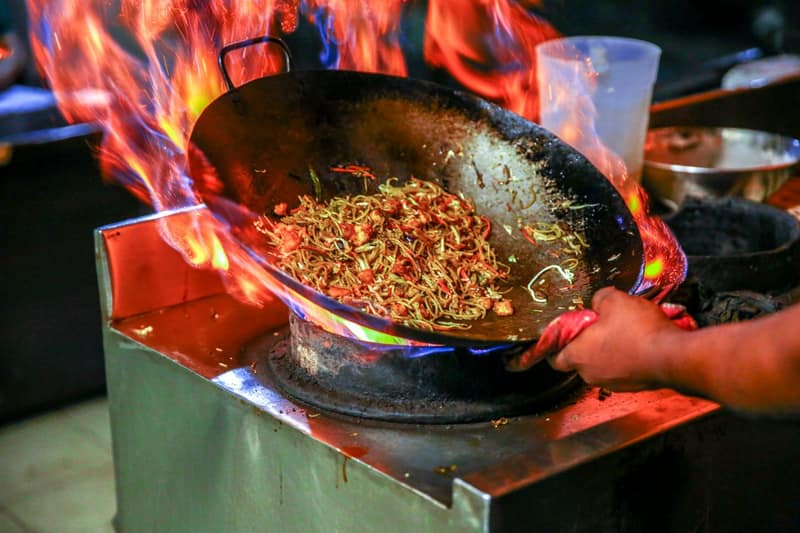
How it looks · Photo: Aesthos AR. Photography on Pexels
At a glance
 Glutinous rice flour
 Sugar
 Sweet red bean paste
 Sesame seeds
 Neutral vegetable oil
About this dish
- Origin
- China · Commonly attributedRecorded in China since at least the Tang dynasty; today strongly associated with Cantonese dim sum and Lunar New Year.Also popular in Hong Kong, Vietnam, MalaysiaMore food from China
China - Dish
- Snack · Dessert · Sweets & confectionery · Dumplings
- Cooking method
- Deep-fried
- Taste
- nutty, sweet
- Diet
- Vegan · No gluten ingredients · Dairy-free · No nut ingredientsWorked out from the ingredients. How labels work
All labels
Vegan · Plant-based · Vegetarian (lacto-ovo) · Eggetarian · Lacto-vegetarian · Ovo-vegetarian · Pescatarian · Flexitarian-friendly · No gluten ingredients · Dairy-free · Egg-free · No nut ingredients · Alcohol-free · Pork-free · Beef-free · Low-sodium · DASH-style - Good for
- Festive & celebration
- Cook more with
- Glutinous rice flour · Sweet red bean paste · Sesame seeds · Sugar
- Techniques
- Deep-frying · Kneading
Allergens
- Contains: Sesamefrom sesame seeds
Based on typical versions of these ingredients and not verified allergen-free. Brands differ and cross-contact happens, so always check labels. For severe allergies, follow your clinician’s advice.
Nutrition
150 kcal per serving
Estimated1 serving ≈ 50 g · recipe makes 16
Where the energy comes from
- Protein 6%
- Carbohydrate 63%
- Fat 31%
| Nutrient | Per serving | Per 100 g* |
|---|---|---|
| Energy | 150 kcal | 299 kcal |
| Protein | 2.3 g | 4.6 g |
| Carbohydrate | 23.7 g | 47.4 g |
| Net carbohydrate | — | — |
| Sugars | — | — |
| Added sugars | 6.9 g | 13.8 g |
| Fibre | — | — |
| Fat | 5.2 g | 10.4 g |
| Saturated fat | 0.6 g | 1.2 g |
| Trans fat | — | — |
| Cholesterol | 0 mg | 0 mg |
| Sodium | 28 mg | 56 mg |
| Salt equivalent | 0.1 g | 0.1 g |
Vitamins & minerals per serving
- Potassium
- 50 mg
- Calcium
- 54 mg
- Iron
- 0.9 mg
- Magnesium
- 27 mg
- Vitamin A (RAE)
- 0 µg
- Vitamin C
- 0 mg
- Vitamin D
- 0 µg
- Vitamin B12
- 0 µg
- Folate (DFE)
- 19 µg
How these numbers were made
- Calculated from USDA FoodData Central (SR Legacy) per-100 g values and the listed quantities.
- *Per 100 g of combined raw ingredients; the cooked dish may weigh more or less.
- Glutinous rice flour: White rice flour (FDC 169714) used as a stand-in; glutinous rice flour has a near-identical macronutrient profile.
- Sweet red bean paste: Canned sweetened adzuki beans (FDC 173729) used as a stand-in; home-made or bought anko is usually a little drier and sweeter.
- “—” means the value isn’t known for enough of the ingredients; it is never zero by default.
- Values are estimates for guidance, not for medical dosing. U.S. Department of Agriculture, Agricultural Research Service. FoodData Central, 2019. fdc.nal.usda.gov.
Good to know
Storage
- Best eaten warm on the day; they toughen as they cool.
Original editorial recipe · FriendsPantry editorial · Not yet independently reviewed · Added
Recipe DNA
How this dish is built
Grouped by each ingredient’s role in the dish. Each band’s width is its share of the dish by weight. Choose a component to see what it does.
Reviews & corrections
Reviews come from signed-in cooks and appear after a moderator checks them. We never show made-up ratings.
You might also like
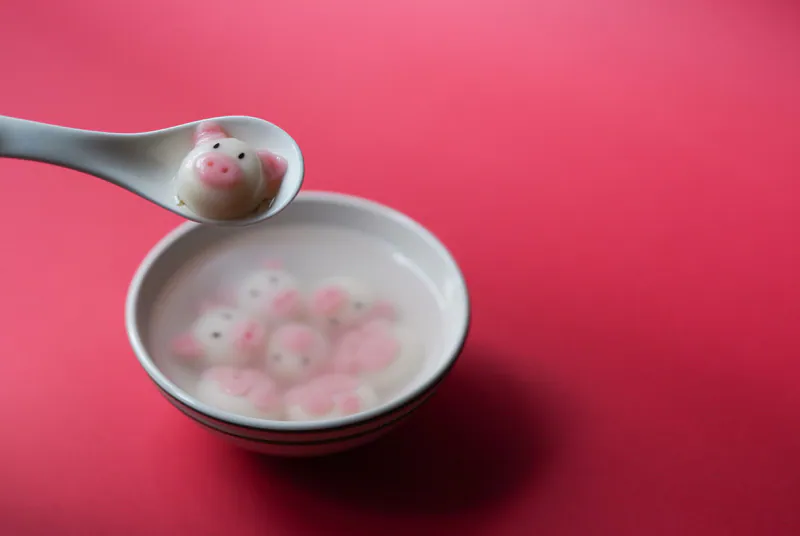
Tangyuan (black sesame rice balls in ginger syrup)
Chinese · 1 h 30 min · 429 kcal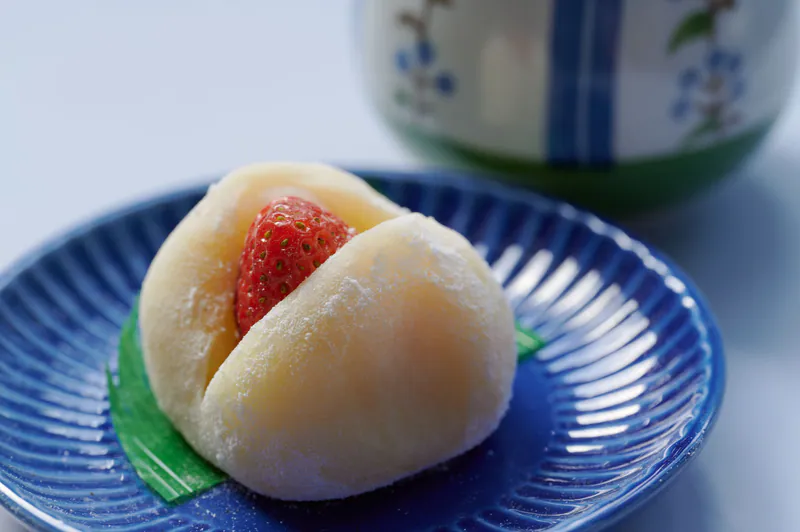
Ichigo daifuku (strawberry mochi)
 Japanese · 29 min · 171 kcal · Vegan
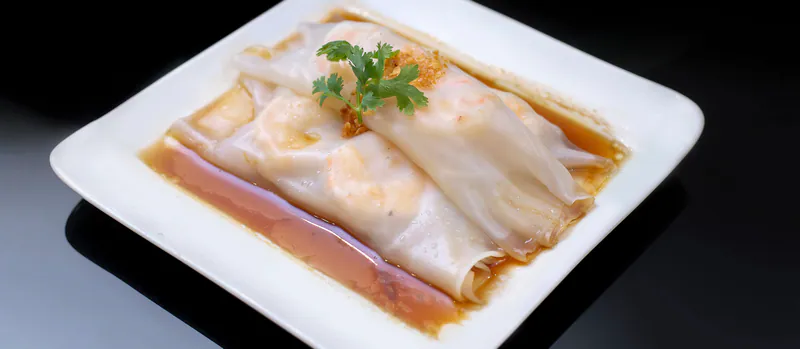
Cheung fun (steamed rice noodle rolls with prawns)
Cantonese · 1 h 20 min · 303 kcal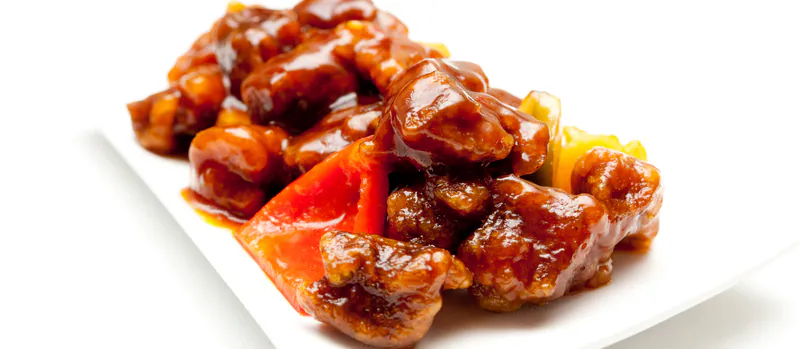
Tang cu pai gu (sweet and sour spare ribs)
Chinese · 1 h 20 min · 767 kcal