
 Sri Lankan · Sweets & confectionery
Helapa (Sri Lankan finger millet and coconut parcels)
Vegetarian
හැලප · hælapa
Soft, earthy little sweets of finger millet and rice flour cooked with kithul treacle, grated coconut and cardamom, pressed onto leaves, folded and steamed until firm. A village tea-time treat from Sri Lanka, unwrapped warm from its fragrant leaf.
Helapa (Sri Lankan finger millet and coconut parcels) is a Sri Lankan sweet, ready in about 1 hour 5 minutes and made with finger millet flour (ragi), coconut and kithul treacle (fishtail palm syrup). It serves 10 and is rated intermediate to cook.
No licensed photograph of this dish yet.
- Prep
- 25 min
- Cook
- 30 min
- Rest
- 10 min
- Total
- 1 h 5 min
- Serves
- 10
- Level
- Intermediate
- Calories
- 204
Main ingredients
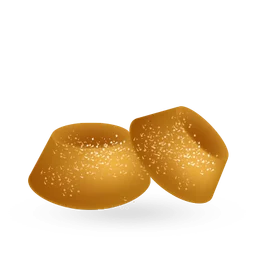
Ingredients
For the dough
For the coconut treacle
For wrapping
Method
Coconut treacle
6 minStep 1
Warm the kithul treacle (opens in a new tab) in a saucepan (opens in a new tab) over medium-low heat. Add the grated coconut (opens in a new tab) and crushed cardamom (opens in a new tab) and stir for 5–6 minutes until the coconut has soaked up most of the treacle and the mixture is sticky. Take off the heat.
- 6 min
- medium-low heat
- Saucepan (opens in a new tab)
- Mortar and pestle (opens in a new tab)
Dough
8 minStep 2
Mix the finger millet flour (opens in a new tab), rice flour (opens in a new tab) and salt in a bowl. Add the coconut (opens in a new tab)–treacle mixture and work it in with a spoon, then add warm water little by little and knead to a soft, slightly sticky dough that holds its shape.
The dough should feel like soft play dough; add a spoon of rice flour if it is too wet to shape.
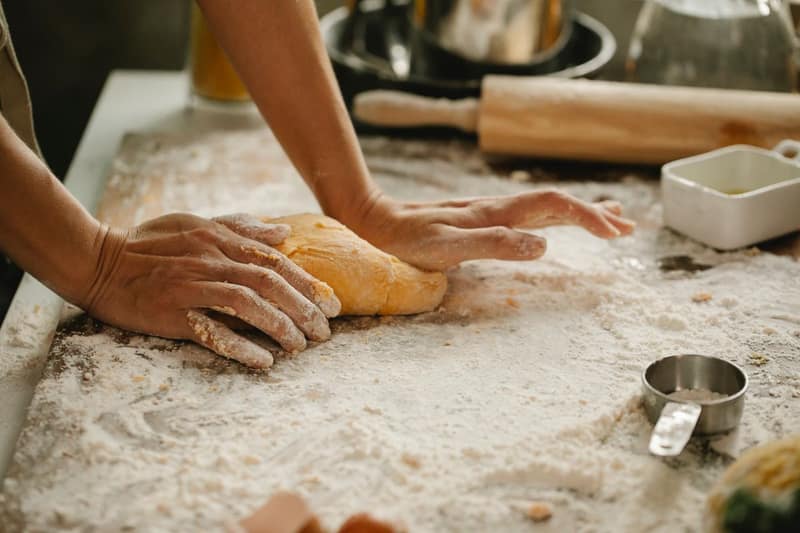
How it looks · Photo: Klaus Nielsen on Pexels
Wrapping
34 minStep 3
Pass the banana-leaf pieces quickly over a flame or dip them in hot water so they turn bright and pliable. Wipe them dry.
- 4 min
Step 4
Divide the dough into 10 portions. Flatten each onto the centre of a leaf with wet fingers into a rectangle about 1 cm thick, then fold the leaf in half over it and tuck the ends under.
- 10 min
Step 5
Set the parcels in a steamer (opens in a new tab) over boiling water, cover and steam for 20 minutes until the dough is firm and no longer sticky when pressed.
- 20 min
- medium-high heat
- Steamer (opens in a new tab)
Step 6
Leave to rest for 10 minutes, then unwrap and eat warm or at room temperature.
At a glance
1 · Coconut treacle in a pan
 Coconut
- Kithul treacle (fishtail palm syrup)
 Cardamom
then mix
2 · Dough in a bowl
- Finger millet flour (ragi)
 Rice flour
 Salt
then pass
3 · Wrapping in a bowl
 Banana leaves
About this dish
- Origin
- Sri Lanka (Sinhala village cooking), Sri Lanka · Commonly attributedTraditionally wrapped in leaves of the kanda tree (Macaranga peltata), which give a faint herbal aroma; banana leaf is the usual substitute outside Sri Lanka. Some cooks fill the millet dough with a coconut–treacle mixture (pani pol) instead of mixing it through.More food from Sri Lanka
Sri Lanka - Dish
- Snack · Breakfast · Sweets & confectionery · Desserts
- Cooking method
- Simmered, Steamed
- Taste
- sweet, earthy, aromatic / warmly spiced
- Diet
- Vegan · No gluten ingredients · Dairy-free · No nut ingredientsWorked out from the ingredients. How labels work
All labels
Vegan · Plant-based · Vegetarian (lacto-ovo) · Eggetarian · Lacto-vegetarian · Ovo-vegetarian · Pescatarian · Flexitarian-friendly · No gluten ingredients · Dairy-free · Egg-free · No nut ingredients · Alcohol-free · Pork-free · Beef-free · Low-sodium - Good for
- Make-ahead · Portable / lunchbox · Festive & celebration
- Cook more with
- Finger millet flour (ragi) · Coconut · Kithul treacle (fishtail palm syrup) · Rice flour · Cardamom · Banana leaves
Allergens
None of the 14 major allergens appear in the listed ingredients.
Based on typical versions of these ingredients and not verified allergen-free. Brands differ and cross-contact happens, so always check labels. For severe allergies, follow your clinician’s advice.
Nutrition
204 kcal per serving
Estimated1 serving ≈ 79 g · recipe makes 10
Where the energy comes from
- Protein 6%
- Carbohydrate 68%
- Fat 26%
| Nutrient | Per serving | Per 100 g* |
|---|---|---|
| Energy | 204 kcal | 257 kcal |
| Protein | 3 g | 3.8 g |
| Carbohydrate | 35.6 g | 44.9 g |
| Net carbohydrate | 33.3 g | 42.1 g |
| Sugars | 13.3 g | 16.8 g |
| Added sugars | 12 g | 15.1 g |
| Fibre | 2.2 g | 2.8 g |
| Fat | 6 g | 7.5 g |
| Saturated fat | 4.6 g | 5.8 g |
| Trans fat | — | — |
| Cholesterol | — | — |
| Sodium | 65 mg | 82 mg |
| Salt equivalent | 0.2 g | 0.2 g |
Vitamins & minerals per serving
- Potassium
- 146 mg
- Calcium
- 28 mg
- Iron
- 1.2 mg
- Magnesium
- 35 mg
- Vitamin A (RAE)
- —
- Vitamin C
- 1 mg
- Vitamin D
- —
- Vitamin B12
- —
- Folate (DFE)
- 13 µg
How these numbers were made
- Calculated from USDA FoodData Central (SR Legacy) per-100 g values and the listed quantities.
- *Per 100 g of combined raw ingredients; the cooked dish may weigh more or less.
- Not counted (tiny amounts or “to taste”): banana leaves.
- Finger millet flour (ragi): Millet flour (FDC 172023) used as a stand-in; finger millet is notably higher in calcium, so calcium is understated.
- Kithul treacle (fishtail palm syrup): Maple syrup (FDC 169661) used as a stand-in; kithul treacle is sap of the fishtail palm (Caryota urens) boiled down to a dark, smoky syrup of similar sugar content.
- “—” means the value isn’t known for enough of the ingredients; it is never zero by default.
- Values are estimates for guidance, not for medical dosing. U.S. Department of Agriculture, Agricultural Research Service. FoodData Central, 2019. fdc.nal.usda.gov.
Good to know
Tips
- Lightly dry-roasting the rice flour in a pan until it smells toasty gives the helapa a better, less pasty texture.
- If you can buy fresh kanda leaves at a Sri Lankan grocer, use them — they are the classic wrapper.
Common mistakes
- Adding all the water at once; finger millet flours vary a lot in how much they absorb.
Serve with
- Serve with a cup of plain Ceylon tea, as part of a New Year table with kokis, kavum and kiribath.
Storage
- Keeps 2 days in the leaves in a covered container at cool room temperature, or 4 days refrigerated.
Reheating
- Re-steam in their leaves for 5 minutes.
Variations
- Filled helapa: The plain millet dough is spread on the leaf, topped with the coconut–treacle filling and folded over so the sweet centre is enclosed.
- Rice flour helapa: Made with all rice flour for a paler, softer parcel where finger millet is not available.
Original editorial recipe · FriendsPantry editorial · source: TasteAtlas (dish facts) · Not yet independently reviewed · Added
Recipe DNA
How this dish is built
Built from the recipe’s own sections. Each band’s width is its share of the dish by weight. Choose a component to see what it does.
Structure
For the dough
- Finger millet flour (ragi), kurakkan (finger millet) flour200 g
- Rice flour, roasted white rice flour60 g
- Salt0.25 tsp · 1.5 g
- Water180 ml · 180 g
Reviews & corrections
Reviews come from signed-in cooks and appear after a moderator checks them. We never show made-up ratings.
You might also like
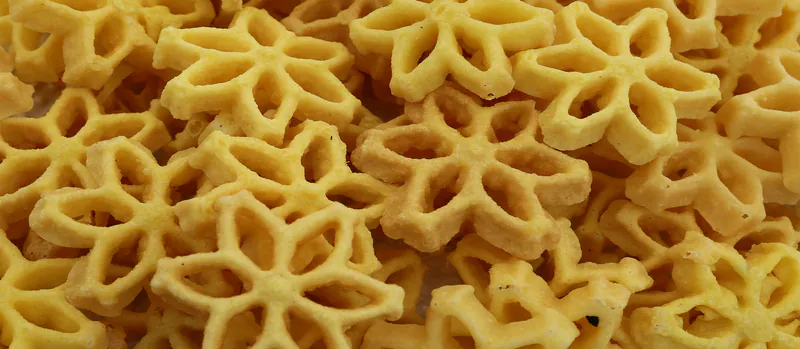
Kokis (Sri Lankan rosette cookies)
Sri Lankan · 1 h 30 min · 210 kcal · Contains egg
Kiribath
Sri Lankan · 55 min · 367 kcal · Vegan
Aluwa (Sri Lankan rice flour diamonds)
Sri Lankan · 1 h 15 min · 115 kcal · Vegan
Lavariya (string hopper parcels with sweet coconut)
Sri Lankan · 1 h 10 min · 329 kcal · Vegan