
Biangbiang noodles (Xi'an hot-oil noodles)
Vegetarian
油泼扯面 · yóupō chěmiàn
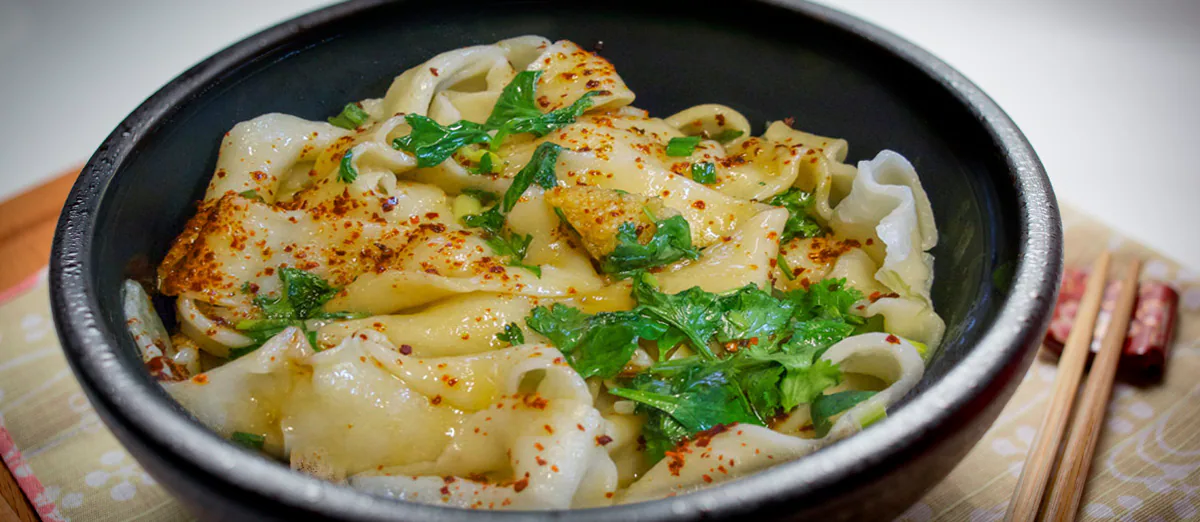
Wide, chewy belt noodles pulled by hand from a rested dough, topped with garlic, spring onion, chilli flakes and Sichuan pepper and scorched with smoking-hot oil, then tossed with soy sauce and black vinegar. A defining dish of Xi'an in Shaanxi province.
Biangbiang noodles (Xi'an hot-oil noodles) is a Chinese noodle dish from China, ready in about 3 hours 15 minutes and made with all-purpose flour, red chilli flakes and neutral vegetable oil. It serves 3 and is rated intermediate to cook.
- Prep
- 30 min
- Cook
- 15 min
- Rest
- 2 h 30 min
- Total
- 3 h 15 min
- Serves
- 3
- Level
- Intermediate
- Calories
- 860
Main ingredients
Ingredients
For the noodles
For the toppings
For the hot oil
For the sauce
Method
Noodles
28 minStep 1
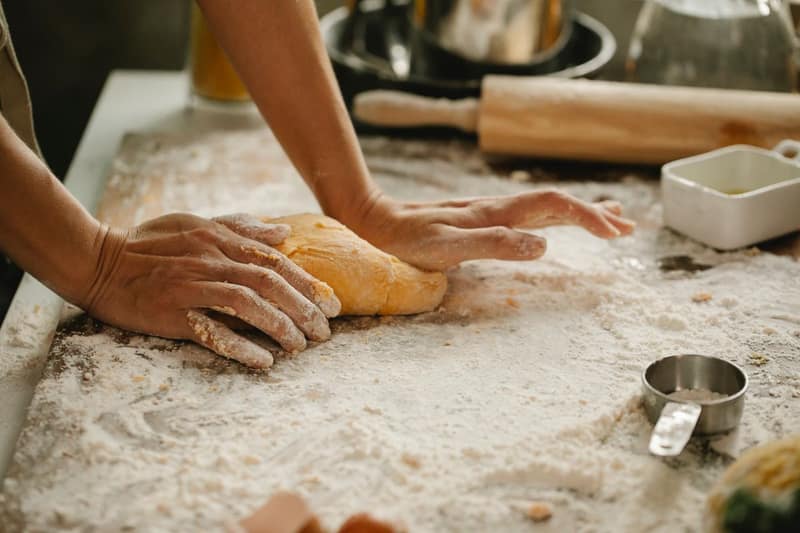
Dissolve the salt in the water and mix into the flour to a shaggy dough. Knead for 5 minutes, rest for 15 minutes, then knead again until smooth. Cover and rest for 30 minutes.
How it looks · Photo: Klaus Nielsen on Pexels Step 2
Divide into 6 pieces, roll each into a log, then flatten into an oblong about 12 × 6 cm. Brush all over with oil, cover tightly and rest for at least 2 hours at room temperature.
The long rest relaxes the gluten so the dough stretches without tearing.
Step 3
Bring a large pot of water to the boil. Roll one piece a little longer, press a chopstick lengthways down its centre, then hold the ends and pull, bouncing and slapping it on the counter, until it is about 1 m long and 3–4 cm wide. Tear it in half along the groove into a loop.
- 10 min
If it springs back, rest the dough longer; if it tears, pull more gently.
Toppings
8 minStep 4
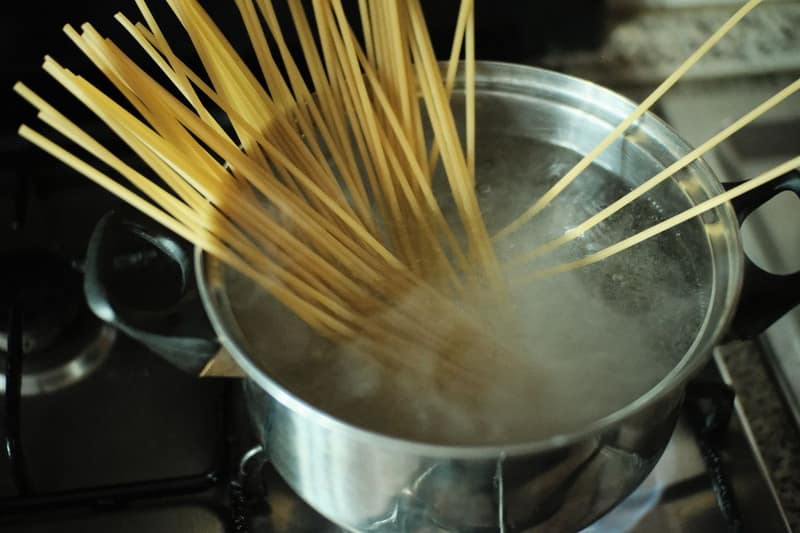
Drop the noodles into the boiling water as you pull them and cook for 1–2 minutes, until they float and are chewy-tender. Blanch the bok choy (opens in a new tab) and bean sprouts (opens in a new tab) in the same water for the last 30 seconds. Lift into bowls.
How it looks · Photo: Gianpiero Ferraro on Pexels Step 5
Top each bowl with garlic (opens in a new tab), spring onion (opens in a new tab), chilli flakes (opens in a new tab), Sichuan pepper and a pinch of salt.
- 2 min
Sauce
3 minStep 6
Heat the oil until smoking, about 200 °C, and pour it over the toppings so they sizzle. Add the soy sauce (opens in a new tab) and black vinegar and toss everything together straight away.
- 3 min
- 200°C
- high heat
- Saucepan (opens in a new tab)
Food safety: Pour the hot oil slowly into a heatproof bowl; it will spit and foam.
At a glance
1 · Noodles in a pot
 All-purpose flour
 Salt
 Neutral vegetable oil
then drop
2 · Toppings in a bowl
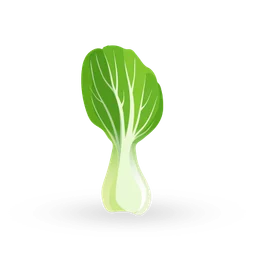 Bok choy
 Bean sprouts
 Garlic
 Spring onion
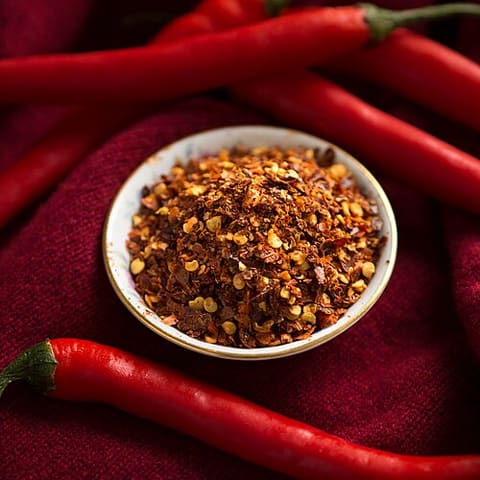 Red chilli flakes
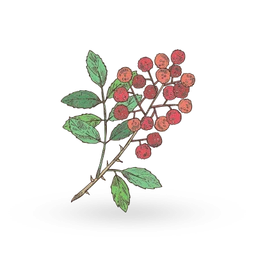 Sichuan peppercorns
- Salt
then heat
3 · Sauce in a pan
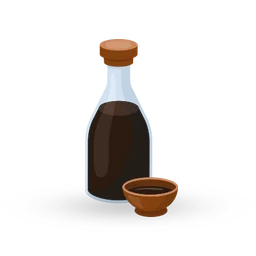 Soy sauce
 Chinese black vinegar
About this dish
- Origin
- Xi'an, Shaanxi province, China · Well documentedThe name 'biang' is said to imitate the slap of the dough on the counter; its Chinese character, with more than 50 strokes, is one of the most complex in the language. Youpo ('oil-splashed') describes the hot-oil finish.More food from China
China - Dish
- Lunch · Dinner · Noodles · Main courses
- Cooking method
- Boiled
- Taste
- spicy (chilli heat), garlicky, sour, savoury
- Diet
- Vegan · Dairy-free · No nut ingredientsWorked out from the ingredients. How labels work
All labels
Vegan · Plant-based · Vegetarian (lacto-ovo) · Eggetarian · Lacto-vegetarian · Ovo-vegetarian · Pescatarian · Flexitarian-friendly · Dairy-free · Egg-free · No nut ingredients · No added sugar · Alcohol-free · Pork-free · Beef-free - Good for
- Budget-friendly
- Cook more with
- All-purpose flour · Red chilli flakes · Bok choy · Garlic · Spring onion · Sichuan peppercorns
Allergens
- Contains: Wheatfrom all-purpose flour, soy sauce, chinese black vinegar
- Contains: Glutenfrom all-purpose flour, soy sauce, chinese black vinegar
- Contains: Soyfrom soy sauce
Based on typical versions of these ingredients and not verified allergen-free. Brands differ and cross-contact happens, so always check labels. For severe allergies, follow your clinician’s advice.
Nutrition
860 kcal per serving
Estimated1 serving ≈ 361 g · recipe makes 3
Where the energy comes from
- Protein 8%
- Carbohydrate 52%
- Fat 40%
| Nutrient | Per serving | Per 100 g* |
|---|---|---|
| Energy | 860 kcal | 238 kcal |
| Protein | 17.3 g | 4.8 g |
| Carbohydrate | 111.3 g | 30.8 g |
| Net carbohydrate | 105.5 g | 29.2 g |
| Sugars | 3.5 g | 1 g |
| Added sugars | 0 g | 0 g |
| Fibre | 5.8 g | 1.6 g |
| Fat | 38.5 g | 10.7 g |
| Saturated fat | 3 g | 0.8 g |
| Trans fat | — | — |
| Cholesterol | 0 mg | 0 mg |
| Sodium | 1893 mg | 524 mg |
| Salt equivalent | 4.7 g | 1.3 g |
Vitamins & minerals per serving
- Potassium
- 532 mg
- Calcium
- 134 mg
- Iron
- 7.6 mg
- Magnesium
- 67 mg
- Vitamin A (RAE)
- 232 µg
- Vitamin C
- 37 mg
- Vitamin D
- 0 µg
- Vitamin B12
- 0 µg
- Folate (DFE)
- 445 µg
How these numbers were made
- Calculated from USDA FoodData Central (SR Legacy) per-100 g values and the listed quantities.
- *Per 100 g of combined raw ingredients; the cooked dish may weigh more or less.
- Optional ingredients are not included: bean sprouts.
- Not counted (tiny amounts or “to taste”): sichuan peppercorns.
- Red chilli flakes: Ground cayenne (FDC 170932) used as a stand-in for dried chilli flakes such as pul biber or Aleppo pepper.
- Chinese black vinegar: Balsamic vinegar (FDC 172241) used as a stand-in for Chinkiang/Zhenjiang black rice vinegar; both are dark, aged and slightly sweet.
- “—” means the value isn’t known for enough of the ingredients; it is never zero by default.
- Values are estimates for guidance, not for medical dosing. U.S. Department of Agriculture, Agricultural Research Service. FoodData Central, 2019. fdc.nal.usda.gov.
Good to know
Tips
- Use a deep, heatproof bowl so the oil does not splash out.
- The oil must be smoking hot to toast the garlic and chilli properly; that sizzle is the flavour.
Common mistakes
- Rushing the rest; under-rested dough snaps instead of stretching.
- Overcooking the noodles, which lose their chew.
Serve with
- Serve with a bowl of the noodle cooking water to sip, Xi'an style, and roujiamo or liangpi on the side.
Food safety
- Never leave heating oil unattended; keep a lid nearby.
Storage
- Best eaten immediately. Oiled dough pieces keep 1 day in the fridge; bring to room temperature before pulling.
Variations
- Xi hong shi jidan biangbiang mian: Topped with a tomato and scrambled egg sauce alongside the hot oil.
- Sanhe yi biangbiang mian: 'Three in one': hot-oil noodles with tomato-egg sauce and braised pork, all in one bowl.
Original editorial recipe · FriendsPantry editorial · source: TasteAtlas (dish facts) · Not yet independently reviewed · Added
Recipe DNA
How this dish is built
Built from the recipe’s own sections. Each band’s width is its share of the dish by weight. Choose a component to see what it does.
The body of the dish
For the sauce
- Soy sauce3 tbsp · 51 g
- Chinese black vinegar2 tbsp · 31 g
Reviews & corrections
Reviews come from signed-in cooks and appear after a moderator checks them. We never show made-up ratings.
You might also like
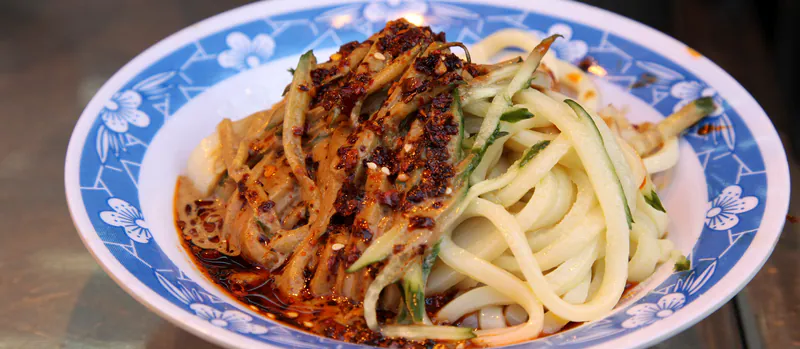
Liangpi (cold skin noodles)
 Chinese · 5 h 20 min · 605 kcal · Vegan
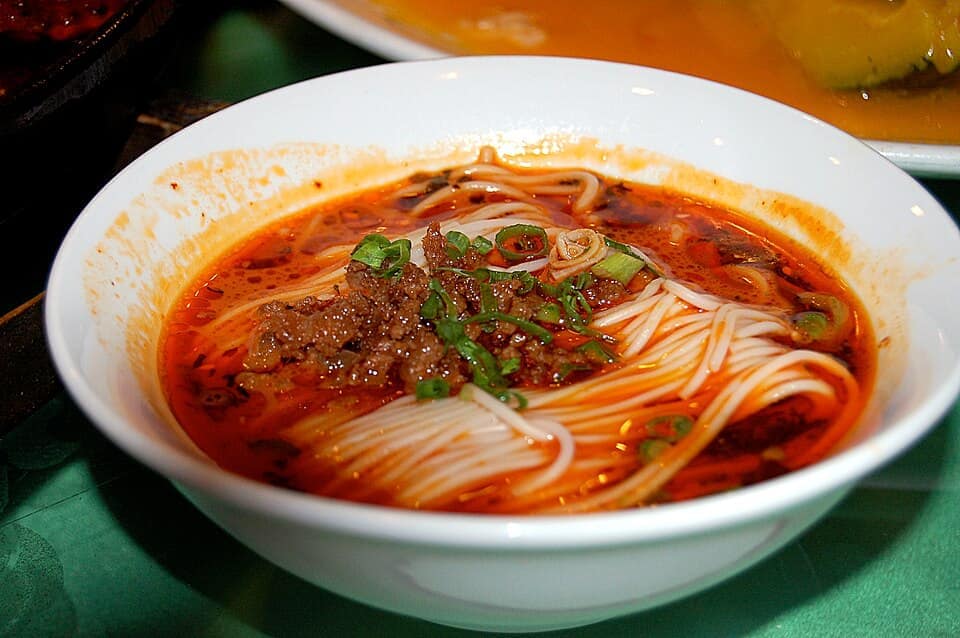
Dan dan noodles
Sichuan · 25 min · 709 kcal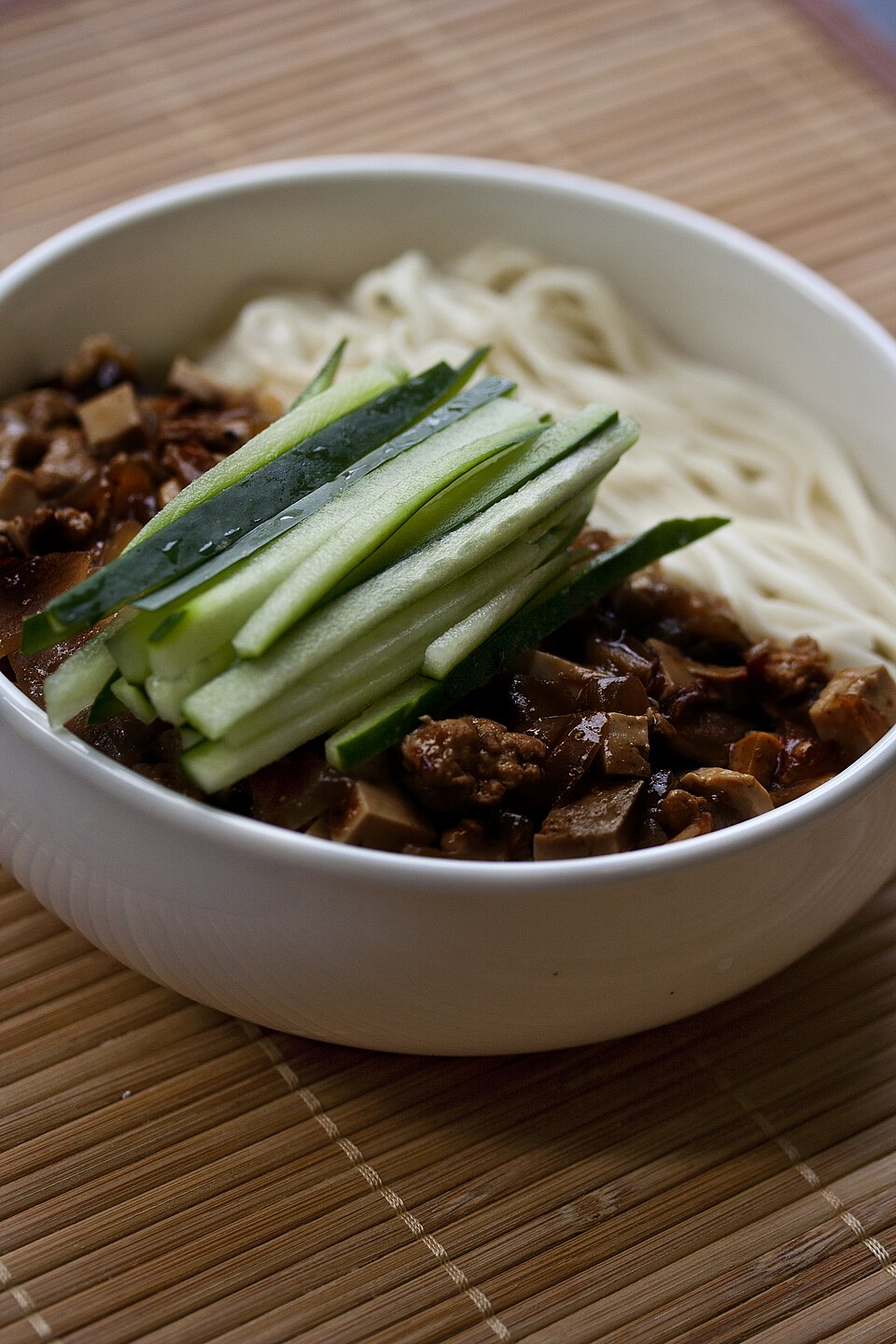
Zhajiangmian (Beijing fried sauce noodles)
Chinese · 45 min · 775 kcal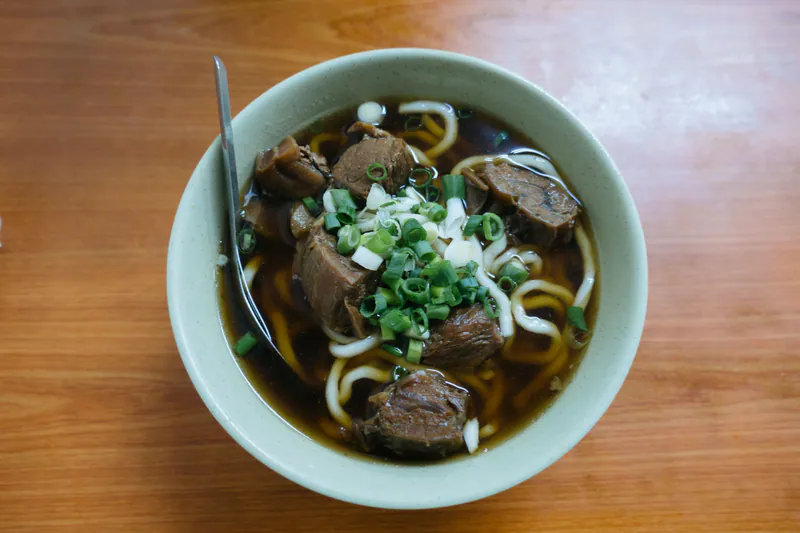
Taiwanese beef noodle soup
 Taiwanese · 3 h · 551 kcal