
Beyaynetu (Ethiopian fasting platter)
Vegetarian
በያይነቱ · bäyaynätu
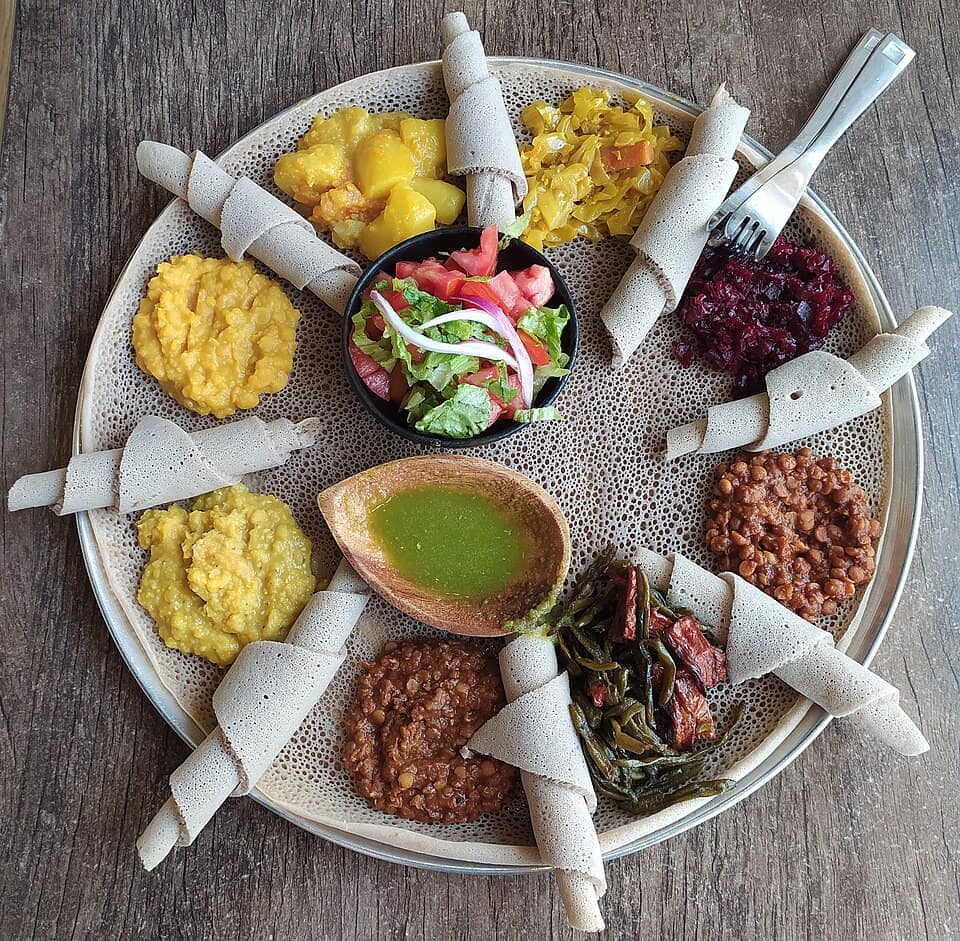
A round of injera laid with small mounds of several separately cooked dishes — spicy red lentils, mild yellow split peas, garlicky collard greens and turmeric cabbage with potatoes and carrot, plus a fresh tomato salad. Its name means 'of every kind', and the meatless version is the classic Ethiopian fasting-day meal.
Beyaynetu (Ethiopian fasting platter) is an Ethiopian main course, ready in about 1 hour 55 minutes and made with red lentils, berbere and injera (teff flatbread). It serves 6 and is rated intermediate to cook.
No licensed photograph of this dish yet.
- Prep
- 40 min
- Cook
- 1 h 15 min
- Total
- 1 h 55 min
- Serves
- 6
- Level
- Intermediate
- Calories
- 872
Main ingredients
Ingredients
For the misir wot
For the kik alicha
For the gomen
For the atkilt wat
For the tomato salad
To serve
Method
Misir wot
39 minStep 1
Misir wot: cook the onion (opens in a new tab) in a dry saucepan (opens in a new tab) over medium heat, stirring, for 5 minutes until soft and lightly coloured. Add the oil, berbere (opens in a new tab), garlic (opens in a new tab) and ginger and fry for 3 minutes, then stir in the tomato paste (opens in a new tab).
- 9 min
- medium heat
- Saucepan (opens in a new tab)
Cooking the onion dry before adding oil is the Ethiopian way to build a sweet, thick base.
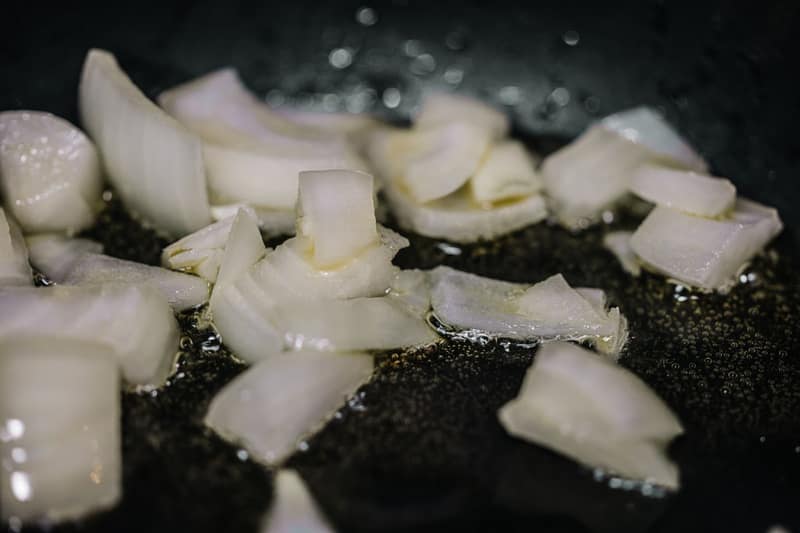
How it looks · Photo: Magda Ehlers on Pexels Step 2
Add the lentils and water, bring to the boil and simmer, stirring often, for 25–30 minutes until the lentils collapse into a thick, glossy stew. Season with salt.
- 30 min
- low heat
- Wooden spoon (opens in a new tab)
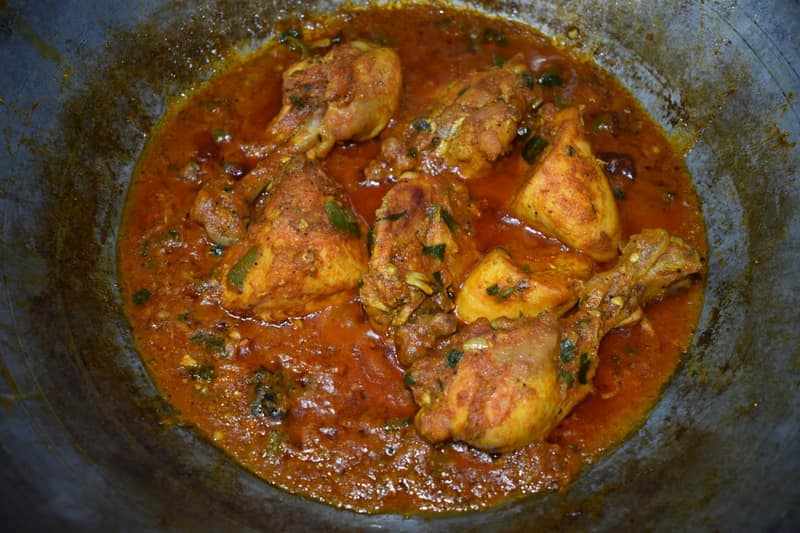
How it looks · Photo: Bachir Mamud on Pexels
Kik alicha
50 minStep 3
Kik alicha: meanwhile, simmer the split peas in the water for 30–40 minutes until soft. In another pan, soften the onion (opens in a new tab) in the oil for 6–8 minutes, add the garlic (opens in a new tab), ginger and turmeric (opens in a new tab) for a minute, then stir in the peas with their liquid and the salt. Simmer for 10 minutes until thick.
- 50 min
- medium-low heat
- Dutch oven / casserole pot (opens in a new tab)
Gomen
25 minStep 4
Gomen: fry the onion (opens in a new tab) in the oil for 5 minutes, add the garlic (opens in a new tab) and chillies, then the chopped collards (opens in a new tab) and a splash of water. Cover and cook, stirring now and then, for 15–20 minutes until tender. Season with salt.
- 25 min
- medium-low heat
- Frying pan / skillet (opens in a new tab)
Atkilt wat
30 minStep 5
Atkilt wat: soften the onion (opens in a new tab) in the oil, add the garlic (opens in a new tab) and turmeric (opens in a new tab), then the carrots (opens in a new tab) and potatoes (opens in a new tab) with the water and salt. Cover and cook for 10 minutes, then add the cabbage (opens in a new tab) and cook, covered, for another 15 minutes until everything is tender.
- 30 min
- medium-low heat
- Dutch oven / casserole pot (opens in a new tab)
Tomato salad
5 minStep 6
Tomato salad: mix the tomatoes (opens in a new tab), red onion (opens in a new tab), chilli, lemon juice (opens in a new tab) and salt.
To serve
5 minStep 7
Lay a round of injera (opens in a new tab) on a large platter. Spoon each dish in a separate mound around it, with the salad in the centre. Serve with rolled injera for tearing and scooping — no cutlery needed.
- 5 min
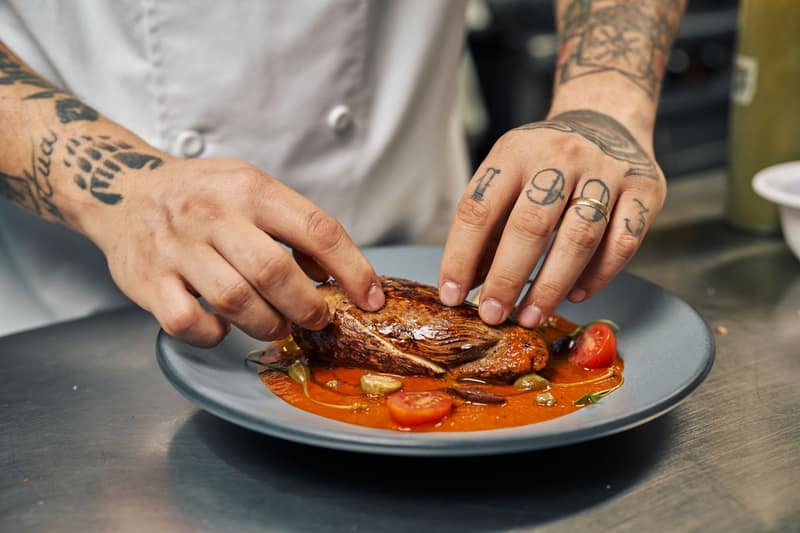
How it looks · Photo: Willians Huerta on Pexels
At a glance
1 · Misir wot in a pan
 Red lentils
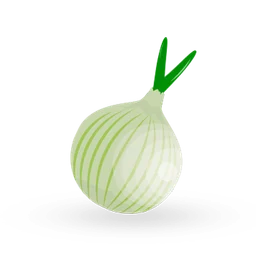 Onion
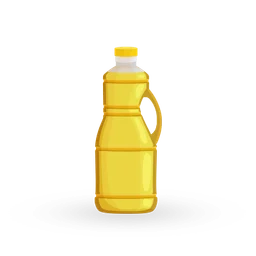 Neutral vegetable oil
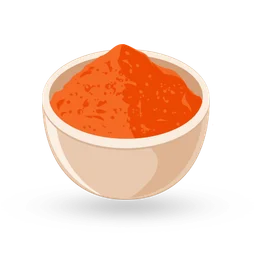 Berbere
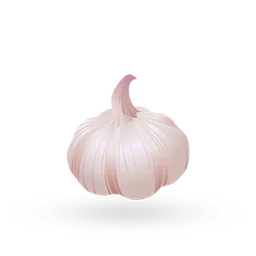 Garlic
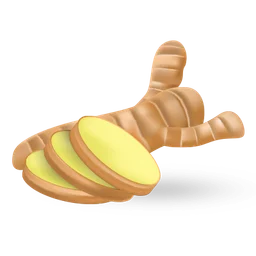 Fresh ginger
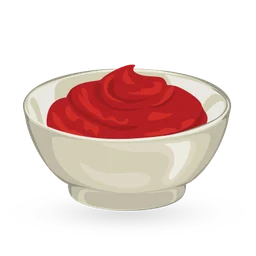 Tomato paste
 Salt
then kik
2 · Kik alicha in a pan
 Dried split peas (yellow or green)
- Onion
- Neutral vegetable oil
- Garlic
- Fresh ginger
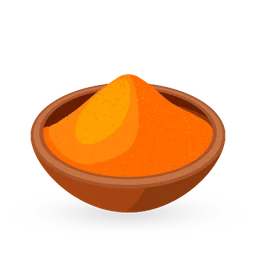 Turmeric
- Salt
then gomen
3 · Gomen in a pan
 Collard greens
- Onion
- Neutral vegetable oil
- Garlic
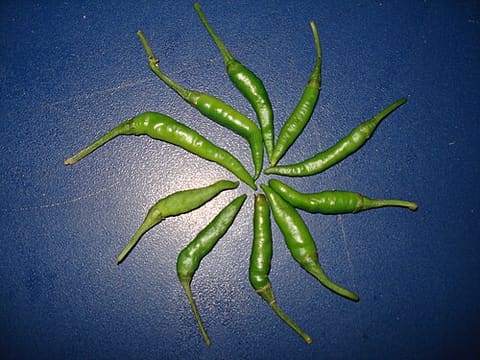 Green chilli
- Salt
then atkilt
4 · Atkilt wat in a pan
 Cabbage
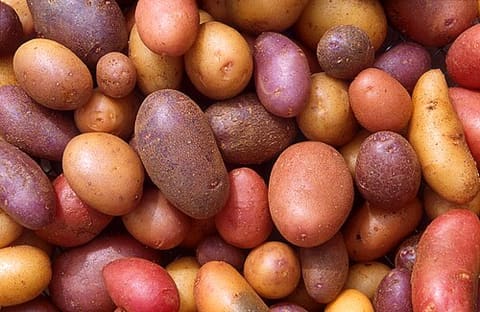 Potato
 Carrot
- Onion
- Neutral vegetable oil
- Turmeric
- Garlic
- Salt
then tomato
5 · Tomato salad in a bowl
 Tomato
 Red onion
- Green chilli
 Lemon juice
- Salt
then lay
6 · To serve in a bowl
- Injera (teff flatbread)
About this dish
- Origin
- Ethiopia · Well documentedEthiopian Orthodox Christians fast from all animal products on Wednesdays, Fridays and during long fasting seasons such as Lent, which shaped a huge repertoire of plant-based stews. Restaurants also serve meat versions with tibs or doro wat.Also popular in EritreaMore food from Ethiopia
Ethiopia - Dish
- Lunch · Dinner · Main courses · Stews & braises
- Cooking method
- Simmered, Sautéed, Stewed
- Taste
- spicy (chilli heat), earthy, savoury, sour, aromatic / warmly spiced
- Diet
- Vegan · Dairy-free · No nut ingredients · High-proteinWorked out from the ingredients. How labels work
All labels
Vegan · Plant-based · Vegetarian (lacto-ovo) · Eggetarian · Lacto-vegetarian · Ovo-vegetarian · Pescatarian · Flexitarian-friendly · Dairy-free · Egg-free · No nut ingredients · No added sugar · Alcohol-free · Pork-free · Beef-free · High-protein - Good for
- Batch cooking · Make-ahead · Budget-friendly
- Cook more with
- Red lentils · Berbere · Injera (teff flatbread) · Onion · Garlic · Fresh ginger
Allergens
- May contain: Glutenfrom injera (teff flatbread)
Based on typical versions of these ingredients and not verified allergen-free. Brands differ and cross-contact happens, so always check labels. For severe allergies, follow your clinician’s advice.
Nutrition
872 kcal per serving
Estimated1 serving ≈ 920 g · recipe makes 6
Where the energy comes from
- Protein 13%
- Carbohydrate 53%
- Fat 34%
| Nutrient | Per serving | Per 100 g* |
|---|---|---|
| Energy | 872 kcal | 95 kcal |
| Protein | 30 g | 3.3 g |
| Carbohydrate | 118.8 g | 12.9 g |
| Net carbohydrate | 93.7 g | 10.2 g |
| Sugars | 12.1 g | 1.3 g |
| Added sugars | 0 g | 0 g |
| Fibre | 25.1 g | 2.7 g |
| Fat | 34 g | 3.7 g |
| Saturated fat | 2.9 g | 0.3 g |
| Trans fat | — | — |
| Cholesterol | — | — |
| Sodium | 1682 mg | 183 mg |
| Salt equivalent | 4.2 g | 0.5 g |
Vitamins & minerals per serving
- Potassium
- 1754 mg
- Calcium
- 404 mg
- Iron
- 11.1 mg
- Magnesium
- 218 mg
- Vitamin A (RAE)
- 401 µg
- Vitamin C
- —
- Vitamin D
- —
- Vitamin B12
- —
- Folate (DFE)
- —
How these numbers were made
- Calculated from USDA FoodData Central (SR Legacy) per-100 g values and the listed quantities.
- *Per 100 g of combined raw ingredients; the cooked dish may weigh more or less.
- Berbere: Blended chili powder (FDC 171319) used as a stand-in; berbere is a chilli-based Ethiopian/Eritrean blend with fenugreek, coriander and warm spices and has a broadly similar profile.
- Dried split peas (yellow or green): Raw green split peas (FDC 172428); yellow and green split peas are nutritionally near-identical.
- Injera (teff flatbread): Uncooked teff (FDC 169747) scaled by 0.37 as a stand-in for injera, a fermented teff pancake that is mostly water by weight. No injera entry is in the imported FDC set.
- “—” means the value isn’t known for enough of the ingredients; it is never zero by default.
- Values are estimates for guidance, not for medical dosing. U.S. Department of Agriculture, Agricultural Research Service. FoodData Central, 2019. fdc.nal.usda.gov.
Good to know
Tips
- Every dish can be made a day ahead and reheated; the stews taste better the next day.
- Add shiro, fasolia (green beans and carrot) or azifa (lentil salad) to make a bigger platter.
Common mistakes
- Making all the dishes taste the same — the platter relies on contrast between the hot red wot and the mild yellow alicha and greens.
Serve with
- Share from one platter, tearing injera with the right hand.
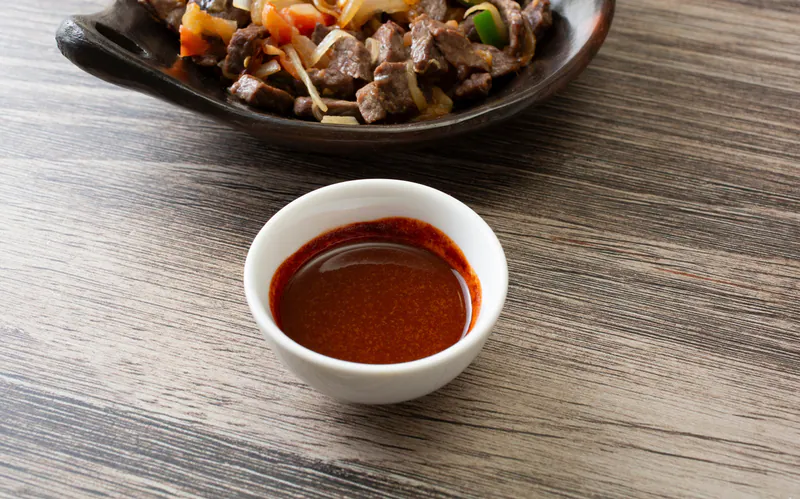
- Offer extra berbere or awaze (chilli paste) on the side.
Storage
- Each stew keeps 4 days refrigerated or 3 months frozen; injera keeps 2 days wrapped at room temperature.
Reheating
- Reheat each stew separately with a splash of water until steaming hot.
Variations
- Beyaynetu with meat: Outside fasting periods it may include doro wat, key wat (spicy beef stew) or tibs, and fresh ayib cheese.
- Eritrean mixed platter (Eritrea): Eritrea serves a similar assortment of tsebhi (stews) on taita.
Original editorial recipe · FriendsPantry editorial · source: TasteAtlas (dish facts) · Not yet independently reviewed · Added
Recipe DNA
How this dish is built
Built from the recipe’s own sections. Each band’s width is its share of the dish by weight. Choose a component to see what it does.
Masalas in this recipe
Make the masala first, then come back to finish the dish.
Dry spice blend
Berbere spice blend
This recipe uses 2 tbsp (13 g for 6 servings).
Reviews & corrections
Reviews come from signed-in cooks and appear after a moderator checks them. We never show made-up ratings.
You might also like
Misir wot
 Ethiopian · 1 h · 351 kcal · Vegetarian
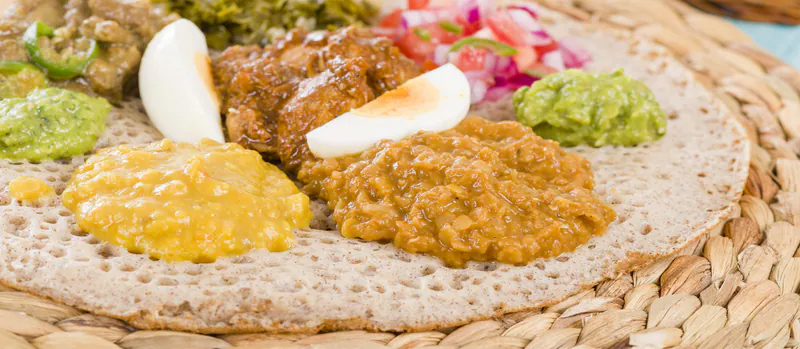
Kik alicha (Ethiopian yellow split pea stew)
Ethiopian · 1 h 12 min · 407 kcal · VegetarianGomen
Ethiopian · 40 min · 169 kcal · VeganAtkilt wat
Ethiopian · 55 min · 268 kcal · Vegan