
What it is
The eggs of salmon, separated from the membrane and cured in salt or a soy-based marinade. Each bead is about the size of a pea and bright orange. In Japan it is ikura, served on rice bowls and gunkan sushi; in Russia it is red caviar, eaten on blinis and buttered bread.
How it’s used
- Spooned over rice (ikura don) or sushi
- On blinis or buttered bread with sour cream
- Garnish for scrambled eggs, potatoes and canapés
Characteristics
- Taste
- Salty, rich and briny with a clean sea flavour.
- Texture
- Each egg bursts with a gentle pop, releasing a silky liquid.
- Sold as
- cured, frozen
- Cooking uses
- Usually eaten raw, Used as a garnish
- Common in
- Japanese, Russian, Scandinavian, Ukrainian
Storage
Refrigerated. Keep in the coldest part of the fridge; once opened, use within 2–3 days. It freezes reasonably well in an airtight tub.
Diet, allergens and safety
Contains Fish.
- Vegetarian
- Vegan
- Dairy-free
- Egg-free
- Gluten-free
- Nut-free
- Soy-free
- Caffeine-free
- Contains fish, a common allergen.
- Eaten uncooked: keep cold, respect the use-by date, and avoid in pregnancy or for the immunocompromised unless the product is pasteurised.
- High in salt.
Nutrition per 100 g
- Energy
- 264 kcal
- Protein
- 24.6 g
- Carbohydrate
- 4 g
- Fat
- 17.9 g
- Fibre
- 0 g
- Sugars
- 0 g
USDA FoodData Central: Fish, caviar, black and red, granular (a close stand-in).
Substitutes
Optional — what works if you don’t have it, and how it changes the dish.
- Tarama (cured fish roe) — Cured fish roe in a different form, for spreading rather than garnishing.
- Smoked salmon — Gives a similar salty, rich salmon note on blinis.
Related ingredients
Recipes with salmon roe (ikura)
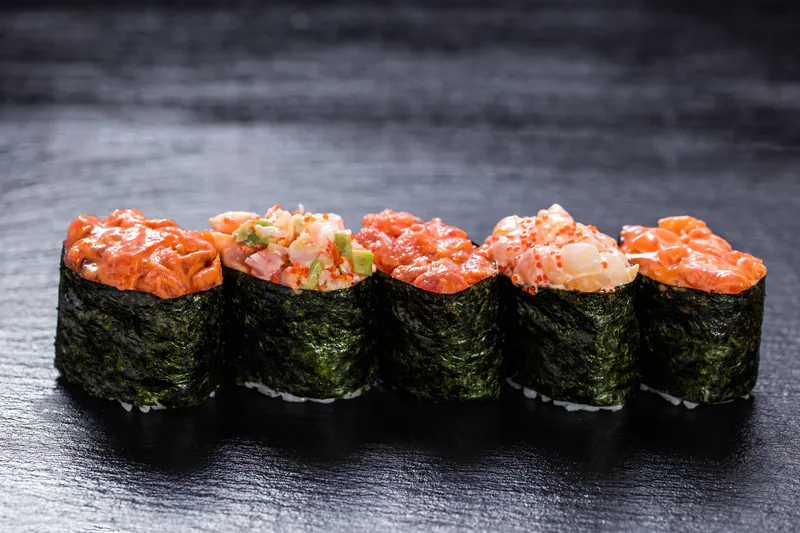
Gunkanmaki (battleship sushi)
 Japanese · 1 h 35 min · 418 kcal
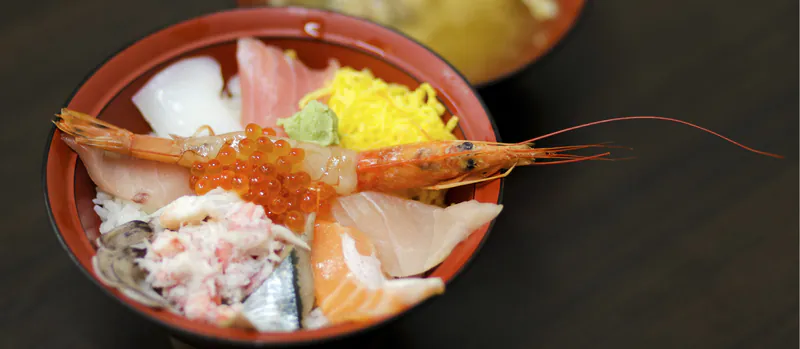
Kaisendon (seafood rice bowl)
Japanese · 1 h 25 min · 763 kcal
Zakuski (Russian appetiser spread)
 Russian · 5 h 10 min · 525 kcal