
 Cantonese · Chinese · Main courses
Zhaziji (Cantonese crispy fried chicken)
Non-vegetarian
炸子鸡 · zhá zǐ jī
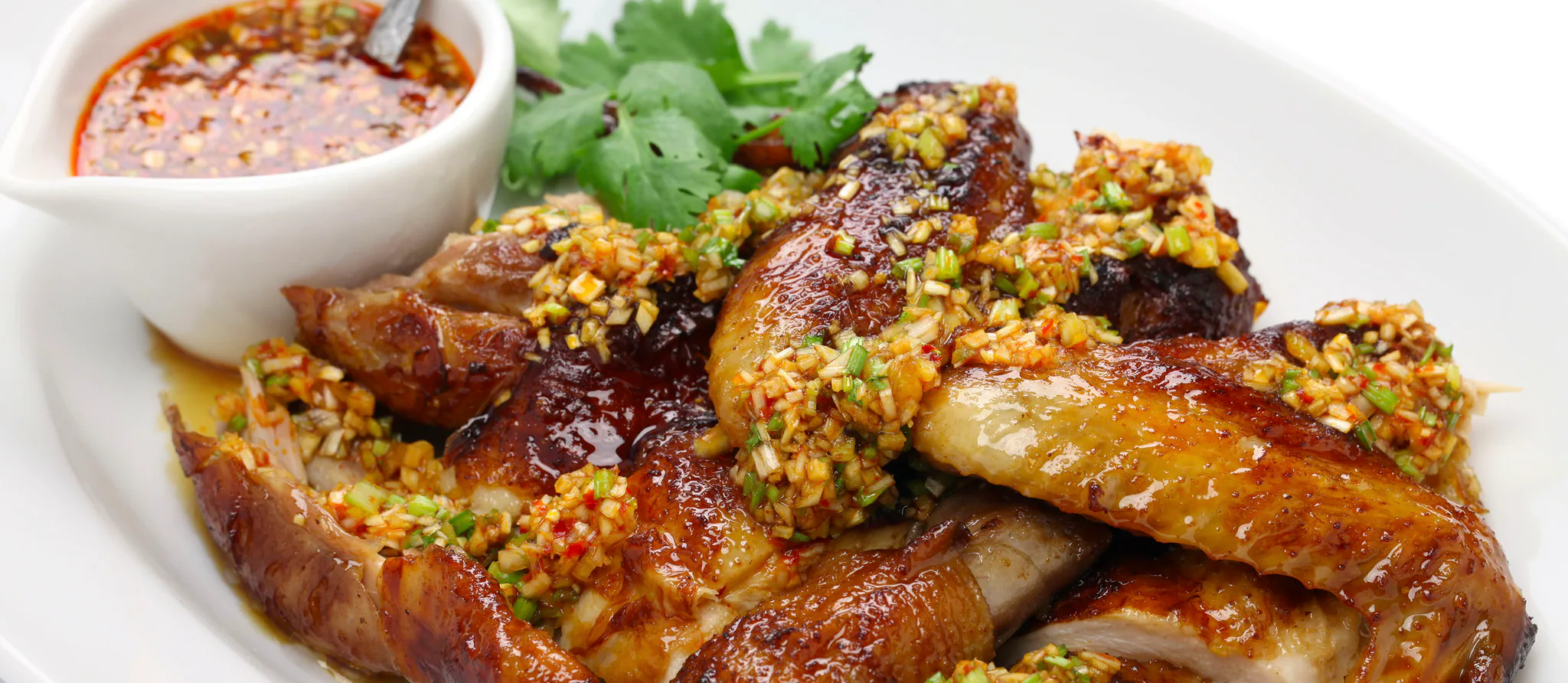
A young chicken poached in a fragrant spiced brine, glazed with a vinegar and maltose syrup, air-dried and then fried or basted with hot oil until the skin turns glassy and crackling while the meat stays juicy. A Cantonese banquet classic served with five-spice salt and prawn crackers.
Zhaziji (Cantonese crispy fried chicken) is a Cantonese main course from China, ready in about 5 hours 10 minutes and made with chicken pieces, skin-on and rice vinegar. It serves 4 and is rated advanced to cook.
- Prep
- 20 min
- Cook
- 50 min
- Rest
- 4 h
- Total
- 5 h 10 min
- Serves
- 4
- Level
- Advanced
- Calories
- 685
Drying overnight in the fridge gives the crispest skin.
Main ingredients

Ingredients
For the spiced brine
For the skin glaze
For frying
For the five-spice salt
To serve
Method
Spiced brine
42 minStep 1
Bring the brine ingredients — water, salt, sugar (opens in a new tab), ginger, cinnamon, star anise (opens in a new tab), Sichuan pepper and nutmeg (opens in a new tab) — to the boil and simmer for 10 minutes to infuse.
- 12 min
- medium heat
- Stockpot / large pot (opens in a new tab)
Step 2
Lower the chicken into the brine, breast down, lifting and re-dipping it twice so the cavity fills. Return to a bare simmer, then turn off the heat, cover and leave it to poach for 25–30 minutes, until the juices at the thigh run clear.
- 30 min
- low heat
- Stockpot / large pot (opens in a new tab)
Food safety: The chicken is fried afterwards, but make sure the thigh is close to cooked here; the frying mostly crisps the skin.
Skin glaze
5 minStep 3
Lift out the chicken and drain it. Warm the vinegar, honey (opens in a new tab), cornstarch (opens in a new tab) and 3 tbsp water in a small pan until smooth and brush or pour it all over the hot skin.
Step 4
Hang the chicken in a cool, airy place in front of a fan, or leave it uncovered on a rack in the fridge, for at least 4 hours (ideally overnight), until the skin feels dry and papery.
The drier the skin, the crisper it gets; damp patches stay soft.
Frying
10 minStep 5
Heat the oil in a wok (opens in a new tab) to 180 °C. Holding the chicken over the wok with a large spider or on a hook, ladle (opens in a new tab) hot oil over it continuously, turning it, until the skin is deep red-gold and crackling and the thigh reaches 74 °C, 8–10 minutes. Or lower it in and fry for 6–8 minutes, turning.
Food safety: Use a heavy, deep pan no more than one-third full of oil, keep a lid nearby and never leave hot oil unattended; dry wet food well before lowering it in.
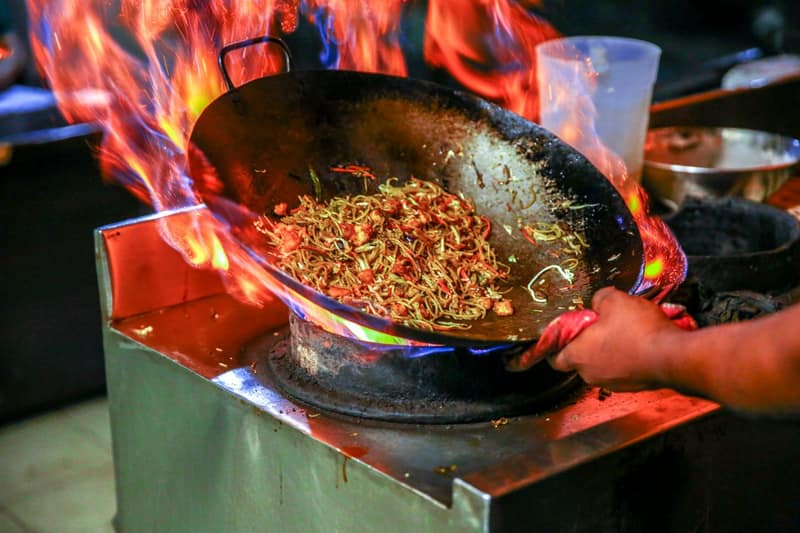
How it looks · Photo: Aesthos AR. Photography on Pexels
Five-spice salt
8 minStep 6
Toast the salt in a dry pan for a minute, then mix with the five-spice. Rest the chicken for 5 minutes, chop it Cantonese-style through the bone into pieces and reassemble on a plate. Serve with the five-spice salt and lemon (opens in a new tab).
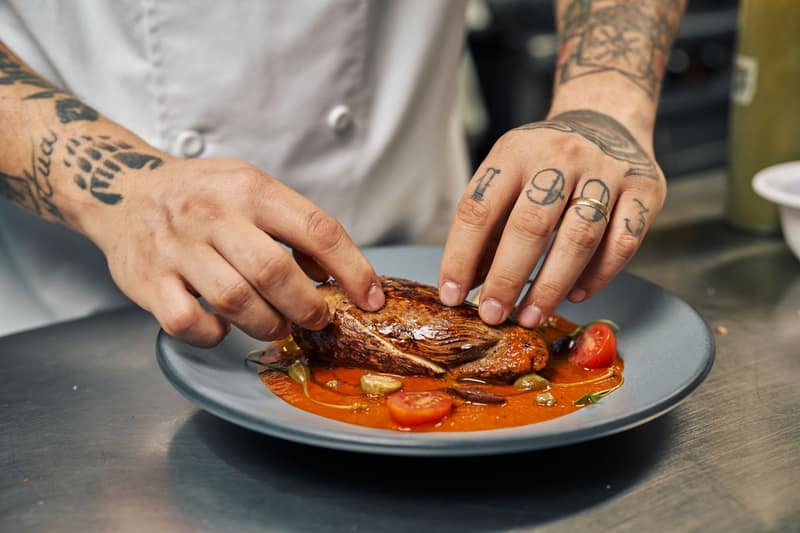
How it looks · Photo: Willians Huerta on Pexels
At a glance
1 · Spiced brine in a pan
 Salt
 Sugar
 Fresh ginger
 Cinnamon stick
 Star anise / anise
 Sichuan peppercorns
 Nutmeg
then lift
2 · Skin glaze in a pan
 Rice vinegar
 Honey
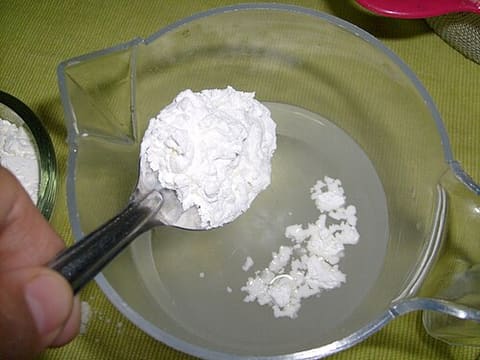 Cornstarch
then heat
3 · Frying in a pan
 Neutral vegetable oil
then toast
4 · Five-spice salt in a pan
- Salt
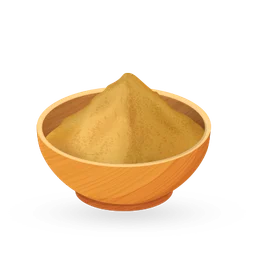 Five-spice powder
About this dish
- Origin
- Guangdong, China · Well documentedA signature of Guangzhou restaurant cooking since the early 20th century, served at weddings and banquets.Also popular in Hong Kong, Malaysia, SingaporeMore food from China
China - Dish
- Dinner · Lunch · Main courses
- Cooking method
- Poached, Deep-fried
- Taste
- savoury, aromatic / warmly spiced, salty
- Diet
- No gluten ingredients · Dairy-free · No nut ingredients · Low-carb · High-proteinWorked out from the ingredients. How labels work
All labels
Non-vegetarian · No gluten ingredients · Dairy-free · Egg-free · No nut ingredients · Alcohol-free · Pork-free · Beef-free · Low-carb · High-protein - Good for
- Festive & celebration
- Cook more with
- Chicken pieces, skin-on · Rice vinegar · Sugar · Fresh ginger · Cinnamon stick · Star anise / anise
- Techniques
- Deep-frying · Simmering · Poaching
Allergens
None of the 14 major allergens appear in the listed ingredients.
Based on typical versions of these ingredients and not verified allergen-free. Brands differ and cross-contact happens, so always check labels. For severe allergies, follow your clinician’s advice.
Nutrition
685 kcal per serving
Estimated1 serving ≈ 1063 g · recipe makes 4
Where the energy comes from
- Protein 25%
- Carbohydrate 10%
- Fat 65%
| Nutrient | Per serving | Per 100 g* |
|---|---|---|
| Energy | 685 kcal | 64 kcal |
| Protein | 42.2 g | 4 g |
| Carbohydrate | 16.9 g | 1.6 g |
| Net carbohydrate | 16.2 g | 1.5 g |
| Sugars | 13.8 g | 1.3 g |
| Added sugars | 13.6 g | 1.3 g |
| Fibre | 0.7 g | 0.1 g |
| Fat | 49.1 g | 4.6 g |
| Saturated fat | 10.9 g | 1 g |
| Trans fat | 0.3 g | 0 g |
| Cholesterol | 169 mg | 16 mg |
| Sodium | 7737 mg | 728 mg |
| Salt equivalent | 19.3 g | 1.8 g |
Vitamins & minerals per serving
- Potassium
- 483 mg
- Calcium
- 119 mg
- Iron
- 2.4 mg
- Magnesium
- 66 mg
- Vitamin A (RAE)
- 92 µg
- Vitamin C
- 4 mg
- Vitamin D
- 0.5 µg
- Vitamin B12
- 0.7 µg
- Folate (DFE)
- 15 µg
How these numbers were made
- Calculated from USDA FoodData Central (SR Legacy) per-100 g values and the listed quantities.
- *Per 100 g of combined raw ingredients; the cooked dish may weigh more or less.
- Optional ingredients are not included: lemon.
- Not counted (tiny amounts or “to taste”): sichuan peppercorns, five-spice powder.
- Star anise / anise: Anise seed (FDC 171316) used as a stand-in for star anise.
- Rice vinegar: Distilled vinegar (FDC 172237) used as a stand-in for unseasoned rice vinegar.
- “—” means the value isn’t known for enough of the ingredients; it is never zero by default.
- Values are estimates for guidance, not for medical dosing. U.S. Department of Agriculture, Agricultural Research Service. FoodData Central, 2019. fdc.nal.usda.gov.
Good to know
Tips
- Restaurants pierce the skin all over with a fine skewer before glazing so fat can escape and the skin blisters evenly.
Common mistakes
- Glazing a wet, cold chicken — the glaze slides off. Glaze it while still hot from the brine.
Serve with
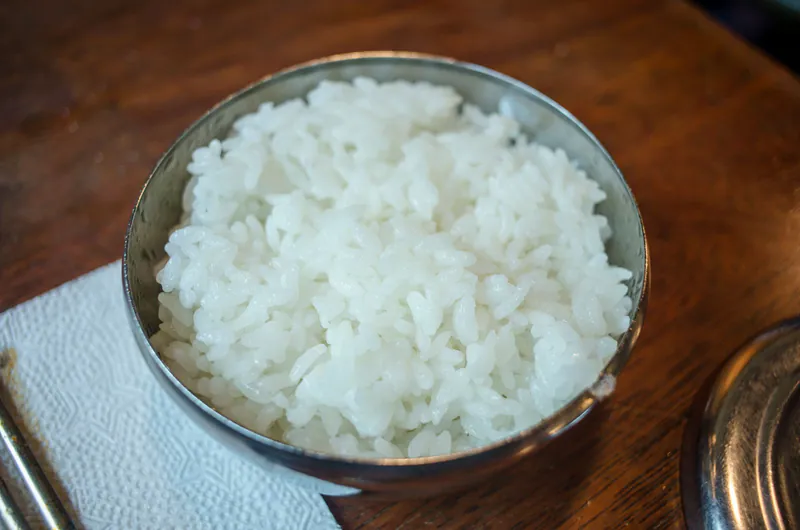
- Serve with prawn crackers, five-spice salt, Worcestershire sauce for dipping (a Hong Kong habit) and steamed rice.
Food safety
- Cook chicken until the thickest part reaches 74 °C and the juices run clear.
- Use a heavy, deep pan no more than one-third full of oil, keep a lid nearby and never leave hot oil unattended; dry wet food well before lowering it in.
Storage
- Best eaten within an hour of frying; leftovers keep 2 days refrigerated.
Reheating
- Re-crisp in a 200 °C oven or air fryer for 8–10 minutes.
Variations
- Oven-roasted version: Roast the dried, glazed chicken at 220 °C for about 45 minutes, finishing under the grill to blister the skin.
- Siu yuk-style chicken: Some Hong Kong roast shops coat the skin with salt and vinegar only and roast it in a hanging oven.
Original editorial recipe · FriendsPantry editorial · source: TasteAtlas (dish facts) · Not yet independently reviewed · Added
Recipe DNA
How this dish is built
Built from the recipe’s own sections. Each band’s width is its share of the dish by weight. Choose a component to see what it does.
What the dish is built around
Main ingredient
- Chicken pieces, skin-on, 1 whole young chicken, head and feet removed1.4 kg · 900 g
Masalas in this recipe
Make the masala first, then come back to finish the dish.
Dry spice blend
Chinese five-spice powder
This recipe uses ½ tsp (1.1 g for 4 servings).
Reviews & corrections
Reviews come from signed-in cooks and appear after a moderator checks them. We never show made-up ratings.
You might also like
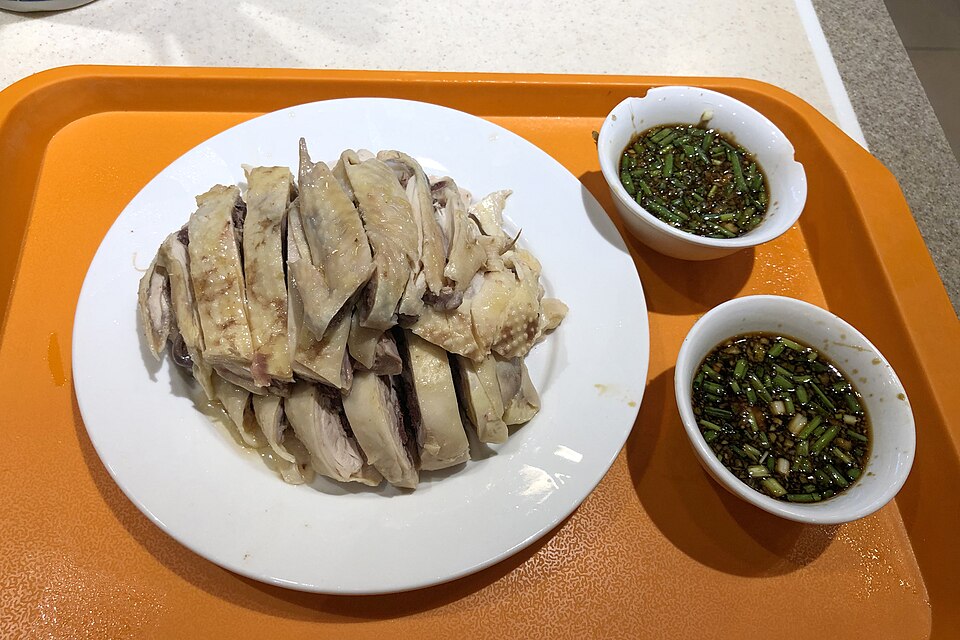
White cut chicken with ginger-scallion sauce
Cantonese · 1 h 15 min · 654 kcal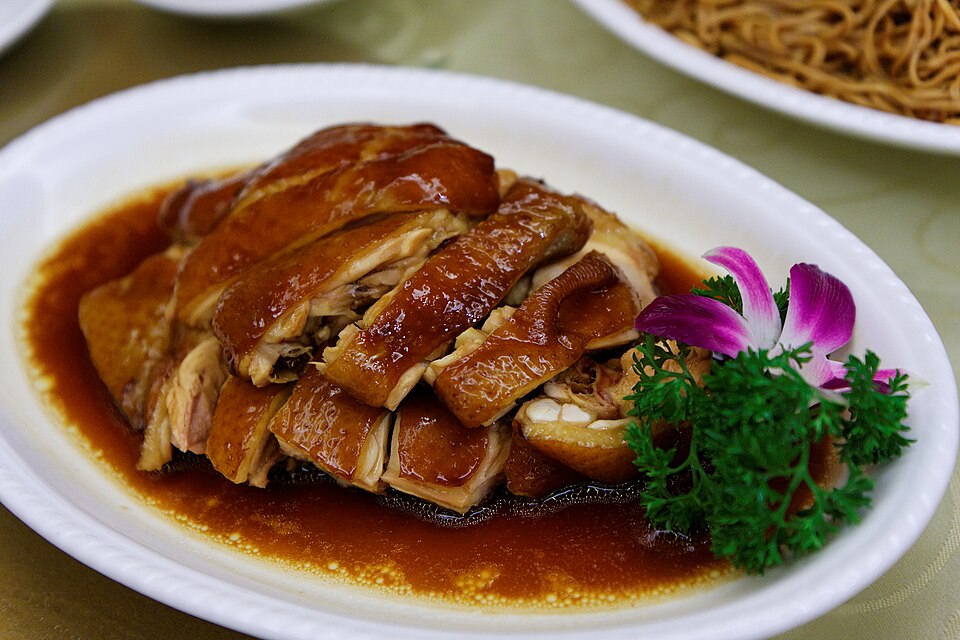
Cantonese soy sauce chicken
Cantonese · 1 h 5 min · 466 kcal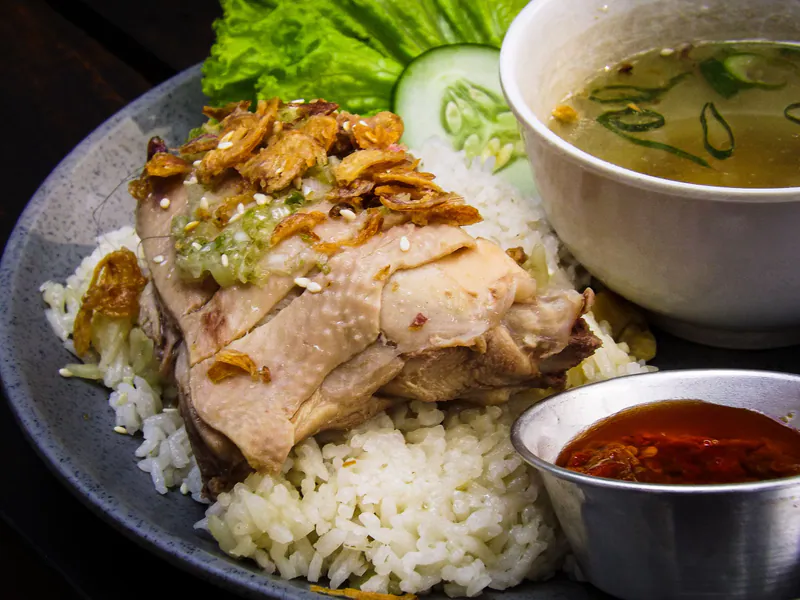
Hainanese chicken rice
 Singaporean · 1 h 35 min · 803 kcal
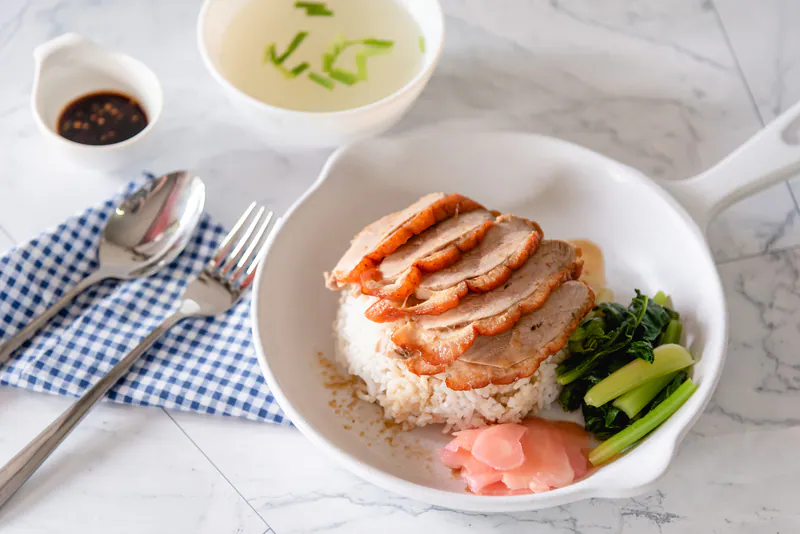
Roasted duck rice (Singapore)
Singaporean · 14 h 30 min · 1267 kcal