
Weißwurst (Bavarian white sausage)
Non-vegetarian
Weißwurst
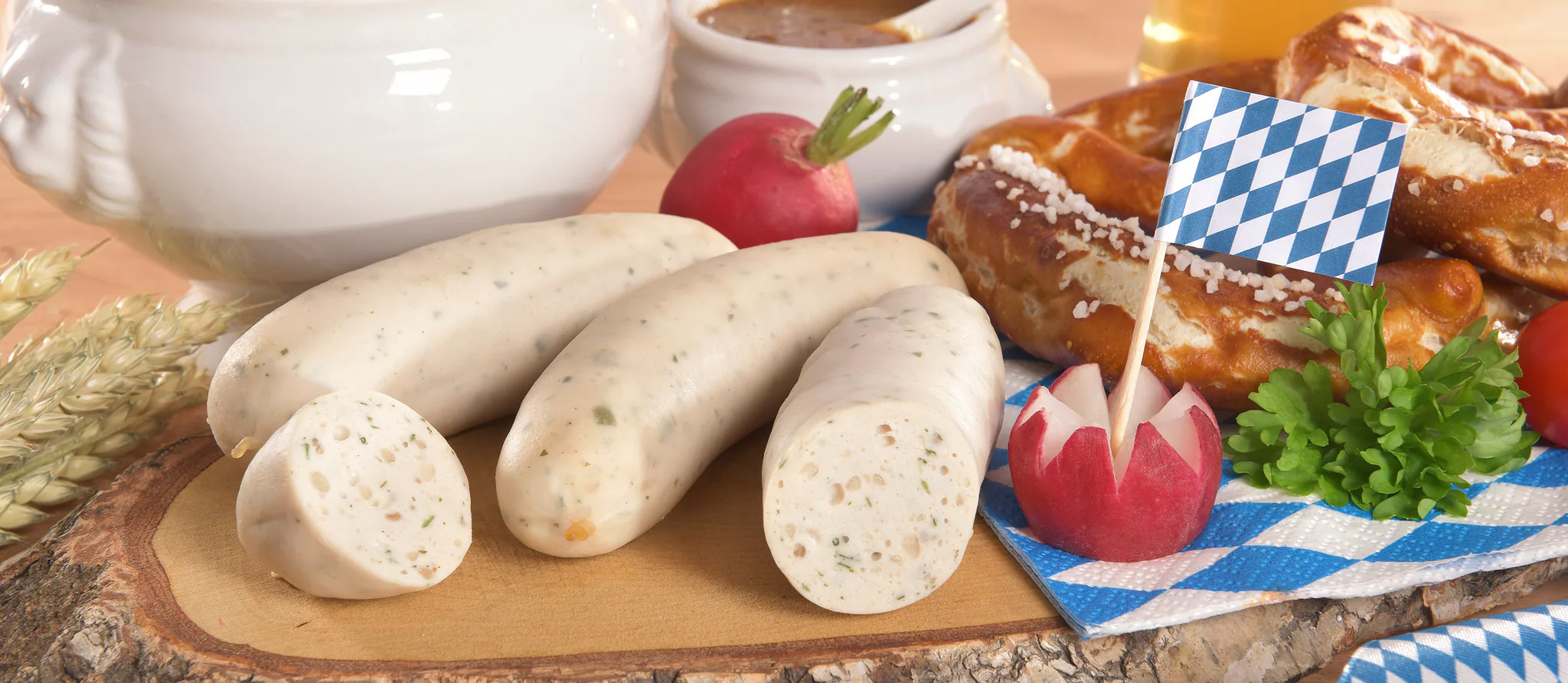
Pale, delicate sausages of finely emulsified veal and pork back fat flavoured with parsley, lemon zest, mace and white pepper, gently poached rather than fried. In Bavaria they are a late-morning meal, peeled at the table and eaten with sweet mustard, a soft pretzel and a wheat beer.
Weißwurst (Bavarian white sausage) is a German main course from Germany, ready in about 1 hour 50 minutes and made with veal cutlet, parsley and natural sausage casings. It serves 6 and is rated advanced to cook.
- Prep
- 1 h
- Cook
- 20 min
- Rest
- 30 min
- Total
- 1 h 50 min
- Serves
- 6
- Level
- Advanced
- Calories
- 384
Main ingredients
Ingredients
For the sausage meat
For stuffing
For poaching
To serve
Method
Sausage meat
20 minStep 1
Chill the veal (opens in a new tab) and pork fat in the freezer for 30 minutes until firm, along with the food processor (opens in a new tab) bowl and blade. Everything must stay very cold for the sausage meat to bind.
- 5 min
Food safety: Keep the meat and equipment below 5 °C while grinding and mixing, and refrigerate the mixture between steps.
Step 2
Process the veal (opens in a new tab) with the salt and half the crushed ice until it forms a smooth, sticky paste. Add the pork fat and the rest of the ice and process again until completely smooth and pale. Check the temperature: stop and chill the bowl if it rises above 12 °C.
Work in two batches if your processor is small.
Step 3
Add the white pepper (opens in a new tab), mace (opens in a new tab), ginger, onion (opens in a new tab), lemon zest (opens in a new tab) and parsley (opens in a new tab) and pulse just until evenly flecked with green. Poach a teaspoon of the mixture in simmering water, taste and adjust the seasoning.
Stuffing
25 minStep 4
Thread a soaked casing onto a sausage-stuffer nozzle or a wide plain piping-bag tip and fill it evenly with the meat, avoiding air pockets. Twist into links about 12 cm long (about 70 g each) and cut them apart in pairs.
Poaching
20 minStep 5
Heat the water in a large pot to 75–80 °C, well below boiling. Slip in the sausages, take the pot off the heat if it climbs higher, and poach for 15–20 minutes until the centre reaches 70 °C.
- 20 min
- 78°C · water, not boiling
- Stockpot / large pot (opens in a new tab)
- Food thermometer (opens in a new tab)
If the water boils, the casings split and the sausages turn grey and dry.
To serve
2 minStep 6
Serve the sausages in a bowl with some of their warm poaching water. To eat, cut each one lengthwise and peel back the casing (or suck the meat out of one end, the Bavarian 'zuzeln'), and dip in sweet mustard.
- 2 min
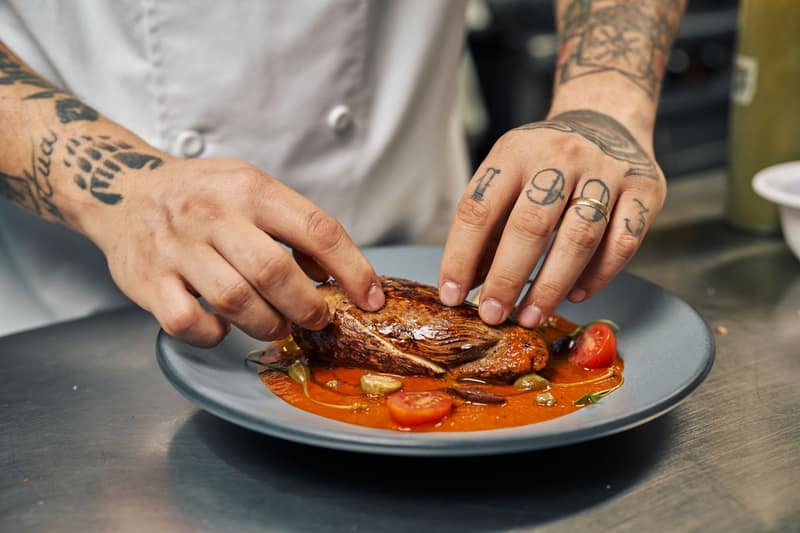
How it looks · Photo: Willians Huerta on Pexels
At a glance
1 · Sausage meat in a pan
 Veal cutlet
 Pork belly
 Salt
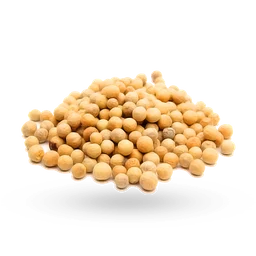 White pepper
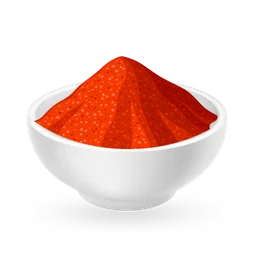 Mace
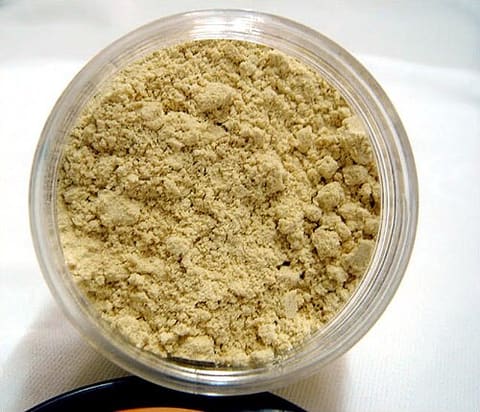 Ground ginger
 Onion
 Lemon zest
 Parsley
then thread
2 · Stuffing in a bowl
- Natural sausage casings
then heat
3 · Poaching in a pot
then serve
4 · To serve in a bowl
 Prepared mustard
About this dish
- Origin
- Munich, Bavaria, Germany · Commonly attributedMunich legend credits the butcher Sepp Moser with improvising them on 22 February 1857 at the Zum Ewigen Licht inn on Marienplatz. Tradition says they should be eaten before the noon church bells, a habit from the days before refrigeration.Also popular in AustriaMore food from Germany
Germany - Dish
- Breakfast · Brunch · Main courses · Sausages · Breakfast dishes
- Cooking method
- Poached, Blended
- Taste
- mild, herby, savoury, aromatic / warmly spiced
- Diet
- No gluten ingredients · Dairy-free · No nut ingredients · Keto-style · Low-carb · High-proteinWorked out from the ingredients. How labels work
All labels
Non-vegetarian · No gluten ingredients · Dairy-free · Egg-free · No nut ingredients · No added sugar · Alcohol-free · Keto-style · Low-carb · High-protein · Calorie-conscious - Good for
- Freezer-friendly · Batch cooking
- Cook more with
- Veal cutlet · Parsley · Natural sausage casings · Pork belly · White pepper · Mace
- Techniques
- Simmering · Poaching · Wet grinding · Emulsification
Allergens
- Contains: Mustardfrom prepared mustard
- May contain: Sulphitesfrom prepared mustard
Based on typical versions of these ingredients and not verified allergen-free. Brands differ and cross-contact happens, so always check labels. For severe allergies, follow your clinician’s advice.
Nutrition
384 kcal per serving
Estimated1 serving ≈ 212 g · recipe makes 6
Where the energy comes from
- Protein 30%
- Carbohydrate 2%
- Fat 69%
| Nutrient | Per serving | Per 100 g* |
|---|---|---|
| Energy | 384 kcal | 181 kcal |
| Protein | 28.6 g | 13.5 g |
| Carbohydrate | 1.6 g | 0.8 g |
| Net carbohydrate | 0.7 g | 0.3 g |
| Sugars | 0.2 g | 0.1 g |
| Added sugars | 0 g | 0 g |
| Fibre | 1 g | 0.5 g |
| Fat | 29.2 g | 13.7 g |
| Saturated fat | 10.6 g | 5 g |
| Trans fat | — | — |
| Cholesterol | 92 mg | 43 mg |
| Sodium | 1313 mg | 618 mg |
| Salt equivalent | 3.3 g | 1.5 g |
Vitamins & minerals per serving
- Potassium
- 419 mg
- Calcium
- 30 mg
- Iron
- 1.7 mg
- Magnesium
- 44 mg
- Vitamin A (RAE)
- 23 µg
- Vitamin C
- 7 mg
- Vitamin D
- —
- Vitamin B12
- 2.5 µg
- Folate (DFE)
- 14 µg
How these numbers were made
- Calculated from USDA FoodData Central (SR Legacy) per-100 g values and the listed quantities.
- *Per 100 g of combined raw ingredients; the cooked dish may weigh more or less.
- Optional ingredients are not included: onion.
- Ice: Frozen water; same composition as water.
- Mace: Nutmeg (FDC 171326) used as a stand-in; mace is the aril of the same seed.
- Natural sausage casings: Dry gelatine (FDC 169599) scaled to a quarter as a stand-in: soaked hog or sheep casings are mostly water and collagen, used a few grams per sausage.
- “—” means the value isn’t known for enough of the ingredients; it is never zero by default.
- Values are estimates for guidance, not for medical dosing. U.S. Department of Agriculture, Agricultural Research Service. FoodData Central, 2019. fdc.nal.usda.gov.
Good to know
Tips
- Butchers add a little ice-cold veal stock or gelatine for extra juiciness; crushed ice does the same job at home.
- Uncooked links freeze well; poach them from frozen, adding 5 minutes.
Common mistakes
- Letting the meat warm up while processing — the emulsion breaks and the sausage turns crumbly.
- Frying or grilling them; Weißwurst is always poached.
Serve with
- Serve with Laugenbrezel, sweet Bavarian mustard and a Weißbier for a classic Weißwurstfrühstück.
Food safety
- Keep the meat and equipment below 5 °C while grinding and mixing, and refrigerate the mixture between steps.
- Poach until the centre reaches 70 °C and eat promptly; this fresh sausage does not keep long.
Storage
- Raw sausages keep 1 day in the fridge or 2 months frozen. Poached sausages keep 2 days in the fridge.
Reheating
- Rewarm in hot (not boiling) water for 8–10 minutes.
Variations
- Weißwurst with pork only: Some butchers use pork shoulder instead of veal for a slightly firmer sausage.
- Shop-bought Weißwurst: Ready-made sausages need only the gentle poaching and serving steps (about 10 minutes in hot water).
Original editorial recipe · FriendsPantry editorial · source: TasteAtlas (dish facts) · Not yet independently reviewed · Added
Recipe DNA
How this dish is built
Built from the recipe’s own sections. Each band’s width is its share of the dish by weight. Choose a component to see what it does.
What the dish is built around
For the sausage meat
- Veal cutlet, boneless veal shoulder or breast, cut into 2 cm cubes and chilled until almost frozen600 g
- Pork belly, skinless pork back fat or fatty belly, cubed and chilled until almost frozen300 g
- Ice, crushed200 g
- Salt16 g
- White pepper1 tsp · 2.4 g
- Mace, ground0.5 tsp · 1.1 g
- Ground ginger1 pinch · 0.1 g
- Onion, very finely grated (optional)0.5 piece · 55 g
- Lemon zest, finely grated, from an unwaxed lemon1 tsp · 2 g
- Parsley, leaves very finely chopped30 g
Reviews & corrections
Reviews come from signed-in cooks and appear after a moderator checks them. We never show made-up ratings.
You might also like
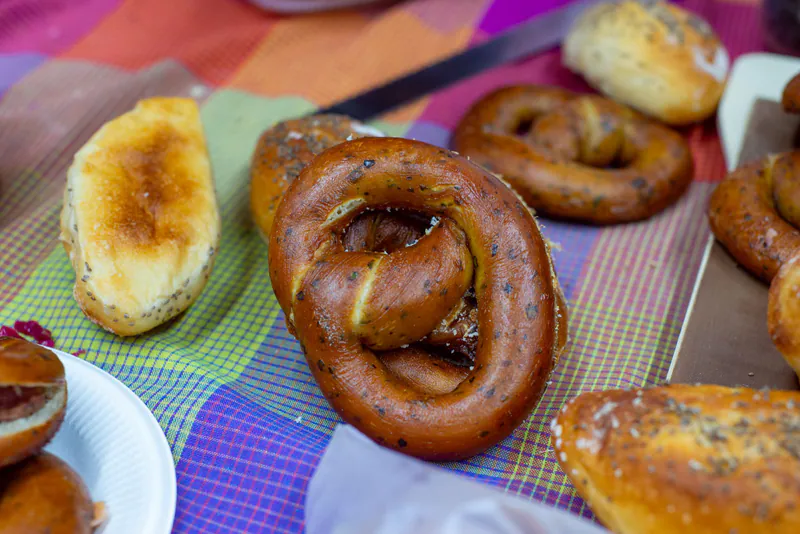
Laugenbrezel
 German · 2 h 15 min · 253 kcal · Vegetarian
Homemade Franconian bratwurst
German · 3 h 35 min · 695 kcal
Cumberland sausage (homemade coil)
 British · 1 h 40 min · 671 kcal
St. Galler Bratwurst (Swiss veal sausage)
 Swiss · 2 h 30 min · 381 kcal