
 American · French · Appetizers & starters
Tuna tartare
Non-vegetarian
Diced raw tuna dressed with lemon, olive oil, mustard, capers, shallot and fresh herbs, shaped over creamy avocado and served chilled with toasted bread. A bistro steak tartare reimagined with fish.
Tuna tartare is an American starter from United States, ready in about 40 minutes and made with tuna, olive oil and avocado. It serves 4 and is rated easy to cook.
No licensed photograph of this dish yet.
- Prep
- 20 min
- Cook
- 5 min
- Rest
- 15 min
- Total
- 40 min
- Serves
- 4
- Level
- Easy
- Calories
- 362
Main ingredients
Ingredients
For the tartare
For the avocado base
To serve
Method
Tartare
10 minStep 1
Chill a mixing bowl (opens in a new tab). With a very sharp knife, cut the tuna (opens in a new tab) into 5 mm slices, then strips, then small even dice, removing any sinew. Put the tuna in the cold bowl and keep it in the fridge.
- 10 min
- Chef's knife (opens in a new tab)
- Chopping board (opens in a new tab)
- Mixing bowl (opens in a new tab)
Food safety: Only use fish sold for eating raw (sushi- or sashimi-grade, previously frozen to kill parasites), keep it cold until the last moment and eat it within an hour of preparing.
Do not chop with a rocking motion — clean single cuts keep the fish from turning mushy.
Avocado base
5 minStep 2
Toss the avocado (opens in a new tab) gently with the lemon juice (opens in a new tab) and a pinch of salt.
- 2 min
Step 3
Whisk the mustard, lemon juice (opens in a new tab), lemon zest (opens in a new tab) and olive oil (opens in a new tab) together. Add to the tuna (opens in a new tab) with the shallot (opens in a new tab), capers (opens in a new tab), chives (opens in a new tab), tarragon (opens in a new tab), salt and pepper (opens in a new tab) and fold gently. Taste and adjust the seasoning. Chill for up to 15 minutes, no longer, or the lemon will start to 'cook' the fish.
- 3 min
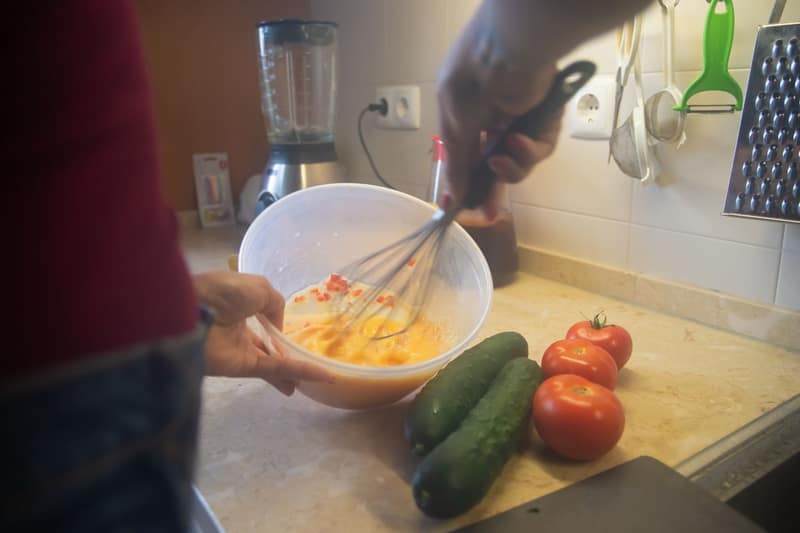
How it looks · Photo: Kampus Production on Pexels
To serve
5 minStep 4
Toast the baguette (opens in a new tab) slices. Press a layer of avocado (opens in a new tab) into a 7 cm ring on each plate, top with the tuna (opens in a new tab) and lift the ring away. Make a small hollow on top, slip in a quail egg yolk (opens in a new tab) if using, and serve at once with the toasts.
- 5 min
Food safety: This dish contains raw or lightly cooked egg; use very fresh, preferably pasteurised eggs, and avoid serving it to pregnant women, young children, older people or anyone with a weakened immune system.
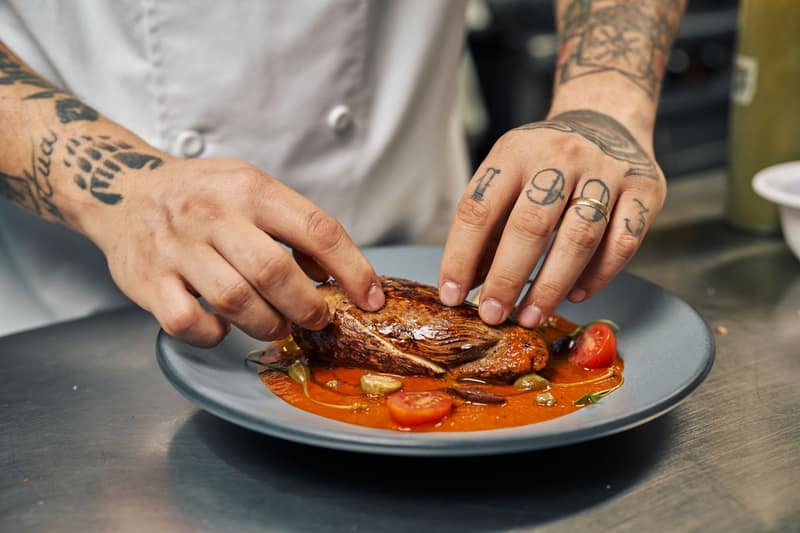
How it looks · Photo: Willians Huerta on Pexels
At a glance
1 · Tartare in a bowl
 Tuna
 Shallot
 Capers
 Chives
 Tarragon (fresh)
 Prepared mustard
 Olive oil
 Lemon juice
 Lemon zest
 Salt
 Black pepper
then toss
2 · Avocado base in a bowl
 Avocado
- Lemon juice
- Salt
then toast
3 · To serve in a pan
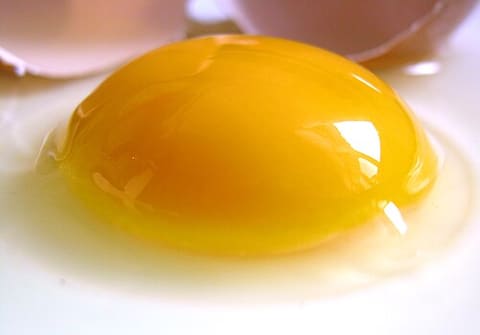 Egg yolk
 Crusty bread / baguette
About this dish
- Origin
- Los Angeles, United States · Commonly attributedOften credited to Japanese chef Shigefumi Tachibe at Chaya Brasserie in Los Angeles in the 1980s, who swapped the beef in steak tartare for raw tuna; it became a fixture of upscale restaurants across the US and France.Also popular in FranceMore food from United States
United States - Dish
- Lunch · Dinner · Appetizers & starters
- Cooking method
- Raw, No-cook
- Taste
- fresh, citrusy, herby, umami
- Diet
- Pescatarian · Dairy-free · No nut ingredients · Low-carb · High-proteinWithout the optional extras: Egg-freeWorked out from the ingredients. How labels work
All labels
Pescatarian · Non-vegetarian · Dairy-free · No nut ingredients · No added sugar · Alcohol-free · Pork-free · Beef-free · Low-carb · High-protein · Calorie-conscious - Good for
- Minimal cleanup
Allergens
- Contains, can be adapted: Eggsfrom egg yolk
- Contains: Fishfrom tuna
- Contains: Wheatfrom crusty bread / baguette
- Contains: Glutenfrom crusty bread / baguette
- May contain: Sesamefrom crusty bread / baguette
- Contains: Mustardfrom prepared mustard
- May contain: Sulphitesfrom prepared mustard
Based on typical versions of these ingredients and not verified allergen-free. Brands differ and cross-contact happens, so always check labels. For severe allergies, follow your clinician’s advice.
Nutrition
362 kcal per serving
Estimated1 serving ≈ 206 g · recipe makes 4
Where the energy comes from
- Protein 32%
- Carbohydrate 24%
- Fat 44%
| Nutrient | Per serving | Per 100 g* |
|---|---|---|
| Energy | 362 kcal | 175 kcal |
| Protein | 29 g | 14.1 g |
| Carbohydrate | 21.6 g | 10.5 g |
| Net carbohydrate | 17.3 g | 8.4 g |
| Sugars | 2.5 g | 1.2 g |
| Added sugars | 0 g | 0 g |
| Fibre | 4.2 g | 2.1 g |
| Fat | 18 g | 8.7 g |
| Saturated fat | 2.7 g | 1.3 g |
| Trans fat | 0 g | 0 g |
| Cholesterol | 39 mg | 19 mg |
| Sodium | 625 mg | 303 mg |
| Salt equivalent | 1.6 g | 0.8 g |
Vitamins & minerals per serving
- Potassium
- 743 mg
- Calcium
- 36 mg
- Iron
- 2.5 mg
- Magnesium
- 63 mg
- Vitamin A (RAE)
- 30 µg
- Vitamin C
- 9 mg
- Vitamin D
- 1.7 µg
- Vitamin B12
- 2.1 µg
- Folate (DFE)
- 97 µg
How these numbers were made
- Calculated from USDA FoodData Central (SR Legacy) per-100 g values and the listed quantities.
- *Per 100 g of combined raw ingredients; the cooked dish may weigh more or less.
- Optional ingredients are not included: egg yolk.
- Tarragon (fresh): USDA SR Legacy has only dried tarragon; fresh basil is used as a nutritionally similar fresh-herb stand-in.
- “—” means the value isn’t known for enough of the ingredients; it is never zero by default.
- Values are estimates for guidance, not for medical dosing. U.S. Department of Agriculture, Agricultural Research Service. FoodData Central, 2019. fdc.nal.usda.gov.
Good to know
Tips
- Put the tuna in the freezer for 15 minutes before dicing; firm fish cuts more cleanly.
- Dress the tuna at the last minute so its colour stays a bright ruby red.
Common mistakes
- Dressing the fish too early, which turns it grey and soft.
- Using fish not intended for eating raw.
Serve with
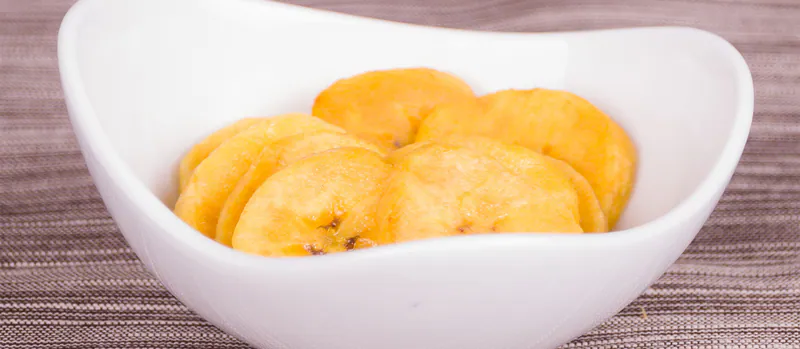
- Serve as a starter with toasted baguette, rice crackers or plantain chips and a glass of chilled white wine.
Food safety
- Only use fish sold for eating raw (sushi- or sashimi-grade, previously frozen to kill parasites), keep it cold until the last moment and eat it within an hour of preparing.
- This dish contains raw or lightly cooked egg; use very fresh, preferably pasteurised eggs, and avoid serving it to pregnant women, young children, older people or anyone with a weakened immune system.
Storage
- Do not store — make and eat within the hour.
Variations
- Asian-style tuna tartare: Dressed with soy sauce, sesame oil, ginger, spring onion and a little wasabi, served with wonton crisps.
- Salmon tartare: The same method with sashimi-grade salmon and dill instead of tarragon.
Original editorial recipe · FriendsPantry editorial · source: TasteAtlas (dish facts) · Not yet independently reviewed · Added
Recipe DNA
How this dish is built
Built from the recipe’s own sections. Each band’s width is its share of the dish by weight. Choose a component to see what it does.
The body of the dish
For the avocado base
- Avocado, 1 large ripe avocado, diced180 g
- Lemon juice1 tsp · 5.1 g
- Salt1 pinch · 0.4 g
Reviews & corrections
Reviews come from signed-in cooks and appear after a moderator checks them. We never show made-up ratings.
You might also like
Hawaiian ahi poke
Pacific Island · 30 min · 195 kcal
Café de Paris butter (Geneva herb and spice steak butter)
 Swiss · 12 h 33 min · 208 kcal
Salade lyonnaise
 French · 35 min · 377 kcal
Caesar salad
American · 23 min · 492 kcal