
 Haitian · Caribbean · Stews & braises
Tchaka (Haitian hominy, bean and pork stew)
Non-vegetarian
Tchaka
A thick, slow-cooked Haitian stew of dried hominy, red kidney beans and pumpkin simmered with smoked or salted pork trotters, herbs, cloves and a whole Scotch bonnet until everything turns soft and creamy. A hearty dish of country cooking and celebrations, served with pikliz.
Tchaka (Haitian hominy, bean and pork stew) is a Haitian stew, ready in about 4 hours and made with hominy, kidney beans (canned) and pig's trotters. It serves 8 and is rated intermediate to cook.
No licensed photograph of this dish yet.
- Prep
- 30 min
- Cook
- 3 h 30 min
- Total
- 4 h
- Serves
- 8
- Level
- Intermediate
- Calories
- 458
Plus overnight soaking of the hominy and beans.
Main ingredients
Ingredients
For the stew
For the epis
Method
Stew
2 h 5 minStep 1
Rub the pork pieces with the lime juice (opens in a new tab) and vinegar, rinse well with cold water and put them in a large pot with the drained hominy (opens in a new tab) and 3 litres of water. Bring to the boil, skim, then simmer partly covered for 1 hour.
- 65 min
- medium-low heat
- Stockpot / large pot (opens in a new tab)
Food safety: Wash hands, boards and knives after handling raw meat, and keep it apart from salad and other ready-to-eat food.
Step 2
Add the drained beans and boil hard for 10 minutes, then keep simmering for about 1 hour more, topping up with hot water as needed so everything stays covered.
- 60 min
- medium-low heat
Food safety: Dried kidney beans must boil vigorously for at least 10 minutes to destroy their natural toxin; never cook them from raw in a slow cooker.
Epis
1 h 30 minStep 3
Blend the onion (opens in a new tab), bell pepper (opens in a new tab), spring onion (opens in a new tab), celery (opens in a new tab), garlic (opens in a new tab) and parsley (opens in a new tab) to a coarse paste (epis). Fry it in the oil in a frying pan for 5 minutes until fragrant.
Step 4
Stir the epis into the pot with the pumpkin (opens in a new tab), chicken stock (opens in a new tab), thyme (opens in a new tab), cloves (opens in a new tab) and whole Scotch bonnet (opens in a new tab). Simmer for 1–1½ hours more, stirring often, until the hominy (opens in a new tab) has burst, the beans are creamy, the pumpkin has melted into the stew and the meat falls from the bone.
- 80 min
- low heat
- Wooden spoon (opens in a new tab)
Food safety: Scotch bonnets are extremely hot: wear gloves or wash your hands well after handling them, and keep them away from your eyes.
Keep the pepper whole for flavour without fierce heat; burst it only if you want it hot.
Step 5
Remove the Scotch bonnet (opens in a new tab) and thyme (opens in a new tab) stalks, season with salt and pepper (opens in a new tab) and serve thick and hot.
- 2 min
At a glance
1 · Stew in a pot
 Hominy
 Kidney beans (canned)
 Pig's trotters
 Lime juice
 White vinegar
 Pumpkin
 Chicken stock
 Thyme (fresh)
 Cloves
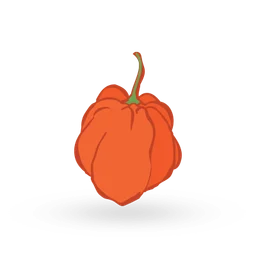 Scotch bonnet pepper
 Salt
 Black pepper
then blend
2 · Epis in a pan
 Neutral vegetable oil
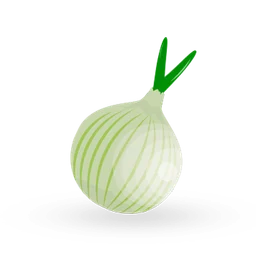 Onion
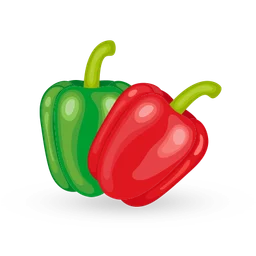 Green bell pepper
- Spring onion
 Celery
 Garlic
 Parsley
About this dish
- Origin
- Haiti · Commonly attributedTchaka is traditionally prepared for Vodou ceremonies honouring Azaka, the spirit of agriculture, and for family gatherings. Some versions add crab, salted beef or coconut milk.More food from Haiti
Haiti - Dish
- Lunch · Dinner · Stews & braises · Main courses
- Cooking method
- Boiled, Slow-cooked, Stewed
- Taste
- smoky, savoury, earthy, herby
- Diet
- No gluten ingredients · Dairy-free · No nut ingredients · High-proteinWorked out from the ingredients. How labels work
All labels
Non-vegetarian · No gluten ingredients · Dairy-free · Egg-free · No nut ingredients · No added sugar · Alcohol-free · Beef-free · High-protein · Low-sodium · Calorie-conscious - Good for
- One-pot · Batch cooking · Freezer-friendly · Festive & celebration
- Cook more with
- Hominy · Kidney beans (canned) · Pig's trotters · Lime juice · Pumpkin · Chicken stock
Allergens
- Contains: Celeryfrom chicken stock, celery
Based on typical versions of these ingredients and not verified allergen-free. Brands differ and cross-contact happens, so always check labels. For severe allergies, follow your clinician’s advice.
Nutrition
458 kcal per serving
Estimated1 serving ≈ 764 g · recipe makes 8
Where the energy comes from
- Protein 24%
- Carbohydrate 22%
- Fat 54%
| Nutrient | Per serving | Per 100 g* |
|---|---|---|
| Energy | 458 kcal | 60 kcal |
| Protein | 27.7 g | 3.6 g |
| Carbohydrate | 24.7 g | 3.2 g |
| Net carbohydrate | 20.4 g | 2.7 g |
| Sugars | 6.1 g | 0.8 g |
| Added sugars | 0 g | 0 g |
| Fibre | 4.3 g | 0.6 g |
| Fat | 27.6 g | 3.6 g |
| Saturated fat | 8.4 g | 1.1 g |
| Trans fat | — | — |
| Cholesterol | 91 mg | 12 mg |
| Sodium | 684 mg | 90 mg |
| Salt equivalent | 1.7 g | 0.2 g |
Vitamins & minerals per serving
- Potassium
- 864 mg
- Calcium
- 117 mg
- Iron
- 3.2 mg
- Magnesium
- 66 mg
- Vitamin A (RAE)
- 286 µg
- Vitamin C
- 29 mg
- Vitamin D
- 2.1 µg
- Vitamin B12
- 0.9 µg
- Folate (DFE)
- 43 µg
How these numbers were made
- Calculated from USDA FoodData Central (SR Legacy) per-100 g values and the listed quantities.
- *Per 100 g of combined raw ingredients; the cooked dish may weigh more or less.
- Optional ingredients are not included: white vinegar.
- Pig's trotters: Fresh pork shoulder used as a stand-in for pig's trotters, which have no FDC SR Legacy entry; trotters are mostly skin, tendon and bone, so only part of the weight is eaten and they are richer in collagen.
- Scotch bonnet pepper: Raw red hot chilli pepper used as a stand-in; scotch bonnets are a fleshy Capsicum chinense chilli of similar composition.
- “—” means the value isn’t known for enough of the ingredients; it is never zero by default.
- Values are estimates for guidance, not for medical dosing. U.S. Department of Agriculture, Agricultural Research Service. FoodData Central, 2019. fdc.nal.usda.gov.
Good to know
Tips
- A pressure cooker cuts the cooking time roughly in half: cook the hominy and pork for 30 minutes, add the beans for 20, then finish uncovered with the vegetables.
Common mistakes
- Salting early — smoked or salted pork releases plenty of salt as it cooks.
Food safety
- Cool large pots of soup or stew quickly (divide into shallow containers) and refrigerate within 2 hours; reheat until piping hot throughout.
- Scotch bonnets are extremely hot: wear gloves or wash your hands well after handling them, and keep them away from your eyes.
Storage
- Keeps 4 days refrigerated or 3 months frozen.
Reheating
- Thin with water or stock and reheat, stirring, until piping hot.
Variations
- Tchaka with crab: Coastal households add crab to the pot in the last half hour.
- Tchaka with coconut milk: A can of coconut milk added with the pumpkin for a richer stew.
Original editorial recipe · FriendsPantry editorial · source: TasteAtlas (dish facts) · Not yet independently reviewed · Added
Sauces, chutneys & dips for this dish
Recipe DNA
How this dish is built
Built from the recipe’s own sections. Each band’s width is its share of the dish by weight. Choose a component to see what it does.
The body of the dish
For the stew
- Hominy, dried (mayi), soaked overnight400 g
- Kidney beans (canned), dried red beans, soaked overnight250 g
- Pig's trotters, smoked or salted pork legs, cut into pieces by the butcher1 kg · 1000 g
- Lime juice3 tbsp · 46 g
- White vinegar (optional)2 tbsp · 30 g
- Water3 l · 3000 g
- Pumpkin, peeled and cut into 3 cm chunks500 g
- Chicken stock500 ml · 500 g
- Thyme (fresh)4 sprig · 2 g
- Cloves4 piece · 0.4 g
- Scotch bonnet pepper, left whole1 piece · 10 g
- Salt1 tsp · 6 g
- Black pepper0.5 tsp · 1.2 g
Reviews & corrections
Reviews come from signed-in cooks and appear after a moderator checks them. We never show made-up ratings.
You might also like
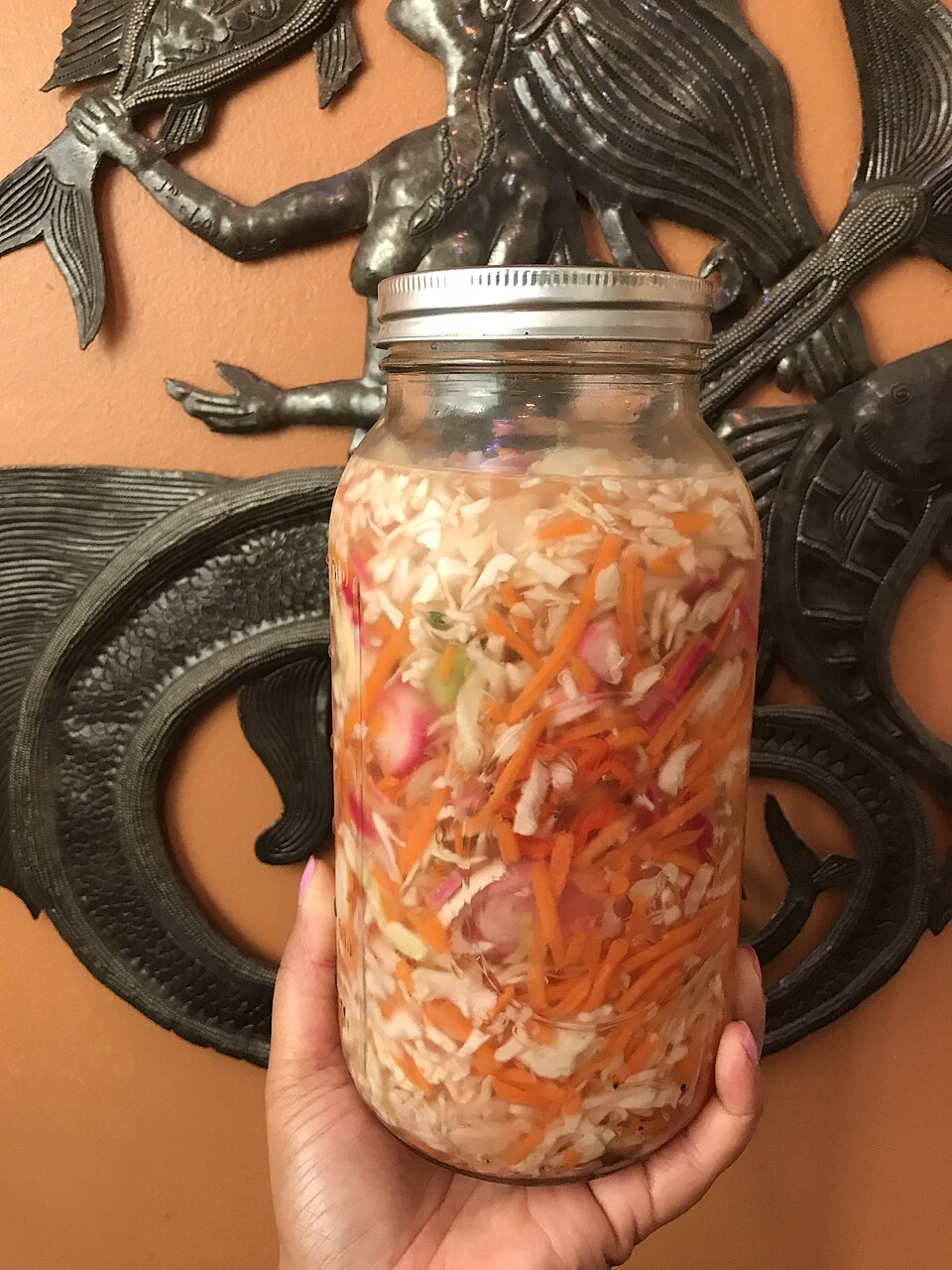
Pikliz
Haitian · 24 h 20 min · 21 kcal · Vegan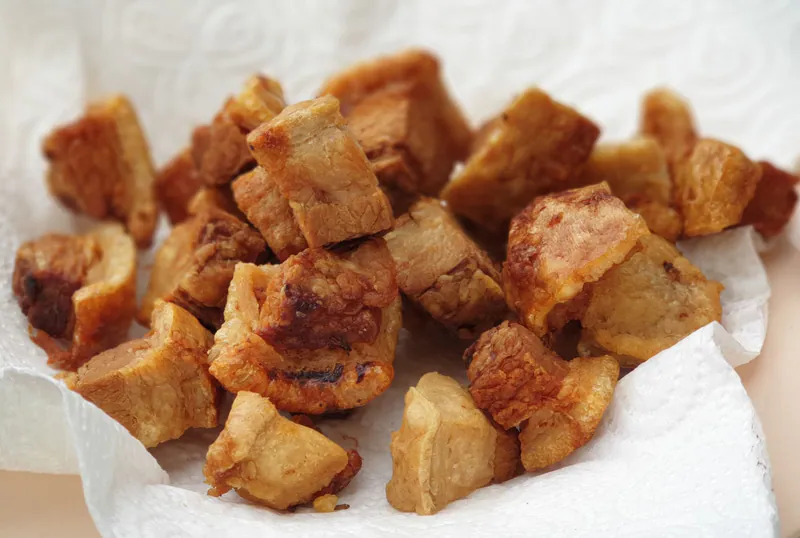
Griot
Haitian · 5 h 55 min · 524 kcal
Diri ak pwa (Haitian rice and red beans)
Haitian · 1 h · 426 kcal · Vegetarian
Soup joumou
Haitian · 3 h 30 min · 281 kcal