
Bath kulu badhu (Sri Lankan rice and curry)
Non-vegetarian
බත් කුළුබඩු · bath kulubadu
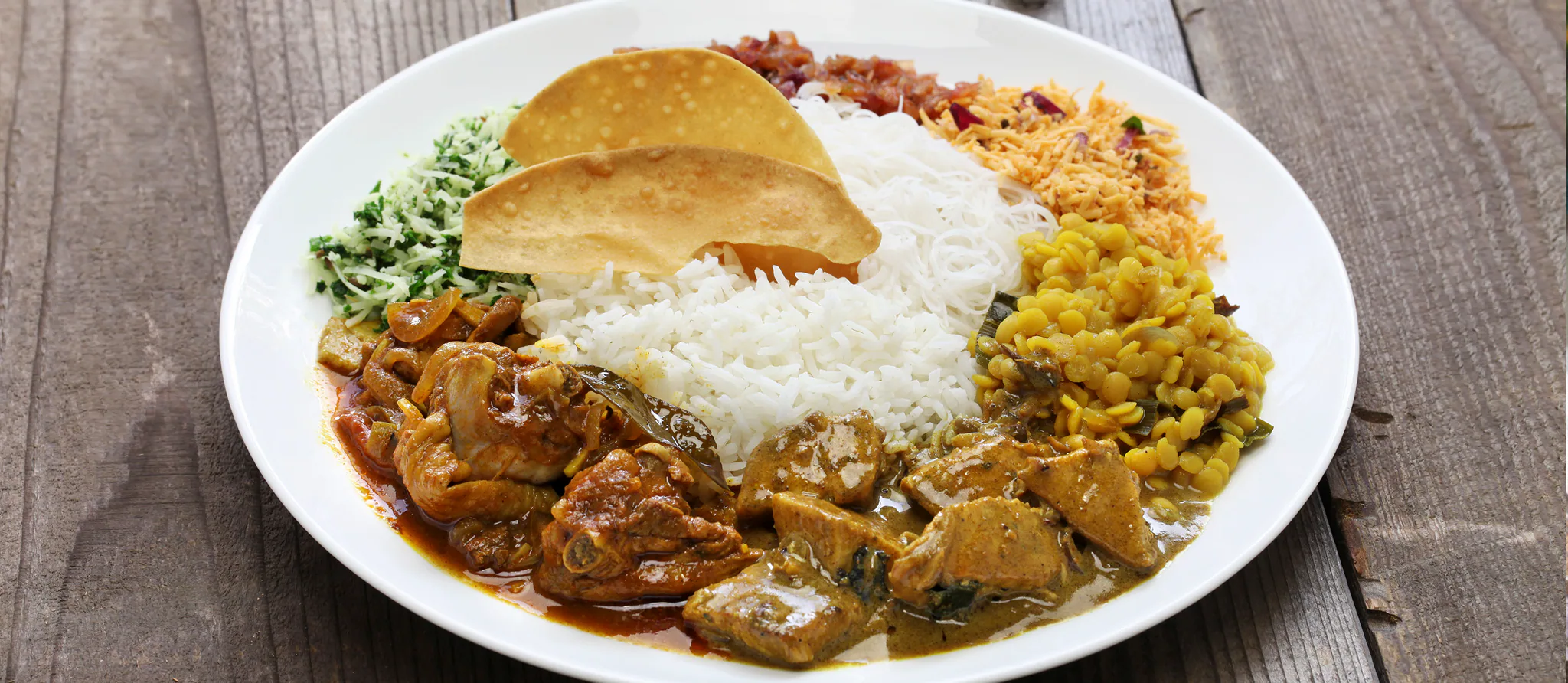
Sri Lanka's everyday national meal: a mound of steamed rice surrounded by several curries — here a dark roasted chicken curry, creamy coconut dhal and a green bean curry — with a sharp pol sambol of fresh coconut and chilli. Each mouthful is mixed together by hand on the plate.
Bath kulu badhu (Sri Lankan rice and curry) is a Sri Lankan rice dish, ready in about 1 hour 40 minutes and made with red rice, chicken thigh and curry powder. It serves 4 and is rated intermediate to cook.
- Prep
- 40 min
- Cook
- 1 h
- Total
- 1 h 40 min
- Serves
- 4
- Level
- Intermediate
- Calories
- 1387
Main ingredients
Ingredients
For the rice
For the roasted chicken curry
For the coconut dhal (parippu)
For the green bean curry
For the pol sambol
Method
Roasted chicken curry
5 minStep 1
Rub the chicken with the roasted curry powder (opens in a new tab), chilli powder, turmeric (opens in a new tab) and salt and set aside while you prepare the rest.
- 5 min
Food safety: Cook poultry until it reaches 74 °C in the thickest part, and keep raw poultry and its juices away from ready-to-eat food.
Rice
1 h 16 minStep 2
Cook the rice with the water and a pandan (opens in a new tab) leaf, covered, until tender and the water is absorbed (about 35 minutes for red rice (opens in a new tab), 15 for white). Rest it covered off the heat.
- 35 min
- low heat
- Saucepan (opens in a new tab)
Food safety: Cooked rice can carry Bacillus cereus spores that survive cooking; cool leftover rice quickly and refrigerate it within an hour.
Step 3
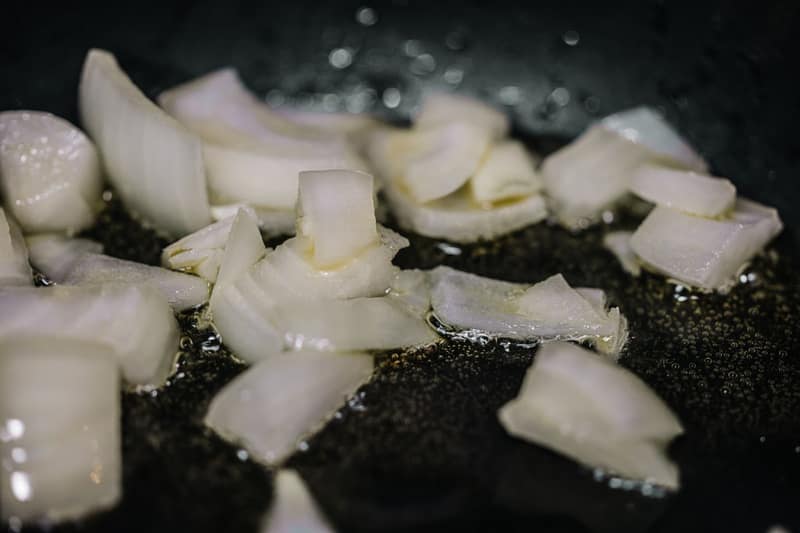
For the chicken curry, heat the coconut oil (opens in a new tab) in a heavy pot and fry the onion (opens in a new tab), garlic (opens in a new tab), ginger, curry leaves (opens in a new tab), pandan (opens in a new tab), cinnamon, cardamom (opens in a new tab) and cloves (opens in a new tab) until the onion is golden, about 6 minutes. Add the chicken and fry for 5 minutes to seal it in the spices.
- 11 min
- medium heat
- Dutch oven / casserole pot (opens in a new tab)
How it looks · Photo: Magda Ehlers on Pexels Step 4
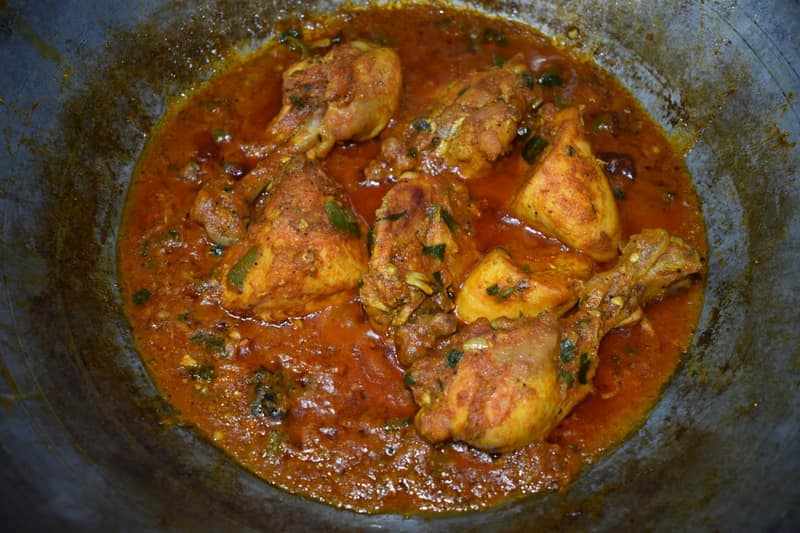
Add the tomato (opens in a new tab) and water, cover and simmer for 20 minutes. Stir in the coconut milk (opens in a new tab) and simmer uncovered for 10 minutes more until the chicken is tender and the gravy is thick and dark.
- 30 min
- medium-low heat
How it looks · Photo: Bachir Mamud on Pexels
Coconut dhal (parippu)
22 minStep 5
Meanwhile, for the dhal, simmer the lentils with the water, turmeric (opens in a new tab) and green chillies until soft and broken down, about 15 minutes. Stir in the coconut milk (opens in a new tab) and salt and simmer for 3 minutes. In a small pan, heat the coconut oil (opens in a new tab), pop the mustard seeds (opens in a new tab), then fry the shallots (opens in a new tab), dried chillies and curry leaves (opens in a new tab) until golden and pour over the dhal.
- 22 min
- medium-low heat
- Saucepan (opens in a new tab)
- Frying pan / skillet (opens in a new tab)
Green bean curry
10 minStep 6
For the bean curry, put the beans, onion (opens in a new tab), green chilli (opens in a new tab), turmeric (opens in a new tab), curry powder (opens in a new tab), coconut milk (opens in a new tab) and salt in a pan and simmer, uncovered, for 8–10 minutes until the beans are tender but still bright and the sauce has thickened.
- 10 min
- medium heat
Pol sambol
7 minStep 7
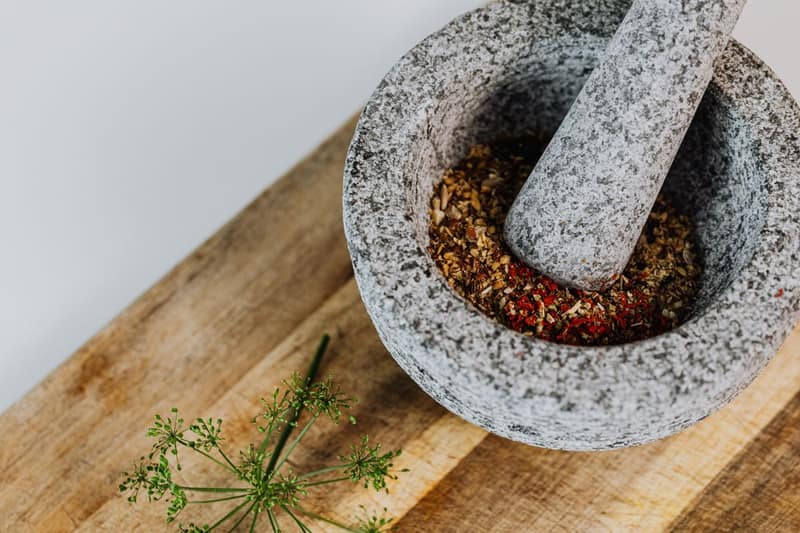
For the pol sambol, pound or rub the chopped red onion (opens in a new tab), chilli powder, Maldive fish (opens in a new tab) and salt together, then mix in the grated coconut (opens in a new tab) with your fingers until it turns pink. Add lime (opens in a new tab) juice to taste.
How it looks · Photo: https://kaboompics.com/ on Pexels Step 8
Serve a mound of rice with spoonfuls of each curry and the sambol arranged around it, so everyone can mix them as they eat.
- 2 min
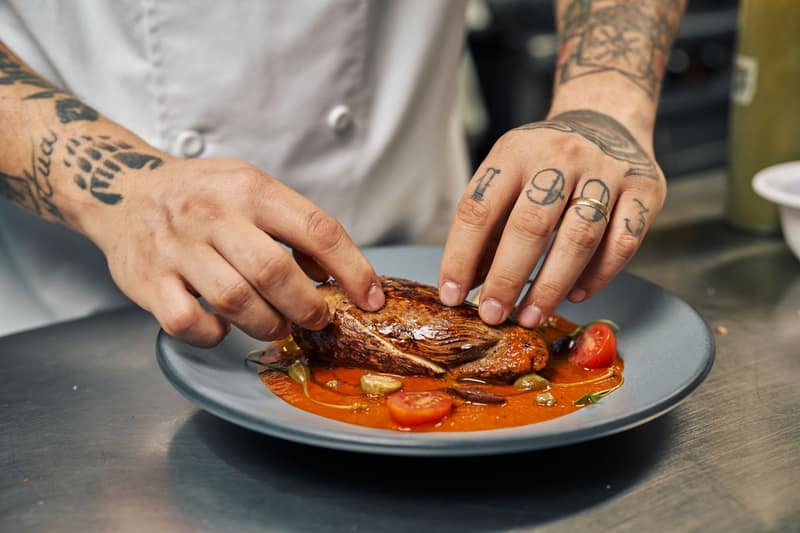
How it looks · Photo: Willians Huerta on Pexels
At a glance
1 · Roasted chicken curry in a pan
 Chicken thigh
 Curry powder
- Cayenne / chilli powder
 Turmeric
 Salt
 Coconut oil
 Onion
 Garlic
 Fresh ginger
 Curry leaves
 Pandan leaves
 Cinnamon stick
 Cardamom
 Cloves
 Tomato
 Coconut milk
then cook
2 · Rice in a pot
 Red rice
- Pandan leaves
then simmer
3 · Coconut dhal (parippu) in a pan
 Red lentils
- Turmeric
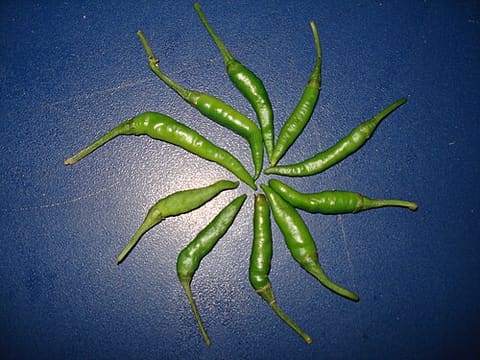 Green chilli
- Coconut milk
- Salt
- Coconut oil
 Mustard seeds
- Shallot
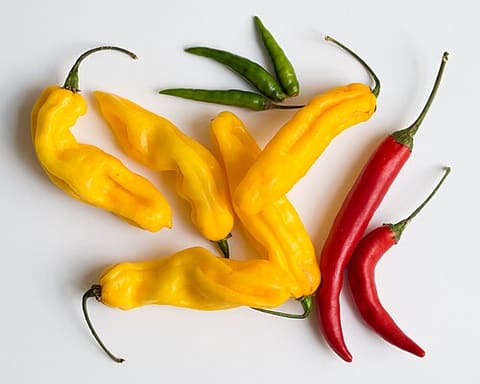 Dried whole chillies
- Curry leaves
then put
4 · Green bean curry in a pan
 Green beans
- Onion
- Green chilli
- Turmeric
- Curry powder
- Coconut milk
- Salt
then pound
5 · Pol sambol in a bowl
 Coconut
 Red onion
- Cayenne / chilli powder
 Maldive fish (dried tuna)
 Lime
- Salt
About this dish
- Origin
- Sri Lanka · Well documentedEaten daily, usually at lunch. A typical home spread has at least three curries — one meat or fish and two vegetables or pulses — plus a sambol, mallum (shredded greens with coconut) and crisp papadams.More food from Sri Lanka
Sri Lanka - Dish
- Lunch · Dinner · Rice dishes · Curries · Main courses
- Cooking method
- Boiled, Simmered, Toasted
- Taste
- spicy (chilli heat), aromatic / warmly spiced, creamy, savoury
- Diet
- No gluten ingredients · Dairy-free · No nut ingredients · High-proteinWithout the optional extras: Whole-food focusedWorked out from the ingredients. How labels work
All labels
Non-vegetarian · No gluten ingredients · Dairy-free · Egg-free · No nut ingredients · No added sugar · Alcohol-free · Pork-free · Beef-free · High-protein - Good for
- Everyday · Batch cooking
- Cook more with
- Red rice · Chicken thigh · Curry powder · Red lentils · Cayenne / chilli powder · Turmeric
- Techniques
- Toasting · Boiling · Simmering · Spice roasting (dry-roasting)
Allergens
- Contains, can be adapted: Fishfrom maldive fish (dried tuna)
- Contains: Mustardfrom curry powder, mustard seeds
- May contain: Celeryfrom curry powder
Based on typical versions of these ingredients and not verified allergen-free. Brands differ and cross-contact happens, so always check labels. For severe allergies, follow your clinician’s advice.
Nutrition
1387 kcal per serving
Estimated1 serving ≈ 1146 g · recipe makes 4
Where the energy comes from
- Protein 19%
- Carbohydrate 40%
- Fat 41%
| Nutrient | Per serving | Per 100 g* |
|---|---|---|
| Energy | 1387 kcal | 121 kcal |
| Protein | 67.2 g | 5.9 g |
| Carbohydrate | 141.7 g | 12.4 g |
| Net carbohydrate | — | — |
| Sugars | — | — |
| Added sugars | 0 g | 0 g |
| Fibre | — | — |
| Fat | 65.3 g | 5.7 g |
| Saturated fat | 48.2 g | 4.2 g |
| Trans fat | — | — |
| Cholesterol | 188 mg | 16 mg |
| Sodium | 1996 mg | 174 mg |
| Salt equivalent | 5 g | 0.4 g |
Vitamins & minerals per serving
- Potassium
- 2068 mg
- Calcium
- 217 mg
- Iron
- 15.1 mg
- Magnesium
- 327 mg
- Vitamin A (RAE)
- 87 µg
- Vitamin C
- 41 mg
- Vitamin D
- 0 µg
- Vitamin B12
- 1.2 µg
- Folate (DFE)
- 214 µg
How these numbers were made
- Calculated from USDA FoodData Central (SR Legacy) per-100 g values and the listed quantities.
- *Per 100 g of combined raw ingredients; the cooked dish may weigh more or less.
- Optional ingredients are not included: pandan leaves, maldive fish (dried tuna).
- Not counted (tiny amounts or “to taste”): curry leaves, pandan leaves, curry leaves.
- Red rice: Raw long-grain brown rice used as a stand-in; red rice (e.g. Bhutanese red rice) is a whole or semi-milled rice with a similar nutrient profile.
- “—” means the value isn’t known for enough of the ingredients; it is never zero by default.
- Values are estimates for guidance, not for medical dosing. U.S. Department of Agriculture, Agricultural Research Service. FoodData Central, 2019. fdc.nal.usda.gov.
Good to know
Tips
- Make the curries ahead: like most curries they taste better the next day, and only the rice and sambol need to be made fresh.
- Swap in whatever curries you like: fish ambul thiyal, beetroot curry or a jackfruit curry are all common.
Common mistakes
- Making every curry equally rich; balance a spicy meat curry with mild, creamy vegetable dishes.
Serve with
- Add fried papadams, a gotu kola mallum or sambol, and a spoon of seeni sambol or lime pickle.
- Eat with the fingers of the right hand, mixing a little of each curry into the rice.
Food safety
- Cook poultry until it reaches 74 °C in the thickest part, and keep raw poultry and its juices away from ready-to-eat food.
- Cooked rice can carry Bacillus cereus spores that survive cooking; cool leftover rice quickly and refrigerate it within an hour.
Storage
- Curries keep 3 days refrigerated; pol sambol is best on the day.
Reheating
- Reheat curries gently until piping hot; reheat rice only once, until steaming hot throughout.
Variations
- Fish rice and curry: A coastal spread built around a sour fish curry such as ambul thiyal or a tuna curry.
- Vegetarian rice and curry: Five vegetable and pulse curries — dhal, beetroot, jackfruit, pumpkin and greens — with sambol and papadams.
- Lunch packet: Rice and curries wrapped in banana leaf or paper, sold at lunchtime across Sri Lanka.
Original editorial recipe · FriendsPantry editorial · source: TasteAtlas (dish facts) · Not yet independently reviewed · Added
Sauces, chutneys & dips for this dish
Recipe DNA
How this dish is built
Built from the recipe’s own sections. Each band’s width is its share of the dish by weight. Choose a component to see what it does.
The body of the dish
For the green bean curry
- Green beans, cut diagonally into 3 cm pieces300 g
- Onion, sliced0.5 piece · 55 g
- Green chilli, sliced1 piece · 6 g
- Turmeric0.25 tsp · 0.8 g
- Curry powder1 tsp · 2.1 g
- Coconut milk150 ml · 147 g
- Salt0.5 tsp · 3 g
Masalas in this recipe
Make the masala first, then come back to finish the dish.
Dry spice blend
Everyday curry powder (British-style)
This recipe uses 2 tbsp + 1 tsp (14 g for 4 servings).
Reviews & corrections
Reviews come from signed-in cooks and appear after a moderator checks them. We never show made-up ratings.
You might also like
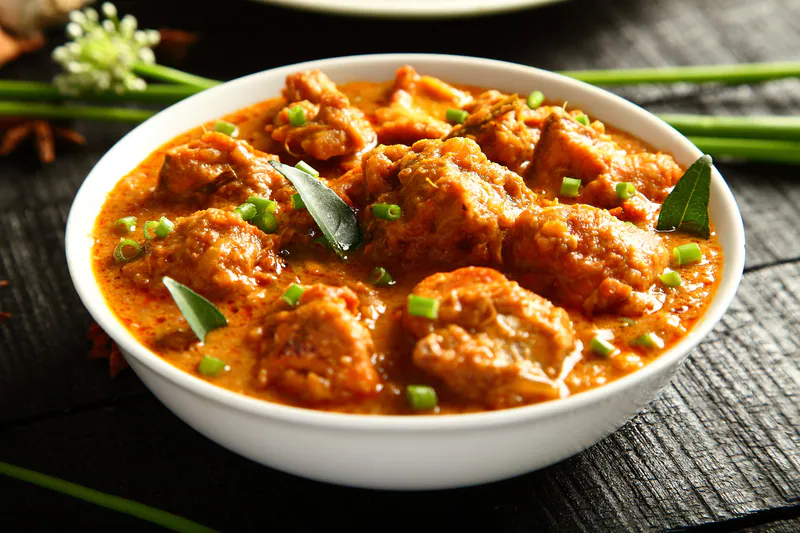
Sri Lankan chicken curry
 Sri Lankan · 1 h 35 min · 693 kcal
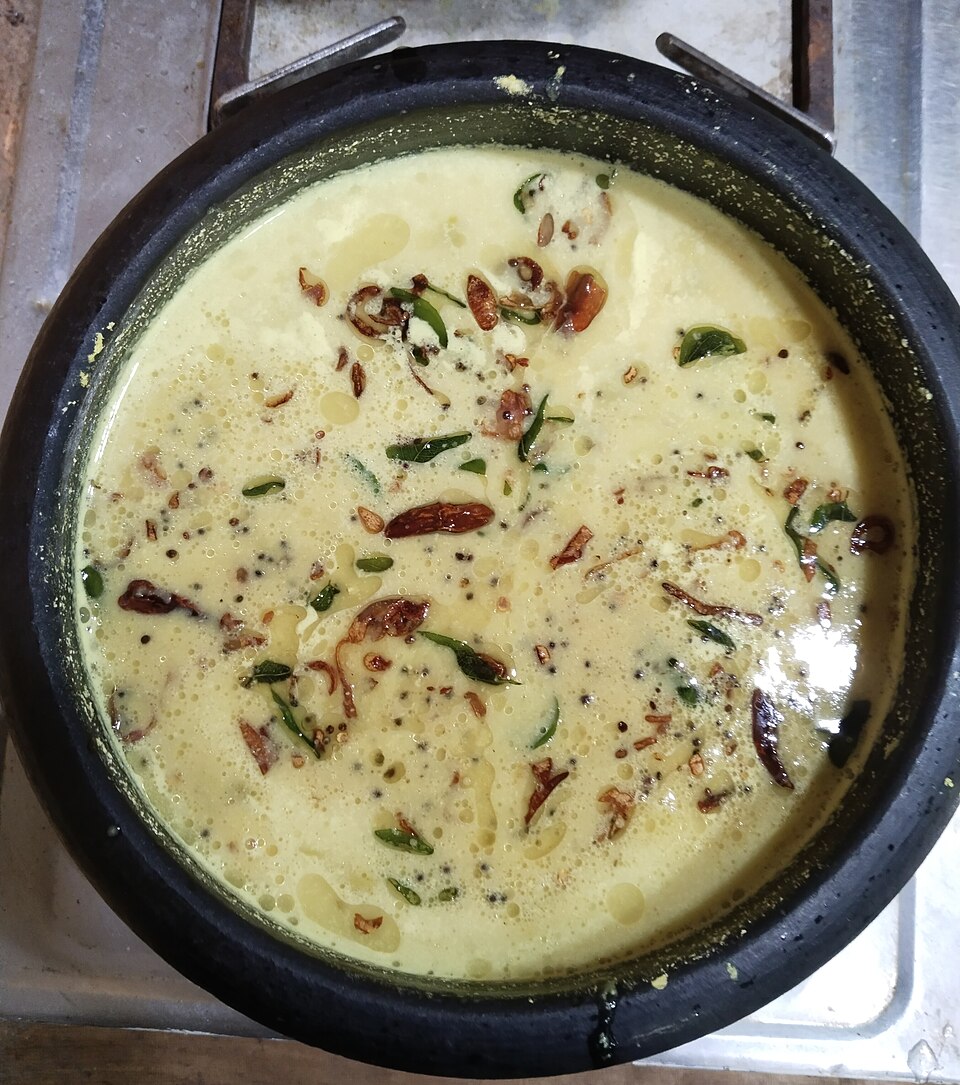
Parippu
Sri Lankan · 35 min · 362 kcal · Vegan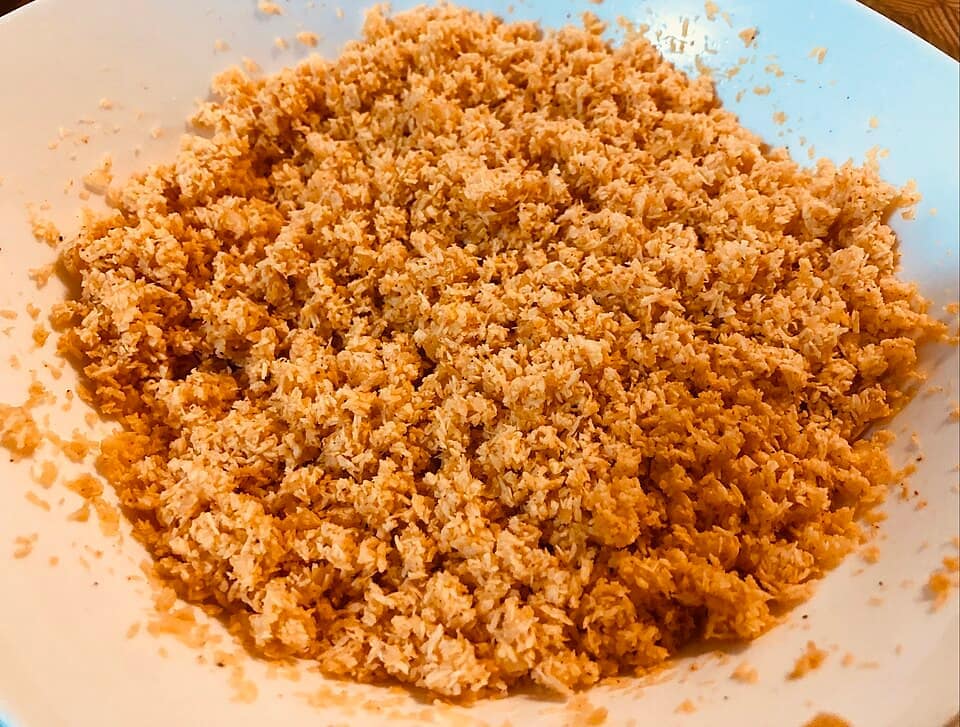
Pol sambol
Sri Lankan · 15 min · 193 kcal · VeganGotu kola sambol
Sri Lankan · 15 min · 68 kcal · Vegan