
 Danish · Scandinavian · Side dishes
Rødkål (Danish sweet and sour red cabbage)
Non-vegetarian
Rødkål
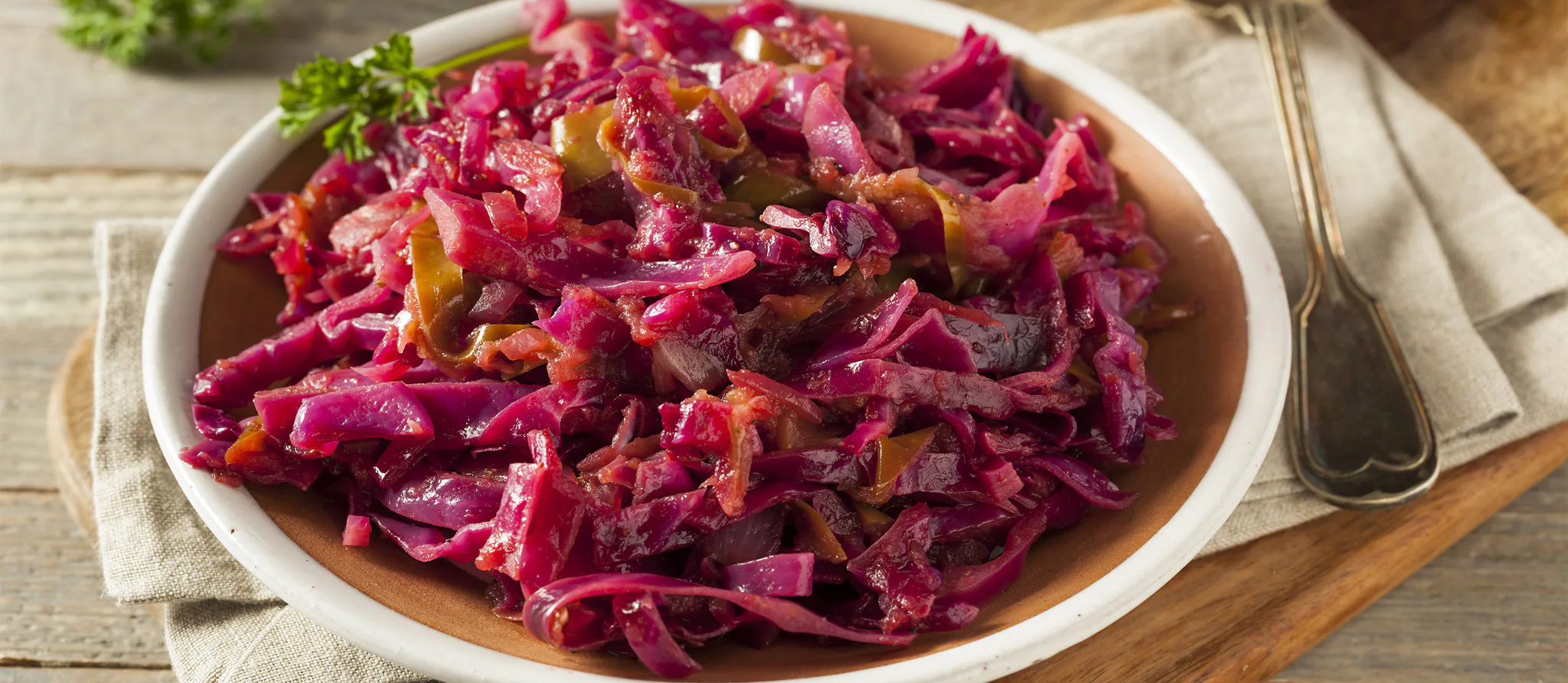
Finely shredded red cabbage braised slowly with butter, vinegar, sugar, redcurrant and warm spices until glossy, soft and sweet-sour. The indispensable side dish of the Danish Christmas table, next to roast pork and duck.
Rødkål (Danish sweet and sour red cabbage) is a Danish side dish from Denmark, ready in about 1 hour 50 minutes and made with red cabbage, apple cider vinegar and sugar. It serves 8 and is rated easy to cook.
- Prep
- 20 min
- Cook
- 1 h 30 min
- Total
- 1 h 50 min
- Serves
- 8
- Level
- Easy
- Calories
- 159
Main ingredients
Method
Step 1
Melt the butter (opens in a new tab) and duck fat (opens in a new tab) (if using) in a large heavy pot. Add the cabbage and stir over medium heat for 5 minutes until it starts to wilt and darken.
Step 2
Add the vinegar, sugar (opens in a new tab), salt, water, apple (opens in a new tab) (if using), cloves (opens in a new tab), star anise (opens in a new tab), bay leaves (opens in a new tab) and cinnamon. Stir well — the vinegar turns the cabbage bright purple-red.
- 2 min
Step 3
Cover and simmer very gently for 1–1½ hours, stirring now and then, until the cabbage is completely tender. Add a splash of water if it catches.
- 80 min
- low heat
Step 4
Stir in the redcurrant jelly (opens in a new tab) and cook uncovered for 5–10 minutes until the liquid is syrupy and glossy. Pick out the whole spices, then taste and balance with more sugar (opens in a new tab), vinegar or salt.
- 8 min
- medium-low heat
At a glance
 Red cabbage
 Butter
- Duck fat
 Apple cider vinegar
 Sugar
 Redcurrant jelly
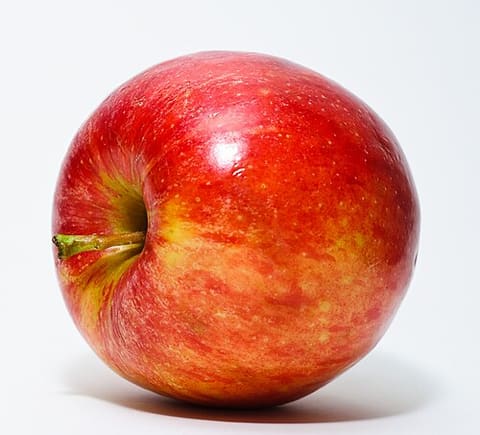 Apple
 Cloves
 Star anise / anise
 Bay leaves
 Cinnamon stick
 Salt
About this dish
- Origin
- Denmark · Well documentedEaten all over Scandinavia and northern Germany, but in Denmark it is a fixed part of julefrokost and Christmas Eve dinner.Also popular in Sweden, NorwayMore food from Denmark
Denmark - Dish
- Lunch · Dinner · Side dishes
- Cooking method
- Braised
- Taste
- sweet & sour, aromatic / warmly spiced, fruity
- Diet
- No gluten ingredients · No nut ingredientsWithout the optional extras: Vegetarian (lacto-ovo), Eggetarian, Lacto-vegetarian, PescatarianWorked out from the ingredients. How labels work
All labels
Non-vegetarian · Flexitarian-friendly · No gluten ingredients · Egg-free · No nut ingredients · Alcohol-free · Pork-free · Beef-free · Low-fat - Good for
- Make-ahead · Freezer-friendly · One-pot
- Cook more with
- Red cabbage · Apple cider vinegar · Sugar · Butter · Redcurrant jelly · Cloves
Allergens
- Contains: Milkfrom butter
Based on typical versions of these ingredients and not verified allergen-free. Brands differ and cross-contact happens, so always check labels. For severe allergies, follow your clinician’s advice.
Nutrition
159 kcal per serving
Estimated1 serving ≈ 205 g · recipe makes 8
Where the energy comes from
- Protein 5%
- Carbohydrate 77%
- Fat 18%
| Nutrient | Per serving | Per 100 g* |
|---|---|---|
| Energy | 159 kcal | 77 kcal |
| Protein | 2.2 g | 1.1 g |
| Carbohydrate | 32.8 g | 16 g |
| Net carbohydrate | 29.3 g | 14.3 g |
| Sugars | 24.7 g | 12 g |
| Added sugars | 18.5 g | 9 g |
| Fibre | 3.5 g | 1.7 g |
| Fat | 3.3 g | 1.6 g |
| Saturated fat | 2 g | 1 g |
| Trans fat | — | — |
| Cholesterol | 8 mg | 4 mg |
| Sodium | 507 mg | 247 mg |
| Salt equivalent | 1.3 g | 0.6 g |
Vitamins & minerals per serving
- Potassium
- 385 mg
- Calcium
- 77 mg
- Iron
- 1.3 mg
- Magnesium
- 26 mg
- Vitamin A (RAE)
- 110 µg
- Vitamin C
- 86 mg
- Vitamin D
- 0 µg
- Vitamin B12
- 0 µg
- Folate (DFE)
- 27 µg
How these numbers were made
- Calculated from USDA FoodData Central (SR Legacy) per-100 g values and the listed quantities.
- *Per 100 g of combined raw ingredients; the cooked dish may weigh more or less.
- Optional ingredients are not included: duck fat, apple.
- Redcurrant jelly: Generic fruit jelly (FDC 169642) used for redcurrant jelly; both are clear, set fruit-juice and sugar preserves.
- Star anise / anise: Anise seed (FDC 171316) used as a stand-in for star anise.
- “—” means the value isn’t known for enough of the ingredients; it is never zero by default.
- Values are estimates for guidance, not for medical dosing. U.S. Department of Agriculture, Agricultural Research Service. FoodData Central, 2019. fdc.nal.usda.gov.
Good to know
Tips
- Rødkål tastes better the next day; make it ahead for Christmas.
- Slice the cabbage as thinly as you can — a mandoline makes quick work of it.
Common mistakes
- Adding no acid early on, which leaves the cabbage a dull blue-grey.
Serve with
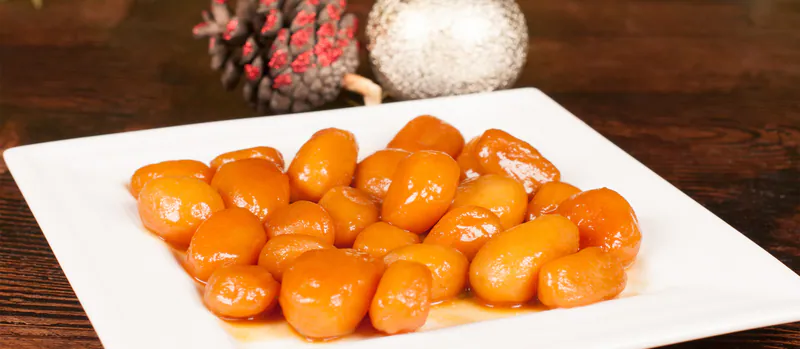
- Serve with flæskesteg (crackling roast pork), roast duck, frikadeller and caramelised potatoes.
- Cold rødkål is the classic topping for a leverpostej or roast-pork open sandwich.
Storage
- Keeps 1 week refrigerated or 3 months frozen.
Reheating
- Reheat gently in a covered pan with a spoon of water.
Variations
- Swedish kokt rödkål (Sweden): Similar, often flavoured with allspice and a little blackcurrant or lingonberry.
- German Apfelrotkohl: Braised with more apple, onion and goose fat.
Original editorial recipe · FriendsPantry editorial · source: TasteAtlas (dish facts) · Not yet independently reviewed · Added
Recipe DNA
How this dish is built
Grouped by each ingredient’s role in the dish. Each band’s width is its share of the dish by weight. Choose a component to see what it does.
What the dish is built around
Main ingredient
- Red cabbage, quartered, cored and very thinly sliced1.2 kg · 1200 g
- Butter30 g
- Apple, tart, peeled and grated (optional)1 piece · 180 g
Reviews & corrections
Reviews come from signed-in cooks and appear after a moderator checks them. We never show made-up ratings.
You might also like
Apfelrotkohl
 German · 1 h 30 min · 145 kcal · Vegetarian
Frikadeller
Danish · 55 min · 487 kcalSmørrebrød with egg and shrimp
Danish · 20 min · 332 kcal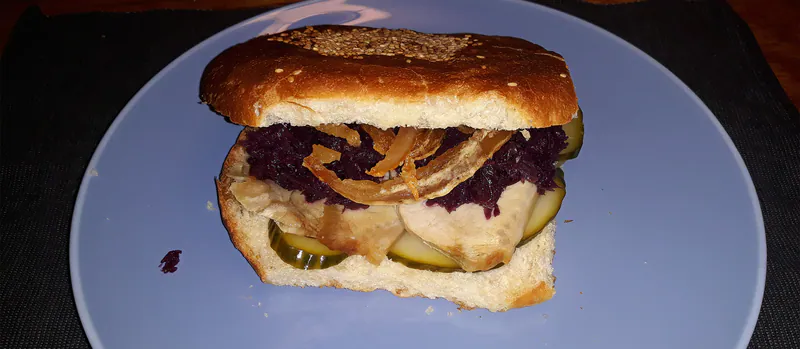
Flæskestegssandwich (Danish roast pork sandwich)
Danish · 2 h 25 min · 752 kcal