
 Greek · Mediterranean · Appetizers & starters
Riganada (Cephalonian oregano bread with tomato)
Vegetarian
Ριγανάδα · riganáda
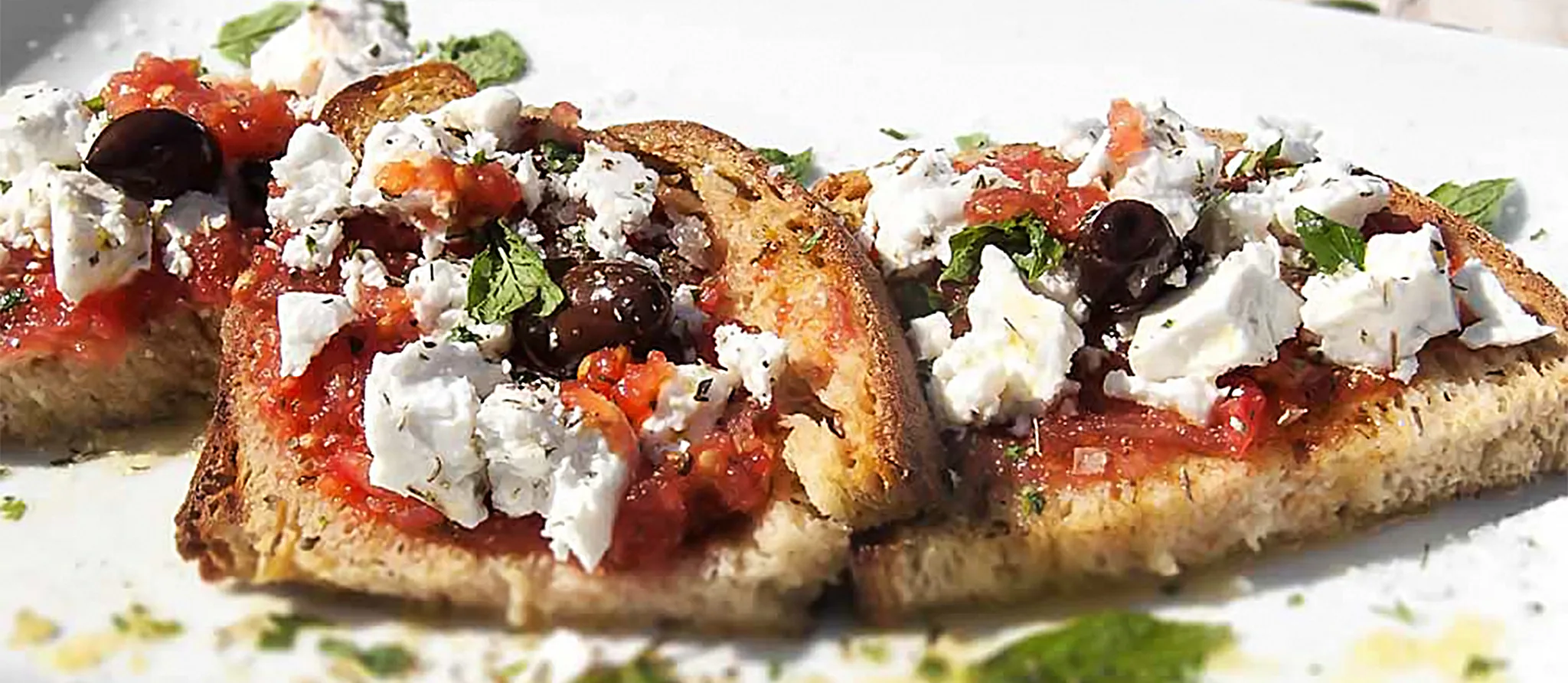
Thick slices of day-old country bread or barley rusk splashed with water and vinegar, soaked in olive oil and heaped with chopped ripe tomato, garlic and plenty of dried oregano. A no-cook summer meze from the Ionian island of Cephalonia.
Riganada (Cephalonian oregano bread with tomato) is a Greek starter from Greece, ready in about 20 minutes and made with crusty bread / baguette, olive oil and tomato. It serves 4 and is rated beginner to cook.
- Prep
- 10 min
- Cook
- 0 min
- Rest
- 10 min
- Total
- 20 min
- Serves
- 4
- Level
- Beginner
- Calories
- 263
Main ingredients
Method
Step 1
Lay the bread slices on a plate. If using garlic (opens in a new tab), rub the cut side over the bread. Mix the water and vinegar and sprinkle evenly over the bread so it is moist but not soggy.
- 3 min
Step 2
Drizzle the bread with about two-thirds of the olive oil (opens in a new tab) and leave for 5–10 minutes to soak in.
- 1 min
Step 3
Season the chopped tomato (opens in a new tab) with salt and spoon it, with its juice, over the bread. Scatter generously with oregano (opens in a new tab), add the basil (opens in a new tab) and feta (opens in a new tab) if using, and finish with the rest of the oil. Serve at once.
- 5 min
- Grater (opens in a new tab)
- Chef's knife (opens in a new tab)
- Chopping board (opens in a new tab)
How it looks · Photo: Klaus Nielsen on Pexels
At a glance
 Crusty bread / baguette
 Wine vinegar
 Olive oil
 Tomato
 Garlic
 Dried oregano
 Basil
 Salt
 Feta
About this dish
- Origin
- Cephalonia (Kefalonia), Ionian Islands, Greece · Commonly attributedThe name comes from rigani, Greek for oregano. It began as a way to use up stale bread in summer and is a cousin of Cretan dakos, which uses barley rusks and mizithra cheese.More food from Greece
Greece - Dish
- Lunch · Snack · Appetizers & starters
- Cooking method
- No-cook
- Taste
- fresh, herby, tangy
- Diet
- Vegetarian (lacto-ovo) · No nut ingredients · Low-carbWithout the optional extras: Vegan, Plant-based, Ovo-vegetarian, Dairy-freeWith the listed swaps: Whole-food focusedWorked out from the ingredients. How labels work
All labels
Vegetarian (lacto-ovo) · Eggetarian · Lacto-vegetarian · Pescatarian · Flexitarian-friendly · Egg-free · No nut ingredients · No added sugar · Alcohol-free · Pork-free · Beef-free · Mediterranean-style · Low-carb · DASH-style - Good for
- Budget-friendly · Minimal cleanup
- Cook more with
- Crusty bread / baguette · Tomato · Dried oregano · Wine vinegar
Allergens
- Contains, can be adapted: Milkfrom feta
- Contains: Wheatfrom crusty bread / baguette
- Contains: Glutenfrom crusty bread / baguette
- May contain: Sesamefrom crusty bread / baguette
- May contain: Sulphitesfrom wine vinegar
Based on typical versions of these ingredients and not verified allergen-free. Brands differ and cross-contact happens, so always check labels. For severe allergies, follow your clinician’s advice.
Nutrition
263 kcal per serving
Calculated1 serving ≈ 165 g · recipe makes 4
Where the energy comes from
- Protein 7%
- Carbohydrate 33%
- Fat 60%
| Nutrient | Per serving | Per 100 g* |
|---|---|---|
| Energy | 263 kcal | 159 kcal |
| Protein | 4.6 g | 2.8 g |
| Carbohydrate | 22 g | 13.3 g |
| Net carbohydrate | 20 g | 12.1 g |
| Sugars | 4 g | 2.4 g |
| Added sugars | 0 g | 0 g |
| Fibre | 2.1 g | 1.2 g |
| Fat | 17.9 g | 10.8 g |
| Saturated fat | 2.5 g | 1.5 g |
| Trans fat | — | — |
| Cholesterol | 0 mg | 0 mg |
| Sodium | 508 mg | 307 mg |
| Salt equivalent | 1.3 g | 0.8 g |
Vitamins & minerals per serving
- Potassium
- 264 mg
- Calcium
- 37 mg
- Iron
- 1.9 mg
- Magnesium
- 23 mg
- Vitamin A (RAE)
- 38 µg
- Vitamin C
- 12 mg
- Vitamin D
- 0 µg
- Vitamin B12
- 0 µg
- Folate (DFE)
- 74 µg
How these numbers were made
- Calculated from USDA FoodData Central (SR Legacy) per-100 g values and the listed quantities.
- *Per 100 g of combined raw ingredients; the cooked dish may weigh more or less.
- Optional ingredients are not included: garlic, basil, feta.
- “—” means the value isn’t known for enough of the ingredients; it is never zero by default.
- Values are estimates for guidance, not for medical dosing. U.S. Department of Agriculture, Agricultural Research Service. FoodData Central, 2019. fdc.nal.usda.gov.
Good to know
Tips
- The ripest summer tomatoes make all the difference.
- Rusks should soften on the surface but keep a little crunch in the middle.
Common mistakes
- Drenching the bread in water so it falls apart.
- Using bland, out-of-season tomatoes.
Serve with
- Serve with grilled or salted sardines, olives and a chilled glass of Robola wine or ouzo.
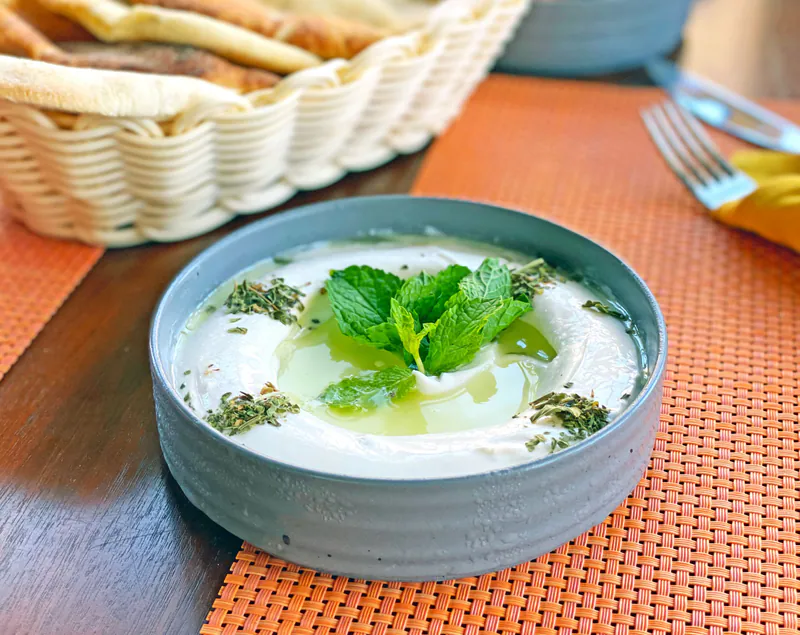
- Make it part of a meze spread with tzatziki and horiatiki salad.
Storage
- Assemble just before eating.
Variations
- With paximadi: Barley rusks are briefly dipped in water before topping, as in dakos.
- With cheese: Crumbled feta or Cephalonian feta-like cheese is scattered over the tomato.
Original editorial recipe · FriendsPantry editorial · source: TasteAtlas (dish facts) · Not yet independently reviewed · Added
Recipe DNA
How this dish is built
Grouped by each ingredient’s role in the dish. Each band’s width is its share of the dish by weight. Choose a component to see what it does.
What the dish is built around
Main ingredient
- Crusty bread / baguette, thick slices of day-old country bread4 slice · 140 g
- Tomato, very ripe, finely chopped or coarsely grated, skins discarded3 piece · 360 g
- Feta, crumbled (optional)60 g
Reviews & corrections
Reviews come from signed-in cooks and appear after a moderator checks them. We never show made-up ratings.
You might also like
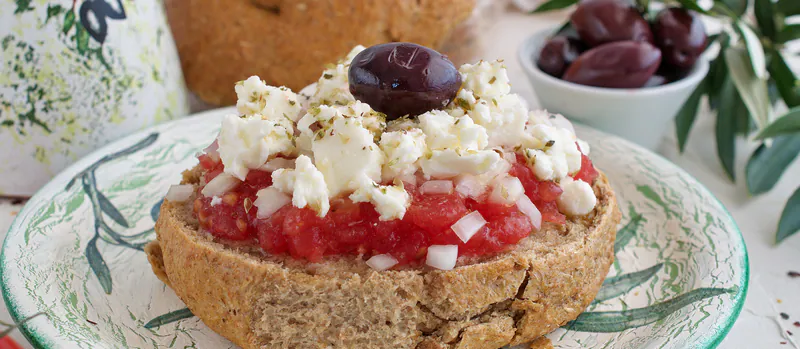
Dakos (Cretan barley rusk salad)
Greek · 20 min · 439 kcal · Vegetarian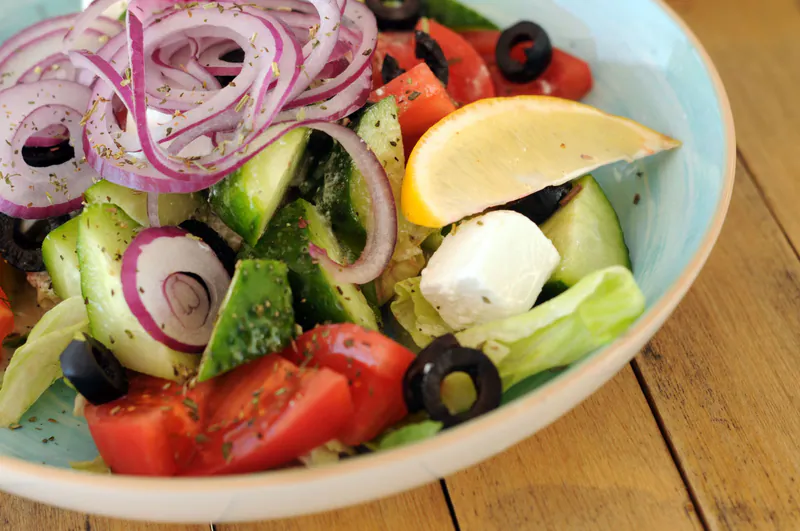
Greek village salad
Greek · 15 min · 314 kcal · Vegetarian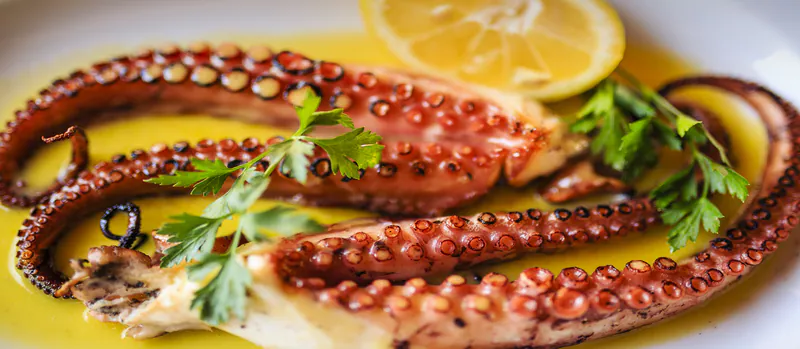
Chtapodi sti schara (Greek grilled octopus)
Greek · 2 h · 439 kcal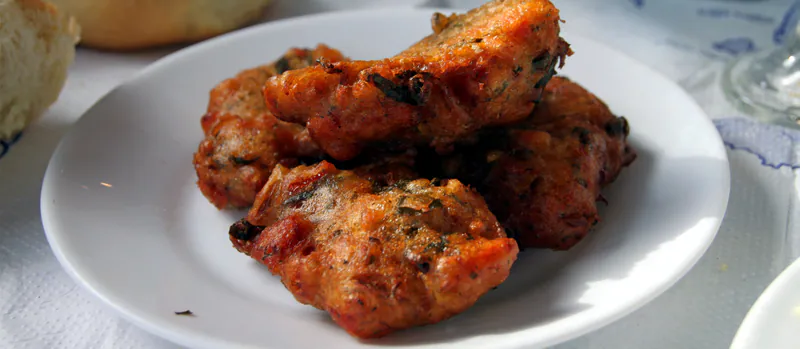
Tomatokeftedes (Santorini tomato fritters)
Greek · 1 h · 305 kcal · Vegetarian