
 Spanish · Mediterranean · Cold soups
Porra antequerana (thick cold tomato and bread soup)
Non-vegetarian
Porra antequerana
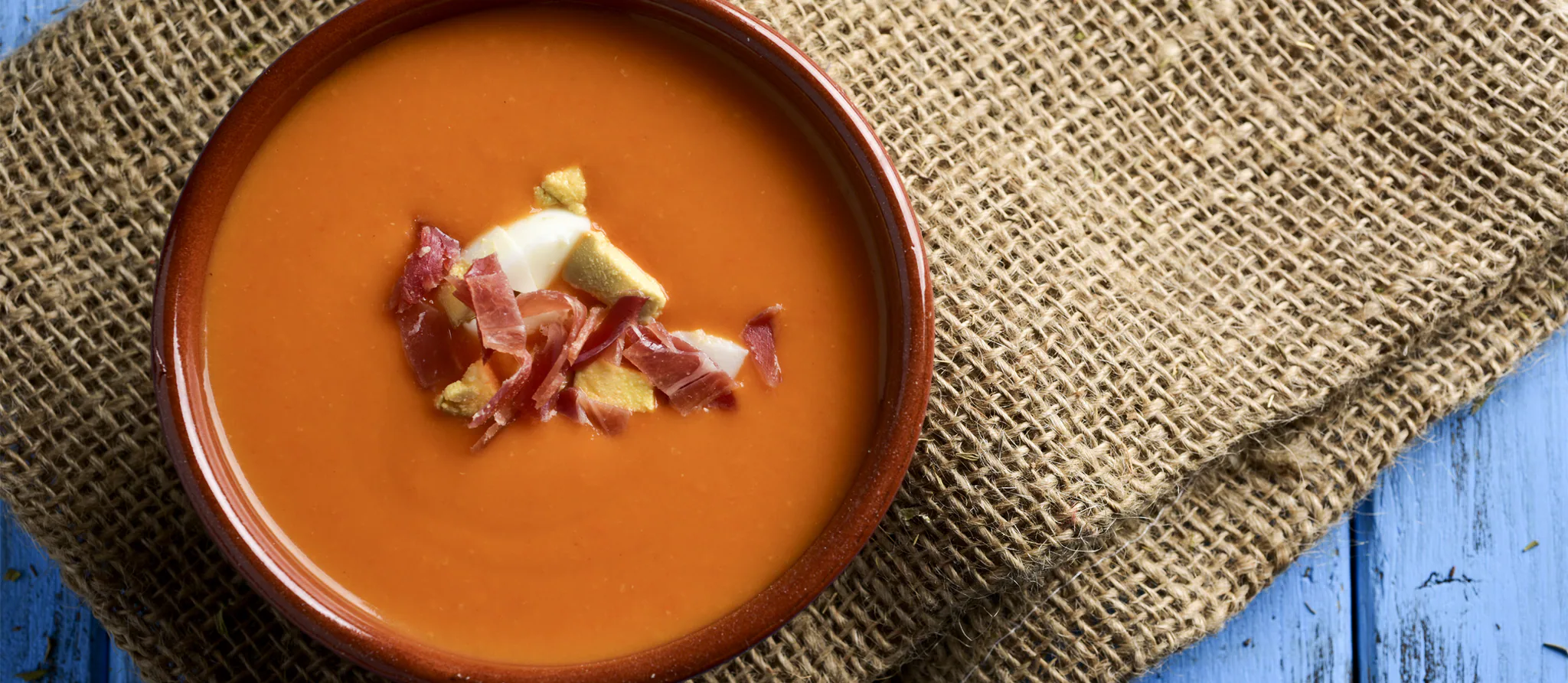
A dense, chilled purée of ripe tomatoes, day-old bread, green pepper, garlic, sherry vinegar and plenty of olive oil, thick enough to hold a standing spoon. Antequera's answer to salmorejo, topped with chopped egg, ham and tuna.
Porra antequerana (thick cold tomato and bread soup) is a Spanish dish from Spain, ready in about 2 hours 35 minutes and made with tomato, crusty bread / baguette and green bell pepper. It serves 4 and is rated easy to cook.
- Prep
- 25 min
- Cook
- 10 min
- Rest
- 2 h
- Total
- 2 h 35 min
- Serves
- 4
- Level
- Easy
- Calories
- 600
Main ingredients
Method
Step 1
Blend the tomatoes (opens in a new tab) until completely smooth, then press them through a sieve to remove the skins and seeds. You should have about 900 ml of tomato pulp.
Step 2
Soak the torn bread in the tomato (opens in a new tab) pulp for 10 minutes until fully softened.
Step 3
Pound the garlic (opens in a new tab) with the salt to a paste in a mortar (or add it straight to the blender (opens in a new tab)). Add the garlic paste, green pepper (opens in a new tab) and vinegar to the soaked bread and blend until smooth.
Step 4
With the blender (opens in a new tab) running, pour in the olive oil (opens in a new tab) in a thin stream until the porra turns pale orange (opens in a new tab), glossy and very thick. Taste for salt and vinegar. It should be thick enough that a spoon stands up in it; blend in more bread if it is loose.
- 3 min
Making it by hand in a mortar, as in the Antequera contest, gives a slightly coarser, denser cream.
Step 5
Meanwhile boil the eggs (opens in a new tab) for 10 minutes, cool in cold water, peel and chop.
- 12 min
- medium heat
Step 6
Chill the porra for at least 2 hours. Serve in shallow bowls topped with the chopped egg (opens in a new tab), diced ham, flaked tuna and orange (opens in a new tab), with a thread of olive oil (opens in a new tab).
- 3 min
At a glance
 Tomato
 Crusty bread / baguette
 Green bell pepper
 Garlic
 Olive oil
 Wine vinegar
 Salt
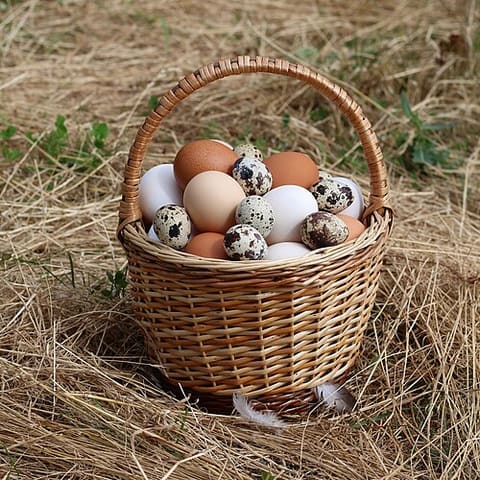 Egg
 Prosciutto / dry-cured ham
 Canned tuna
 Orange
About this dish
- Origin
- Antequera, Málaga province (Andalusia), Spain · Well documentedPart of the Andalusian family of pounded bread soups with salmorejo and gazpacho; red versions only became possible once New World tomatoes and peppers were adopted. Antequera holds a yearly porra contest in which it must be made by hand in a mortar.More food from Spain
Spain - Dish
- Lunch · Dinner · Cold soups · Soups · Appetizers & starters
- Cooking method
- Blended, No-cook, Boiled
- Taste
- fresh, tangy, garlicky, rich
- Diet
- Dairy-free · No nut ingredientsWorked out from the ingredients. How labels work
All labels
Non-vegetarian · Flexitarian-friendly · Dairy-free · No nut ingredients · No added sugar · Alcohol-free · Beef-free · Mediterranean-style - Good for
- Make-ahead · Budget-friendly
- Cook more with
- Tomato · Crusty bread / baguette · Green bell pepper · Garlic · Wine vinegar · Egg
- Techniques
- Boiling · Wet grinding · Emulsification
Allergens
- Contains: Eggsfrom egg
- Contains, can be adapted: Fishfrom canned tuna
- Contains: Wheatfrom crusty bread / baguette
- Contains: Glutenfrom crusty bread / baguette
- May contain: Sesamefrom crusty bread / baguette
- May contain: Sulphitesfrom wine vinegar
Based on typical versions of these ingredients and not verified allergen-free. Brands differ and cross-contact happens, so always check labels. For severe allergies, follow your clinician’s advice.
Nutrition
600 kcal per serving
Estimated1 serving ≈ 428 g · recipe makes 4
Where the energy comes from
- Protein 10%
- Carbohydrate 29%
- Fat 61%
| Nutrient | Per serving | Per 100 g* |
|---|---|---|
| Energy | 600 kcal | 140 kcal |
| Protein | 15.2 g | 3.6 g |
| Carbohydrate | 44.4 g | 10.4 g |
| Net carbohydrate | 39.5 g | 9.2 g |
| Sugars | 10.3 g | 2.4 g |
| Added sugars | 0 g | 0 g |
| Fibre | 4.9 g | 1.2 g |
| Fat | 41.4 g | 9.7 g |
| Saturated fat | 6.9 g | 1.6 g |
| Trans fat | — | — |
| Cholesterol | 101 mg | 24 mg |
| Sodium | 1493 mg | 349 mg |
| Salt equivalent | 3.7 g | 0.9 g |
Vitamins & minerals per serving
- Potassium
- 811 mg
- Calcium
- 80 mg
- Iron
- 4 mg
- Magnesium
- 57 mg
- Vitamin A (RAE)
- 150 µg
- Vitamin C
- 64 mg
- Vitamin D
- —
- Vitamin B12
- 0.3 µg
- Folate (DFE)
- 159 µg
How these numbers were made
- Calculated from USDA FoodData Central (SR Legacy) per-100 g values and the listed quantities.
- *Per 100 g of combined raw ingredients; the cooked dish may weigh more or less.
- Optional ingredients are not included: canned tuna, orange.
- Prosciutto / dry-cured ham: Cured ham, lean and fat, unheated (FDC 167875) used as a stand-in for air-dried prosciutto/jamón; real dry-cured ham is drier and saltier.
- “—” means the value isn’t known for enough of the ingredients; it is never zero by default.
- Values are estimates for guidance, not for medical dosing. U.S. Department of Agriculture, Agricultural Research Service. FoodData Central, 2019. fdc.nal.usda.gov.
Good to know
Tips
- Use the ripest, reddest tomatoes you can find; pale tomatoes give a thin, sour porra.
- In Antequera it is also eaten as a dip with bread sticks (picos) or raw vegetables.
Common mistakes
- Adding all the oil at once, which stops it emulsifying and leaves the soup greasy.
- Using soft sandwich bread, which turns gluey instead of thickening.
Serve with
- Serve very cold as a starter, or as a light summer lunch with extra ham and egg.
- Spoon a dollop next to grilled fish or fried aubergine.
Food safety
- Keep the porra refrigerated and do not leave it out in the heat for more than 2 hours.
Storage
- Keeps 2 days covered in the fridge; stir before serving. Add the toppings only at the last minute.
Variations
- Porra blanca: An older, pale version of bread, garlic, oil, vinegar and salt, without tomato or pepper, similar to white gazpacho.
- Porra de naranja: Winter porra from Antequera with orange segments pounded in or scattered over.
- Salmorejo cordobés (Spain): Córdoba's version without pepper, a little smoother and less dense.
How is porra different from salmorejo?
They are close relatives. Porra antequerana is usually thicker, nearly always contains green pepper and often a little more vinegar; salmorejo is smoother and typically pepper-free.
Original editorial recipe · FriendsPantry editorial · source: TasteAtlas (dish facts) · Not yet independently reviewed · Added
Recipe DNA
How this dish is built
Built from the recipe’s own sections. Each band’s width is its share of the dish by weight. Choose a component to see what it does.
What the dish is built around
Main ingredient
- Tomato, very ripe, cored and roughly chopped1000 g
- Crusty bread / baguette, dense, day-old white loaf, crusts removed, torn250 g
- Green bell pepper, small, deseeded and chopped (about 120 g)1 piece · 120 g
Reviews & corrections
Reviews come from signed-in cooks and appear after a moderator checks them. We never show made-up ratings.
You might also like
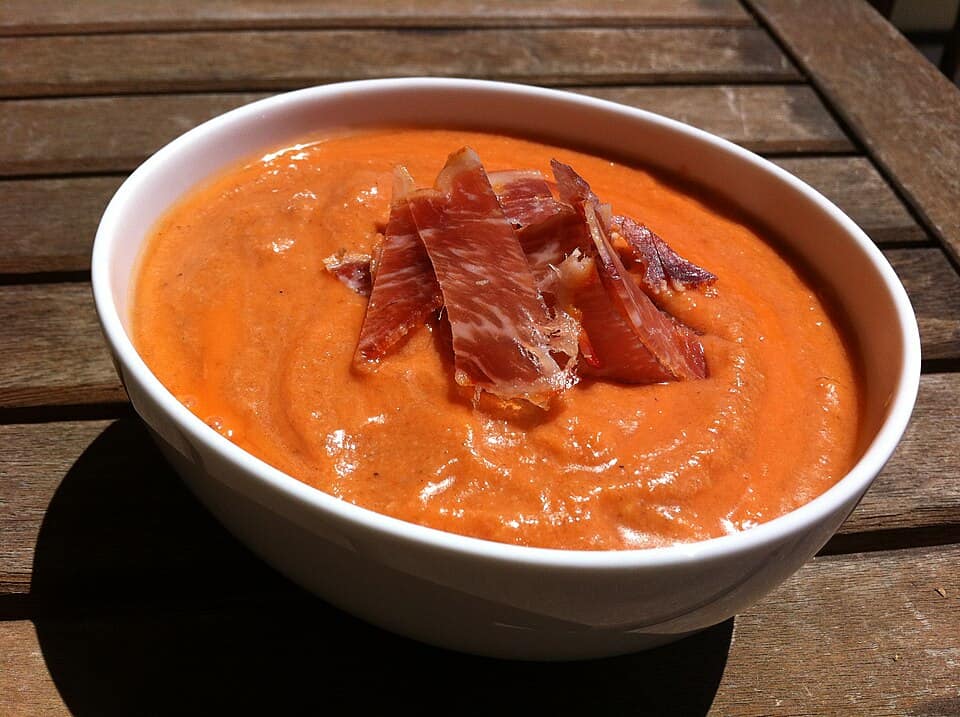
Salmorejo
Spanish · 2 h 15 min · 425 kcal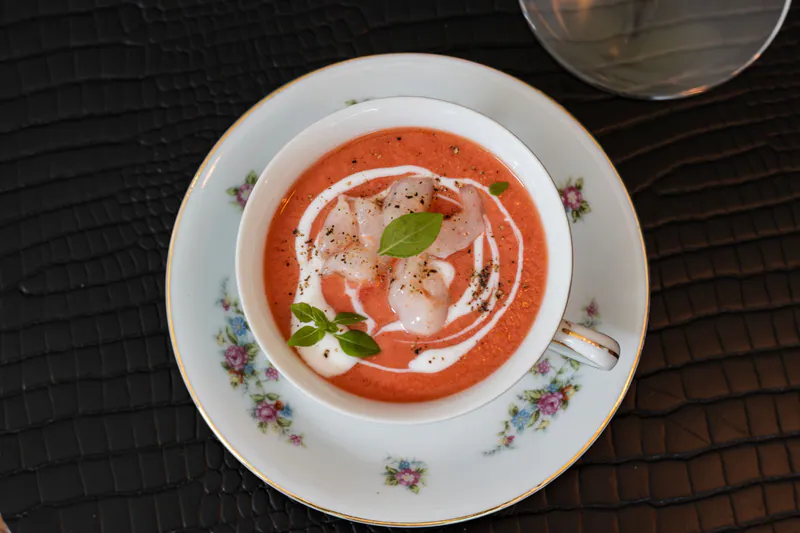
Gazpacho
Spanish · 2 h 15 min · 220 kcal · Vegan
Ajo blanco
Spanish · 2 h 15 min · 500 kcal · Vegan
Espinacas con garbanzos
Spanish · 30 min · 338 kcal · Vegan