
Peking duck (Beijing kao ya)
Non-vegetarian
北京烤鸭 · Běijīng kǎoyā
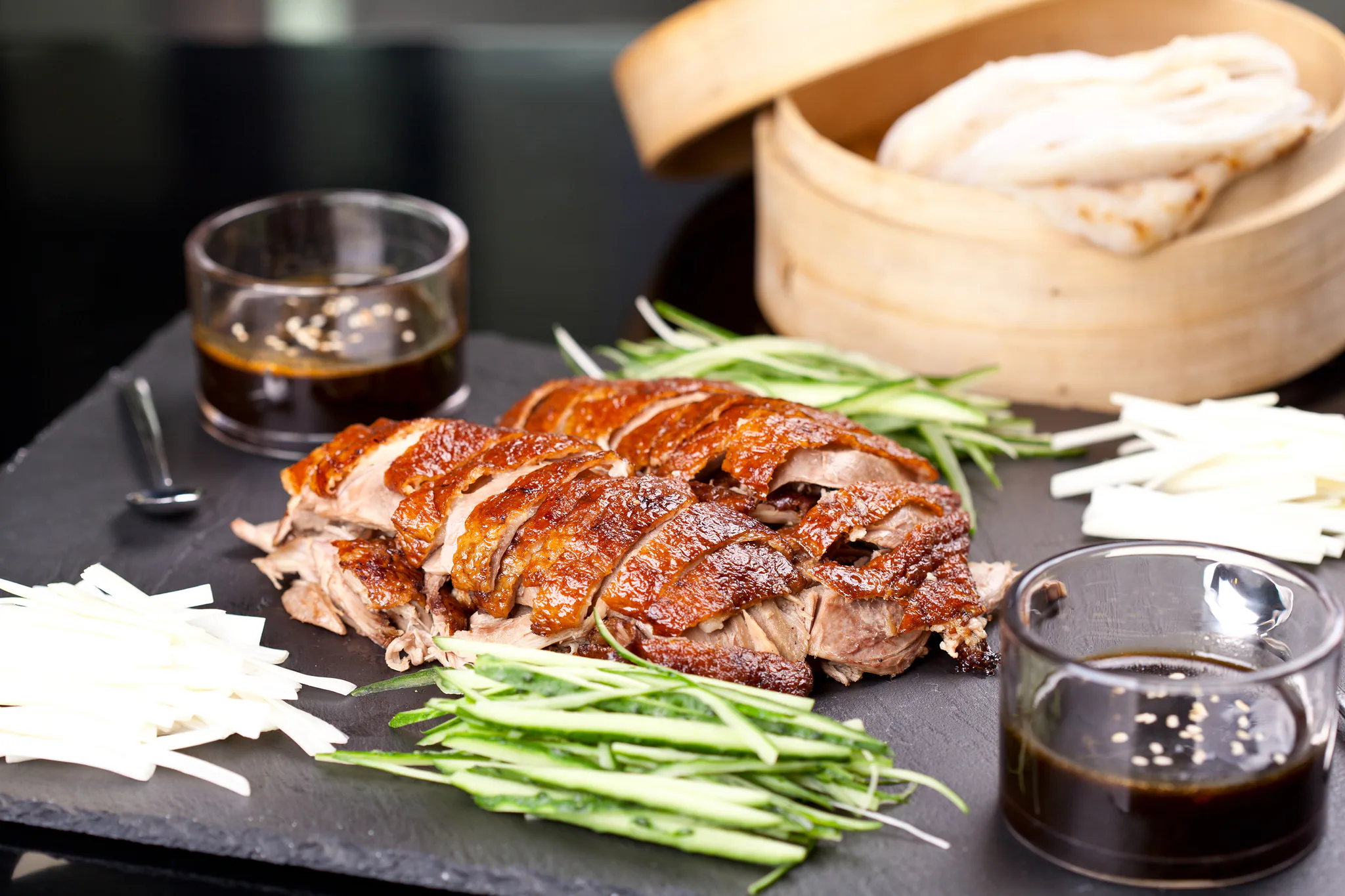
A whole duck scalded, glazed with honey and vinegar and dried for a day so the skin roasts thin, lacquered and crackling-crisp. It is carved at the table and rolled into thin pancakes with hoisin or sweet bean sauce, spring onion and cucumber.
Peking duck (Beijing kao ya) is a Chinese main course from China, ready in about 26 hours 50 minutes and made with duck (pieces), honey and hoisin sauce. It serves 4 and is rated advanced to cook.
- Prep
- 1 h
- Cook
- 1 h 40 min
- Rest
- 24 h 10 min
- Total
- 26 h 50 min
- Serves
- 4
- Level
- Advanced
- Calories
- 1141
Most of the rest time is drying the duck uncovered in the fridge for about 24 hours.
Main ingredients
Ingredients
For the duck
For scalding
For the glaze
For the pancakes
To serve
Method
Duck
15 minStep 1
Pat the duck (opens in a new tab) dry. Rub the cavity with the salt and five-spice and fill it with the ginger and spring onion (opens in a new tab) lengths. Close the opening with a skewer. Gently work your fingers between the skin and breast meat to loosen the skin without tearing it.
- 15 min
Food safety: Cook duck until the thickest part of the thigh reaches 74 °C (165 °F). Keep raw poultry and its juices away from ready-to-eat food.
Scalding
5 minStep 2
Set the duck (opens in a new tab) on a rack in the sink and pour the boiling water slowly over every part of the skin, turning it once. The skin will tighten and turn pale. Pat dry.
Food safety: Pour slowly and keep your hands clear of the splashes.
Glaze
5 minStep 3
Stir the honey (opens in a new tab), rice vinegar (opens in a new tab), Shaoxing wine (opens in a new tab) and hot water together and brush the glaze all over the skin. Leave the duck (opens in a new tab) uncovered on a rack in the fridge for 24 hours, brushing once more after a few hours, until the skin feels dry and papery.
A fan pointed at the duck for the first hour speeds up drying.
Pancakes
2 h 3 minStep 4
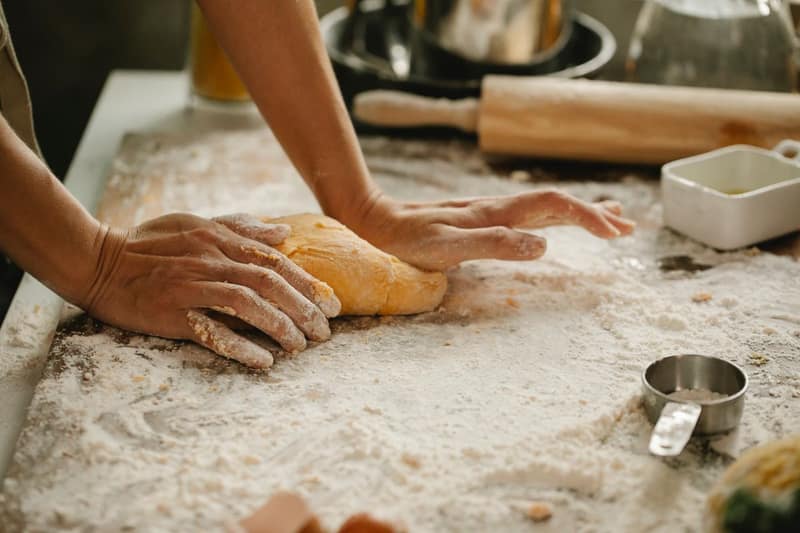
For the pancakes, stir the hot water into the flour, then knead for 5 minutes into a smooth dough. Cover and rest for 30 minutes.
- 8 min
How it looks · Photo: Klaus Nielsen on Pexels Step 5
Heat the oven (opens in a new tab) to 200 °C. Put the duck (opens in a new tab) breast-side up on a rack over a roasting pan (opens in a new tab) with 2 cm of water (to stop the dripping fat smoking). Roast for 20 minutes, then lower to 170 °C and roast for 60 minutes more, turning it breast-down for the middle 20 minutes.
If the skin colours too fast, loosely cover those spots with foil.
How it looks · Photo: locrifa on Pexels Step 6
Raise the oven (opens in a new tab) to 220 °C for the last 10 minutes to crisp the skin until it is deep mahogany and the thigh reaches 74 °C. Rest the duck (opens in a new tab) for 10 minutes.
- 10 min
- 220°C
- Oven (opens in a new tab)
Step 7
While the duck (opens in a new tab) roasts, roll the dough into a log and cut into 16 pieces. Flatten two pieces, brush one with sesame oil (opens in a new tab) and press the other on top, then roll the pair into a thin 16 cm round. Cook in a dry frying pan for about 1 minute per side until puffed with a few pale spots, then pull the two pancakes apart. Keep covered with a cloth.
To serve
10 minStep 8
Carve the crisp skin off the breast first and serve it with sugar (opens in a new tab) for dipping if you like, then slice the rest of the meat with some skin attached. Spread a pancake with sauce, add duck (opens in a new tab), spring onion (opens in a new tab) strips and cucumber (opens in a new tab), and roll up.
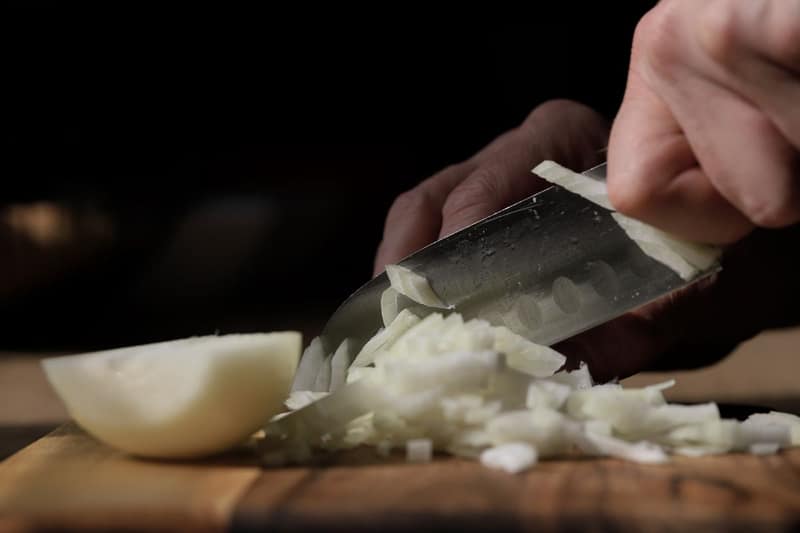
How it looks · Photo: Christina & Peter on Pexels
At a glance
1 · Duck in a bowl
 Duck (pieces)
 Salt
 Five-spice powder
 Fresh ginger
 Spring onion
then set
2 · Scalding in a pot
then stir
3 · Glaze in a pan
 Honey
 Rice vinegar
 Shaoxing wine
then stir
4 · Pancakes in a pan
 All-purpose flour
 Toasted sesame oil
then carve
5 · To serve in a bowl
 Hoisin sauce
- Spring onion
 Cucumber
 Sugar
About this dish
- Origin
- Beijing, China · Well documentedRoast duck was served at the Ming imperial court; Bianyifang (founded 1416) is known for the closed-oven style and Quanjude (1864) for ducks hung over fruitwood fires. This home version uses a domestic oven.Also popular in Hong Kong, Taiwan, Singapore, MalaysiaMore food from China
China - Dish
- Dinner · Main courses · Wraps & rolls
- Cooking method
- Roasted, Marinated / cured
- Taste
- rich, sweet & savoury, aromatic / warmly spiced, fresh
- Diet
- Dairy-free · No nut ingredients · High-proteinWorked out from the ingredients. How labels work
All labels
Non-vegetarian · Dairy-free · Egg-free · No nut ingredients · Pork-free · Beef-free · High-protein - Good for
- Festive & celebration
- Cook more with
- Duck (pieces) · Honey · Hoisin sauce · Five-spice powder · Fresh ginger · Spring onion
- Techniques
- Roasting · Boiling · Marinating · Kneading · Curing
Allergens
- Contains: Wheatfrom shaoxing wine, all-purpose flour, hoisin sauce
- Contains: Glutenfrom shaoxing wine, all-purpose flour, hoisin sauce
- Contains: Soyfrom hoisin sauce
- Contains, can be adapted: Sesamefrom toasted sesame oil, hoisin sauce
Based on typical versions of these ingredients and not verified allergen-free. Brands differ and cross-contact happens, so always check labels. For severe allergies, follow your clinician’s advice.
Nutrition
1141 kcal per serving
Estimated1 serving ≈ 850 g · recipe makes 4
Where the energy comes from
- Protein 39%
- Carbohydrate 30%
- Fat 31%
| Nutrient | Per serving | Per 100 g* |
|---|---|---|
| Energy | 1141 kcal | 134 kcal |
| Protein | 109.2 g | 12.8 g |
| Carbohydrate | 84.3 g | 9.9 g |
| Net carbohydrate | 80.4 g | 9.5 g |
| Sugars | 22.5 g | 2.6 g |
| Added sugars | — | — |
| Fibre | 3.9 g | 0.5 g |
| Fat | 37.8 g | 4.5 g |
| Saturated fat | 13.5 g | 1.6 g |
| Trans fat | — | — |
| Cholesterol | 424 mg | 50 mg |
| Sodium | 2596 mg | 305 mg |
| Salt equivalent | 6.5 g | 0.8 g |
Vitamins & minerals per serving
- Potassium
- 1833 mg
- Calcium
- 125 mg
- Iron
- 17.2 mg
- Magnesium
- 146 mg
- Vitamin A (RAE)
- 153 µg
- Vitamin C
- 41 mg
- Vitamin D
- 0.6 µg
- Vitamin B12
- 2.2 µg
- Folate (DFE)
- 353 µg
How these numbers were made
- Calculated from USDA FoodData Central (SR Legacy) per-100 g values and the listed quantities.
- *Per 100 g of combined raw ingredients; the cooked dish may weigh more or less.
- Optional ingredients are not included: sugar.
- Not counted (tiny amounts or “to taste”): five-spice powder.
- Rice vinegar: Distilled vinegar (FDC 172237) used as a stand-in for unseasoned rice vinegar.
- Shaoxing wine: Sake (FDC 167723) used as a stand-in for Chinese rice cooking wine.
- “—” means the value isn’t known for enough of the ingredients; it is never zero by default.
- Values are estimates for guidance, not for medical dosing. U.S. Department of Agriculture, Agricultural Research Service. FoodData Central, 2019. fdc.nal.usda.gov.
Good to know
Tips
- Keep the rendered duck fat from the pan for roasting potatoes.
- Simmer the carcass with ginger and cabbage for the duck-bone soup that traditionally ends the meal.
Common mistakes
- Skipping the drying time — wet skin steams instead of crisping.
- Roasting directly in the pan, so the underside sits in fat and turns soggy.
Serve with
- Serve with smashed cucumber salad and hot and sour soup.
- Set out the pancakes, sauce and vegetables so everyone rolls their own.
Food safety
- Cook duck until the thickest part of the thigh reaches 74 °C (165 °F). Keep raw poultry and its juices away from ready-to-eat food.
Storage
- Leftover duck keeps 3 days in the fridge; pancakes keep 2 days wrapped.
Reheating
- Crisp leftover duck in a 200 °C oven for 8–10 minutes; steam pancakes for 2–3 minutes.
Variations
- Duck three ways: The skin and meat in pancakes, the remaining meat stir-fried with bean sprouts, and the bones made into soup.
- Closed-oven (menlu) style: The Bianyifang method roasts the duck in a preheated, sealed oven without an open flame, giving a softer, juicier skin.
Original editorial recipe · FriendsPantry editorial · source: TasteAtlas (dish facts) · Not yet independently reviewed · Added
Sauces, chutneys & dips for this dish
Recipe DNA
How this dish is built
Built from the recipe’s own sections. Each band’s width is its share of the dish by weight. Choose a component to see what it does.
The body of the dish
For the glaze
- Honey3 tbsp · 63 g
- Rice vinegar2 tbsp · 30 g
- Shaoxing wine1 tbsp · 15 g
- Water60 ml · 60 g
Masalas in this recipe
Make the masala first, then come back to finish the dish.
Dry spice blend
Chinese five-spice powder
This recipe uses 1 tsp (2.2 g for 4 servings).
Reviews & corrections
Reviews come from signed-in cooks and appear after a moderator checks them. We never show made-up ratings.
You might also like
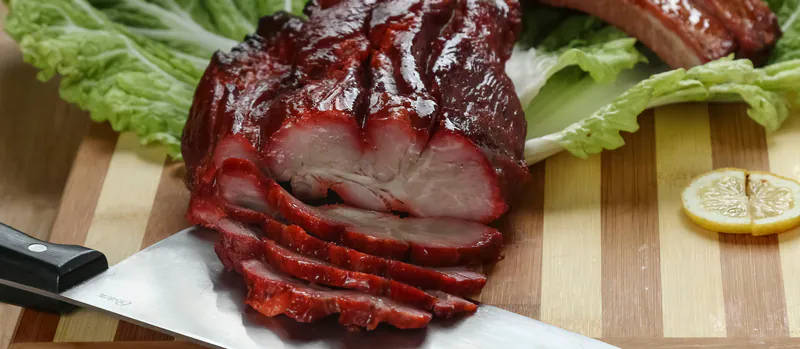
Char siu (Cantonese barbecue pork)
 Cantonese · 1 h 10 min · 392 kcal
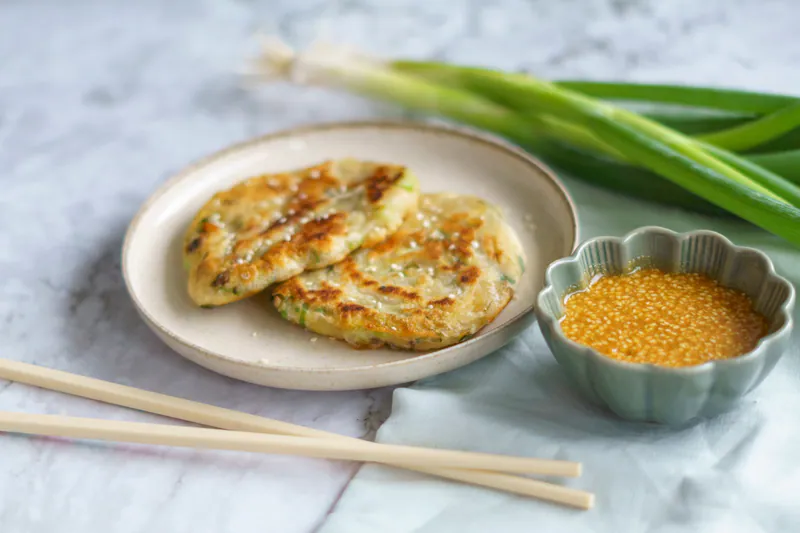
Scallion pancakes
Chinese · 1 h 10 min · 370 kcal · Vegan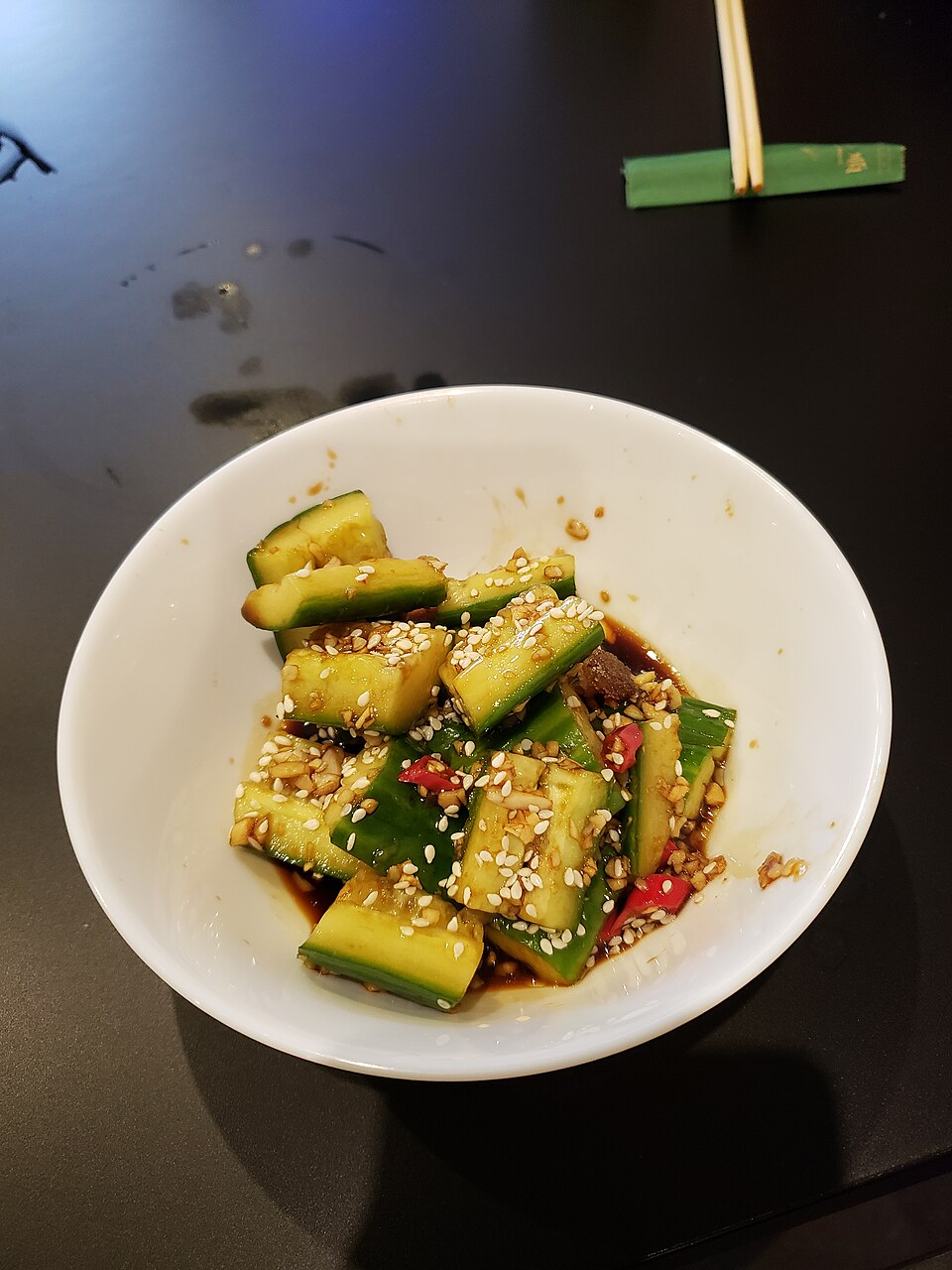
Smashed cucumber salad
Chinese · 20 min · 60 kcal · Vegan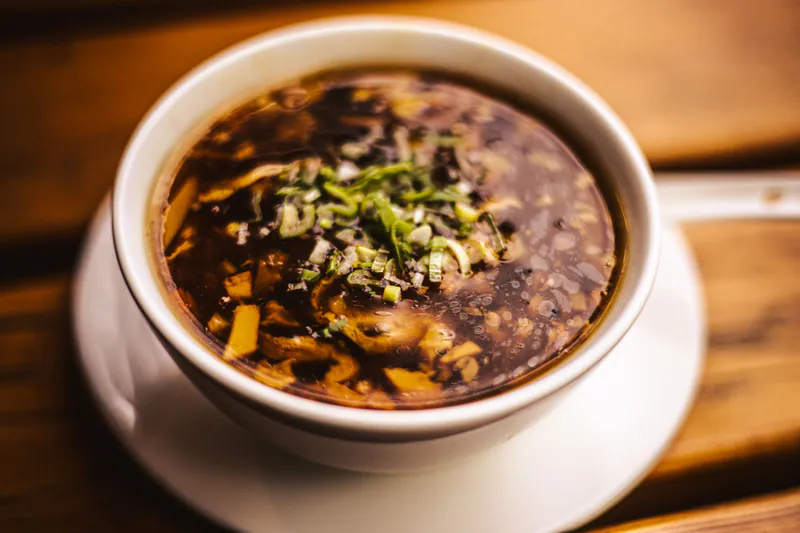
Hot and sour soup
Chinese · 30 min · 267 kcal