
Pastelitos criollos (Argentine quince pastries)
Non-vegetarian
Pastelitos criollos
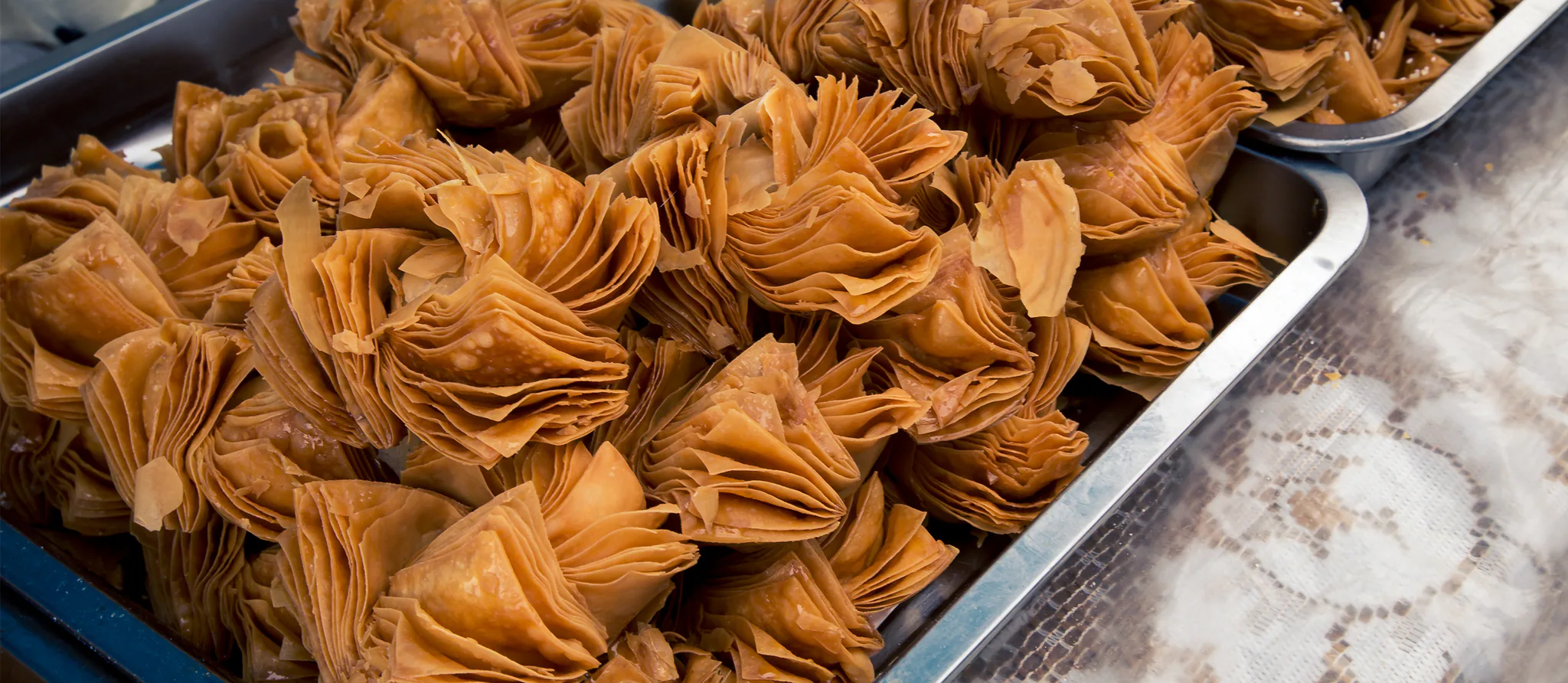
Star-shaped pastries of flaky laminated dough filled with quince or sweet-potato paste, fried until golden and glazed with syrup. Argentina's patriotic pastry, made in quantity for the national holidays of 25 May and 9 July.
Pastelitos criollos (Argentine quince pastries) is an Argentine pastry from Argentina, ready in about 2 hours 15 minutes and made with butter, quince paste (membrillo) and sugar. It serves 18 and is rated advanced to cook.
- Prep
- 1 h
- Cook
- 35 min
- Rest
- 40 min
- Total
- 2 h 15 min
- Serves
- 18
- Level
- Advanced
- Calories
- 397
Main ingredients
Ingredients
For the dough
For laminating
For the filling
For frying
For the syrup
Method
Dough
10 minStep 1
Rub the lard (opens in a new tab) into the flour and salt, then add the water gradually and knead to a smooth, soft dough. Cover and rest for 20 minutes.
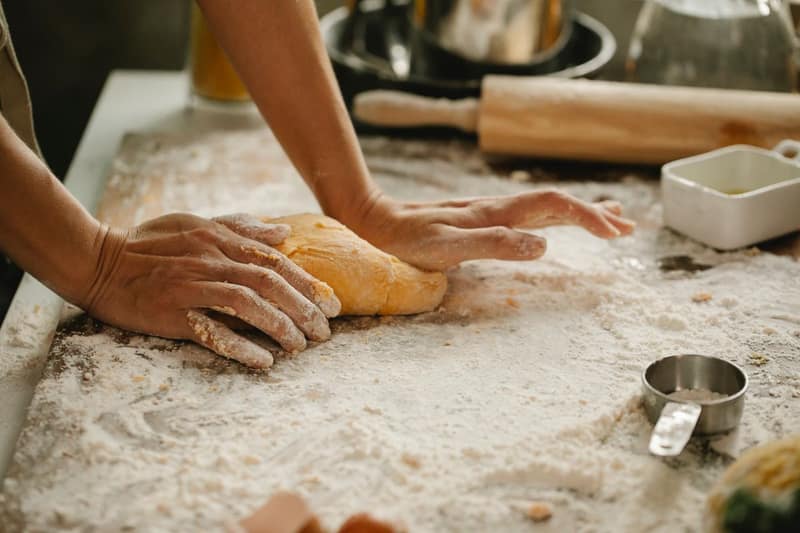
How it looks · Photo: Klaus Nielsen on Pexels
Laminating
12 minStep 2
Beat the softened butter (opens in a new tab) with 2 tbsp flour. Roll the dough into a thin rectangle about 40 × 60 cm, spread it with the butter paste and roll it up tightly from the long side like a Swiss roll. Coil the roll into a snail, flatten slightly, cover and chill for 20 minutes.
Syrup
7 minStep 3
Make the syrup: boil the sugar (opens in a new tab), water and lemon zest (opens in a new tab) for 5 minutes until slightly thickened. Leave to cool.
- 7 min
- medium heat
- Saucepan (opens in a new tab)
Food safety: Boiling sugar syrup is far hotter than boiling water and sticks to skin; use a deep pan, long sleeves and a long-handled spoon, and keep children away from the stove.
Filling
30 minStep 4
Roll the dough out 3 mm thick and cut into 36 squares of 8 cm. Brush a square with egg (opens in a new tab), place a cube of quince (and a pinch of cinnamon (opens in a new tab)) in the centre and set a second square on top, turned 45° to make an eight-pointed star. Press around the filling to seal, then pinch each corner of the bottom square up to the corner of the top one. Repeat.
Frying
33 minStep 5
Heat the oil to 170 °C. Fry the pastelitos 3 or 4 at a time, basting the tops with hot oil so the layers open, for 3–4 minutes per side, until golden and puffed. Drain briefly.
- 25 min
- 170°C
- medium heat
- Stockpot / large pot (opens in a new tab)
- Food thermometer (opens in a new tab)
- Slotted spoon (opens in a new tab)
Food safety: Never leave hot oil unattended; keep the pan's handle turned inwards and lower dough in gently, away from you.
If the oil is too hot the outside browns before the inner layers cook.
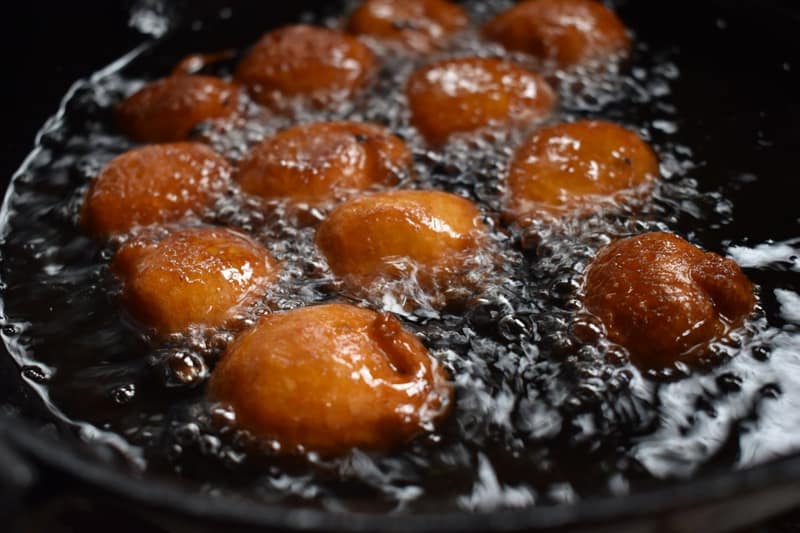
How it looks · Photo: Riya Roy on Pexels Step 6
While still warm, dip each pastelito into the cooled syrup or brush it generously, then leave on a rack to set.
- 8 min
At a glance
1 · Dough in a bowl
 All-purpose flour
 Lard
 Salt
then beat
2 · Laminating in a bowl
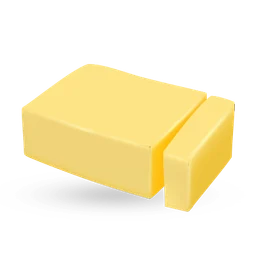 Butter
- All-purpose flour
then make
3 · Syrup in a pot
 Sugar
 Lemon zest
then roll
4 · Filling in a bowl
- Quince paste (membrillo)
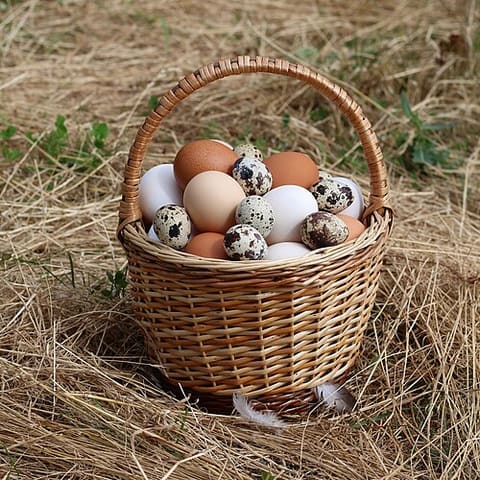 Egg
 Cinnamon
then heat
5 · Frying in a pan
 Neutral vegetable oil
About this dish
- Origin
- Argentina · Well documentedAssociated with the May Revolution of 1810, when pastry sellers are said to have walked the streets of Buenos Aires; today they are the traditional treat for 25 de Mayo and 9 de Julio.Also popular in UruguayMore food from Argentina
Argentina - Dish
- Snack · Breakfast · Pastries · Sweets & confectionery
- Cooking method
- Deep-fried
- Taste
- sweet, fruity, buttery
- Diet
- No nut ingredientsWith the listed swaps: Vegetarian (lacto-ovo), Eggetarian, Pescatarian, Pork-freeWorked out from the ingredients. How labels work
All labels
Non-vegetarian · Flexitarian-friendly · No nut ingredients · Alcohol-free · Beef-free - Good for
- Festive & celebration
- Cook more with
- Butter · Quince paste (membrillo) · Sugar · All-purpose flour · Lard · Egg
- Techniques
- Deep-frying · Kneading
Allergens
- Contains: Milkfrom butter
- Contains: Eggsfrom egg
- Contains: Wheatfrom all-purpose flour
- Contains: Glutenfrom all-purpose flour
Based on typical versions of these ingredients and not verified allergen-free. Brands differ and cross-contact happens, so always check labels. For severe allergies, follow your clinician’s advice.
Nutrition
397 kcal per serving
Estimated1 serving ≈ 108 g · recipe makes 18
Where the energy comes from
- Protein 3%
- Carbohydrate 50%
- Fat 47%
| Nutrient | Per serving | Per 100 g* |
|---|---|---|
| Energy | 397 kcal | 367 kcal |
| Protein | 3.5 g | 3.2 g |
| Carbohydrate | 50 g | 46.1 g |
| Net carbohydrate | 49.1 g | 45.3 g |
| Sugars | 24.8 g | 22.9 g |
| Added sugars | 24.2 g | 22.3 g |
| Fibre | 1 g | 0.9 g |
| Fat | 20.7 g | 19.1 g |
| Saturated fat | 7.5 g | 7 g |
| Trans fat | — | — |
| Cholesterol | 37 mg | 34 mg |
| Sodium | 211 mg | 195 mg |
| Salt equivalent | 0.5 g | 0.5 g |
Vitamins & minerals per serving
- Potassium
- 50 mg
- Calcium
- 14 mg
- Iron
- 1.5 mg
- Magnesium
- 8 mg
- Vitamin A (RAE)
- 80 µg
- Vitamin C
- 1 mg
- Vitamin D
- 0.1 µg
- Vitamin B12
- 0 µg
- Folate (DFE)
- 87 µg
How these numbers were made
- Calculated from USDA FoodData Central (SR Legacy) per-100 g values and the listed quantities.
- *Per 100 g of combined raw ingredients; the cooked dish may weigh more or less.
- Optional ingredients are not included: cinnamon, lemon zest.
- Quince paste (membrillo): Jams and preserves (FDC 169641) used as a stand-in; quince paste is quince pulp cooked down with roughly its own weight of sugar until firm enough to slice.
- “—” means the value isn’t known for enough of the ingredients; it is never zero by default.
- Values are estimates for guidance, not for medical dosing. U.S. Department of Agriculture, Agricultural Research Service. FoodData Central, 2019. fdc.nal.usda.gov.
Good to know
Tips
- Cold dough and soft butter laminate best; chill the dough again if the butter starts to ooze.
Common mistakes
- Not sealing the corners well, which lets the filling leak into the oil.
Serve with
- Serve with mate, hot chocolate or locro on national holidays.
- Scatter coloured sprinkles over the wet syrup for children's parties.
Food safety
- Never leave hot oil unattended; keep the pan's handle turned inwards and lower dough in gently, away from you.
Storage
- Best on the day of frying; keep 1 day in a loosely covered box.
Variations
- Pastelitos de batata: Filled with sweet-potato paste instead of quince.
- Baked pastelitos: Made with ready-rolled puff pastry and baked at 200 °C until golden, then glazed.
- Pastelitos de dulce de leche: Filled with thick dulce de leche.
Original editorial recipe · FriendsPantry editorial · source: TasteAtlas (dish facts) · Not yet independently reviewed · Added
Recipe DNA
How this dish is built
Built from the recipe’s own sections. Each band’s width is its share of the dish by weight. Choose a component to see what it does.
Reviews & corrections
Reviews come from signed-in cooks and appear after a moderator checks them. We never show made-up ratings.
You might also like
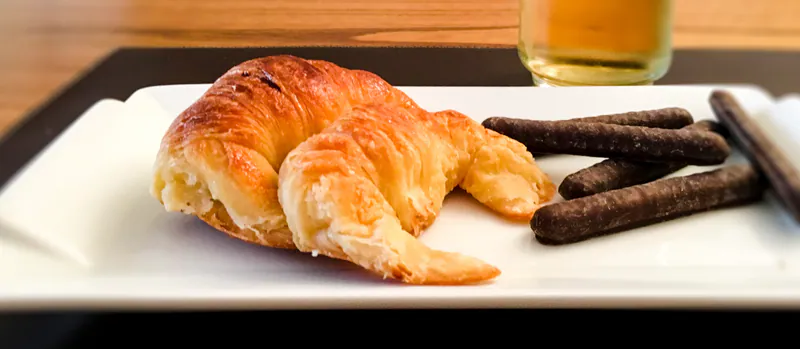
Medialunas (Argentine croissants)
 Argentine · 5 h 15 min · 189 kcal · Contains egg
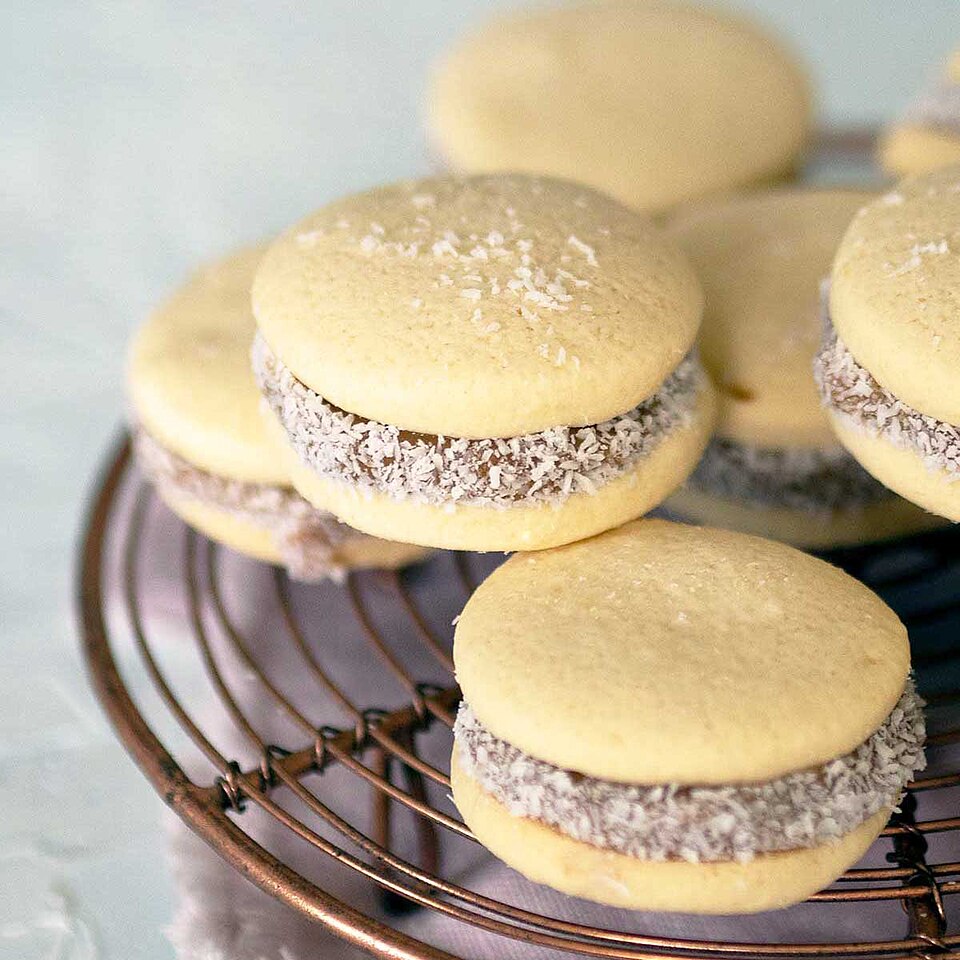
Alfajores de maicena
Argentine · 1 h 50 min · 170 kcal · Contains egg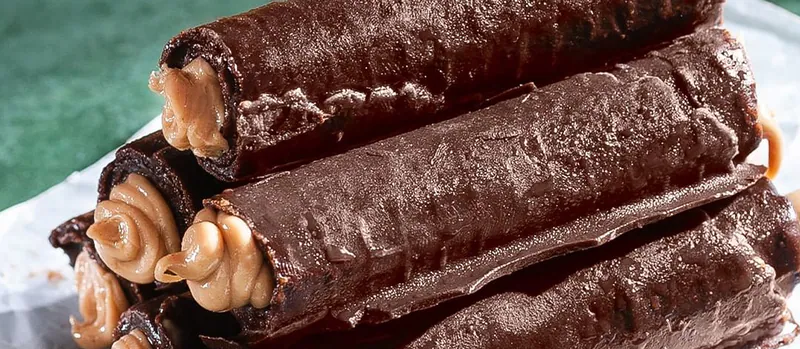
Cubanitos (Argentine dulce de leche wafer rolls)
Argentine · 1 h 20 min · 163 kcal · Contains egg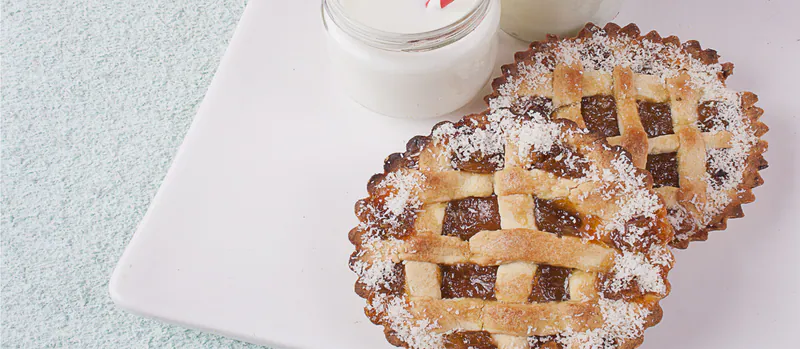
Pastafrola (quince lattice tart)
Argentine · 2 h 10 min · 441 kcal · Contains egg