
Pappardelle al cinghiale (pappardelle with wild boar ragù)
Non-vegetarian
Pappardelle al cinghiale
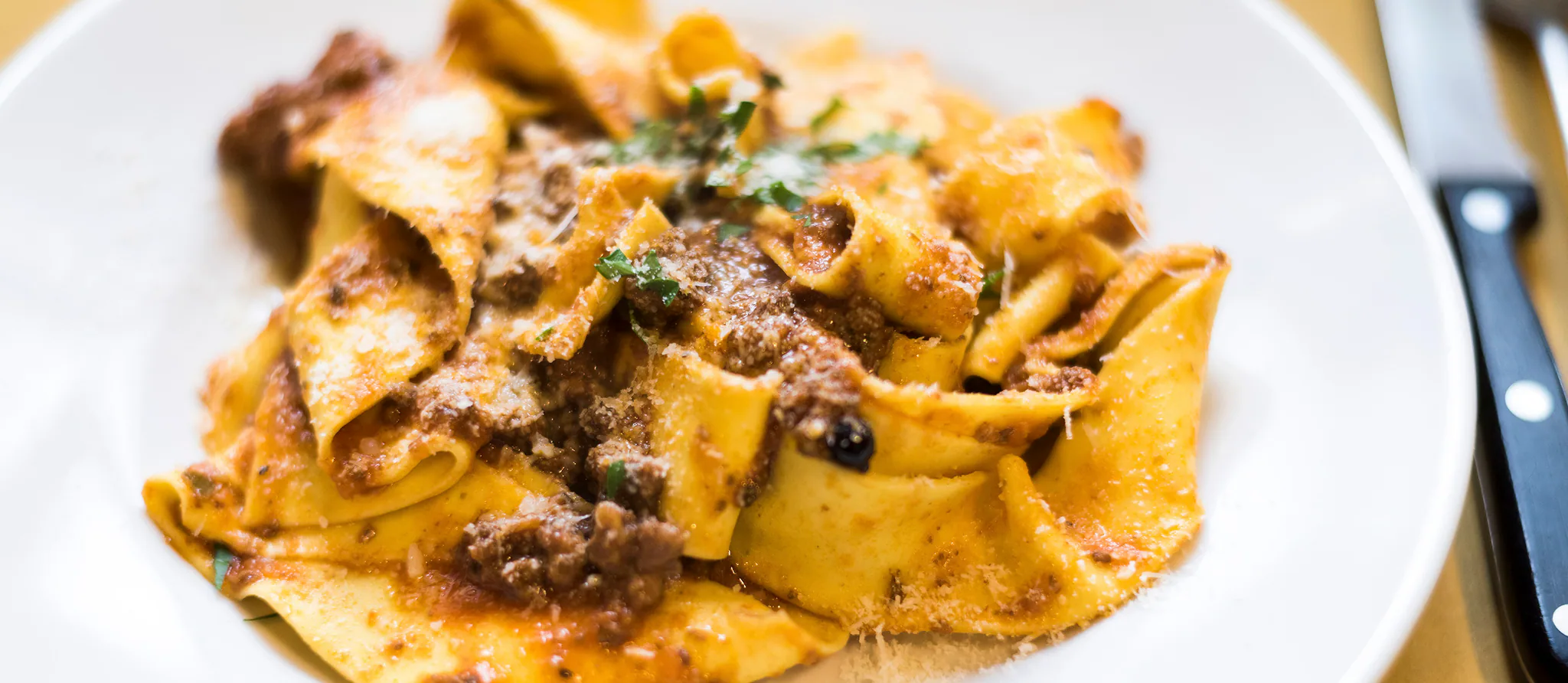
Wide ribbons of egg pasta tossed with a dark ragù of wild boar marinated overnight in red wine with juniper and rosemary, then slowly braised with tomato until it falls into shreds. A hearty autumn and winter dish from the hunting country of Tuscany.
Pappardelle al cinghiale (pappardelle with wild boar ragù) is an Italian pasta dish from Italy, ready in about 15 hours 50 minutes and made with wild boar, dry red wine and dried pasta. It serves 6 and is rated intermediate to cook.
- Prep
- 30 min
- Cook
- 3 h 20 min
- Rest
- 12 h
- Total
- 15 h 50 min
- Serves
- 6
- Level
- Intermediate
- Calories
- 786
The rest time is the overnight marinade.
Main ingredients
Ingredients
For the marinade
For the ragù
To serve
Method
Marinade
15 minStep 1
Put the boar (opens in a new tab) in a bowl with the wine, roughly chopped carrot (opens in a new tab), celery (opens in a new tab) and onion (opens in a new tab), crushed garlic (opens in a new tab), juniper (opens in a new tab), bay and rosemary (opens in a new tab). Cover and refrigerate for 12–24 hours.
Step 2
Drain the meat in a colander (opens in a new tab), discarding the marinade and vegetables (keep the bay leaves (opens in a new tab)). Pat the meat very dry.
Discarding the marinade removes much of the strong, gamey flavour.
How it looks · Photo: Katerina Holmes on Pexels
Ragù
3 h 16 minStep 3
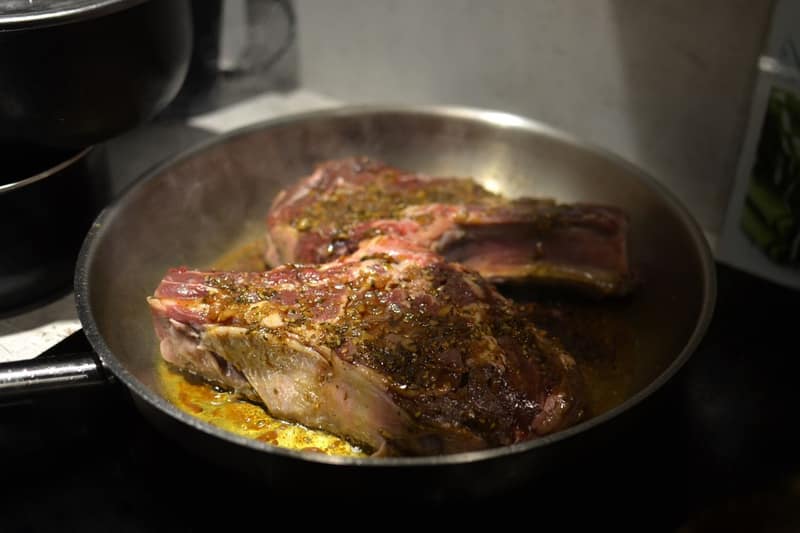
Heat half the oil in a heavy casserole over high heat and brown the meat in batches until well coloured. Set aside.
- 15 min
- high heat
- Dutch oven / casserole pot (opens in a new tab)
How it looks · Photo: Skylar Kang on Pexels Step 4
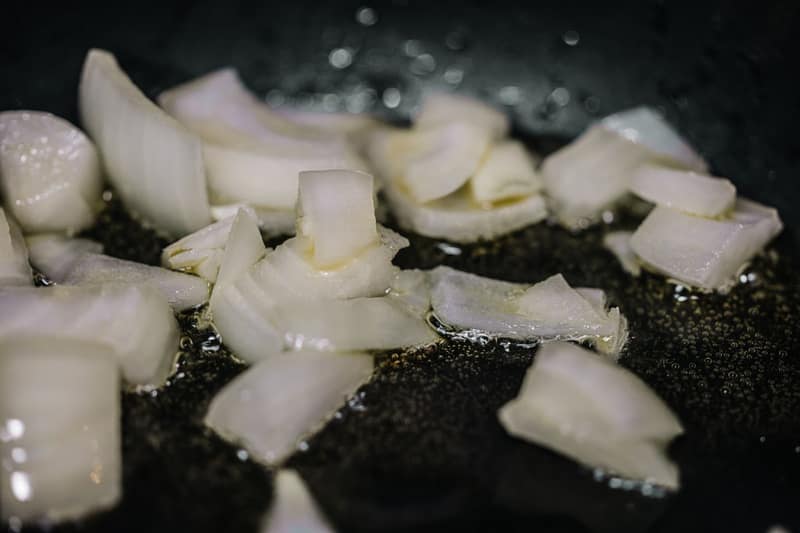
Lower the heat, add the rest of the oil and cook the finely chopped onion (opens in a new tab), carrot (opens in a new tab), celery (opens in a new tab) and garlic (opens in a new tab) for 10 minutes until soft and golden. Stir in the tomato paste (opens in a new tab) for 1 minute.
- 11 min
- medium heat
How it looks · Photo: Magda Ehlers on Pexels Step 5
Return the meat, pour in the fresh wine and let it bubble until reduced by half. Add the tomatoes, stock, rosemary (opens in a new tab), bay leaves (opens in a new tab), salt and pepper (opens in a new tab). Cover and simmer very gently for 2½–3 hours, stirring now and then, until the meat falls apart.
Add a splash of water if it gets too thick.
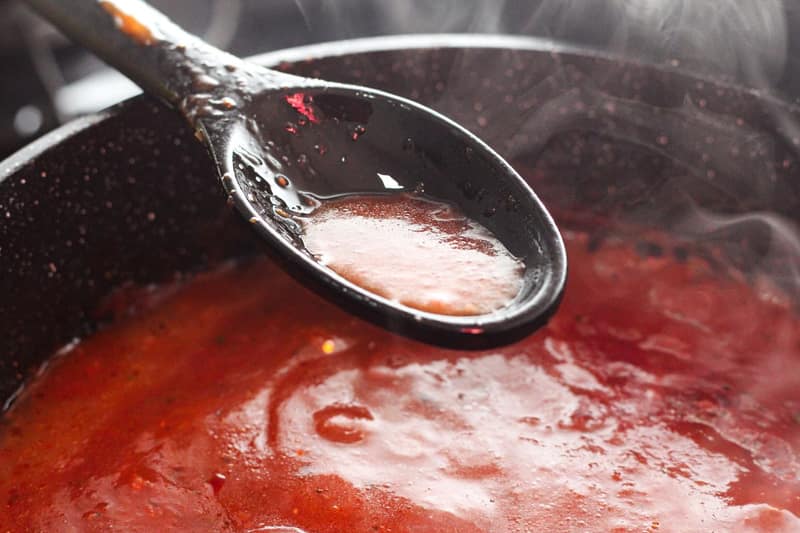
How it looks · Photo: Nanda Mends on Pexels Step 6
Remove the herbs and shred the meat with two forks into the sauce. Simmer uncovered for a few minutes if it is too thin, and taste for salt.
- 5 min
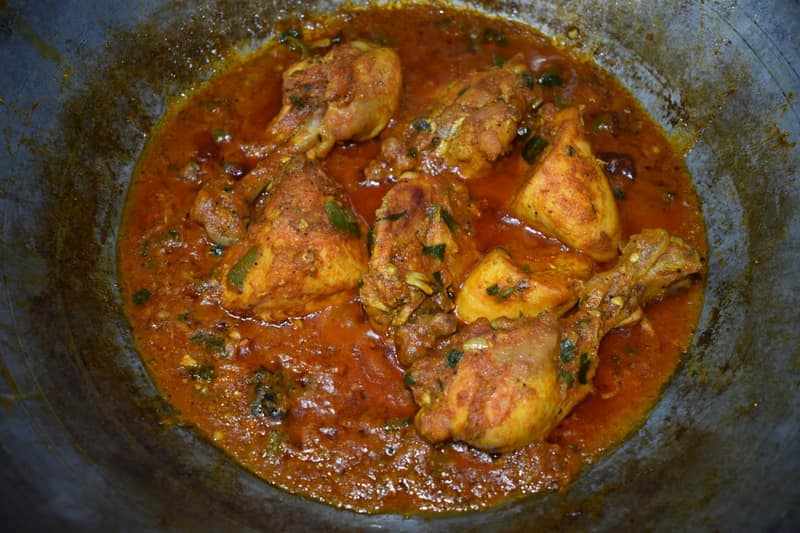
How it looks · Photo: Bachir Mamud on Pexels
To serve
10 minStep 7
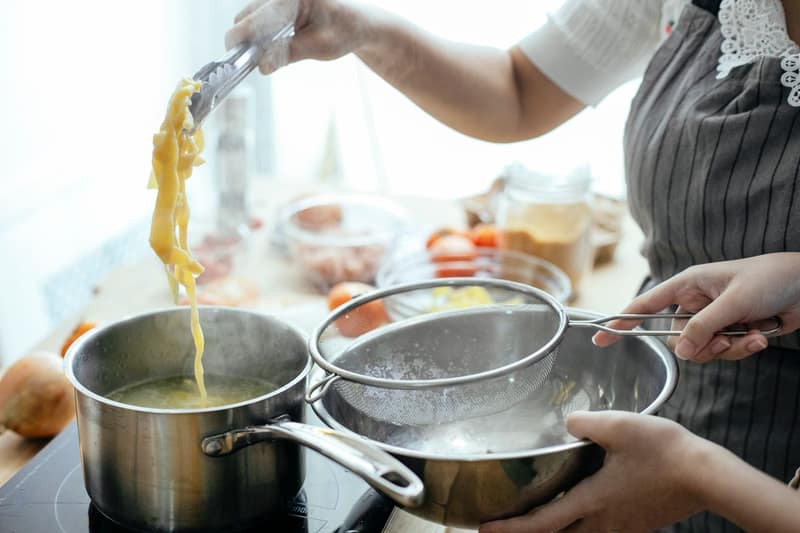
Cook the pappardelle in well-salted boiling water until al dente. Drain, keeping a cup of the cooking water, and toss in the pan with the ragù and a splash of the water. Serve with parsley (opens in a new tab) and Parmigiano (opens in a new tab).
- 10 min
- high heat
- Stockpot / large pot (opens in a new tab)
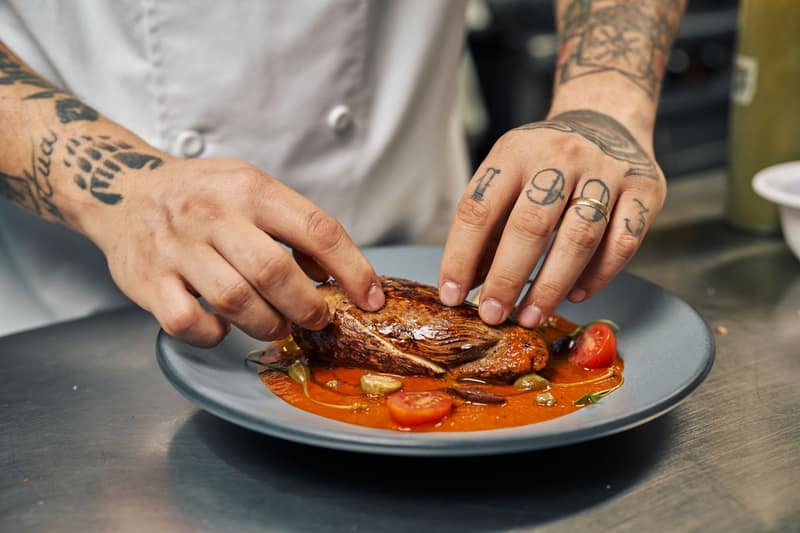
How it looks · Photo: Willians Huerta on Pexels
At a glance
1 · Marinade in a bowl
 Wild boar
 Dry red wine
 Carrot
 Celery
 Onion
 Garlic
 Juniper berries
 Bay leaves
 Rosemary (fresh)
then heat
2 · Ragù in a pan
 Olive oil
- Onion
- Carrot
- Celery
- Garlic
 Tomato paste
- Dry red wine
 Canned tomatoes
 Beef stock
- Rosemary (fresh)
 Salt
 Black pepper
then cook
3 · To serve in a pan
 Dried pasta
 Parmesan
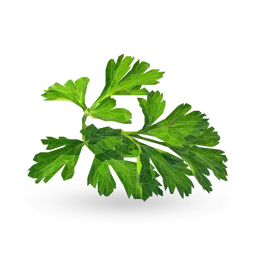 Parsley
About this dish
- Origin
- Tuscany (Maremma, Chianti, Casentino), Italy · Well documentedWild boar is plentiful in the Tuscan hills and is hunted from autumn into winter; marinating in wine softens its gamey flavour. Trattorias across Tuscany serve it with pappardelle.More food from Italy
Italy - Dish
- Lunch · Dinner · Pasta · Main courses
- Cooking method
- Marinated / cured, Braised, Boiled
- Taste
- rich, savoury, earthy, herby
- Diet
- No nut ingredients · High-proteinWith the listed swaps: Beef-freeWorked out from the ingredients. How labels work
All labels
Non-vegetarian · Egg-free · No nut ingredients · No added sugar · High-protein · Low-fat - Good for
- Make-ahead · Freezer-friendly · Batch cooking
- Cook more with
- Wild boar · Dry red wine · Dried pasta · Carrot · Celery · Onion
- Techniques
- Boiling · Simmering · Braising · Knife skills · Marinating
Allergens
- Contains: Milkfrom parmesan
- May contain: Eggsfrom dried pasta
- Contains: Wheatfrom dried pasta
- Contains: Glutenfrom dried pasta
- Contains: Celeryfrom celery, beef stock
- Contains: Sulphitesfrom dry red wine
Based on typical versions of these ingredients and not verified allergen-free. Brands differ and cross-contact happens, so always check labels. For severe allergies, follow your clinician’s advice.
Nutrition
786 kcal per serving
Estimated1 serving ≈ 654 g · recipe makes 6
Where the energy comes from
- Protein 31%
- Carbohydrate 47%
- Fat 22%
| Nutrient | Per serving | Per 100 g* |
|---|---|---|
| Energy | 786 kcal | 120 kcal |
| Protein | 51.6 g | 7.9 g |
| Carbohydrate | 77.8 g | 11.9 g |
| Net carbohydrate | 72.1 g | 11 g |
| Sugars | 8.7 g | 1.3 g |
| Added sugars | 0 g | 0 g |
| Fibre | 5.8 g | 0.9 g |
| Fat | 15.9 g | 2.4 g |
| Saturated fat | 3.7 g | 0.6 g |
| Trans fat | — | — |
| Cholesterol | 113 mg | 17 mg |
| Sodium | 1033 mg | 158 mg |
| Salt equivalent | 2.6 g | 0.4 g |
Vitamins & minerals per serving
- Potassium
- 1570 mg
- Calcium
- 178 mg
- Iron
- 6.4 mg
- Magnesium
- 135 mg
- Vitamin A (RAE)
- 209 µg
- Vitamin C
- 17 mg
- Vitamin D
- 0.4 µg
- Vitamin B12
- 0.9 µg
- Folate (DFE)
- 354 µg
How these numbers were made
- Calculated from USDA FoodData Central (SR Legacy) per-100 g values and the listed quantities.
- *Per 100 g of combined raw ingredients; the cooked dish may weigh more or less.
- Not counted (tiny amounts or “to taste”): juniper berries.
- Wild boar: Lean pork tenderloin (FDC 168249) used as a stand-in; wild boar is a very lean, darker relative of domestic pork.
- “—” means the value isn’t known for enough of the ingredients; it is never zero by default.
- Values are estimates for guidance, not for medical dosing. U.S. Department of Agriculture, Agricultural Research Service. FoodData Central, 2019. fdc.nal.usda.gov.
Good to know
Tips
- The ragù tastes even better the next day.
- Many Tuscan cooks add a few black olives or a square of dark chocolate to the sauce.
Common mistakes
- Boiling the ragù hard, which toughens lean boar meat.
Serve with
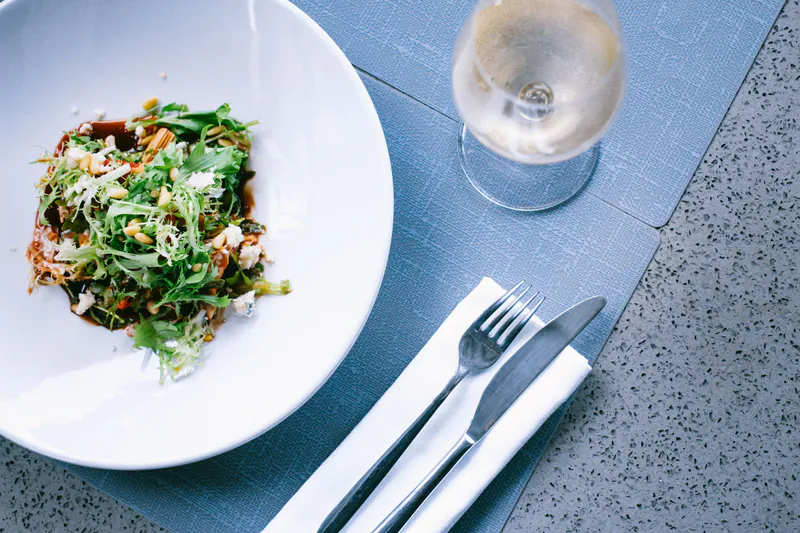
- Follow with a simple green salad and a glass of Chianti or Morellino di Scansano.
Storage
- Ragù keeps 4 days in the fridge or 3 months frozen.
Reheating
- Warm gently with a splash of water until simmering.
Variations
- Cinghiale in umido: The same braise served as a stew with polenta rather than pasta.
- Pici al cinghiale: Served with thick hand-rolled pici from southern Tuscany.
Original editorial recipe · FriendsPantry editorial · source: TasteAtlas (dish facts) · Not yet independently reviewed · Added
Sauces, chutneys & dips for this dish
Recipe DNA
How this dish is built
Built from the recipe’s own sections. Each band’s width is its share of the dish by weight. Choose a component to see what it does.
Seasons and tenderises before cooking
For the marinade
- Wild boar, boneless shoulder, trimmed and cut into 3 cm cubes1 kg · 1000 g
- Dry red wine750 ml · 743 g
- Carrot, roughly chopped1 piece · 60 g
- Celery, roughly chopped1 stalk · 40 g
- Onion, roughly chopped1 piece · 110 g
- Garlic, lightly crushed2 clove · 8 g
- Juniper berries, lightly crushed1 tsp · 2 g
- Bay leaves2 leaf · 0.4 g
- Rosemary (fresh)1 sprig · 1 g
Reviews & corrections
Reviews come from signed-in cooks and appear after a moderator checks them. We never show made-up ratings.
You might also like
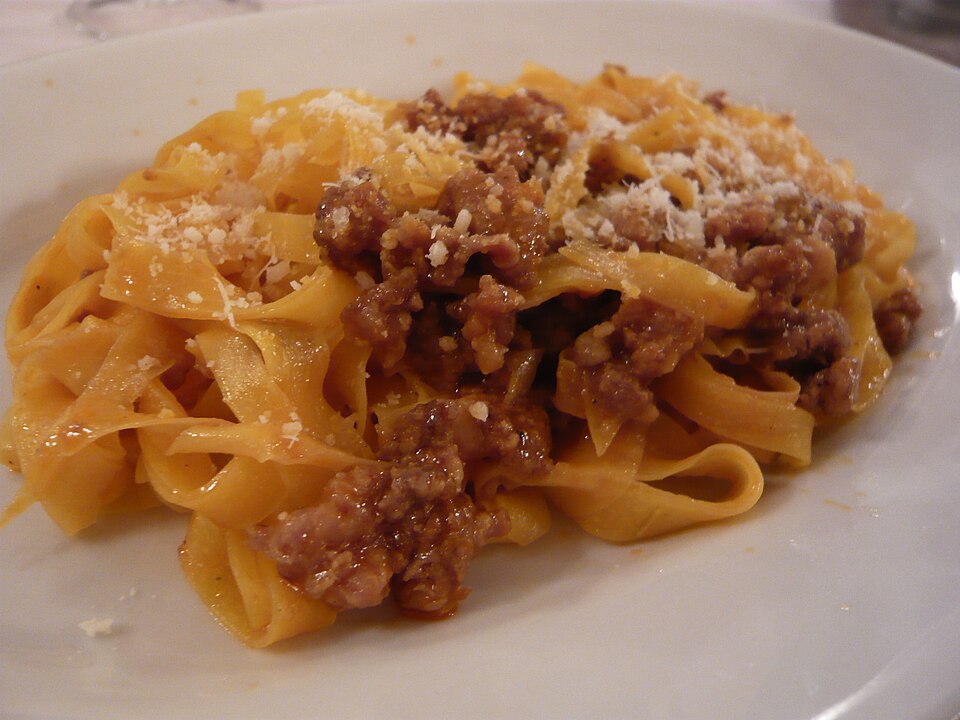
Ragù alla bolognese with tagliatelle
 Italian · 3 h · 630 kcal
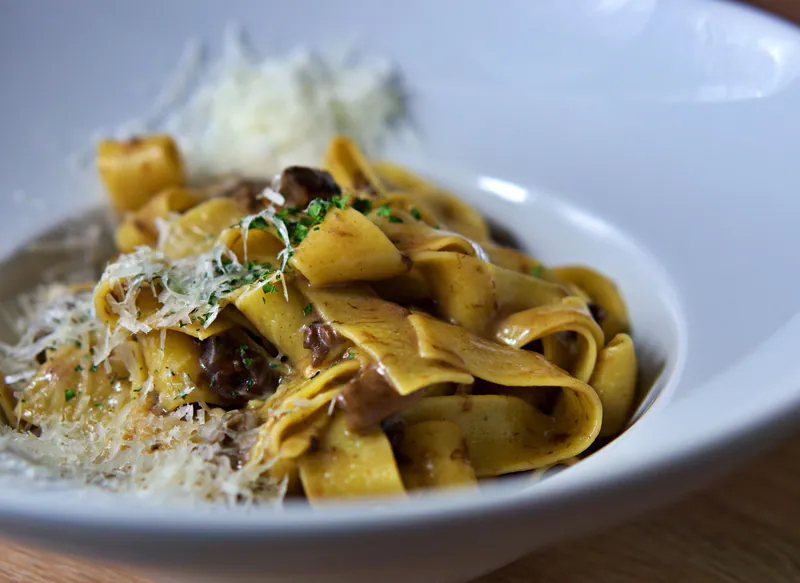
Pappardelle ai funghi (pappardelle with mushrooms)
Italian · 45 min · 600 kcal · Vegetarian
Ribollita
Italian · 1 h 20 min · 315 kcal · Vegan
Pappardelle alla lepre (pappardelle with hare ragù)
Italian · 3 h 40 min · 1127 kcal