
 Portuguese · Breads & flatbreads
Pão alentejano (Alentejo country loaf)
Vegetarian
pão alentejano
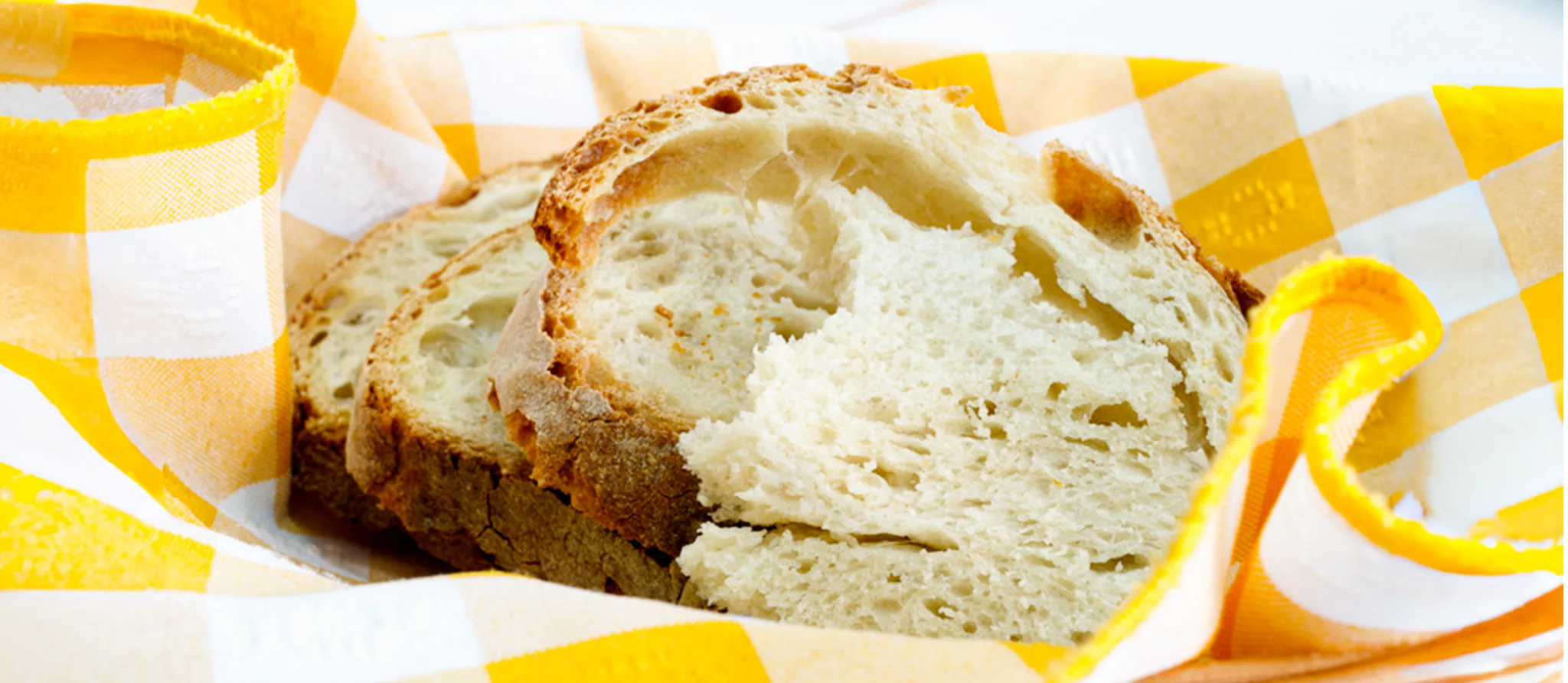
A round, rustic wheat loaf from the Alentejo with a thick, crackly, flour-dusted crust, a little knob on top and a chewy, open, slightly tangy crumb from a long fermentation with sourdough. It keeps for days and is the base of the region's bread soups.
Pão alentejano (Alentejo country loaf) is a Portuguese bread from Portugal, ready in about 6 hours 45 minutes and made with bread flour and sourdough starter. It serves 10 and is rated intermediate to cook.
- Prep
- 30 min
- Cook
- 45 min
- Rest
- 5 h 30 min
- Total
- 6 h 45 min
- Serves
- 10
- Level
- Intermediate
- Calories
- 218
Main ingredients
Method
Step 1
Mix the flours with 300 ml of the water and leave for 30 minutes. Add the starter, yeast (if using), salt and the remaining water and squeeze through the dough until absorbed. Knead or stretch and fold for 10 minutes until smooth and elastic; the dough is fairly wet.

How it looks · Photo: Klaus Nielsen on Pexels Step 2
Cover and leave to rise at warm room temperature for 3–4 hours, folding the dough over itself 3 times in the first 90 minutes, until roughly doubled and full of bubbles.
- 5 min
Step 3
Turn onto a floured surface and shape into a tight round. Pinch a small piece off the top, roll it into a ball and press it back onto the loaf to make the characteristic little 'head'. Place seam-side up in a heavily floured basket and prove for 1 hour.
Step 4
Meanwhile, heat the oven (opens in a new tab) to 250 °C with a lidded cast-iron pot inside. Tip the loaf into the hot pot, cover and bake for 25 minutes, then uncover, reduce to 220 °C and bake for 20 minutes more, until very dark golden and hollow-sounding underneath.
Food safety: The pot is extremely hot; use thick oven gloves and lower the loaf in on baking paper.
At a glance
 Bread flour
 Whole-wheat flour
 Sourdough starter
 Instant yeast
 Salt
- All-purpose flour
About this dish
- Origin
- Alentejo, Portugal · Well documentedTraditionally baked in wood-fired ovens once a week using a piece of old dough kept from the previous batch.More food from Portugal
Portugal - Dish
- Breakfast · Lunch · Dinner · Breads & flatbreads
- Cooking method
- Fermented, Oven-baked
- Taste
- sour, earthy, nutty
- Diet
- Vegan · Dairy-free · No nut ingredientsWorked out from the ingredients. How labels work
All labels
Vegan · Plant-based · Vegetarian (lacto-ovo) · Eggetarian · Lacto-vegetarian · Ovo-vegetarian · Pescatarian · Flexitarian-friendly · Dairy-free · Egg-free · No nut ingredients · No added sugar · Alcohol-free · Pork-free · Beef-free · Low-fat · DASH-style - Good for
- Make-ahead
- Cook more with
- Bread flour · Sourdough starter · Whole-wheat flour · All-purpose flour
- Techniques
- Baking · Kneading · Reduction · Fermentation
Allergens
- Contains: Wheatfrom bread flour, whole-wheat flour, sourdough starter, all-purpose flour
- Contains: Glutenfrom bread flour, whole-wheat flour, sourdough starter, all-purpose flour
Based on typical versions of these ingredients and not verified allergen-free. Brands differ and cross-contact happens, so always check labels. For severe allergies, follow your clinician’s advice.
Nutrition
218 kcal per serving
Estimated1 serving ≈ 103 g · recipe makes 10
Where the energy comes from
- Protein 13%
- Carbohydrate 83%
- Fat 4%
| Nutrient | Per serving | Per 100 g* |
|---|---|---|
| Energy | 218 kcal | 211 kcal |
| Protein | 7.1 g | 6.9 g |
| Carbohydrate | 44.2 g | 43 g |
| Net carbohydrate | 42.4 g | 41.1 g |
| Sugars | 0.2 g | 0.2 g |
| Added sugars | 0 g | 0 g |
| Fibre | 1.9 g | 1.8 g |
| Fat | 1 g | 0.9 g |
| Saturated fat | 0.1 g | 0.1 g |
| Trans fat | — | — |
| Cholesterol | 0 mg | 0 mg |
| Sodium | 389 mg | 378 mg |
| Salt equivalent | 1 g | 0.9 g |
Vitamins & minerals per serving
- Potassium
- 74 mg
- Calcium
- 14 mg
- Iron
- 2.7 mg
- Magnesium
- 21 mg
- Vitamin A (RAE)
- 0 µg
- Vitamin C
- 0 mg
- Vitamin D
- 0 µg
- Vitamin B12
- 0 µg
- Folate (DFE)
- 162 µg
How these numbers were made
- Calculated from USDA FoodData Central (SR Legacy) per-100 g values and the listed quantities.
- *Per 100 g of combined raw ingredients; the cooked dish may weigh more or less.
- Optional ingredients are not included: instant yeast.
- Sourdough starter: Modelled as a 100%-hydration starter: equal weights of flour and water, so half of white flour's values per gram.
- “—” means the value isn’t known for enough of the ingredients; it is never zero by default.
- Values are estimates for guidance, not for medical dosing. U.S. Department of Agriculture, Agricultural Research Service. FoodData Central, 2019. fdc.nal.usda.gov.
Good to know
Tips
- A long, cool rise (overnight in the fridge after shaping) gives a tangier crumb and a blistered crust.
Common mistakes
- Slicing while hot, which makes the crumb gummy.
Serve with
- Serve with olive oil, cured ham, cheese and olives.
- Use the stale loaf for açorda alentejana or migas.
Storage
- Keeps 4–5 days wrapped in a cloth; freezes well sliced.
Variations
- Wood-fired pão alentejano: Baked directly on the floor of a wood oven, giving a thicker, smokier crust.
Original editorial recipe · FriendsPantry editorial · source: TasteAtlas (dish facts) · Not yet independently reviewed · Added
Recipe DNA
How this dish is built
Grouped by each ingredient’s role in the dish. Each band’s width is its share of the dish by weight. Choose a component to see what it does.
What the dish is built around
Main ingredient
- Bread flour450 g
- Whole-wheat flour50 g
- All-purpose flour30 g
Reviews & corrections
Reviews come from signed-in cooks and appear after a moderator checks them. We never show made-up ratings.
You might also like
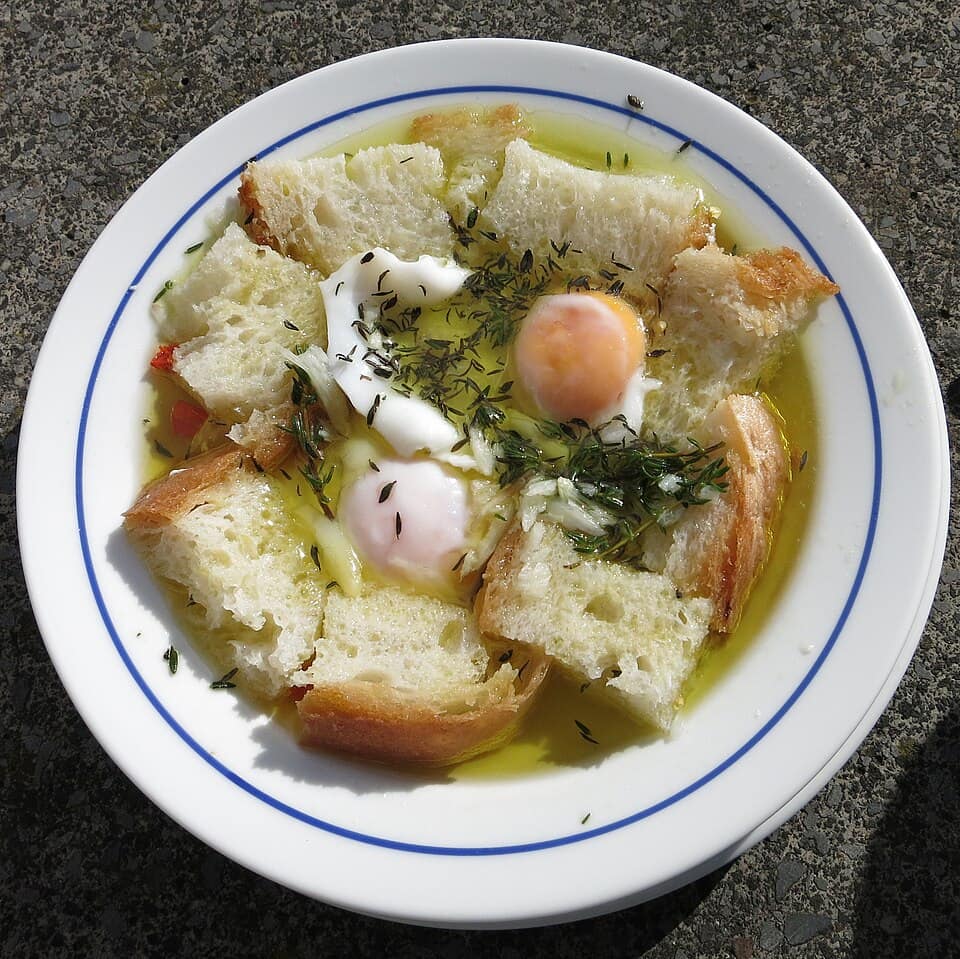
Açorda alentejana
Portuguese · 20 min · 365 kcal · Contains egg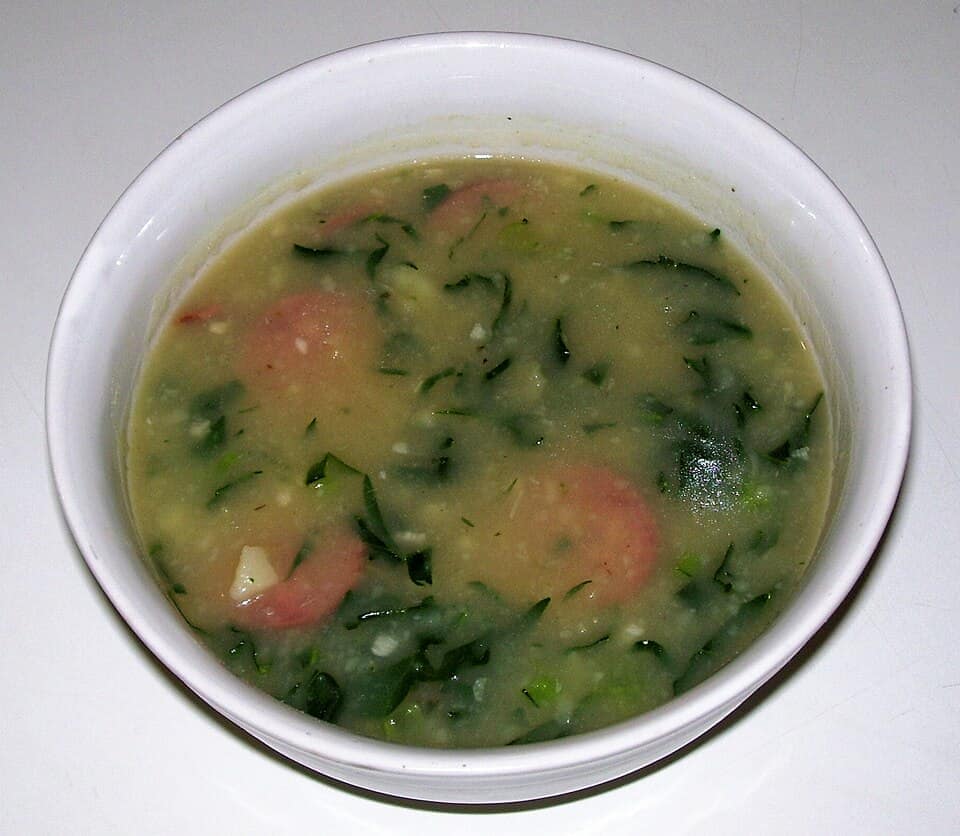
Caldo verde
Portuguese · 50 min · 220 kcal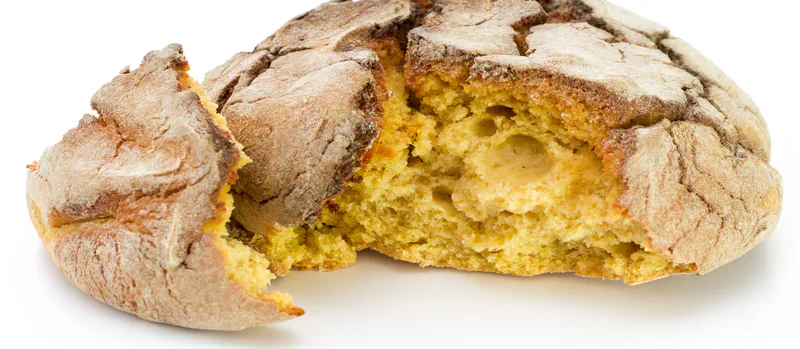
Broa de milho (Portuguese corn bread)
Portuguese · 3 h 35 min · 167 kcal · Vegan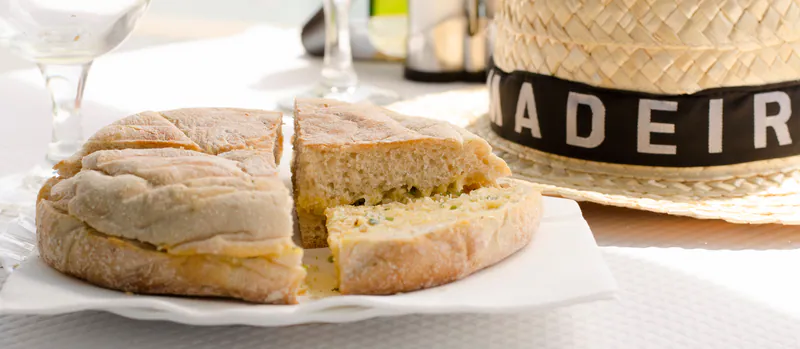
Bolo do caco with garlic butter
Portuguese · 2 h 35 min · 697 kcal · Vegetarian