
 Bangladeshi · Bengali · Rice dishes
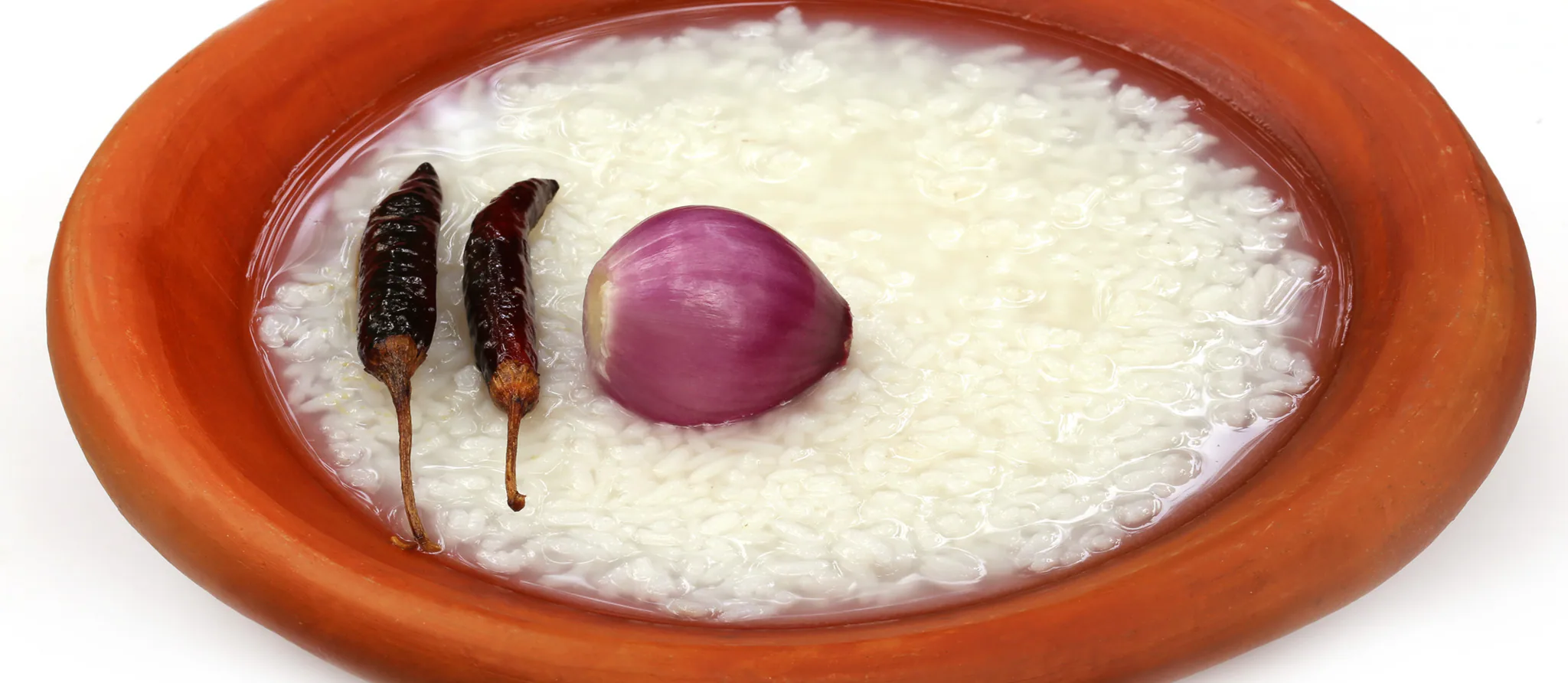
Panta bhat (Bengali soaked rice)
Non-vegetarian
পান্তা ভাত · pāntā bhāt
Cooked rice left to soak overnight in water until slightly sour, then eaten cool with salt, raw onion, green chilli and a drizzle of mustard oil. A cooling everyday breakfast in rural Bangladesh and West Bengal, and the ceremonial dish of Pohela Boishakh, Bengali New Year, when it is served with fried hilsa.
Panta bhat (Bengali soaked rice) is a Bangladeshi rice dish, ready in about 10 hours 30 minutes and made with long-grain white rice and water. It serves 4 and is rated beginner to cook.
- Prep
- 10 min
- Cook
- 20 min
- Rest
- 10 h
- Total
- 10 h 30 min
- Serves
- 4
- Level
- Beginner
- Calories
- 302
Most of the time is overnight soaking.
Main ingredients
Ingredients
To serve
For panta ilish (optional)
Method
Panta ilish (optional)
32 minStep 1
Cook the rice in 600 ml water until soft and fully cooked, about 18 minutes. Let it cool to room temperature, spread out, within an hour.
- 20 min
- medium-low heat
- Saucepan (opens in a new tab)
Food safety: Cooked rice can carry Bacillus cereus spores that survive cooking; cool leftover rice quickly and refrigerate it within an hour.
Step 2
Put the cooled rice in a clean clay pot or glass container and pour over enough cooled boiled water to cover it by 3–4 cm. Cover and leave overnight (8–12 hours) in a cool place; in hot weather, keep it in the fridge.
The rice should smell faintly sour and the water turn cloudy; discard it if it smells unpleasant or shows any mould.
Step 3
If making panta ilish, rub the hilsa (opens in a new tab) with salt and turmeric (opens in a new tab) and fry in hot oil until golden and crisp on both sides, 4–5 minutes per side.
- 10 min
- medium-high heat
- Frying pan / skillet (opens in a new tab)
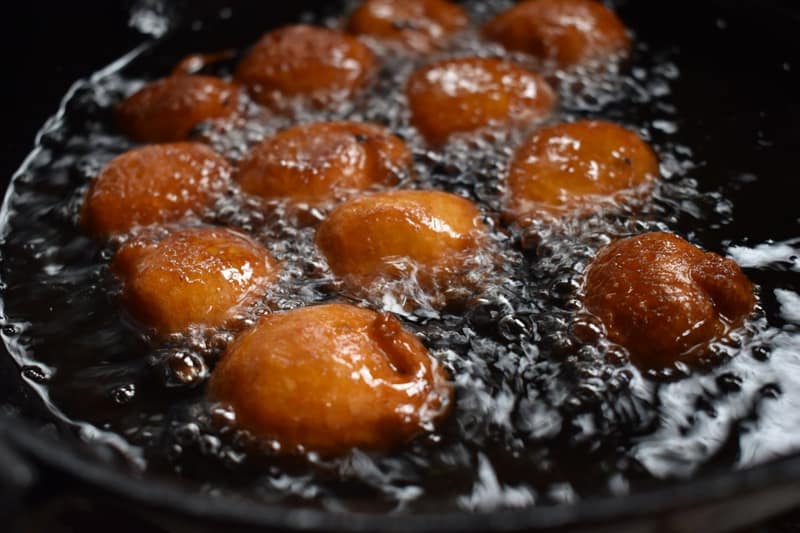
How it looks · Photo: Riya Roy on Pexels
To serve
2 minStep 4
Serve the rice in bowls with some of its soaking water. Each person mixes in salt, a drizzle of mustard oil (opens in a new tab) and lime (opens in a new tab) juice, and eats it with raw onion (opens in a new tab) and green chillies.
- 2 min
How it looks · Photo: Willians Huerta on Pexels
At a glance
1 · Panta ilish (optional) in a pan
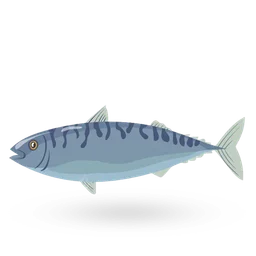 Hilsa
 Turmeric
 Neutral vegetable oil
then serve
2 · To serve in a bowl
 Salt
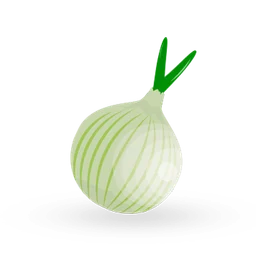 Onion
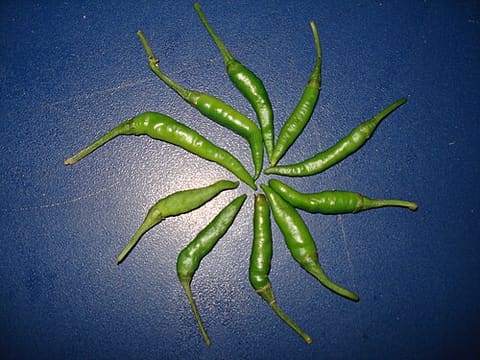 Green chilli
 Mustard oil
 Lime
About this dish
- Origin
- Bangladesh · Well documentedEaten across Bengal and eastern India; close relatives are Odia pakhala and Assamese poita bhat. Panta ilish with fried hilsa is the Pohela Boishakh tradition in Dhaka.Also popular in IndiaMore food from Bangladesh
Bangladesh - Dish
- Breakfast · Lunch · Rice dishes · Breakfast dishes
- Cooking method
- Boiled, Fermented
- Taste
- sour, refreshing, mild, spicy (chilli heat)
- Diet
- Pescatarian · No gluten ingredients · Dairy-free · No nut ingredientsWithout the optional extras: Vegan, Plant-based, Vegetarian (lacto-ovo), Eggetarian, Lacto-vegetarian, Ovo-vegetarian, Flexitarian-friendlyWorked out from the ingredients. How labels work
All labels
Pescatarian · Non-vegetarian · No gluten ingredients · Dairy-free · Egg-free · No nut ingredients · No added sugar · Alcohol-free · Pork-free · Beef-free · Low-fat · DASH-style - Good for
- Budget-friendly · Make-ahead
- Cook more with
- Long-grain white rice · Onion · Green chilli · Mustard oil
- Techniques
- Boiling · Fermentation
Allergens
- Contains, can be adapted: Fishfrom hilsa
- Contains: Mustardfrom mustard oil
Based on typical versions of these ingredients and not verified allergen-free. Brands differ and cross-contact happens, so always check labels. For severe allergies, follow your clinician’s advice.
Nutrition
302 kcal per serving
Calculated1 serving ≈ 404 g · recipe makes 4
Where the energy comes from
- Protein 7%
- Carbohydrate 71%
- Fat 22%
| Nutrient | Per serving | Per 100 g* |
|---|---|---|
| Energy | 302 kcal | 75 kcal |
| Protein | 4.9 g | 1.2 g |
| Carbohydrate | 53.1 g | 13.1 g |
| Net carbohydrate | 51.7 g | 12.8 g |
| Sugars | 1.5 g | 0.4 g |
| Added sugars | 0 g | 0 g |
| Fibre | 1.4 g | 0.3 g |
| Fat | 7.3 g | 1.8 g |
| Saturated fat | 0.9 g | 0.2 g |
| Trans fat | — | — |
| Cholesterol | 0 mg | 0 mg |
| Sodium | 593 mg | 147 mg |
| Salt equivalent | 1.5 g | 0.4 g |
Vitamins & minerals per serving
- Potassium
- 133 mg
- Calcium
- 55 mg
- Iron
- 2.8 mg
- Magnesium
- 26 mg
- Vitamin A (RAE)
- 4 µg
- Vitamin C
- 17 mg
- Vitamin D
- 0 µg
- Vitamin B12
- 0 µg
- Folate (DFE)
- 248 µg
How these numbers were made
- Calculated from USDA FoodData Central (SR Legacy) per-100 g values and the listed quantities.
- *Per 100 g of combined raw ingredients; the cooked dish may weigh more or less.
- Optional ingredients are not included: lime, hilsa, turmeric, neutral vegetable oil.
- “—” means the value isn’t known for enough of the ingredients; it is never zero by default.
- Values are estimates for guidance, not for medical dosing. U.S. Department of Agriculture, Agricultural Research Service. FoodData Central, 2019. fdc.nal.usda.gov.
Good to know
Tips
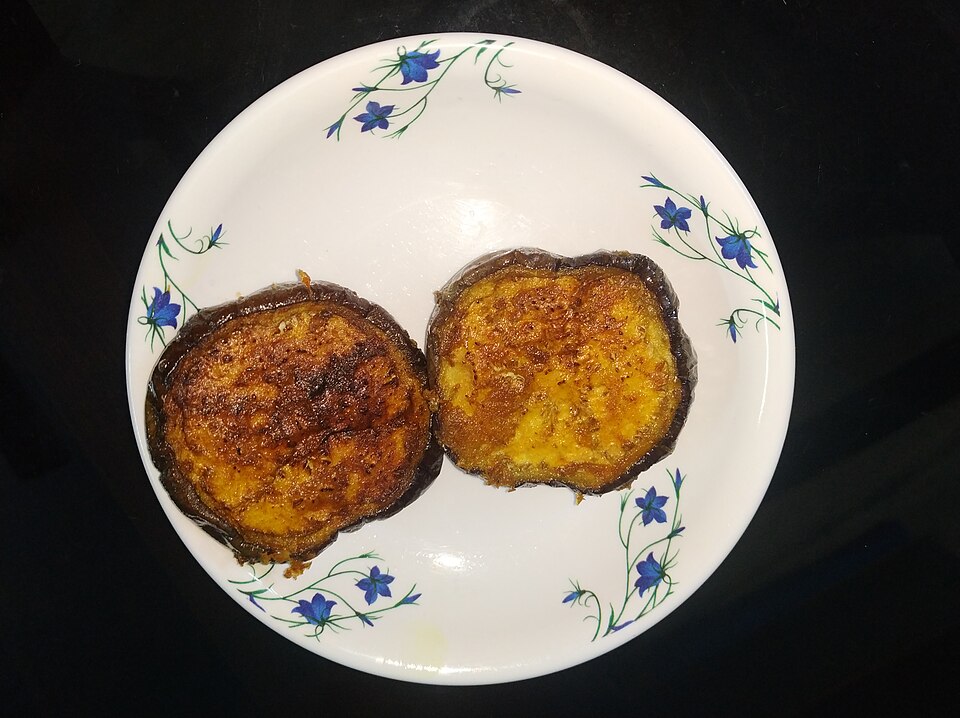
- Traditional accompaniments are mashes (bhorta) of potato, aubergine or dried fish with mustard oil and chilli.
Food safety
- Cooked rice can carry Bacillus cereus spores that survive cooking; cool leftover rice quickly and refrigerate it within an hour.
- Soak only rice that was cooled quickly and handled with clean utensils, and refrigerate it overnight in warm weather.
Storage
- Eat the morning after soaking; do not keep longer than 24 hours.
Variations
- Panta ilish: The festive version served with fried hilsa fish on Bengali New Year.
- Pakhala (Odisha) (India): The Odia cousin, often tempered with curd, cumin and curry leaves.
Original editorial recipe · FriendsPantry editorial · source: TasteAtlas (dish facts) · Not yet independently reviewed · Added
Recipe DNA
How this dish is built
Built from the recipe’s own sections. Each band’s width is its share of the dish by weight. Choose a component to see what it does.
What the dish is built around
Main ingredient
- Long-grain white rice, parboiled or local medium-grain rice, rinsed250 g
Reviews & corrections
Reviews come from signed-in cooks and appear after a moderator checks them. We never show made-up ratings.
You might also like
Bore baasi (Chhattisgarhi soaked rice)
 Indian · 2 h 25 min · 260 kcal · Vegetarian
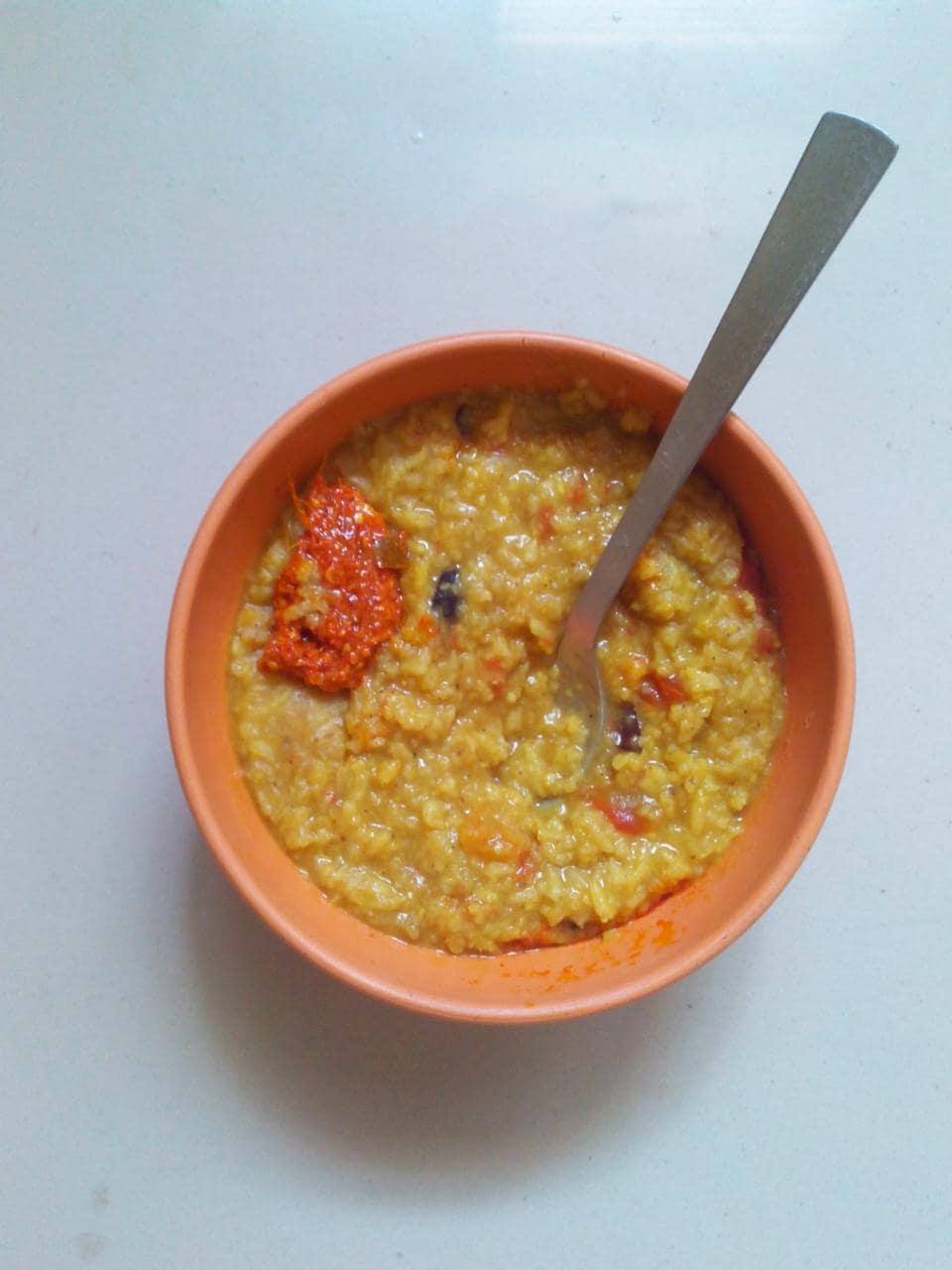
Bhuna khichuri
Bangladeshi · 1 h 5 min · 498 kcal · Vegetarian
Dhakai kacchi biryani
Bangladeshi · 6 h 35 min · 750 kcal
Morog polao
Bangladeshi · 1 h 55 min · 833 kcal