
Nasi kandar (Penang rice with mixed curries)
Non-vegetarian
Nasi kandar
A plate of steamed rice heaped with a dark, aromatic chicken curry, braised okra and hard-boiled eggs, then flooded (banjir) with a mix of curry gravies. This home version recreates the classic Penang mamak counter plate with one rich curry and its sides.
Nasi kandar (Penang rice with mixed curries) is a Malaysian rice dish, ready in about 1 hour 30 minutes and made with long-grain white rice, chicken pieces, skin-on and curry powder. It serves 4 and is rated intermediate to cook.
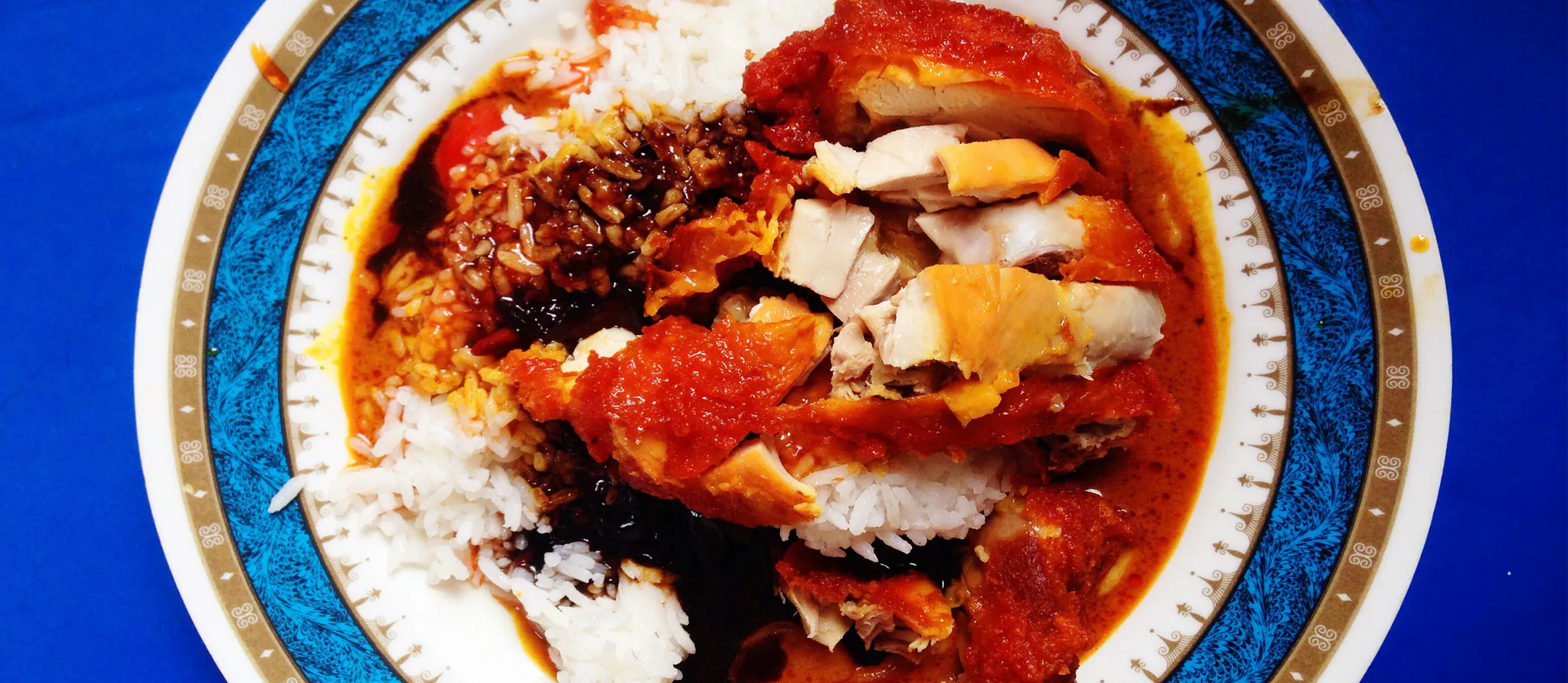
- Prep
- 30 min
- Cook
- 1 h
- Total
- 1 h 30 min
- Serves
- 4
- Level
- Intermediate
- Calories
- 1526
Main ingredients
Ingredients
For the rice
For the chicken curry
For the sides
To serve
Method
Chicken curry
45 minStep 1
Blend the shallots (opens in a new tab), garlic (opens in a new tab) and ginger to a smooth paste with a splash of water. Mix the curry powder (opens in a new tab) and turmeric (opens in a new tab) with 4 tbsp water to a thick paste.
Step 2
Heat the oil in a heavy pot and fry the cinnamon, star anise (opens in a new tab), cardamom (opens in a new tab), cloves (opens in a new tab) and curry leaves (opens in a new tab) for 30 seconds. Add the shallot (opens in a new tab) paste and fry for 5 minutes, then add the curry paste and keep frying, stirring, until it darkens and the oil separates, 8–10 minutes.
- 15 min
- medium heat
- Dutch oven / casserole pot (opens in a new tab)
This slow frying (pecah minyak) is what gives nasi kandar curry its depth.
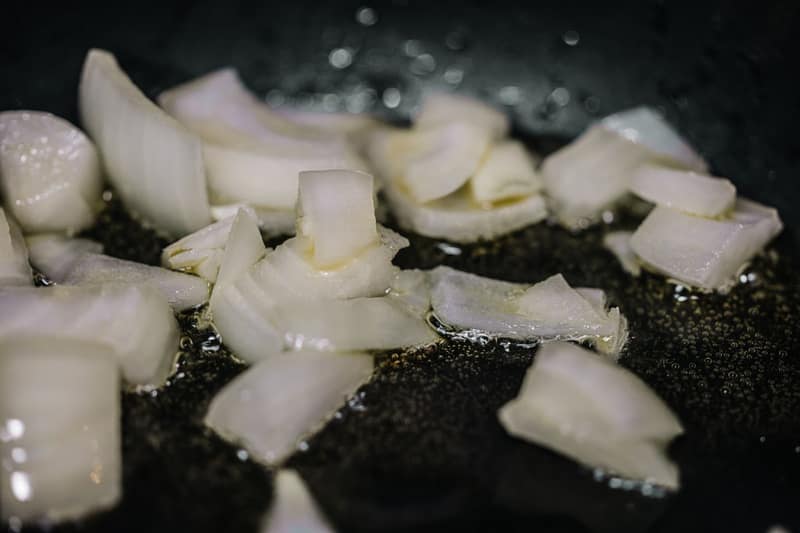
How it looks · Photo: Magda Ehlers on Pexels Step 3
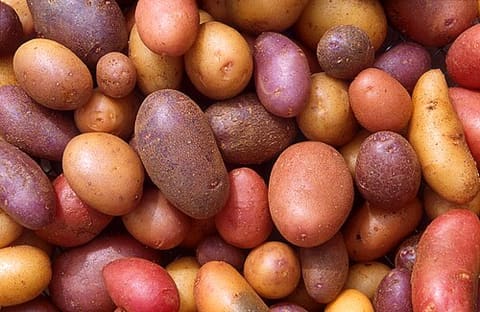
Add the chicken and tomatoes (opens in a new tab) and stir to coat, then add the potatoes (opens in a new tab), water, tamarind, salt and sugar (opens in a new tab). Cover and simmer for 25 minutes.
- 25 min
- medium-low heat
Food safety: Cook chicken and duck until they reach 74 °C in the thickest part, and keep raw poultry and its juices away from ready-to-eat food.
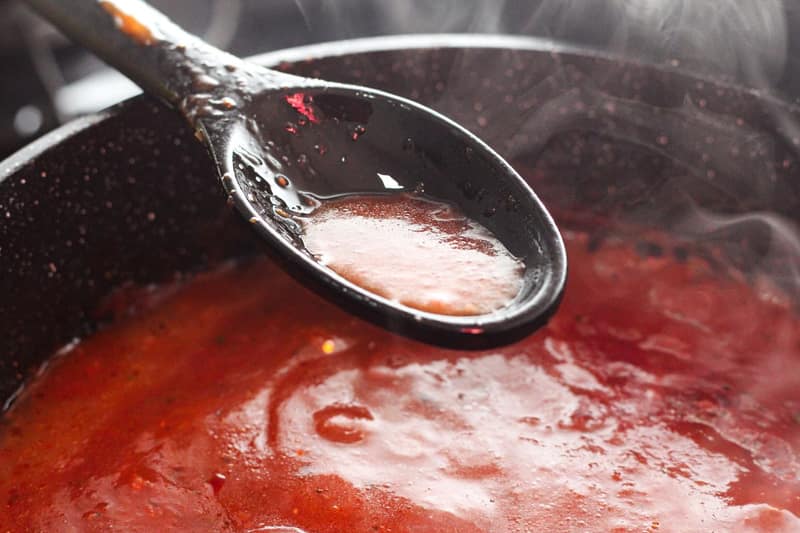
How it looks · Photo: Nanda Mends on Pexels
Rice
25 minStep 4
Meanwhile, cook the rice with the water and salt, covered, on the lowest heat for 15 minutes, then rest off the heat for 10 minutes.
- 25 min
- low heat
- Saucepan (opens in a new tab)
Food safety: Cooked rice can carry Bacillus cereus spores that survive cooking; cool leftover rice quickly and refrigerate it within an hour.
Sides
10 minStep 5
Stir the coconut milk (opens in a new tab) into the curry, add the okra (opens in a new tab) and the peeled eggs (opens in a new tab), and simmer uncovered for 10 minutes until the okra is tender and the gravy thick and glossy. Taste for salt.
- 10 min
- low heat
To serve
3 minStep 6
Pile rice on each plate, add chicken, okra (opens in a new tab) and an egg (opens in a new tab), then ladle plenty of gravy over the rice so it is 'flooded'. Serve with cucumber (opens in a new tab).
- 3 min
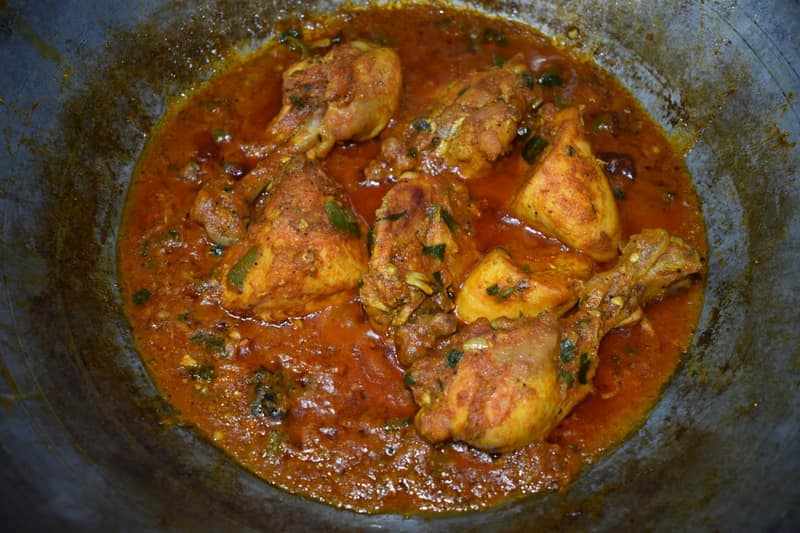
How it looks · Photo: Bachir Mamud on Pexels
At a glance
1 · Chicken curry in a pan
 Chicken pieces, skin-on
 Curry powder
 Turmeric
 Neutral vegetable oil
 Cinnamon stick
 Star anise / anise
 Cardamom
 Cloves
 Curry leaves
 Shallot
 Garlic
 Fresh ginger
 Tomato
 Potato
 Coconut milk
 Tamarind paste
 Salt
 Sugar
then cook
2 · Rice in a pot
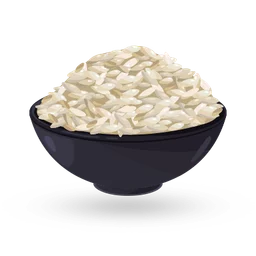 Long-grain white rice
- Salt
then stir
3 · Sides in a pan
 Okra
 Egg
then pile
4 · To serve in a pot
 Cucumber
About this dish
- Origin
- Penang, Malaysia · Well documentedDeveloped by Tamil Muslim traders in George Town, who hawked rice and curries from two baskets balanced on a shoulder pole (kandar). Nasi kandar restaurants now operate across Malaysia.Also popular in SingaporeMore food from Malaysia
Malaysia - Dish
- Lunch · Dinner · Rice dishes · Curries · Main courses
- Cooking method
- Simmered, Boiled, Stewed
- Taste
- spicy (chilli heat), aromatic / warmly spiced, rich, savoury
- Diet
- No gluten ingredients · Dairy-free · No nut ingredients · High-proteinWorked out from the ingredients. How labels work
All labels
Non-vegetarian · No gluten ingredients · Dairy-free · No nut ingredients · Alcohol-free · Pork-free · Beef-free · High-protein - Good for
- Make-ahead
- Cook more with
- Long-grain white rice · Chicken pieces, skin-on · Curry powder · Turmeric · Cinnamon stick · Star anise / anise
Allergens
- Contains: Eggsfrom egg
- May contain: Mustardfrom curry powder
- May contain: Celeryfrom curry powder
Based on typical versions of these ingredients and not verified allergen-free. Brands differ and cross-contact happens, so always check labels. For severe allergies, follow your clinician’s advice.
Nutrition
1526 kcal per serving
Estimated1 serving ≈ 1112 g · recipe makes 4
Where the energy comes from
- Protein 20%
- Carbohydrate 33%
- Fat 47%
| Nutrient | Per serving | Per 100 g* |
|---|---|---|
| Energy | 1526 kcal | 137 kcal |
| Protein | 77 g | 6.9 g |
| Carbohydrate | 126.1 g | 11.3 g |
| Net carbohydrate | 113.8 g | 10.2 g |
| Sugars | 10.5 g | 0.9 g |
| Added sugars | 1 g | 0.1 g |
| Fibre | 12.4 g | 1.1 g |
| Fat | 79.5 g | 7.1 g |
| Saturated fat | 25.4 g | 2.3 g |
| Trans fat | — | — |
| Cholesterol | 411 mg | 37 mg |
| Sodium | 1490 mg | 134 mg |
| Salt equivalent | 3.7 g | 0.3 g |
Vitamins & minerals per serving
- Potassium
- 1971 mg
- Calcium
- 281 mg
- Iron
- 13.3 mg
- Magnesium
- 228 mg
- Vitamin A (RAE)
- 256 µg
- Vitamin C
- 56 mg
- Vitamin D
- 1.6 µg
- Vitamin B12
- 1.4 µg
- Folate (DFE)
- 525 µg
How these numbers were made
- Calculated from USDA FoodData Central (SR Legacy) per-100 g values and the listed quantities.
- *Per 100 g of combined raw ingredients; the cooked dish may weigh more or less.
- Optional ingredients are not included: cucumber.
- Not counted (tiny amounts or “to taste”): curry leaves.
- Star anise / anise: Anise seed (FDC 171316) used as a stand-in for star anise.
- Tamarind paste: Raw tamarind pulp (FDC 167763). Commercial concentrates vary in water content.
- “—” means the value isn’t known for enough of the ingredients; it is never zero by default.
- Values are estimates for guidance, not for medical dosing. U.S. Department of Agriculture, Agricultural Research Service. FoodData Central, 2019. fdc.nal.usda.gov.
Good to know
Tips
- At the stalls, gravies from several curries (chicken, beef, fish head, squid) are mixed over the rice; if you have leftover curries, spoon a little of each over the plate.
- Fried chicken (ayam goreng) is a popular extra.
Serve with
- Add fried chicken, a spoon of sambal and a glass of teh tarik for the full mamak experience.

Food safety
- Cook chicken and duck until they reach 74 °C in the thickest part, and keep raw poultry and its juices away from ready-to-eat food.
- Cooked rice can carry Bacillus cereus spores that survive cooking; cool leftover rice quickly and refrigerate it within an hour.
Storage
- Curry keeps 3 days refrigerated; store rice separately and chill it within an hour.
Reheating
- Reheat the curry until piping hot; steam or microwave the rice until steaming throughout.
Variations
- Nasi kandar banjir: The rice is deliberately drowned in several mixed curry gravies.
- Seafood nasi kandar: Squid, prawn or fish-head curry replaces the chicken.
Original editorial recipe · FriendsPantry editorial · source: TasteAtlas (dish facts) · Not yet independently reviewed · Added
Recipe DNA
How this dish is built
Built from the recipe’s own sections. Each band’s width is its share of the dish by weight. Choose a component to see what it does.
The body of the dish
For the chicken curry
- Chicken pieces, skin-on, bone-in, cut into 10 pieces1.2 kg · 1200 g
- Curry powder4 tbsp · 25 g
- Turmeric0.5 tsp · 1.6 g
- Neutral vegetable oil5 tbsp · 68 g
- Cinnamon stick1 stick · 3 g
- Star anise / anise2 piece · 1 g
- Cardamom, lightly crushed4 piece · 0.8 g
- Cloves4 piece · 0.4 g
- Curry leaves2 sprig · 2 g
- Shallot, blended to a paste with the garlic and ginger6 piece · 180 g
- Garlic5 clove · 20 g
- Fresh ginger30 g
- Tomato, chopped2 piece · 240 g
- Potato, peeled and quartered2 piece · 400 g
- Coconut milk200 ml · 196 g
- Tamarind paste1 tbsp · 18 g
- Water500 ml · 500 g
- Salt1.5 tsp · 9 g
- Sugar1 tsp · 4.2 g
Masalas in this recipe
Make the masala first, then come back to finish the dish.
Dry spice blend
Everyday curry powder (British-style)
This recipe uses 4 tbsp (25 g for 4 servings).
Reviews & corrections
Reviews come from signed-in cooks and appear after a moderator checks them. We never show made-up ratings.
You might also like
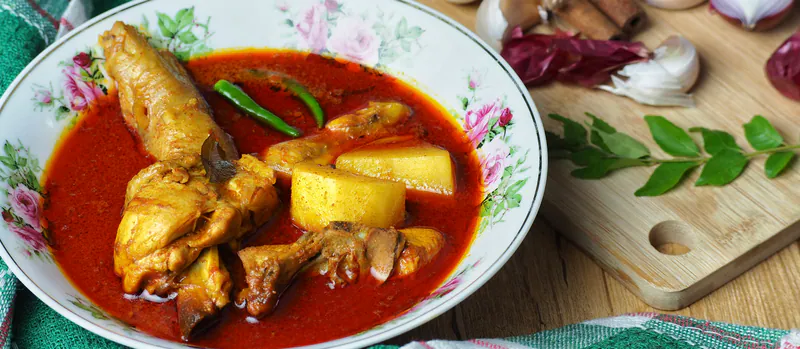
Kari ayam
 Malaysian · 1 h 5 min · 514 kcal
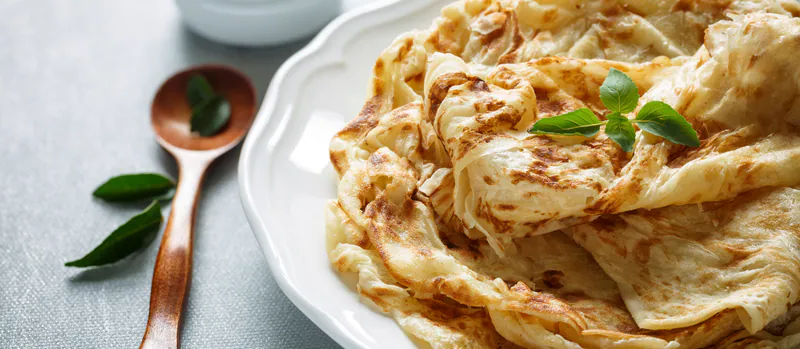
Roti canai
Malaysian · 5 h 5 min · 366 kcal · Contains egg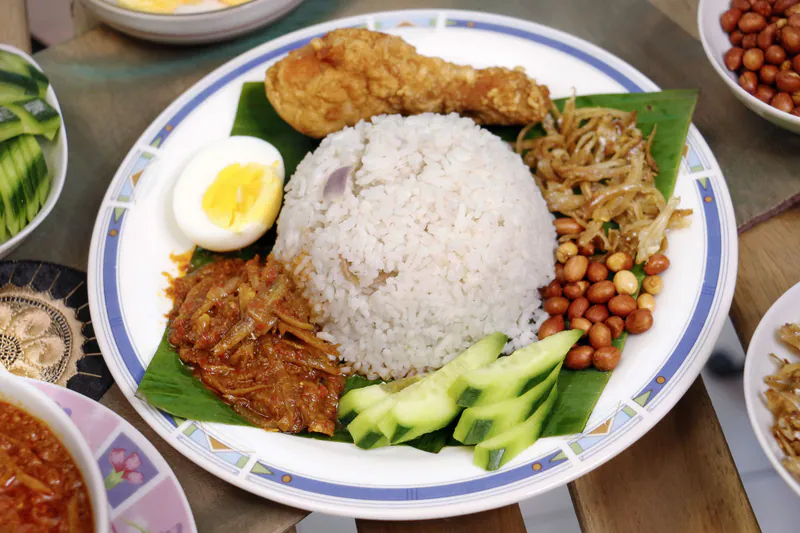
Nasi lemak
Malaysian · 1 h 25 min · 963 kcal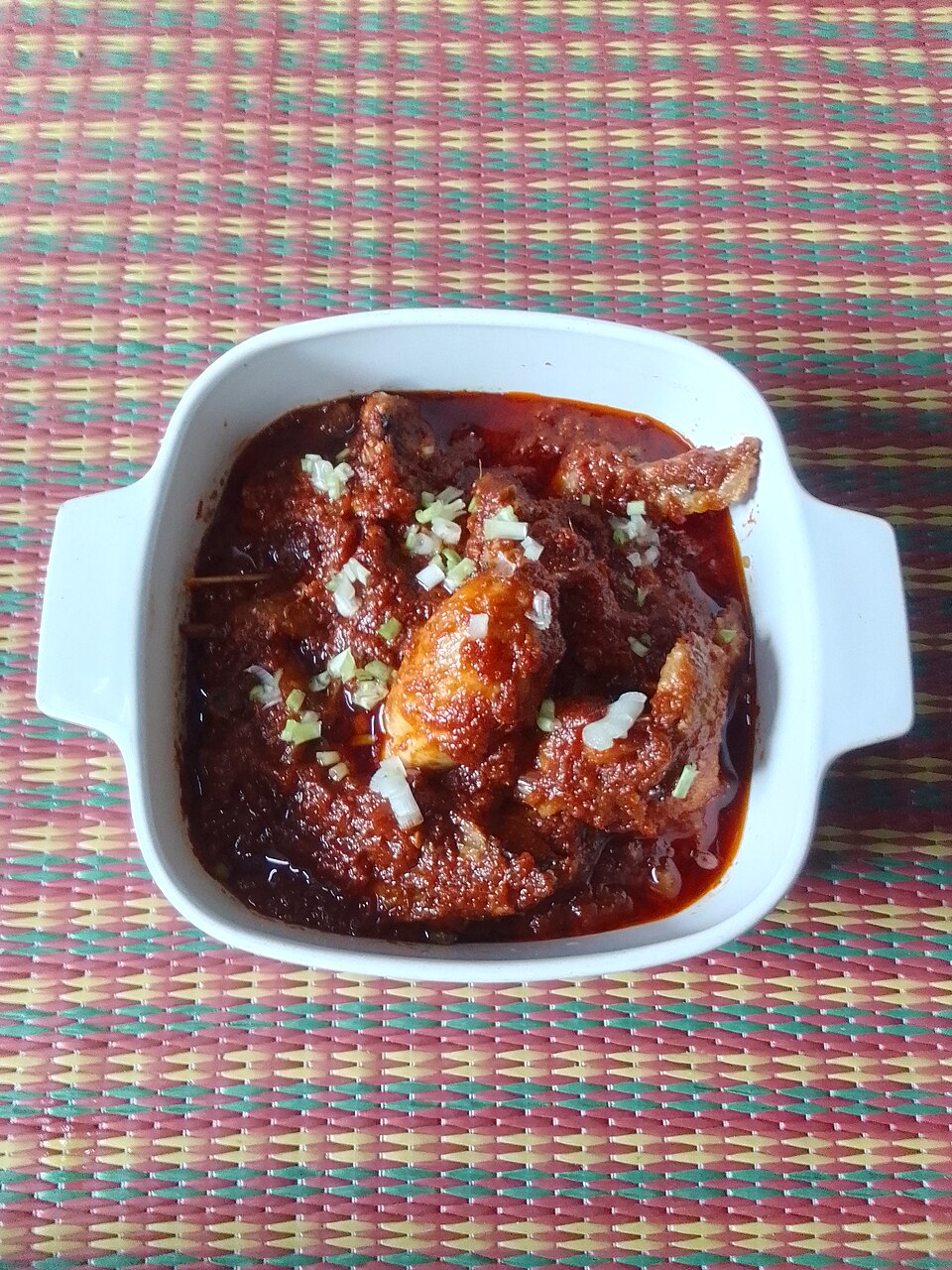
Ayam masak merah
Malaysian · 1 h 10 min · 574 kcal