
 Palestinian · Levantine · Syrian · Pickles & ferments
Makdous (oil-cured stuffed baby aubergines)
Vegetarian
مكدوس · makdūs
Small aubergines boiled until tender, salted and pressed, then stuffed with walnuts, red pepper, chilli and garlic and packed tightly in olive oil to cure for a week. A pantry staple of Palestinian and Syrian homes, eaten at breakfast with bread and labneh.
Makdous (oil-cured stuffed baby aubergines) is a Palestinian pickle, ready in about 1 hour 10 minutes and made with eggplant, walnuts and red bell pepper. It serves 8 and is rated intermediate to cook.
No licensed photograph of this dish yet.
- Prep
- 1 h
- Cook
- 10 min
- Total
- 1 h 10 min
- Serves
- 8
- Level
- Intermediate
- Calories
- 671
Plus 24 hours pressing and 5–7 days curing in oil.
Main ingredients
Ingredients
For the aubergines
For the filling
For curing
Method
Aubergines
12 minStep 1
Boil the aubergines (opens in a new tab) in the salted water for 8–10 minutes, until a knife slips in easily but they still hold their shape. Drain and cool.
Filling
45 minStep 2
Cut a lengthways slit in each aubergine (opens in a new tab), from just below the cap to 1 cm from the base, without cutting through. Sprinkle a pinch of salt into each slit.
Step 3
Pack the aubergines (opens in a new tab) slit-side down in a colander (opens in a new tab), put a plate and a heavy weight on top and leave to drain for 24 hours in a cool place (or the fridge), until they are flat and leathery. This removes the water that would otherwise spoil them.
Well-drained aubergines are the secret of makdous that keeps.
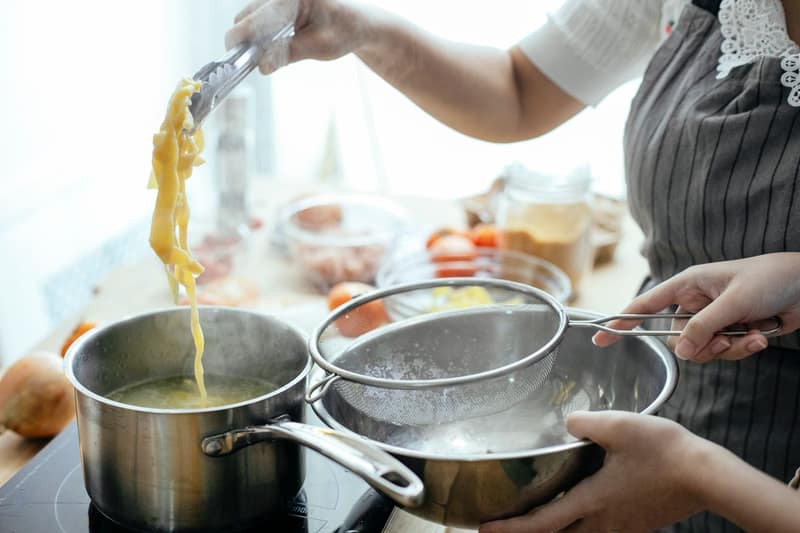
How it looks · Photo: Katerina Holmes on Pexels Step 4
Mix the walnuts (opens in a new tab), squeezed red pepper (opens in a new tab), chilli, garlic (opens in a new tab) and 1 tsp salt to a coarse, fairly dry filling.
Step 5
Open each aubergine and stuff it generously, pressing the sides back together. Pack the aubergines (opens in a new tab) tightly, slit upwards, in a sterilised jar.
Curing
5 minStep 6
Pour in olive oil (opens in a new tab) to cover them by at least 2 cm. Weigh them down with a small saucer if they float, close the jar and leave in the fridge for 5–7 days, turning the jar once a day. Top up with oil as it is absorbed.
- 5 min
Food safety: Garlic and vegetables stored in oil can harbour Clostridium botulinum; keep the jar refrigerated and always under oil.
At a glance
1 · Aubergines in a pot
 Eggplant
 Salt
then cut
2 · Filling in a bowl
 Walnuts
 Red bell pepper
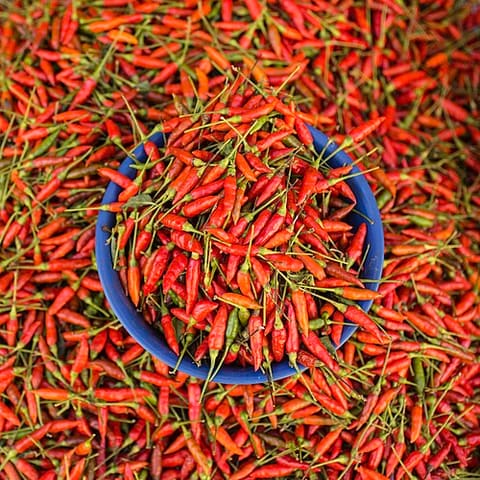 Fresh red chilli
 Garlic
- Salt
then pour
3 · Curing in a bowl
 Olive oil
About this dish
- Origin
- The Levant (Palestine, Syria, Lebanon and Jordan), Palestine · Origin disputedMade across the Levant every late summer when baby aubergines are cheap; the dish is most strongly associated with Syria, but it is a fixture of the Palestinian mouneh (preserved pantry) too.Also popular in Syria, Lebanon, JordanMore food from Palestine
Palestine - Dish
- Breakfast · Snack · Pickles & ferments · Appetizers & starters · Side dishes
- Cooking method
- Boiled, Marinated / cured
- Taste
- tangy, nutty, salty, garlicky, spicy (chilli heat)
- Diet
- Vegan · No gluten ingredients · Dairy-free · Keto-style · Low-carbWorked out from the ingredients. How labels work
All labels
Vegan · Plant-based · Vegetarian (lacto-ovo) · Eggetarian · Lacto-vegetarian · Ovo-vegetarian · Pescatarian · Flexitarian-friendly · Whole-food focused · Paleo-style · No gluten ingredients · Dairy-free · Egg-free · No added sugar · Alcohol-free · Pork-free · Beef-free · Keto-style · Low-carb · Carb-conscious - Good for
- Make-ahead · Budget-friendly
- Cook more with
- Eggplant · Walnuts · Red bell pepper · Fresh red chilli · Garlic
- Techniques
- Boiling · Marinating · Pickling · Curing
Allergens
- Contains: Tree nutsfrom walnuts
Based on typical versions of these ingredients and not verified allergen-free. Brands differ and cross-contact happens, so always check labels. For severe allergies, follow your clinician’s advice.
Nutrition
671 kcal per serving
Calculated1 serving ≈ 616 g · recipe makes 8
Where the energy comes from
- Protein 3%
- Carbohydrate 8%
- Fat 90%
| Nutrient | Per serving | Per 100 g* |
|---|---|---|
| Energy | 671 kcal | 109 kcal |
| Protein | 4.7 g | 0.8 g |
| Carbohydrate | 13.2 g | 2.1 g |
| Net carbohydrate | 7.4 g | 1.2 g |
| Sugars | 6.3 g | 1 g |
| Added sugars | 0 g | 0 g |
| Fibre | 5.7 g | 0.9 g |
| Fat | 69.4 g | 11.3 g |
| Saturated fat | 9.1 g | 1.5 g |
| Trans fat | — | — |
| Cholesterol | 0 mg | 0 mg |
| Sodium | 2053 mg | 333 mg |
| Salt equivalent | 5.1 g | 0.8 g |
Vitamins & minerals per serving
- Potassium
- 454 mg
- Calcium
- 79 mg
- Iron
- 1.4 mg
- Magnesium
- 60 mg
- Vitamin A (RAE)
- 49 µg
- Vitamin C
- 45 mg
- Vitamin D
- 0 µg
- Vitamin B12
- 0 µg
- Folate (DFE)
- 60 µg
How these numbers were made
- Calculated from USDA FoodData Central (SR Legacy) per-100 g values and the listed quantities.
- *Per 100 g of combined raw ingredients; the cooked dish may weigh more or less.
- “—” means the value isn’t known for enough of the ingredients; it is never zero by default.
- Values are estimates for guidance, not for medical dosing. U.S. Department of Agriculture, Agricultural Research Service. FoodData Central, 2019. fdc.nal.usda.gov.
Good to know
Tips
- Some cooks tip the filled jar upside down on a plate overnight before adding the oil, to drain the last of the liquid.
- The oil left in the jar is delicious for cooking eggs or dressing salads.
Common mistakes
- Skipping the pressing — water left in the aubergines turns the oil cloudy and the makdous go off.
- Leaving the aubergines exposed above the oil.
Serve with
- Serve at breakfast with labneh, olives, fresh cucumber and tomato and warm flatbread.
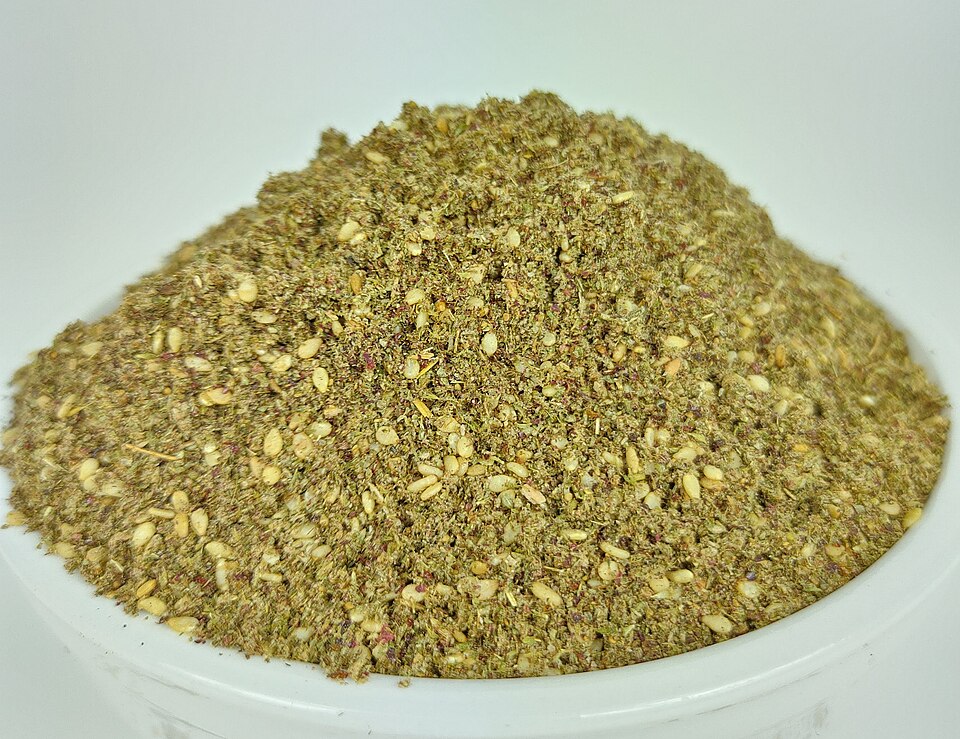
- Add to a meze spread alongside muhammara and za'atar bread.
Food safety
- Homemade vegetables in oil are not safe at room temperature: keep makdous in the fridge and discard any jar with bubbles, a sour or off smell or mould.
Storage
- Keeps 2–3 months refrigerated, always covered with oil; use a clean, dry fork to lift them out.
Variations
- Syrian makdous (Syria): Often made with a little dried mint or hot Aleppo pepper in the filling.
- Makdous with pomegranate molasses: A spoonful of pomegranate molasses in the filling adds sweet-sour depth.
Original editorial recipe · FriendsPantry editorial · source: TasteAtlas (dish facts) · Not yet independently reviewed · Added
Sauces, chutneys & dips for this dish
Recipe DNA
How this dish is built
Built from the recipe’s own sections. Each band’s width is its share of the dish by weight. Choose a component to see what it does.
What goes inside
For the filling
- Walnuts, coarsely chopped150 g
- Red bell pepper, seeded and very finely chopped, then squeezed dry in a cloth2 piece · 240 g
- Fresh red chilli, finely chopped2 piece · 12 g
- Garlic, crushed8 clove · 32 g
- Salt1 tsp · 6 g
Reviews & corrections
Reviews come from signed-in cooks and appear after a moderator checks them. We never show made-up ratings.
You might also like
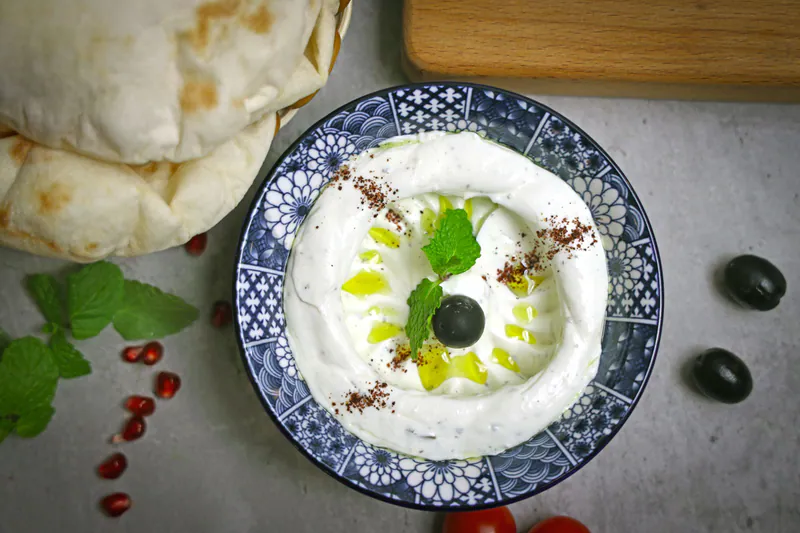
Labneh (strained yoghurt cheese)
Levantine · 24 h 10 min · 73 kcal · Vegetarian
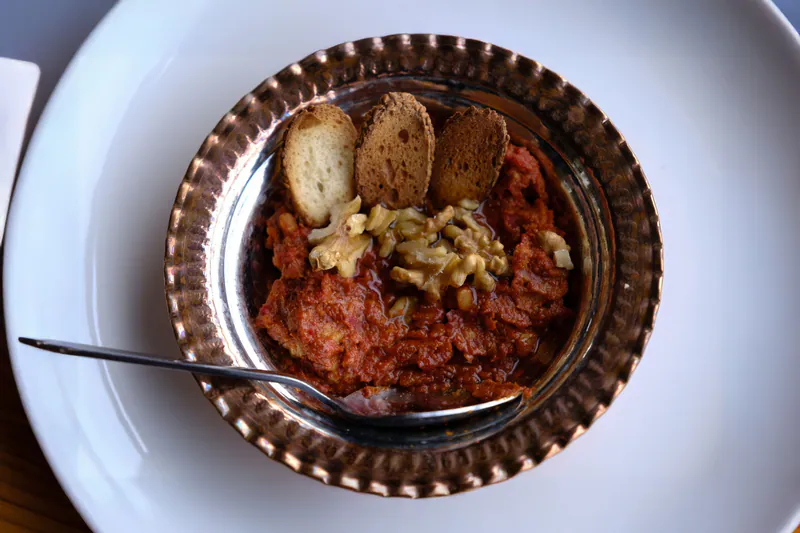
Muhammara
 Syrian · 45 min · 219 kcal · Vegan
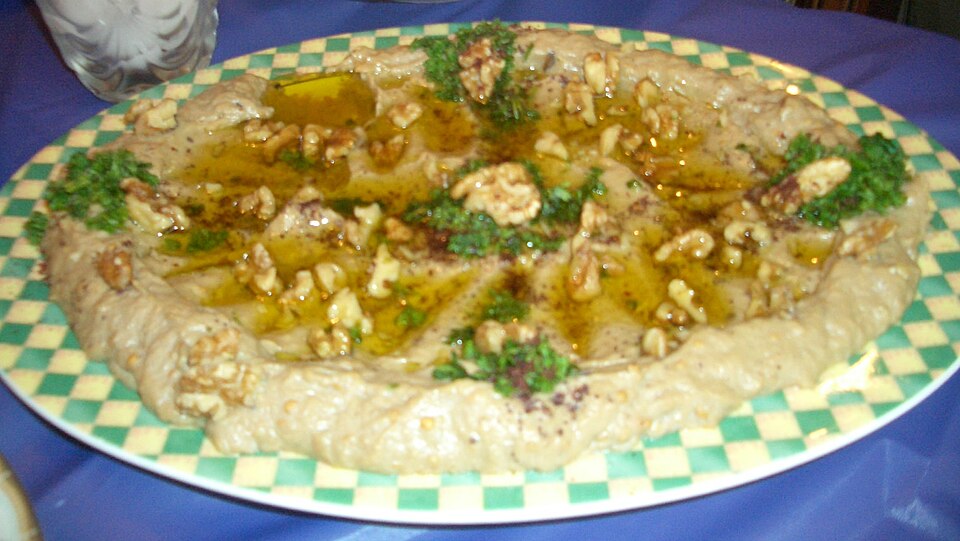
Baba ghanoush (Lebanese-Syrian chopped style)
 Lebanese · 1 h 5 min · 123 kcal · Vegan
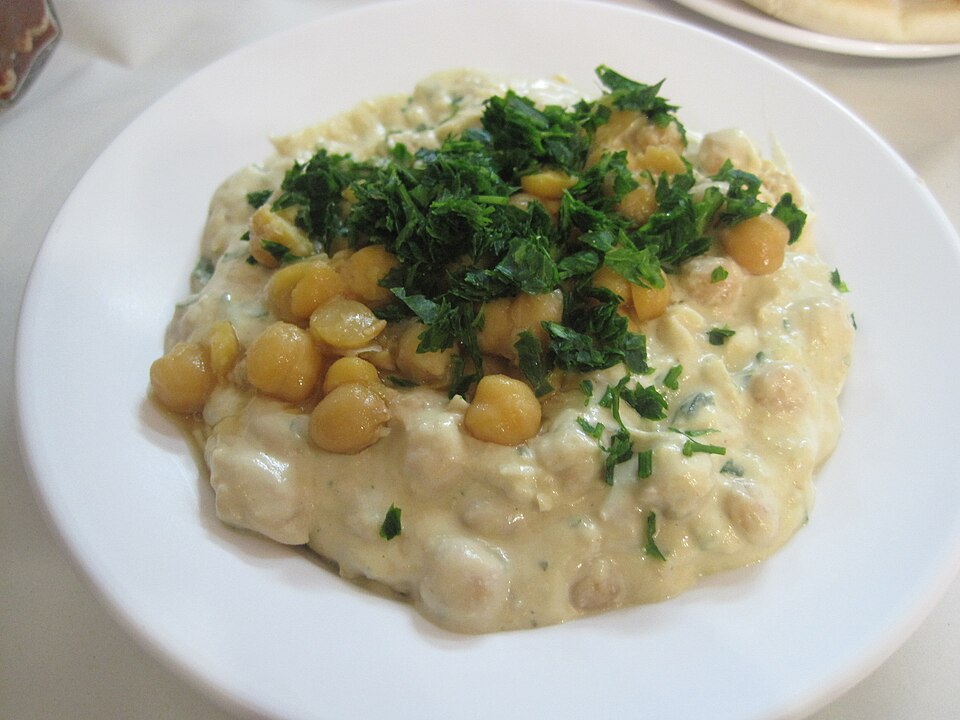
Msabbaha (warm whole-chickpea hummus)
Levantine · 1 h · 392 kcal · Vegan