
Leitão à Bairrada (roast suckling pig)
Non-vegetarian
Leitão à Bairrada
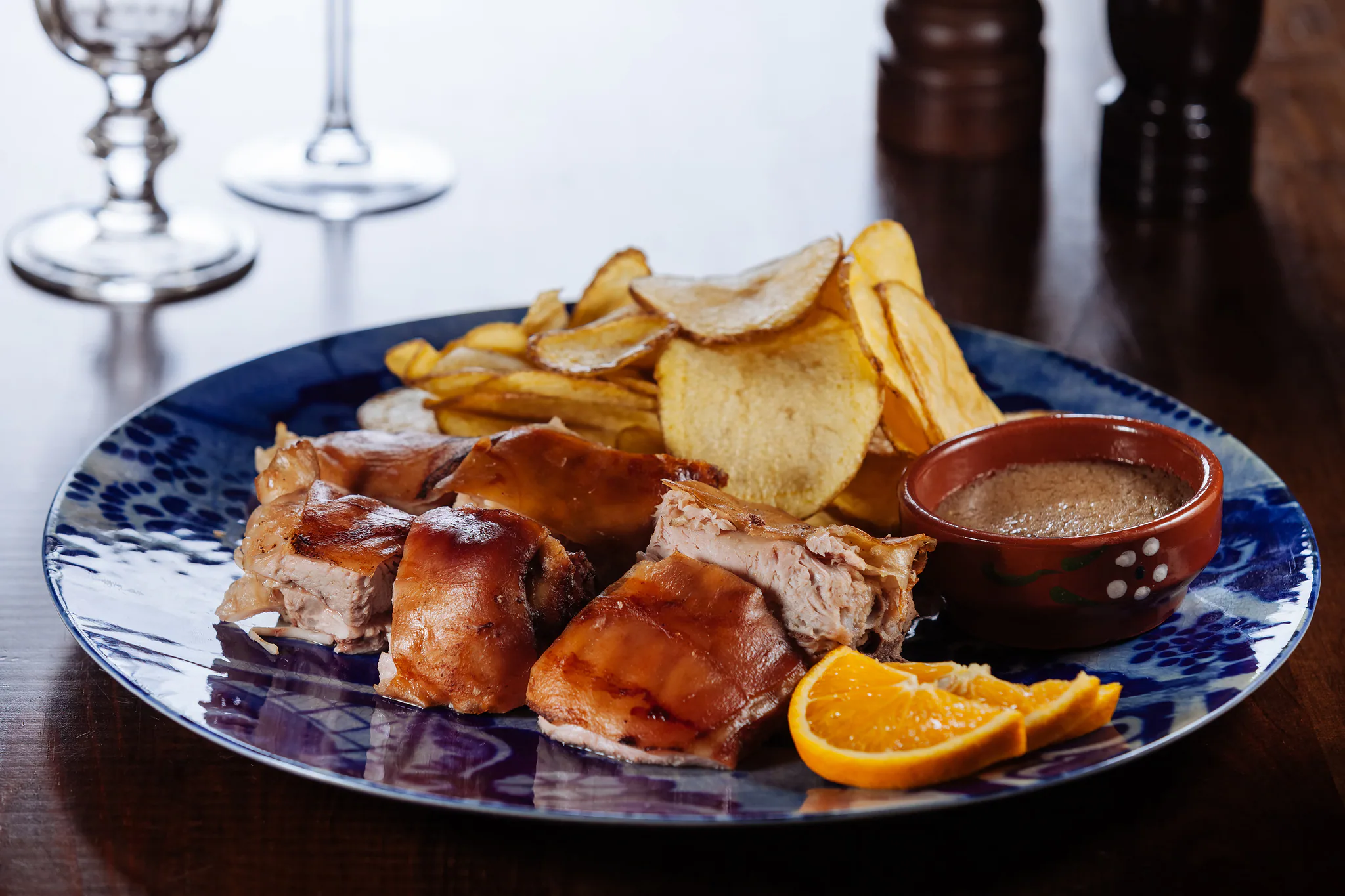
A milk-fed piglet spread inside with a pounded paste of garlic, coarse salt, lard and a great deal of black pepper, then roasted until the skin is glassy and crackling and the meat soft and juicy. Cut into small pieces with skin on every one, it is the feast dish of Portugal's Bairrada wine country.
Leitão à Bairrada (roast suckling pig) is a Portuguese main course from Portugal, ready in about 3 hours 45 minutes and made with suckling pig (milk-fed piglet), garlic and black pepper. It serves 10 and is rated advanced to cook.
- Prep
- 30 min
- Cook
- 3 h
- Rest
- 15 min
- Total
- 3 h 45 min
- Serves
- 10
- Level
- Advanced
- Calories
- 736
Plus an optional night uncovered in the fridge to dry the skin.
Main ingredients
Ingredients
For the piglet
For the paste
For the sauce
To serve
Method
Paste
12 minStep 1
Pound the garlic (opens in a new tab) with the coarse salt in a large mortar to a rough paste. Work in the pepper (opens in a new tab), then the softened lard (opens in a new tab), olive oil (opens in a new tab), parsley (opens in a new tab) and bay leaf (opens in a new tab) until evenly mixed. Set aside 3 tbsp for the sauce.
Piglet
3 h 5 minStep 2
Dry the piglet (opens in a new tab) thoroughly inside and out with kitchen paper. Spread the paste generously over the whole inside of the cavity. Close the belly with a few skewers or lay the piglet skin side up, opened flat, on a rack in a roasting tin. Rub the skin with just a little of the lard (opens in a new tab) from the paste and a pinch of salt — the garlic (opens in a new tab) would burn on the outside.
Food safety: Wash hands, boards and surfaces after handling raw pork.
How it looks · Photo: locrifa on Pexels Step 3
Heat the oven (opens in a new tab) to 180 °C. Roast the piglet (opens in a new tab) for about 2½ hours, brushing the skin with the fat in the tin every 40 minutes, until the meat near the bone reaches 70 °C.
Step 4
Turn the oven (opens in a new tab) up to 230 °C and roast for a final 15–20 minutes, watching closely, until the skin is blistered, golden-brown and crisp. Rest for 15 minutes.
- 20 min
- 230°C
- Oven (opens in a new tab)
Never cover the piglet while it rests or the skin will soften.
Sauce
5 minStep 5
For the sauce, pour the pan juices into a small saucepan (opens in a new tab) with the reserved paste and the wine and boil for 3–4 minutes.
- 5 min
- high heat
- Saucepan (opens in a new tab)
To serve
10 minStep 6
Cut the piglet (opens in a new tab) with a heavy knife or cleaver into small pieces, each with crackling. Arrange on a platter with orange (opens in a new tab) slices and salad, and serve the peppery sauce on the side.
At a glance
1 · Paste in a bowl
 Garlic
 Salt
 Black pepper
 Lard
 Olive oil
 Parsley
 Bay leaves
then dry
2 · Piglet in a pan
 Suckling pig (milk-fed piglet)
then pour
3 · Sauce in a pan
 Dry white wine
then cut
4 · To serve in a bowl
 Orange
 Mixed salad leaves
About this dish
- Origin
- Bairrada, especially Mealhada (Aveiro and Coimbra districts), Portugal · Well documentedThe restaurants lining the main road through Mealhada roast piglets of about four to six weeks old on long spits in wood-fired brick ovens. A cut-open piglet in a domestic oven is the usual home method.More food from Portugal
Portugal - Dish
- Lunch · Dinner · Main courses
- Cooking method
- Roasted
- Taste
- peppery, garlicky, rich, savoury
- Diet
- No gluten ingredients · Dairy-free · No nut ingredients · Keto-style · Low-carb · High-proteinWithout the optional extras: Alcohol-freeWorked out from the ingredients. How labels work
All labels
Non-vegetarian · Whole-food focused · Paleo-style · No gluten ingredients · Dairy-free · Egg-free · No nut ingredients · No added sugar · Beef-free · Keto-style · Low-carb · High-protein - Good for
- Festive & celebration
- Cook more with
- Suckling pig (milk-fed piglet) · Garlic · Lard · Parsley · Bay leaves · Orange
Allergens
- Contains, can be adapted: Sulphitesfrom dry white wine
Based on typical versions of these ingredients and not verified allergen-free. Brands differ and cross-contact happens, so always check labels. For severe allergies, follow your clinician’s advice.
Nutrition
736 kcal per serving
Estimated1 serving ≈ 301 g · recipe makes 10
Where the energy comes from
- Protein 21%
- Carbohydrate 4%
- Fat 74%
| Nutrient | Per serving | Per 100 g* |
|---|---|---|
| Energy | 736 kcal | 245 kcal |
| Protein | 39.1 g | 13 g |
| Carbohydrate | 7.8 g | 2.6 g |
| Net carbohydrate | 6.1 g | 2 g |
| Sugars | 2.7 g | 0.9 g |
| Added sugars | 0 g | 0 g |
| Fibre | 1.7 g | 0.6 g |
| Fat | 60.2 g | 20 g |
| Saturated fat | 20.4 g | 6.8 g |
| Trans fat | — | — |
| Cholesterol | 170 mg | 57 mg |
| Sodium | 2476 mg | 823 mg |
| Salt equivalent | 6.2 g | 2.1 g |
Vitamins & minerals per serving
- Potassium
- 819 mg
- Calcium
- 79 mg
- Iron
- 3.1 mg
- Magnesium
- 52 mg
- Vitamin A (RAE)
- 76 µg
- Vitamin C
- 23 mg
- Vitamin D
- 4.1 µg
- Vitamin B12
- 1.6 µg
- Folate (DFE)
- 30 µg
How these numbers were made
- Calculated from USDA FoodData Central (SR Legacy) per-100 g values and the listed quantities.
- *Per 100 g of combined raw ingredients; the cooked dish may weigh more or less.
- Optional ingredients are not included: dry white wine.
- Suckling pig (milk-fed piglet): Fresh pork shoulder (lean and fat, raw) used as a stand-in; milk-fed piglet meat is paler and slightly leaner, and the weight includes bone and skin.
- Mixed salad leaves: Green leaf lettuce used for a mixed-leaf bag; mixes vary.
- “—” means the value isn’t known for enough of the ingredients; it is never zero by default.
- Values are estimates for guidance, not for medical dosing. U.S. Department of Agriculture, Agricultural Research Service. FoodData Central, 2019. fdc.nal.usda.gov.
Good to know
Tips
- Leaving the prepared piglet uncovered in the fridge overnight dries the skin and gives the best crackling.
- Cut through the skin with kitchen scissors if your knife skids on it.
Common mistakes
- Spreading the garlic paste on the skin — it scorches and keeps the skin from crisping.
- Basting with the watery juices instead of fat, which makes the skin leathery.
Serve with
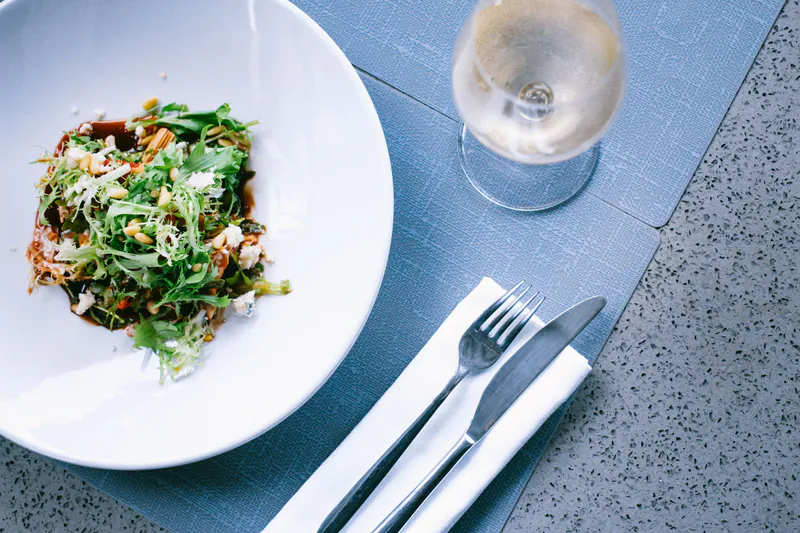
- Served in Bairrada with orange slices, homemade potato crisps (batatas fritas às rodelas), a green salad and a chilled sparkling Bairrada wine.
- Leftover meat in a soft bread roll makes a sandes de leitão.
Food safety
- Cook pork until the meat near the bone reaches at least 70 °C.
Storage
- Keep leftovers refrigerated for up to 3 days.
Reheating
- Reheat skin side up in a 220 °C oven for 10–15 minutes to re-crisp the crackling.
Variations
- Leitão com pão (sandes de leitão): Sliced roast piglet with crackling and a spoon of the peppery sauce in a crusty roll — a roadside snack in Mealhada.
- Cochinillo asado (Spain): Spain's Segovian suckling pig, roasted with little more than salt, water and lard.
Original editorial recipe · FriendsPantry editorial · source: TasteAtlas (dish facts) · Not yet independently reviewed · Added
Recipe DNA
How this dish is built
Built from the recipe’s own sections. Each band’s width is its share of the dish by weight. Choose a component to see what it does.
The spice and seasoning backbone
For the paste
- Garlic, peeled20 clove · 80 g
- Salt, coarse sea salt60 g
- Black pepper, freshly and coarsely ground3 tbsp · 22 g
- Lard, softened150 g
- Olive oil60 ml · 55 g
- Parsley, finely chopped30 g
- Bay leaves, crumbled4 leaf · 0.8 g
Reviews & corrections
Reviews come from signed-in cooks and appear after a moderator checks them. We never show made-up ratings.
You might also like
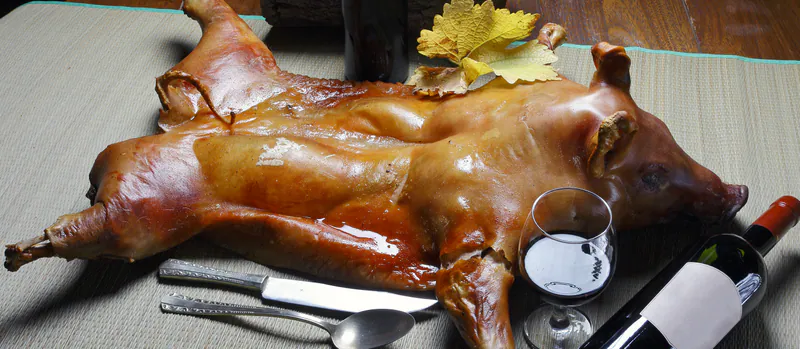
Cochinillo asado (Segovian roast suckling pig)
 Spanish · 3 h 15 min · 717 kcal
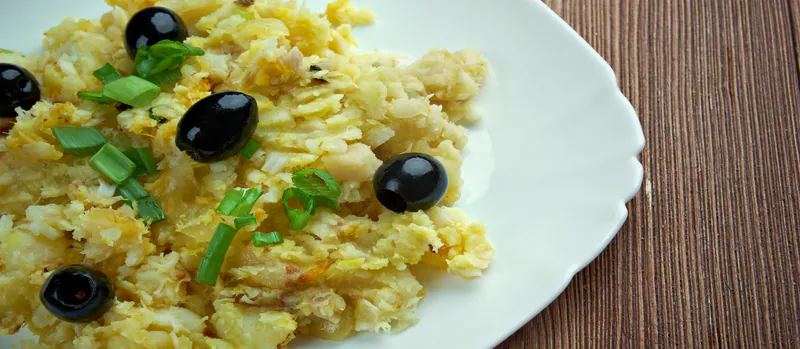
Bacalhau à brás
 Portuguese · 55 min · 581 kcal
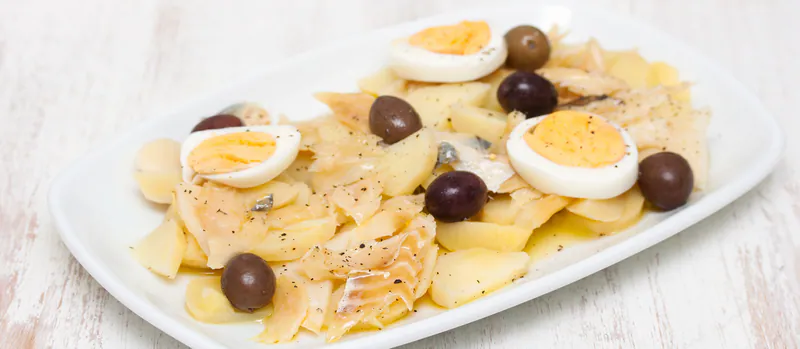
Bacalhau à Gomes de Sá (Porto salt cod with potatoes and olives)
Portuguese · 2 h 20 min · 1093 kcal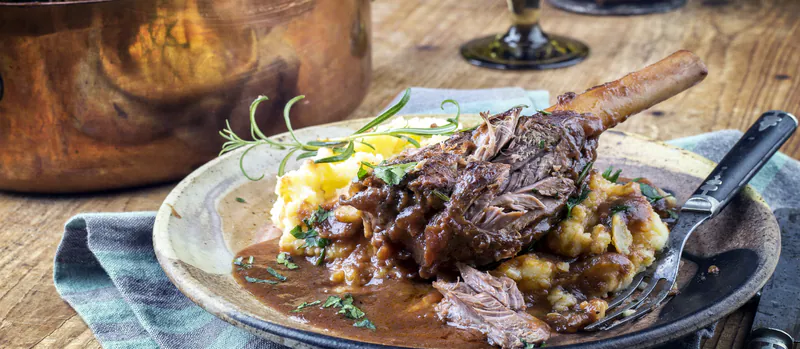
Chanfana (goat braised in red wine)
Portuguese · 15 h 50 min · 581 kcal