
Kushikatsu (Osaka fried skewers)
Non-vegetarian
串カツ · kushikatsu
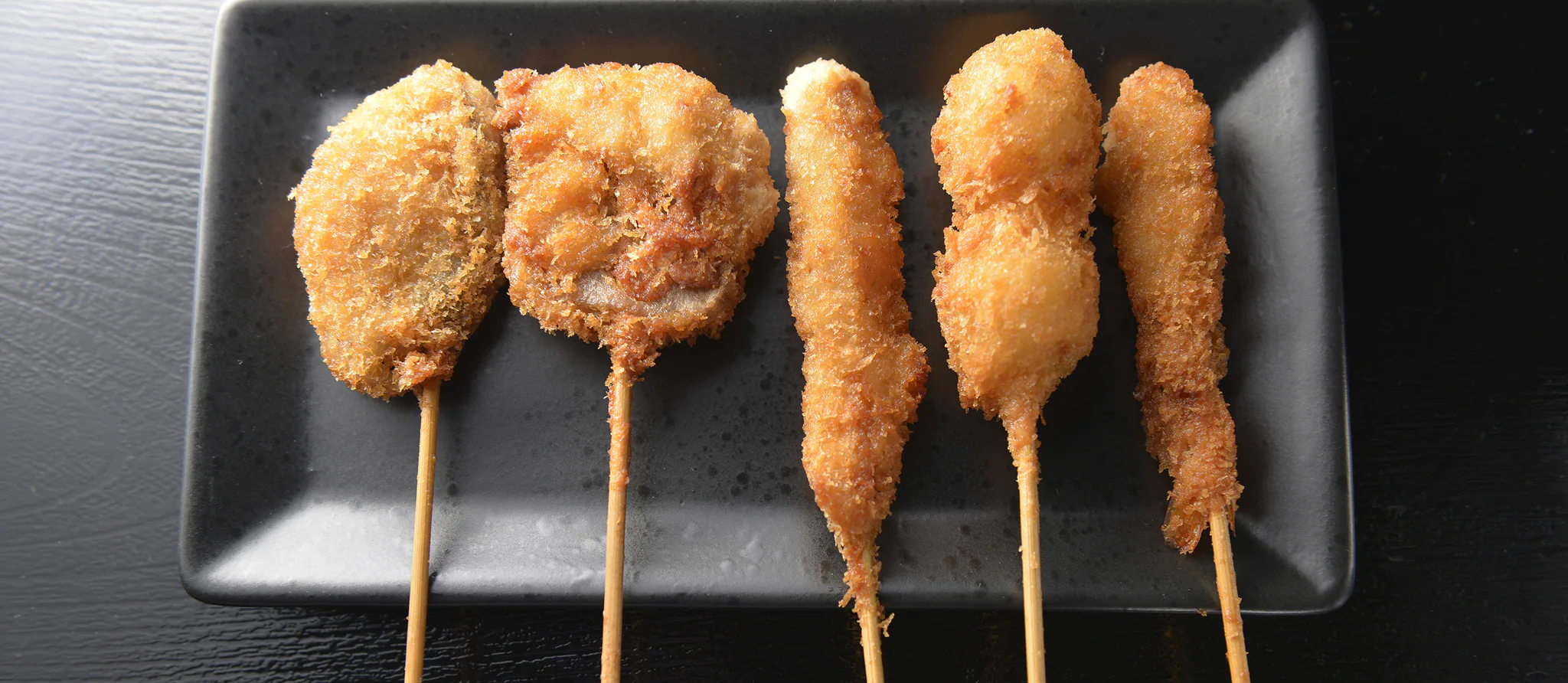
Bite-sized pieces of beef, pork, chicken, quail eggs and vegetables threaded on bamboo skewers, coated in a light batter and panko and deep-fried until crisp. Osaka's street-food favourite, dipped into a thin, tangy Worcestershire-based sauce — once only.
Kushikatsu (Osaka fried skewers) is a Japanese street food, ready in about 1 hour and made with beef sirloin steak, panko and worcestershire sauce. It serves 4 and is rated intermediate to cook.
- Prep
- 35 min
- Cook
- 25 min
- Total
- 1 h
- Serves
- 4
- Level
- Intermediate
- Calories
- 694
Main ingredients
Ingredients
For the skewers
For the batter and coating
For the dipping sauce
To serve
Method
Dipping sauce
5 minStep 1
Soak 24 short bamboo skewers (opens in a new tab) in water for 20 minutes. Simmer the Worcestershire sauce (opens in a new tab), ketchup (opens in a new tab), soy sauce (opens in a new tab), sugar (opens in a new tab) and water for 2 minutes, then cool; the sauce should be thin and runny.
- 5 min
- medium heat
- Skewers (opens in a new tab)
- Saucepan (opens in a new tab)
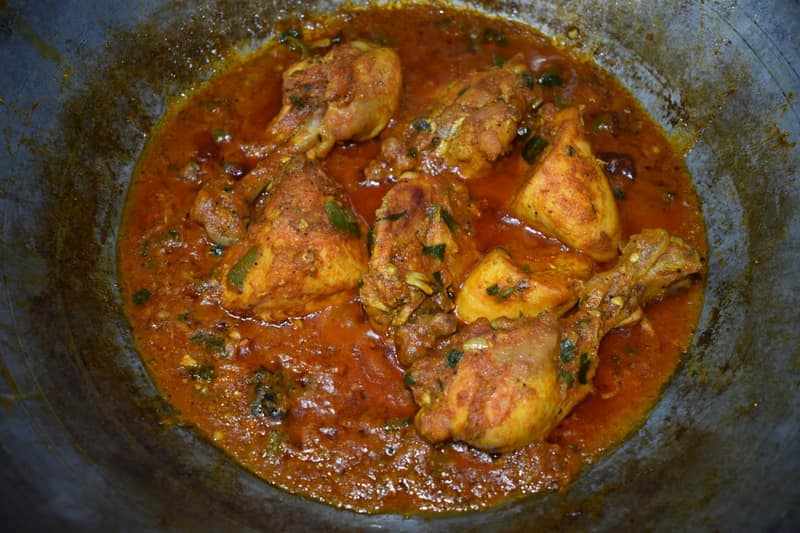
How it looks · Photo: Bachir Mamud on Pexels
Skewers
20 minStep 2
Season the beef, pork and chicken with salt and pepper (opens in a new tab). Thread 2–3 pieces of one ingredient onto each skewer (opens in a new tab): beef, pork, chicken, 2 quail eggs (opens in a new tab), asparagus (opens in a new tab), onion (opens in a new tab) wedges and spring onion (opens in a new tab).
- 20 min
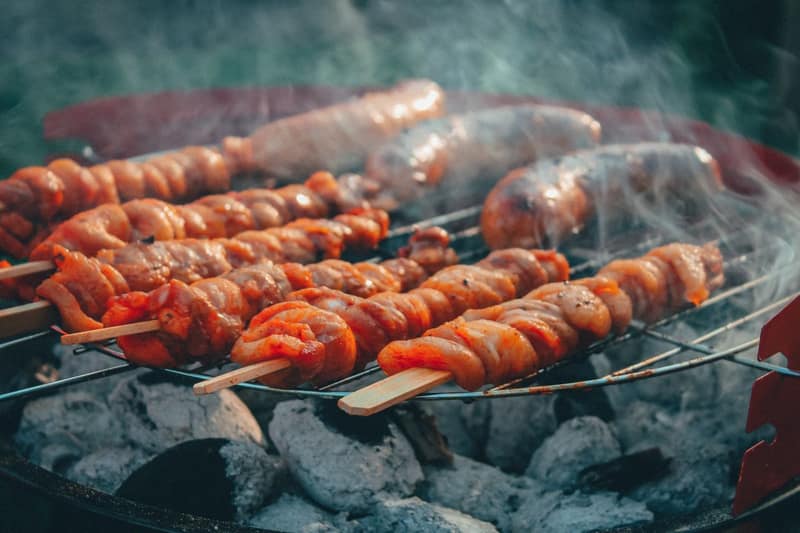
How it looks · Photo: Malte Luk on Pexels
Batter and coating
27 minStep 3
Whisk the flour, egg (opens in a new tab) and ice-cold water to a smooth batter like thin pancake batter. Spread the panko (opens in a new tab) in a tray.
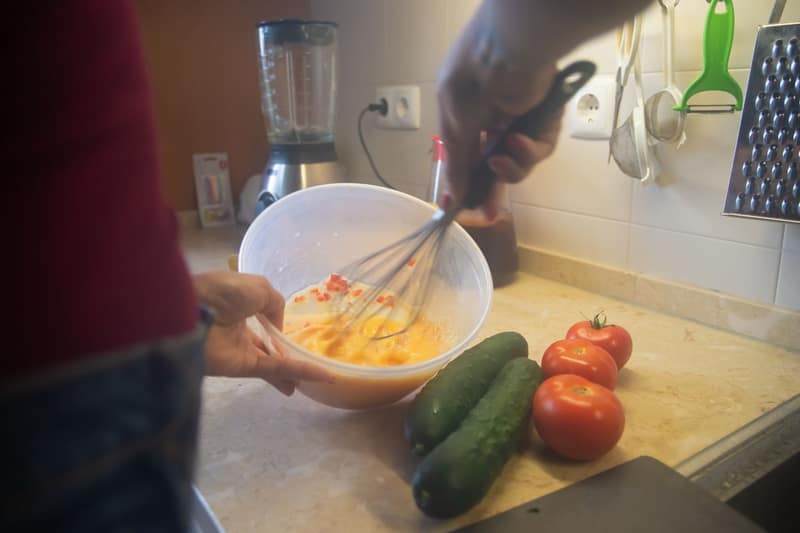
How it looks · Photo: Kampus Production on Pexels Step 4
Heat the oil to 175 °C in a wok (opens in a new tab) or deep pan. Dip each skewer (opens in a new tab) in batter, let the excess drip off, then roll in panko (opens in a new tab) and press so it sticks.
Food safety: Never fill the pan more than a third full of oil, keep a lid nearby to smother flare-ups and never leave hot oil unattended.
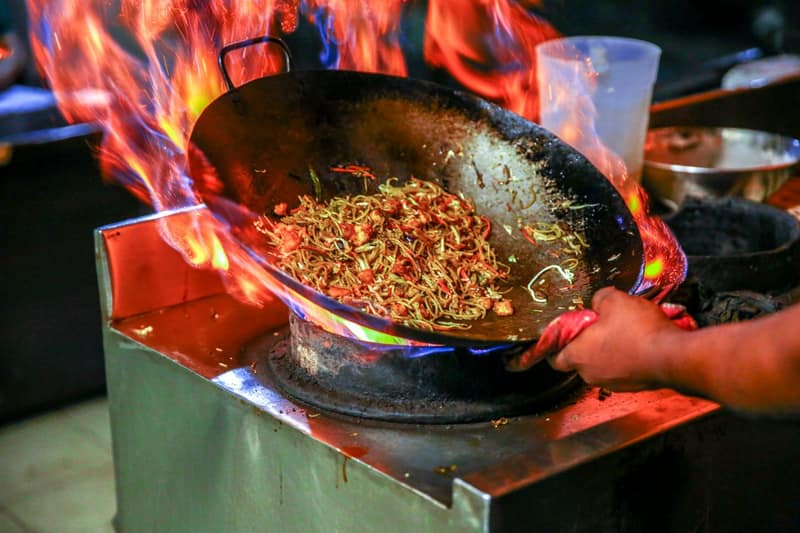
How it looks · Photo: Aesthos AR. Photography on Pexels Step 5
Fry a few skewers (opens in a new tab) at a time until deep golden: about 2 minutes for vegetables and quail eggs (opens in a new tab), 3 minutes for beef and pork, 4 minutes for chicken. Drain on a rack.
Food safety: Cook chicken until the juices run clear and the thickest part reaches 74 °C.
To serve
2 minStep 6
Pour the sauce into a deep container everyone can share. Dip each skewer (opens in a new tab) once and eat at once, with raw cabbage (opens in a new tab) leaves to cleanse the palate (and to scoop extra sauce).
- 2 min
At a glance
1 · Dipping sauce in a bowl
 Worcestershire sauce
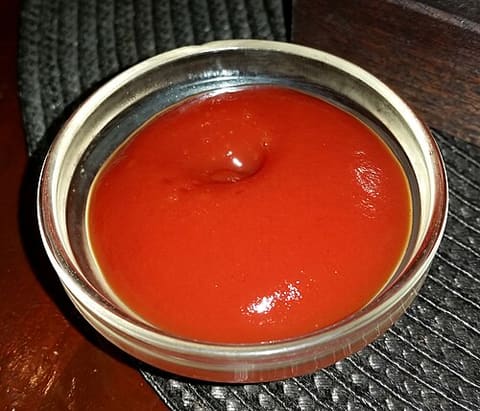 Tomato ketchup
 Soy sauce
 Sugar
then season
2 · Skewers in a bowl
 Beef sirloin steak
 Pork loin
 Chicken thigh
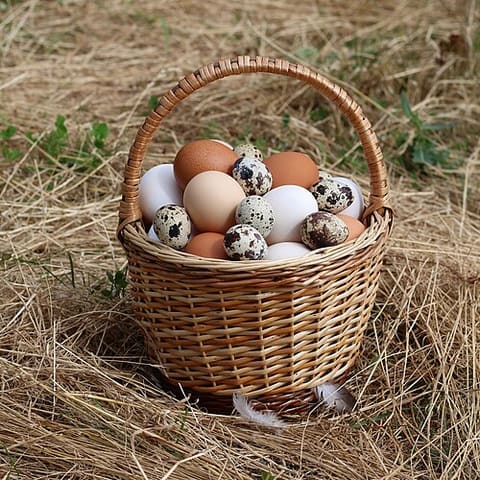 Quail egg
 Asparagus
 Onion
- Spring onion
 Salt
 Black pepper
then whisk
3 · Batter and coating in a bowl
 All-purpose flour
- Egg
 Panko
 Neutral vegetable oil
then pour
4 · To serve in a bowl
 Cabbage
About this dish
- Origin
- Shinsekai, Osaka, Japan · Well documentedKushikatsu stalls appeared in Osaka's Shinsekai district in the late 1920s; the communal-sauce 'no double dipping' rule is famous there. Kushiage is the more general name used elsewhere in Japan.More food from Japan
Japan - Dish
- Dinner · Snack · Street food · Finger food
- Cooking method
- Deep-fried
- Taste
- savoury, tangy, umami, sweet & savoury
- Diet
- Dairy-free · No nut ingredients · High-proteinWorked out from the ingredients. How labels work
All labels
Non-vegetarian · Dairy-free · No nut ingredients · Alcohol-free · High-protein - Good for
- Street food · Festive & celebration
- Cook more with
- Beef sirloin steak · Panko · Worcestershire sauce · Pork loin · Chicken thigh · Asparagus
- Techniques
- Deep-frying · Simmering
Allergens
- May contain: Milkfrom panko
- Contains: Eggsfrom quail egg, egg, panko
- Contains: Fishfrom worcestershire sauce
- Contains: Wheatfrom all-purpose flour, panko, soy sauce
- Contains: Glutenfrom all-purpose flour, panko, worcestershire sauce, soy sauce
- Contains: Soyfrom panko, soy sauce
- May contain: Mustardfrom tomato ketchup
- May contain: Celeryfrom worcestershire sauce, tomato ketchup
- May contain: Sulphitesfrom worcestershire sauce
Based on typical versions of these ingredients and not verified allergen-free. Brands differ and cross-contact happens, so always check labels. For severe allergies, follow your clinician’s advice.
Nutrition
694 kcal per serving
Estimated1 serving ≈ 468 g · recipe makes 4
Where the energy comes from
- Protein 25%
- Carbohydrate 37%
- Fat 38%
| Nutrient | Per serving | Per 100 g* |
|---|---|---|
| Energy | 694 kcal | 148 kcal |
| Protein | 42.9 g | 9.2 g |
| Carbohydrate | 64.6 g | 13.8 g |
| Net carbohydrate | 59.4 g | 12.7 g |
| Sugars | 13.8 g | 3 g |
| Added sugars | — | — |
| Fibre | 5.2 g | 1.1 g |
| Fat | 29.2 g | 6.2 g |
| Saturated fat | 5.5 g | 1.2 g |
| Trans fat | — | — |
| Cholesterol | 153 mg | 33 mg |
| Sodium | 1382 mg | 295 mg |
| Salt equivalent | 3.5 g | 0.7 g |
Vitamins & minerals per serving
- Potassium
- 1064 mg
- Calcium
- 178 mg
- Iron
- 7.3 mg
- Magnesium
- 82 mg
- Vitamin A (RAE)
- 47 µg
- Vitamin C
- 29 mg
- Vitamin D
- 0.5 µg
- Vitamin B12
- 1.3 µg
- Folate (DFE)
- 201 µg
How these numbers were made
- Calculated from USDA FoodData Central (SR Legacy) per-100 g values and the listed quantities.
- *Per 100 g of combined raw ingredients; the cooked dish may weigh more or less.
- Optional ingredients are not included: quail egg, spring onion.
- Panko: Plain dry breadcrumbs (FDC 174928) used as a stand-in for Japanese panko.
- “—” means the value isn’t known for enough of the ingredients; it is never zero by default.
- Values are estimates for guidance, not for medical dosing. U.S. Department of Agriculture, Agricultural Research Service. FoodData Central, 2019. fdc.nal.usda.gov.
Good to know
Tips
- Keep the panko fine — the classic Osaka coating is thin and light rather than shaggy.
- Fry in small batches so the oil temperature does not drop.
Common mistakes
- Double dipping in a shared sauce pot — in Osaka it is the cardinal sin; use the cabbage to scoop more.
Serve with
- Serve with cold beer or highballs and plain cabbage leaves.
- Add shrimp, lotus root, shiitake, camembert or mochi skewers for a bigger spread.
Food safety
- Never fill the pan more than a third full of oil, keep a lid nearby to smother flare-ups and never leave hot oil unattended.
- Cook chicken until the juices run clear and the thickest part reaches 74 °C.
Storage
- Best eaten immediately. Uncooked skewers keep a few hours refrigerated.
Reheating
- Re-crisp in a 200 °C oven or air fryer for 5–6 minutes.
Variations
- Kushiage omakase: Restaurant-style kushiage served one skewer at a time with salt, lemon or different sauces.
- Seafood kushikatsu: Shrimp, squid, scallops and white fish skewers.
Original editorial recipe · FriendsPantry editorial · source: TasteAtlas (dish facts) · Not yet independently reviewed · Added
Sauces, chutneys & dips for this dish
Recipe DNA
How this dish is built
Built from the recipe’s own sections. Each band’s width is its share of the dish by weight. Choose a component to see what it does.
The body of the dish
For the dipping sauce
- Worcestershire sauce100 ml · 110 g
- Tomato ketchup2 tbsp · 34 g
- Soy sauce1 tbsp · 17 g
- Sugar1 tbsp · 13 g
- Water100 ml · 100 g
Reviews & corrections
Reviews come from signed-in cooks and appear after a moderator checks them. We never show made-up ratings.
You might also like
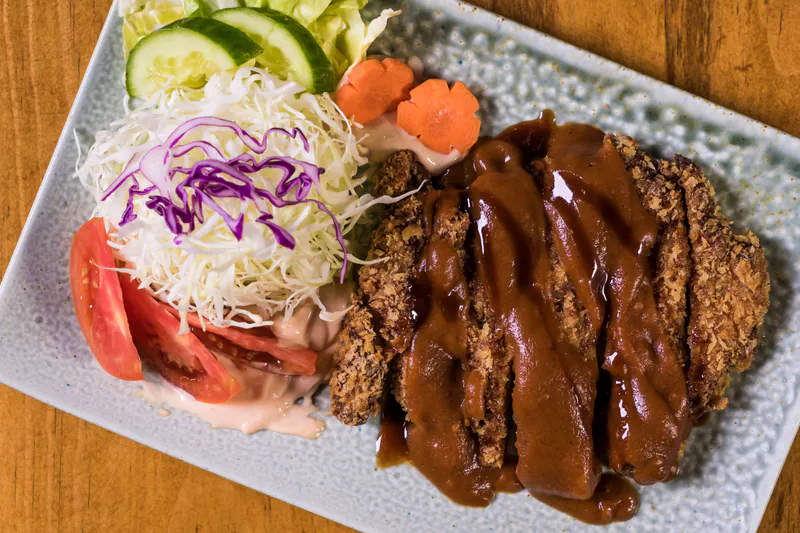
Tonkatsu
 Japanese · 35 min · 712 kcal
Tonkatsu sauce
Japanese · 5 min · 34 kcal
Shrimp and vegetable tempura
Japanese · 45 min · 514 kcal
Hiroshima-style okonomiyaki
Japanese · 55 min · 1817 kcal