
 Malaysian · Indonesian · Singaporean · Cakes
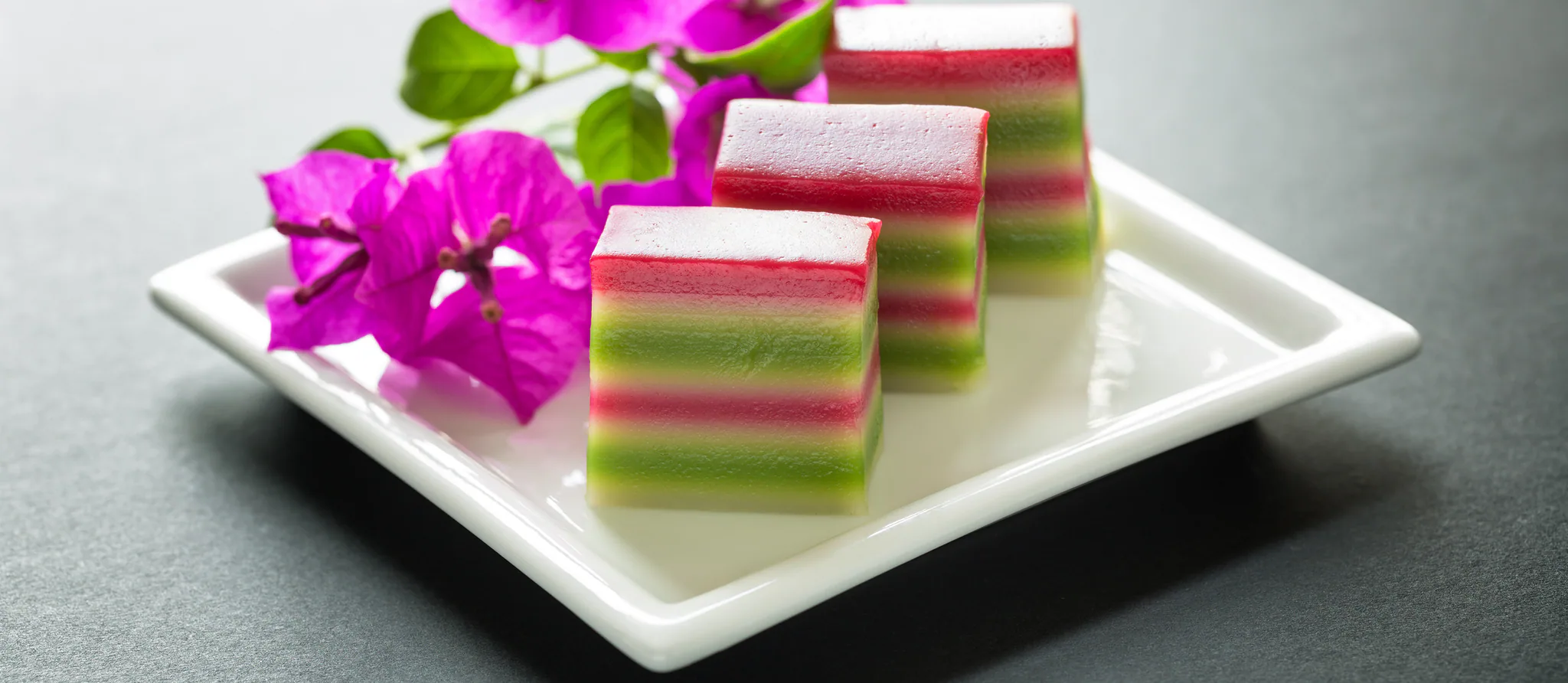
Kuih lapis (steamed layer cake)
Vegetarian
Kuih lapis
A soft, bouncy cake of rice and tapioca flour cooked in coconut milk, steamed one thin layer at a time in alternating colours. Sold at every kuih stall in Malaysia, Indonesia, Singapore and Brunei, and peeled apart layer by layer by children everywhere.
Kuih lapis (steamed layer cake) is a Malaysian cake, ready in about 5 hours 25 minutes and made with pandan leaves, rice flour and tapioca starch. It serves 16 and is rated intermediate to cook.
- Prep
- 25 min
- Cook
- 1 h
- Rest
- 4 h
- Total
- 5 h 25 min
- Serves
- 16
- Level
- Intermediate
- Calories
- 203
Main ingredients
Method
Step 1
Blend the pandan leaves (opens in a new tab) with 100 ml of the water and squeeze through a sieve to get dark green juice.
Step 2
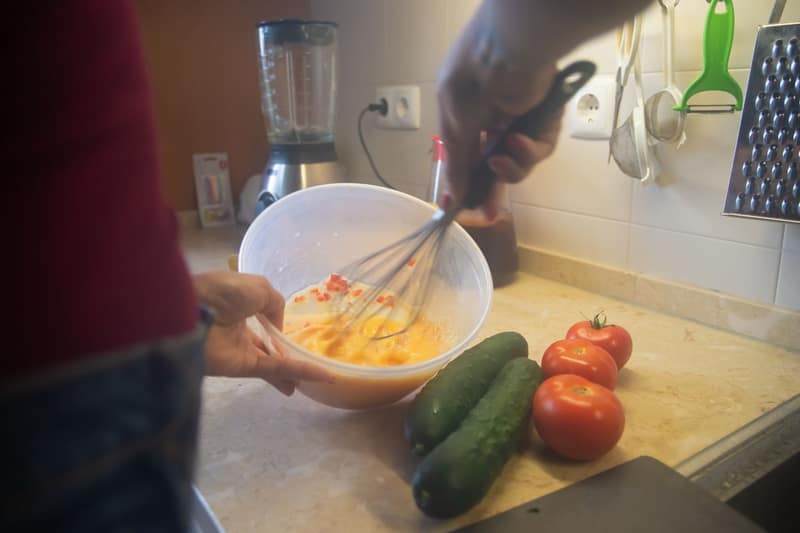
Heat the remaining 200 ml water with the sugar (opens in a new tab) and salt until dissolved, then let it cool a little. In a bowl, whisk (opens in a new tab) the rice flour (opens in a new tab) and tapioca starch (opens in a new tab) with the coconut milk (opens in a new tab) until smooth, then whisk in the sugar syrup. Strain the batter.
How it looks · Photo: Kampus Production on Pexels Step 3
Divide the batter in half. Stir the pandan (opens in a new tab) juice into one half; leave the other white (or tint it pink with a few drops of food colouring, the most common stall colour).
- 2 min
Step 4
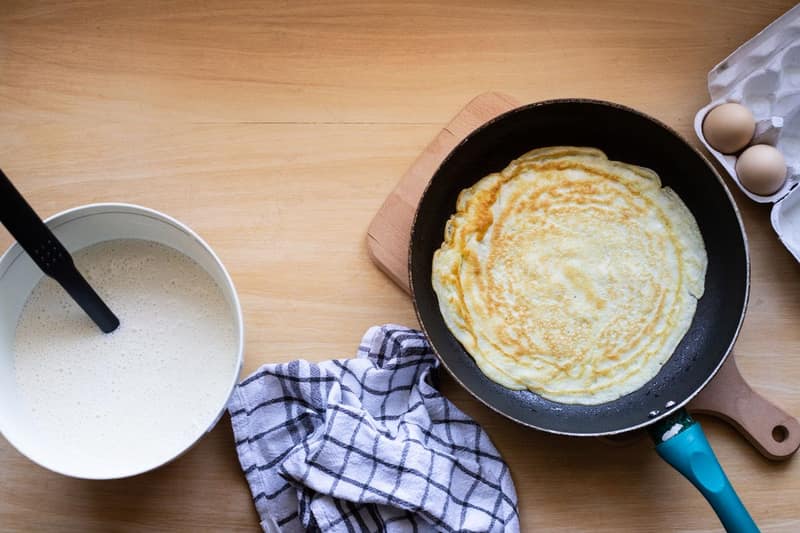
Grease a 20 cm square tin and heat it in a steamer (opens in a new tab) over boiling water for 5 minutes. Pour in a thin layer of white batter (about 1 ladle (opens in a new tab)) and steam for 5 minutes until set.
Wrap the steamer lid in a cloth so condensation does not drip onto the cake.
Step 5
Add a ladle (opens in a new tab) of green batter and steam for 5 minutes; continue alternating colours, stirring the batters before each layer, until all is used (usually 9 layers). Steam the final layer for 15 minutes.
- 50 min
- high heat
- Steamer (opens in a new tab)
How it looks · Photo: Mateusz Feliksik on Pexels Step 6
Cool the cake completely, at least 4 hours, before turning it out and cutting into diamonds or strips with an oiled knife or plastic knife.
- 5 min
At a glance
 Pandan leaves
 Sugar
 Salt
 Rice flour
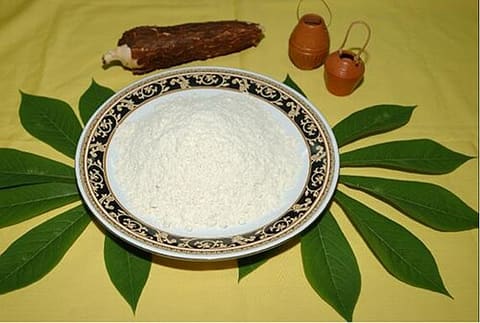 Tapioca starch
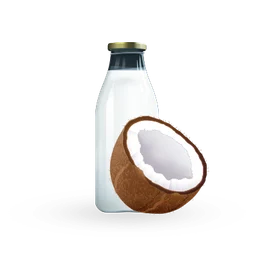 Coconut milk
 Neutral vegetable oil
About this dish
- Origin
- Maritime Southeast Asia · Commonly attributedShared by Malaysia, Indonesia (kue lapis), Singapore and Brunei, with a Burmese cousin called kway lapay; its layered steaming may owe something to Dutch spekkoek and Chinese steamed cakes.Also popular in Malaysia, Indonesia, Singapore, Brunei, Myanmar
- Dish
- Snack · Dessert · Cakes · Sweets & confectionery
- Cooking method
- Steamed
- Taste
- sweet, creamy, aromatic / warmly spiced
- Diet
- Vegan · No gluten ingredients · Dairy-free · No nut ingredientsWorked out from the ingredients. How labels work
All labels
Vegan · Plant-based · Vegetarian (lacto-ovo) · Eggetarian · Lacto-vegetarian · Ovo-vegetarian · Pescatarian · Flexitarian-friendly · No gluten ingredients · Dairy-free · Egg-free · No nut ingredients · Alcohol-free · Pork-free · Beef-free · Low-sodium - Good for
- Make-ahead · Child-friendly · Portable / lunchbox
- Cook more with
- Pandan leaves · Rice flour · Tapioca starch · Coconut milk · Sugar
Allergens
None of the 14 major allergens appear in the listed ingredients.
Based on typical versions of these ingredients and not verified allergen-free. Brands differ and cross-contact happens, so always check labels. For severe allergies, follow your clinician’s advice.
Nutrition
203 kcal per serving
Estimated1 serving ≈ 90 g · recipe makes 16
Where the energy comes from
- Protein 2%
- Carbohydrate 62%
- Fat 36%
| Nutrient | Per serving | Per 100 g* |
|---|---|---|
| Energy | 203 kcal | 224 kcal |
| Protein | 1.3 g | 1.5 g |
| Carbohydrate | 32.3 g | 35.7 g |
| Net carbohydrate | — | — |
| Sugars | — | — |
| Added sugars | 13.8 g | 15.2 g |
| Fibre | — | — |
| Fat | 8.3 g | 9.1 g |
| Saturated fat | 7 g | 7.8 g |
| Trans fat | — | — |
| Cholesterol | 0 mg | 0 mg |
| Sodium | 78 mg | 87 mg |
| Salt equivalent | 0.2 g | 0.2 g |
Vitamins & minerals per serving
- Potassium
- 90 mg
- Calcium
- 12 mg
- Iron
- 1.4 mg
- Magnesium
- 21 mg
- Vitamin A (RAE)
- 0 µg
- Vitamin C
- 0 mg
- Vitamin D
- 0 µg
- Vitamin B12
- 0 µg
- Folate (DFE)
- 6 µg
How these numbers were made
- Calculated from USDA FoodData Central (SR Legacy) per-100 g values and the listed quantities.
- *Per 100 g of combined raw ingredients; the cooked dish may weigh more or less.
- Not counted (tiny amounts or “to taste”): pandan leaves.
- Tapioca starch: Dry pearl tapioca (FDC 169717) used as a stand-in; both are almost pure cassava starch.
- “—” means the value isn’t known for enough of the ingredients; it is never zero by default.
- Values are estimates for guidance, not for medical dosing. U.S. Department of Agriculture, Agricultural Research Service. FoodData Central, 2019. fdc.nal.usda.gov.
Good to know
Tips
- Measure each layer with the same ladle for even stripes.
- Do not cut the cake warm — it is sticky until fully cool and set.
Common mistakes
- Not stirring the batter before each layer, so the starch settles and the top layers are thin and runny.

Storage
- Keeps 1 day covered at room temperature or 3 days refrigerated (steam briefly to soften again).
Variations
- Kue lapis legit (Indonesia): Indonesian baked butter-and-spice layer cake, a different dish despite the similar name.
- Kway lapay (Myanmar) (Myanmar): The Burmese version, often in pink and white.
- Rainbow kuih lapis: Five or more colours for festive platters.
Original editorial recipe · FriendsPantry editorial · source: TasteAtlas (dish facts) · Not yet independently reviewed · Added
Recipe DNA
How this dish is built
Grouped by each ingredient’s role in the dish. Each band’s width is its share of the dish by weight. Choose a component to see what it does.
Reviews & corrections
Reviews come from signed-in cooks and appear after a moderator checks them. We never show made-up ratings.
You might also like
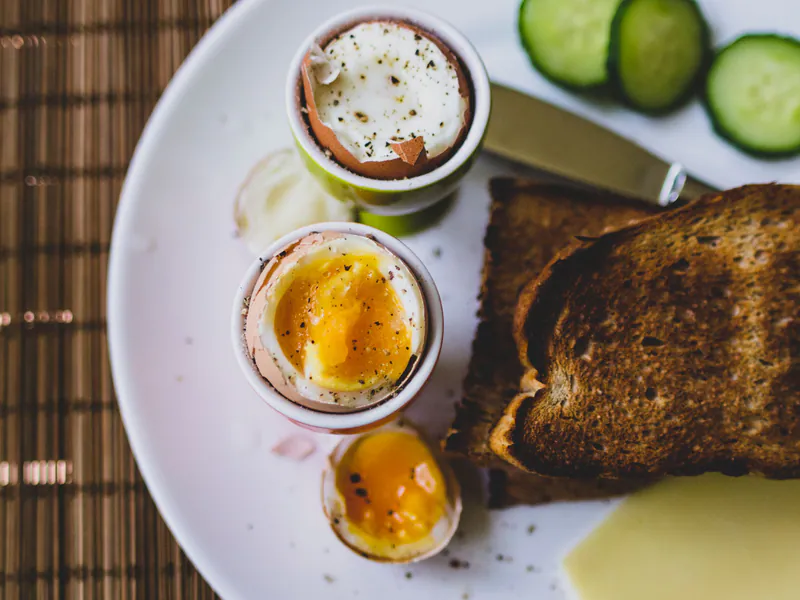
Kaya toast with soft-boiled eggs
 Singaporean · 45 min · 517 kcal · Contains egg
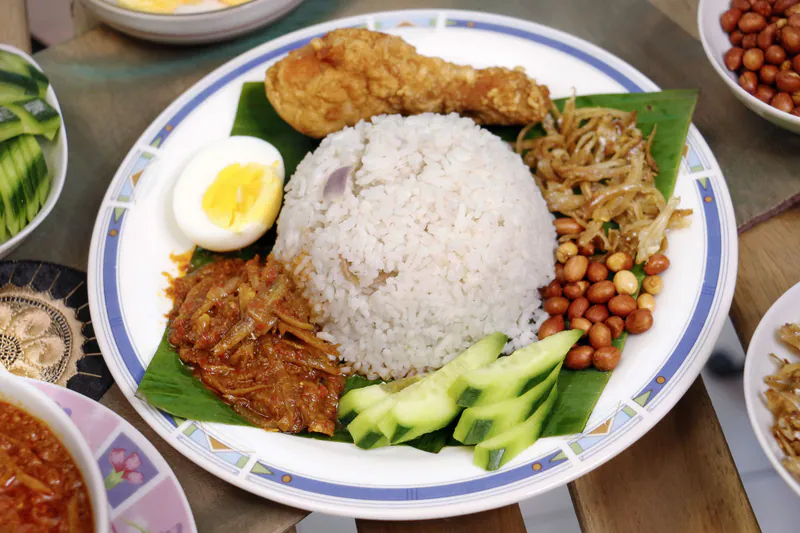
Nasi lemak
Malaysian · 1 h 25 min · 963 kcal
Es cendol
 Indonesian · 1 h 5 min · 300 kcal · Vegan
Katong laksa (Singapore coconut prawn laksa)
Singaporean · 1 h 30 min · 1241 kcal