
Kokoreç (grilled lamb intestines)
Non-vegetarian
Kokoreç
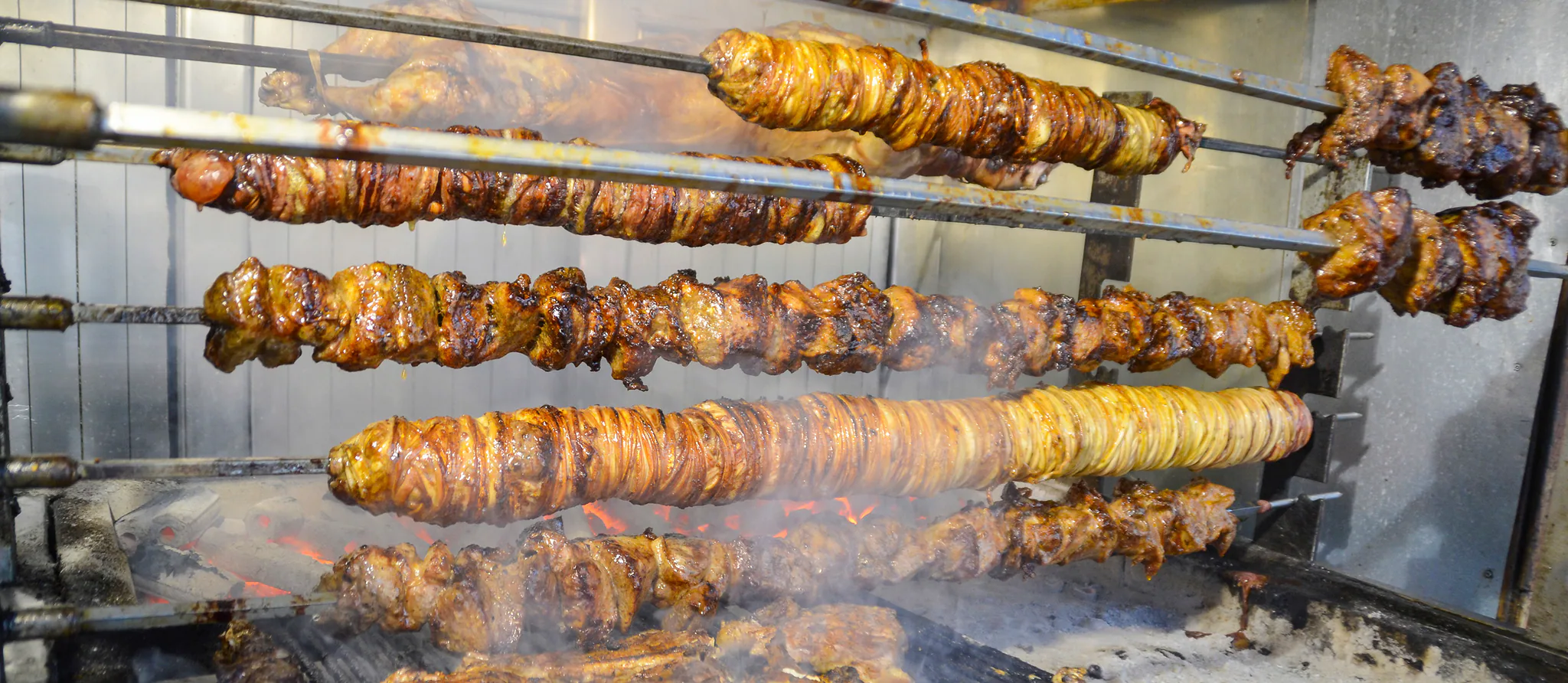
Cleaned lamb intestines wound tightly around sweetbreads on a long skewer and grilled slowly over charcoal, then chopped on a griddle with tomato, green pepper and spices. Stuffed into bread, it is one of Türkiye's best-loved late-night street foods.
Kokoreç (grilled lamb intestines) is a Turkish street food from Türkiye, ready in about 2 hours 15 minutes and made with lamb intestines (cleaned), lamb sweetbreads and dried oregano. It serves 4 and is rated advanced to cook.
- Prep
- 1 h
- Cook
- 1 h 15 min
- Total
- 2 h 15 min
- Serves
- 4
- Level
- Advanced
- Calories
- 1161
Main ingredients

Ingredients
For the kokoreç
For finishing
To serve
Method
Kokoreç
1 h 55 minStep 1
Rinse the intestines repeatedly under cold running water, then soak them for 15 minutes in water with the lemon (opens in a new tab) juice and 1 tsp salt. Rinse again and drain. Blanch the sweetbreads (opens in a new tab) in boiling water for 2 minutes, cool, peel off the membranes and cut into chunks.
Food safety: Offal spoils faster than muscle meat: buy it very fresh, keep it refrigerated and cook it the day you buy it, until no pink remains.
Step 2
Thread the sweetbread pieces onto a long, flat metal skewer (opens in a new tab), pressing them close together, and season with the remaining salt. Tie one end of an intestine to the skewer and wind it tightly round and round over the sweetbreads (opens in a new tab), crossing it back and forth in a criss-cross until you have a thick, even roll. Tuck in and tie off the ends.
The tighter the wrapping, the more evenly it cooks and the better it holds together.
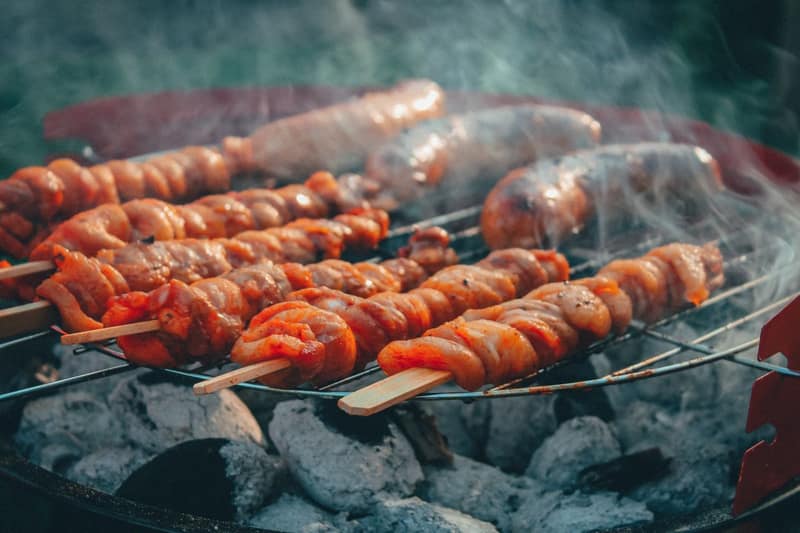
How it looks · Photo: Malte Luk on Pexels Step 3
Grill the skewer (opens in a new tab) horizontally 15–20 cm above medium charcoal, turning every few minutes so the fat drips and the outside crisps evenly, for about 1 hour, until deep golden-brown and cooked right through.
- 60 min
- medium heat
- Grill / barbecue (opens in a new tab)
At home you can roast it in a 200 °C oven on a rack over a tray, turning every 15 minutes, for about 1 hour 15 minutes.
Finishing
8 minStep 4
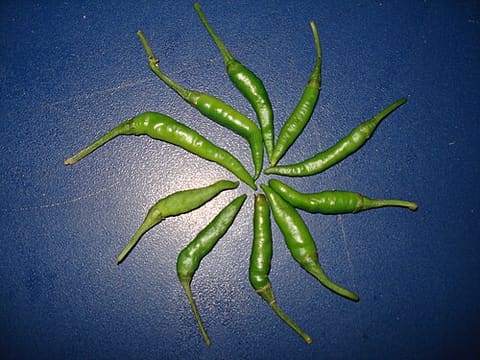
Slide the kokoreç off the skewer (opens in a new tab) and chop it finely. Heat the butter (opens in a new tab) on a griddle or in a heavy pan, add the chopped kokoreç, tomato (opens in a new tab) and green pepper (opens in a new tab) and chop and toss together with two spatulas for 3–4 minutes.
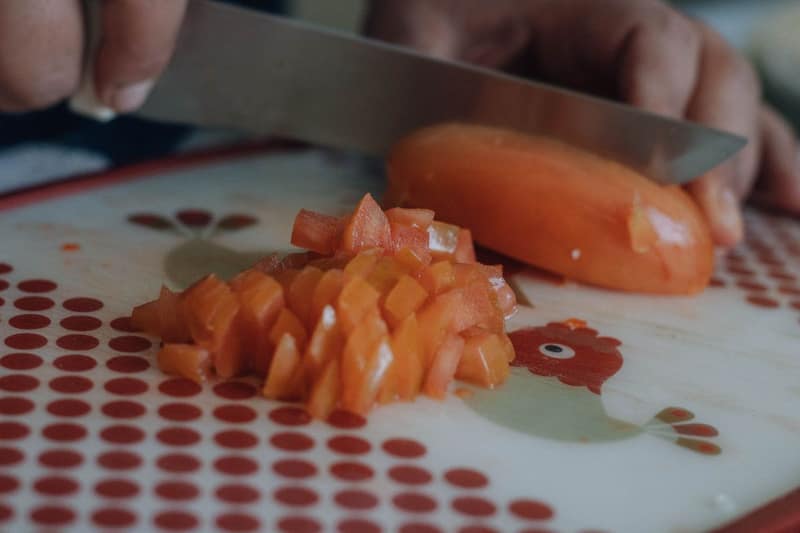
How it looks · Photo: Mayara Caroline Mombelli on Pexels Step 5
Season with the oregano (opens in a new tab), cumin, chilli flakes (opens in a new tab) and black pepper (opens in a new tab), toss again and pile into the warm bread. Eat at once.
- 3 min
At a glance
1 · Kokoreç in a pot
 Lamb intestines (cleaned)
- Lamb sweetbreads
 Salt
 Lemon
then slide
2 · Finishing in a bowl
 Butter
 Tomato
 Green chilli
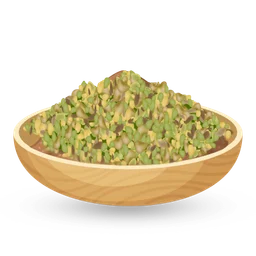 Dried oregano
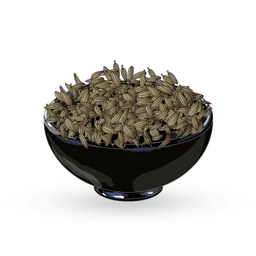 Ground cumin
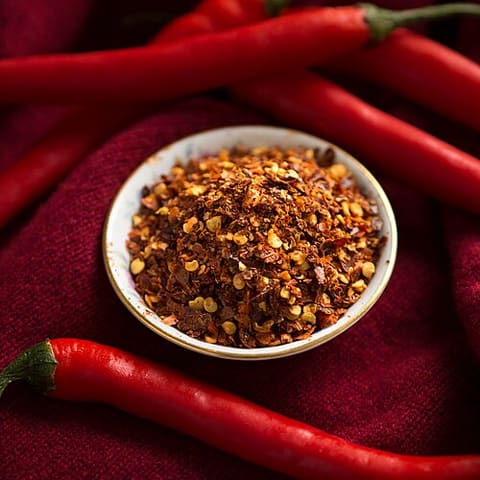 Red chilli flakes
 Black pepper
About this dish
- Origin
- Anatolia and the Aegean; famous in Istanbul and Izmir, Türkiye · Commonly attributedGreece has the closely related kokoretsi, which wraps lungs, liver, heart and kidneys in the intestines and is a centrepiece of the Easter spit-roast.Also popular in Greece, Albania, North MacedoniaMore food from Türkiye
Türkiye - Dish
- Snack · Dinner · Street food · Grills & kebabs · Sandwiches
- Cooking method
- Grilled, Pan-fried
- Taste
- savoury, smoky, spicy (chilli heat), rich
- Diet
- No nut ingredients · High-proteinWorked out from the ingredients. How labels work
All labels
Non-vegetarian · Egg-free · No nut ingredients · No added sugar · Alcohol-free · Pork-free · Beef-free · High-protein - Good for
- Street food
- Cook more with
- Dried oregano · Lemon · Butter · Tomato · Green chilli · Ground cumin
- Techniques
- Grilling · Charcoal grilling · Pan-frying · Boiling · Blanching
Allergens
- Contains, can be adapted: Milkfrom butter
- Contains: Wheatfrom crusty bread / baguette
- Contains: Glutenfrom crusty bread / baguette
- May contain: Sesamefrom crusty bread / baguette
Based on typical versions of these ingredients and not verified allergen-free. Brands differ and cross-contact happens, so always check labels. For severe allergies, follow your clinician’s advice.
Nutrition
1161 kcal per serving
Estimated1 serving ≈ 524 g · recipe makes 4
Where the energy comes from
- Protein 24%
- Carbohydrate 21%
- Fat 56%
| Nutrient | Per serving | Per 100 g* |
|---|---|---|
| Energy | 1161 kcal | 222 kcal |
| Protein | 68.6 g | 13.1 g |
| Carbohydrate | 59.3 g | 11.3 g |
| Net carbohydrate | 55.1 g | 10.5 g |
| Sugars | — | — |
| Added sugars | 0 g | 0 g |
| Fibre | 4.2 g | 0.8 g |
| Fat | 71.3 g | 13.6 g |
| Saturated fat | 31.4 g | 6 g |
| Trans fat | — | — |
| Cholesterol | 477 mg | 91 mg |
| Sodium | 2021 mg | 386 mg |
| Salt equivalent | 5.1 g | 1 g |
Vitamins & minerals per serving
- Potassium
- 1134 mg
- Calcium
- 128 mg
- Iron
- 14.3 mg
- Magnesium
- 114 mg
- Vitamin A (RAE)
- 5643 µg
- Vitamin C
- 34 mg
- Vitamin D
- —
- Vitamin B12
- 73.3 µg
- Folate (DFE)
- 402 µg
How these numbers were made
- Calculated from USDA FoodData Central (SR Legacy) per-100 g values and the listed quantities.
- *Per 100 g of combined raw ingredients; the cooked dish may weigh more or less.
- Lamb intestines (cleaned): Ground lamb (FDC 174370) used as a rough stand-in; cleaned lamb intestines are a fatty offal with a broadly similar protein and fat content. No lamb intestine entry exists in FDC SR Legacy.
- Lamb sweetbreads: Lamb liver (FDC 172531) used as a stand-in for lamb sweetbreads (thymus and pancreas glands); both are lean lamb offal of similar protein, though sweetbreads carry a little more fat.
- Red chilli flakes: Ground cayenne (FDC 170932) used as a stand-in for dried chilli flakes such as pul biber or Aleppo pepper.
- “—” means the value isn’t known for enough of the ingredients; it is never zero by default.
- Values are estimates for guidance, not for medical dosing. U.S. Department of Agriculture, Agricultural Research Service. FoodData Central, 2019. fdc.nal.usda.gov.
Good to know
Tips
- Order the intestines in advance from a Turkish, Greek or halal butcher and ask for them cleaned; cleaning raw intestines at home is slow, careful work.
- Cooking over charcoal gives the authentic smoky flavour; keep the coals moderate so the outside does not burn before the centre is done.
Common mistakes
- Wrapping loosely: the roll falls apart on the grill and cooks unevenly.
- Grilling over fierce heat, which chars the outside and leaves the centre chewy.
Serve with
- Serve in half a loaf or a quarter, with pickled peppers and a glass of ayran or şalgam (fermented turnip juice).
Food safety
- Offal spoils faster than muscle meat: buy it very fresh, keep it refrigerated and cook it the day you buy it, until no pink remains.
Storage
- Best eaten straight away. Leftover chopped kokoreç keeps 1 day refrigerated.
Reheating
- Re-fry on a hot griddle with a knob of butter until sizzling and piping hot.
Variations
- Kokoretsi (Greece): The Greek version: lamb liver, lungs, heart, spleen and kidneys threaded on the skewer and wrapped in the intestines, spit-roasted for Easter and served in thick slices with lemon.
- Yarım ekmek kokoreç: Half a loaf of bread stuffed with the chopped kokoreç; the standard street portion. A 'çeyrek' is a quarter loaf.
- Pan kokoreç: A quick home version where blanched intestines are chopped and fried with onion, tomato and spices without grilling.
Original editorial recipe · FriendsPantry editorial · source: TasteAtlas (dish facts) · Not yet independently reviewed · Added
Recipe DNA
How this dish is built
Built from the recipe’s own sections. Each band’s width is its share of the dish by weight. Choose a component to see what it does.
Added at the end for aroma, freshness and richness
For finishing
- Butter30 g
- Tomato, finely diced2 piece · 240 g
- Green chilli, long Turkish sivri peppers, finely chopped3 piece · 18 g
- Dried oregano2 tsp · 2 g
- Ground cumin1 tsp · 2.1 g
- Red chilli flakes2 tsp · 3.7 g
- Black pepper0.5 tsp · 1.2 g
Reviews & corrections
Reviews come from signed-in cooks and appear after a moderator checks them. We never show made-up ratings.
You might also like
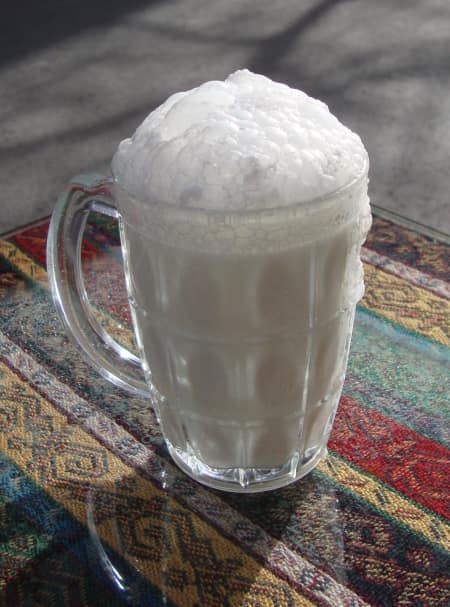
Ayran
 Turkish · 3 min · 92 kcal · Vegetarian
Adana kebab
Turkish · 1 h 7 min · 438 kcal
Tombik döner (döner in a round bun)
Turkish · 3 h 10 min · 495 kcal
Döner kebab (home oven method)
Turkish · 2 h 25 min · 931 kcal