
Kateh (Persian absorption-cooked rice)
Vegetarian
کته · kate
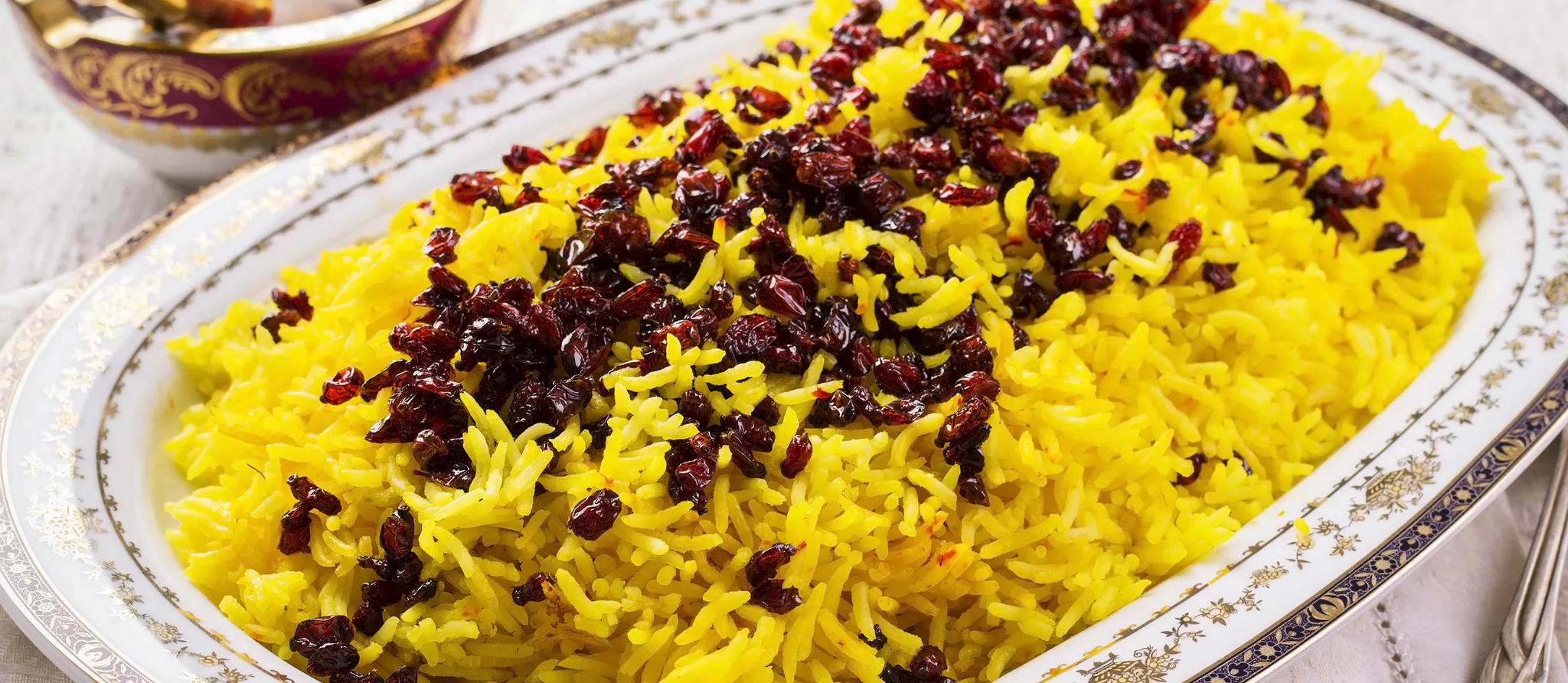
The everyday rice of northern Iran: basmati cooked in just enough salted water to be absorbed, then steamed gently with butter until soft and slightly sticky, often with a golden crust on the bottom. Quicker than the drained and steamed chelo, it is the classic partner for Gilani stews and kebabs.
Kateh (Persian absorption-cooked rice) is an Iranian rice dish, ready in about 1 hour 20 minutes and made with basmati rice and butter. It serves 4 and is rated easy to cook.
- Prep
- 5 min
- Cook
- 45 min
- Rest
- 30 min
- Total
- 1 h 20 min
- Serves
- 4
- Level
- Easy
- Calories
- 449
Soaking the rice is optional.
Main ingredients


Method
Step 1
Rinse the rice in several changes of cold water until the water runs almost clear. If you have time, soak it in fresh water for 30 minutes, then drain.
Step 2
Put the rice in a heavy non-stick saucepan (opens in a new tab) with the water, salt and oil. Bring to the boil, then cook uncovered over medium heat until the water has been absorbed and small holes appear on the surface, 10–12 minutes.
- 12 min
- medium heat
- Saucepan (opens in a new tab)
Step 3
Dot the butter (opens in a new tab) over the rice. Wrap the lid in a clean tea towel, cover the pan tightly and cook over the lowest heat for 30–35 minutes, until the grains are soft and fluffy and a golden crust has formed on the bottom.
- 35 min
- low heat
The towel absorbs steam so the rice does not turn soggy; tie its corners up away from the flame.
Step 4
Spoon the soft rice onto a platter and break the crust into pieces to serve alongside, or turn the whole pan out onto a plate like a cake, crust side up.
- 3 min
About this dish
- Origin
- Gilan and Mazandaran (Caspian provinces), Iran · Well documentedKateh is the standard daily rice in the rice-growing Caspian north, where local varieties such as hashemi are used; elsewhere in Iran it is the quick weekday alternative to chelo.More food from Iran
Iran - Dish
- Lunch · Dinner · Rice dishes · Side dishes
- Cooking method
- Boiled, Steamed
- Taste
- mild, buttery
- Diet
- Vegetarian (lacto-ovo) · No gluten ingredients · No nut ingredientsWith the listed swaps: Vegan, Plant-based, Ovo-vegetarian, Dairy-freeWorked out from the ingredients. How labels work
All labels
Vegetarian (lacto-ovo) · Eggetarian · Lacto-vegetarian · Pescatarian · Flexitarian-friendly · No gluten ingredients · Egg-free · No nut ingredients · No added sugar · Alcohol-free · Pork-free · Beef-free - Good for
- Everyday · Budget-friendly · One-pot
- Cook more with
- Basmati rice · Butter
Allergens
- Contains, can be adapted: Milkfrom butter
Based on typical versions of these ingredients and not verified allergen-free. Brands differ and cross-contact happens, so always check labels. For severe allergies, follow your clinician’s advice.
Nutrition
449 kcal per serving
Estimated1 serving ≈ 289 g · recipe makes 4
Where the energy comes from
- Protein 7%
- Carbohydrate 73%
- Fat 21%
| Nutrient | Per serving | Per 100 g* |
|---|---|---|
| Energy | 449 kcal | 155 kcal |
| Protein | 7.2 g | 2.5 g |
| Carbohydrate | 80 g | 27.7 g |
| Net carbohydrate | 78.7 g | 27.2 g |
| Sugars | 0.1 g | 0 g |
| Added sugars | 0 g | 0 g |
| Fibre | 1.3 g | 0.4 g |
| Fat | 10.1 g | 3.5 g |
| Saturated fat | 4.3 g | 1.5 g |
| Trans fat | — | — |
| Cholesterol | 16 mg | 6 mg |
| Sodium | 1222 mg | 423 mg |
| Salt equivalent | 3.1 g | 1.1 g |
Vitamins & minerals per serving
- Potassium
- 117 mg
- Calcium
- 48 mg
- Iron
- 4.3 mg
- Magnesium
- 29 mg
- Vitamin A (RAE)
- 51 µg
- Vitamin C
- 0 mg
- Vitamin D
- 0 µg
- Vitamin B12
- 0 µg
- Folate (DFE)
- 387 µg
How these numbers were made
- Calculated from USDA FoodData Central (SR Legacy) per-100 g values and the listed quantities.
- *Per 100 g of combined raw ingredients; the cooked dish may weigh more or less.
- Basmati rice: Generic long-grain white rice (FDC 168877); basmati has very similar composition.
- “—” means the value isn’t known for enough of the ingredients; it is never zero by default.
- Values are estimates for guidance, not for medical dosing. U.S. Department of Agriculture, Agricultural Research Service. FoodData Central, 2019. fdc.nal.usda.gov.
Good to know
Tips
- In Gilan, kateh is often cooked a little softer and stickier, so it can be eaten in pressed clumps with fish or stews.
- Leftover kateh is fried in butter as a quick crispy rice cake.
Common mistakes
- Stirring the rice during cooking, which breaks the grains and makes it gluey.
- Using high heat during steaming, which burns the crust before the rice is cooked.
Serve with
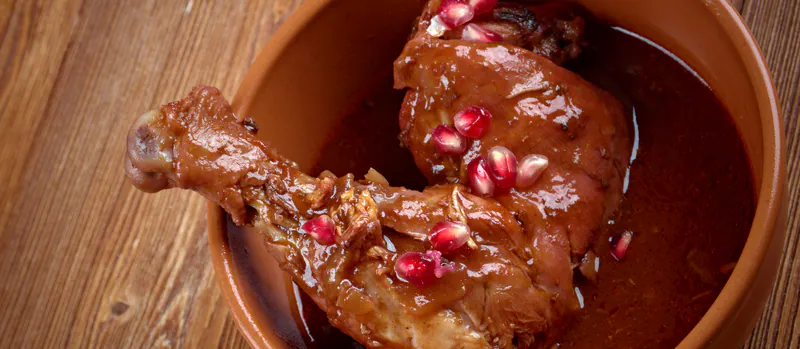
- Serve with kabab torsh, mirza ghasemi, fesenjan or fried fish and zeytoon parvardeh.
Food safety
- Cooked rice can carry Bacillus cereus spores that survive cooking; cool leftover rice quickly and refrigerate it within an hour.
Storage
- Keeps 1 day refrigerated, covered.
Reheating
- Sprinkle with a little water and reheat covered until steaming hot.
Variations
- Kateh with yoghurt (kateh-ye mast): A spoonful of yoghurt is mixed in before steaming for a richer crust.
- Dampokhtak: A related one-pot rice cooked with beans and turmeric.
Original editorial recipe · FriendsPantry editorial · source: TasteAtlas (dish facts) · Not yet independently reviewed · Added
Recipe DNA
How this dish is built
Grouped by each ingredient’s role in the dish. Each band’s width is its share of the dish by weight. Choose a component to see what it does.
Reviews & corrections
Reviews come from signed-in cooks and appear after a moderator checks them. We never show made-up ratings.
You might also like
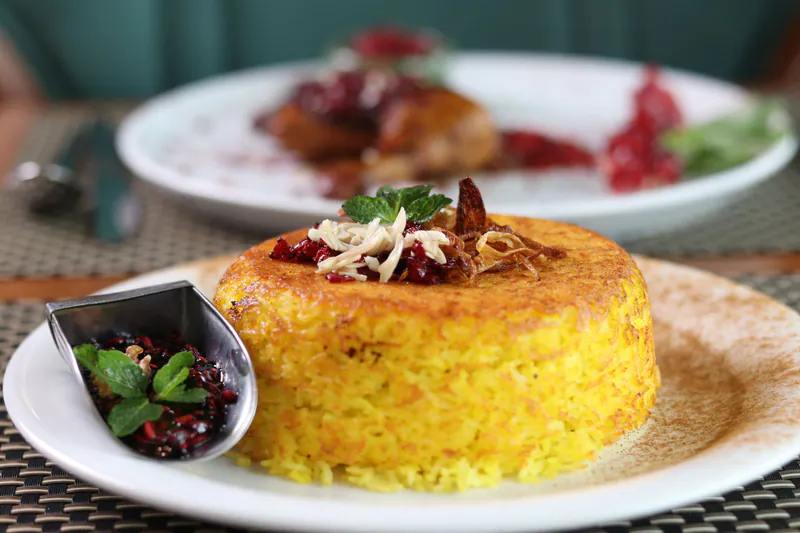
Chelow with tahdig
 Iranian · 2 h 20 min · 425 kcal · Vegetarian
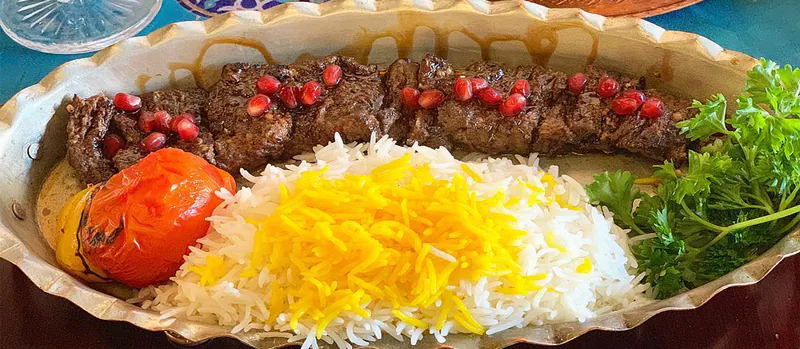
Kabab torsh (Gilani sour kebab)
Iranian · 6 h 32 min · 655 kcal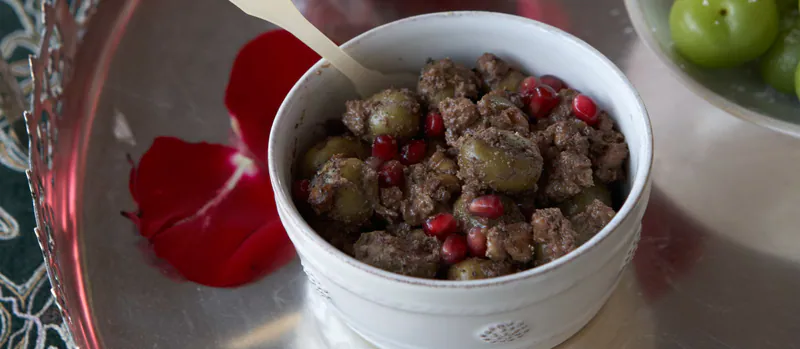
Zeytoon parvardeh (olives with walnuts and pomegranate)
Iranian · 2 h 15 min · 263 kcal · Vegan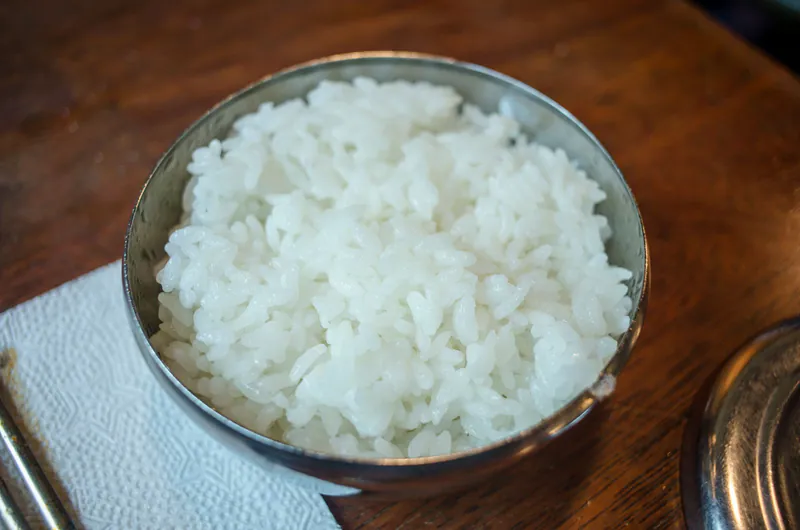
Perfect Steamed Rice
International · 28 min · 274 kcal · Vegan