
 Norwegian · Scandinavian · Swedish · Desserts
Kalvedans (Scandinavian baked milk pudding)
Contains egg (no meat or fish)
Kalvedans
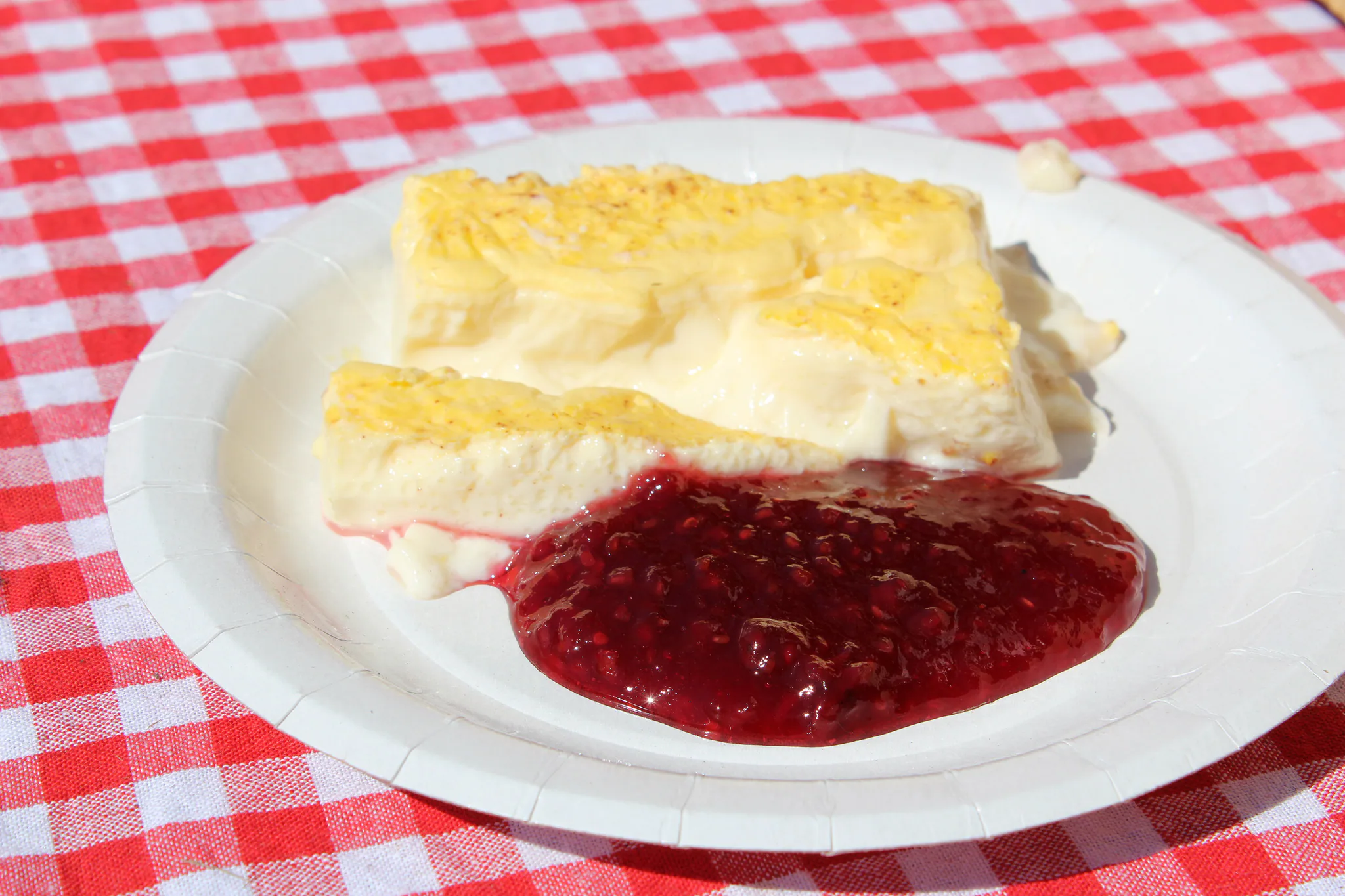
A soft, sliceable pudding traditionally made by baking the rich first milk of a newly calved cow, which sets on its own like a custard. This home version uses whole milk, cream and eggs to give the same gentle wobble, scented with cinnamon.
Kalvedans (Scandinavian baked milk pudding) is a Norwegian dessert from Norway, ready in about 3 hours 25 minutes and made with milk, heavy cream and egg. It serves 6 and is rated easy to cook.
- Prep
- 10 min
- Cook
- 1 h 15 min
- Rest
- 2 h
- Total
- 3 h 25 min
- Serves
- 6
- Level
- Easy
- Calories
- 308
Main ingredients
Method
Step 1
Heat the oven (opens in a new tab) to 150 °C. Butter (opens in a new tab) a baking dish (opens in a new tab) of about 1.5 litres and set it in a roasting tin.
- 3 min
- 150°C
- Baking dish (opens in a new tab)
- Roasting pan (opens in a new tab)
- Oven (opens in a new tab)
How it looks · Photo: locrifa on Pexels Step 2
Whisk (opens in a new tab) the eggs (opens in a new tab) with the sugar (opens in a new tab), salt and cinnamon (opens in a new tab) until smooth but not foamy. Whisk in the milk (opens in a new tab) and cream.
Whisking in lots of air gives a bubbly, holey texture; stir rather than beat.

How it looks · Photo: Kampus Production on Pexels Step 3
Pour the mixture into the dish and dust lightly with cinnamon (opens in a new tab). Pour hot water into the tin to come halfway up the sides of the dish.
- 3 min
Food safety: Carry the tin to the oven before adding the hot water, or pour it in from a kettle once the tin is on the oven shelf.
Step 4
Bake until the pudding is set at the edges and still slightly wobbly in the centre, 60–75 minutes; a knife inserted halfway between edge and centre should come out clean.
- 75 min
- 150°C
- Oven (opens in a new tab)
Step 5
Lift the dish out of the water and leave to cool, then chill for at least 2 hours. Serve cold, cut into squares.
At a glance
 Milk
 Heavy cream
 Egg
 Sugar
 Salt
 Cinnamon
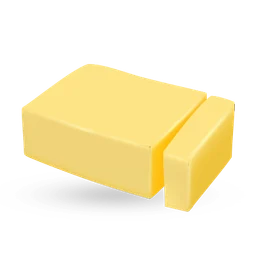 Butter
About this dish
- Origin
- Rural Norway and Sweden, Norway · Well documentedMade on farms across Scandinavia whenever a cow calved; known as kalvdans in Sweden, broddur or ábrystir in Iceland and uunijuusto in Finland. Colostrum is rarely sold, so egg-set versions are now common.Also popular in Sweden, Iceland, FinlandMore food from Norway
Norway - Dish
- Dessert · Snack · Desserts · Puddings & custards
- Cooking method
- Oven-baked
- Taste
- creamy, sweet, mild
- Diet
- Vegetarian (lacto-ovo) · No gluten ingredients · No nut ingredients · Low-carbWorked out from the ingredients. How labels work
All labels
Vegetarian (lacto-ovo) · Eggetarian · Pescatarian · Flexitarian-friendly · No gluten ingredients · No nut ingredients · Alcohol-free · Pork-free · Beef-free · Low-carb · Low-sodium - Good for
- Make-ahead · Budget-friendly
Allergens
- Contains: Milkfrom milk, heavy cream, butter
- Contains: Eggsfrom egg
Based on typical versions of these ingredients and not verified allergen-free. Brands differ and cross-contact happens, so always check labels. For severe allergies, follow your clinician’s advice.
Nutrition
308 kcal per serving
Calculated1 serving ≈ 224 g · recipe makes 6
Where the energy comes from
- Protein 14%
- Carbohydrate 23%
- Fat 63%
| Nutrient | Per serving | Per 100 g* |
|---|---|---|
| Energy | 308 kcal | 137 kcal |
| Protein | 10.5 g | 4.7 g |
| Carbohydrate | 18 g | 8 g |
| Net carbohydrate | 17.9 g | 8 g |
| Sugars | 18 g | 8 g |
| Added sugars | 10 g | 4.5 g |
| Fibre | 0.1 g | 0.1 g |
| Fat | 21.8 g | 9.7 g |
| Saturated fat | 12.4 g | 5.5 g |
| Trans fat | — | — |
| Cholesterol | 210 mg | 94 mg |
| Sodium | 164 mg | 73 mg |
| Salt equivalent | 0.4 g | 0.2 g |
Vitamins & minerals per serving
- Potassium
- 272 mg
- Calcium
- 203 mg
- Iron
- 0.8 mg
- Magnesium
- 21 mg
- Vitamin A (RAE)
- 278 µg
- Vitamin C
- 0 mg
- Vitamin D
- 3.2 µg
- Vitamin B12
- 1 µg
- Folate (DFE)
- 28 µg
How these numbers were made
- Calculated from USDA FoodData Central (SR Legacy) per-100 g values and the listed quantities.
- *Per 100 g of combined raw ingredients; the cooked dish may weigh more or less.
- “—” means the value isn’t known for enough of the ingredients; it is never zero by default.
- Values are estimates for guidance, not for medical dosing. U.S. Department of Agriculture, Agricultural Research Service. FoodData Central, 2019. fdc.nal.usda.gov.
Good to know
Tips
- Low heat and a water bath keep the texture smooth and soft; too hot an oven makes it weep and turn spongy.
Common mistakes
- Baking until fully firm — it keeps setting as it cools and goes rubbery.
Serve with
- Serve cold with lingonberry or cloudberry jam, fresh berries or a drizzle of cream.
- In Finland, uunijuusto is eaten with cloudberry jam or as part of a coffee table.
Food safety
- Cook egg dishes until set, and refrigerate leftovers within 2 hours.
- Use pasteurised milk and cream, and keep the pudding refrigerated.
Storage
- Keeps 3 days covered in the fridge.
Variations
- Kalvedans with colostrum (råmelk): The original: mix 1 part fresh colostrum with 2–3 parts milk, add a little sugar and salt and bake in a water bath; no eggs are needed because colostrum sets by itself.
- Kalvdans (Sweden) (Sweden): The Swedish name for the same pudding, often served with jam and whipped cream.
- Broddur / ábrystir (Iceland) (Iceland): The Icelandic version, heated in a water bath on the stove and served with cinnamon sugar.
- Uunijuusto (Finland) (Finland): Finnish 'oven cheese', baked until browned on top; a close cousin.
Original editorial recipe · FriendsPantry editorial · source: TasteAtlas (dish facts) · Not yet independently reviewed · Added
Recipe DNA
How this dish is built
Reviews & corrections
Reviews come from signed-in cooks and appear after a moderator checks them. We never show made-up ratings.
You might also like
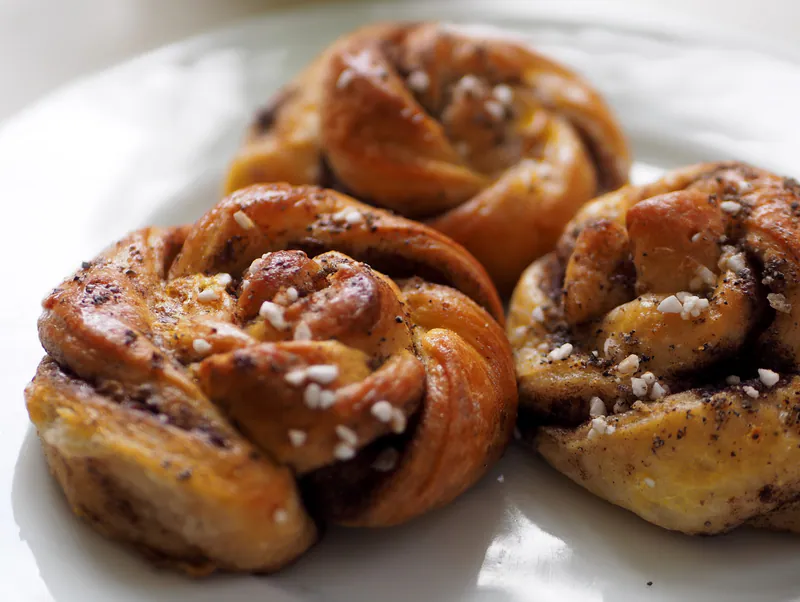
Kardemommeboller (cardamom buns)
 Swedish · 2 h 37 min · 257 kcal · Contains egg
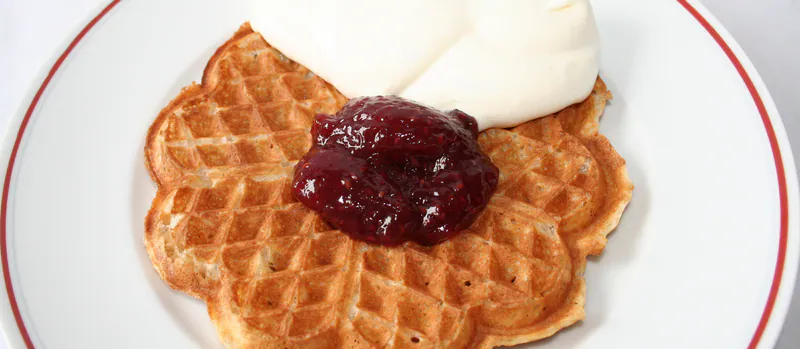
Våfflor (Swedish waffles)
Swedish · 50 min · 674 kcal · Contains egg
Skillingsboller (Bergen cinnamon buns)
Norwegian · 2 h 40 min · 412 kcal · Contains egg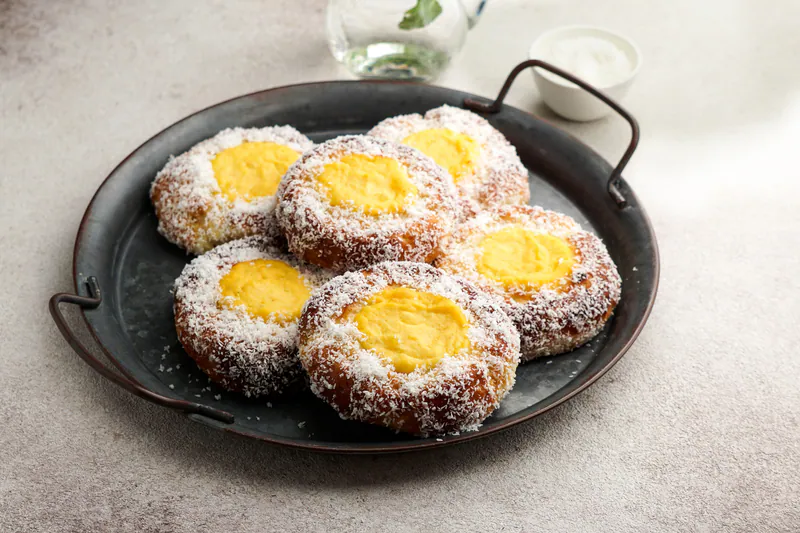
Skolebrød (Norwegian custard buns with coconut)
Norwegian · 2 h 35 min · 309 kcal · Contains egg