

Japanese cheesecake (soufflé cotton cheesecake)
Contains egg (no meat or fish)
スフレチーズケーキ · sufure chīzukēki
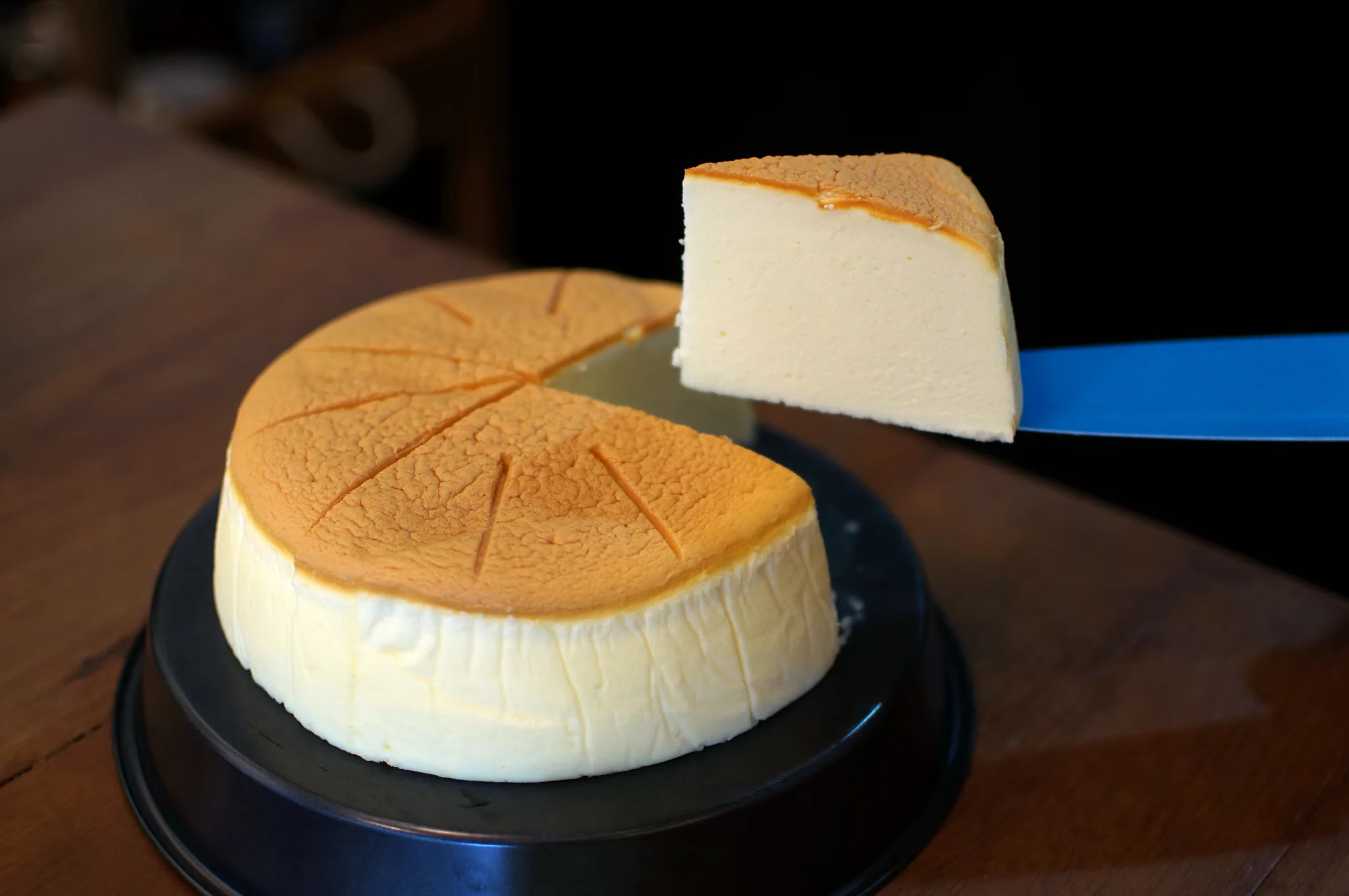
A cream cheese custard lightened with softly whipped meringue and baked slowly in a water bath, so it rises like a soufflé and sets into a tall, moist cake with a cotton-soft crumb. Less rich and less sweet than a New York cheesecake, and best served chilled.
Japanese cheesecake (soufflé cotton cheesecake) is a Japanese cake, ready in about 5 hours 55 minutes and made with cream cheese, egg yolk and egg white. It serves 8 and is rated advanced to cook.
- Prep
- 30 min
- Cook
- 1 h 25 min
- Rest
- 4 h
- Total
- 5 h 55 min
- Serves
- 8
- Level
- Advanced
- Calories
- 330
Main ingredients
Ingredients
For the cheese base
For the meringue
For the tin
Method
Cheese base
18 minStep 1
Heat the oven (opens in a new tab) to 160 °C (conventional, not fan). Grease an 18–20 cm round cake tin (opens in a new tab) with a fixed base and line the base and sides with baking paper, letting the paper stand 5 cm above the rim. If you only have a springform tin, wrap the outside tightly in two layers of foil.
- 5 min
- 160°C · conventional
- Cake tin (opens in a new tab)
- Oven (opens in a new tab)
Step 2
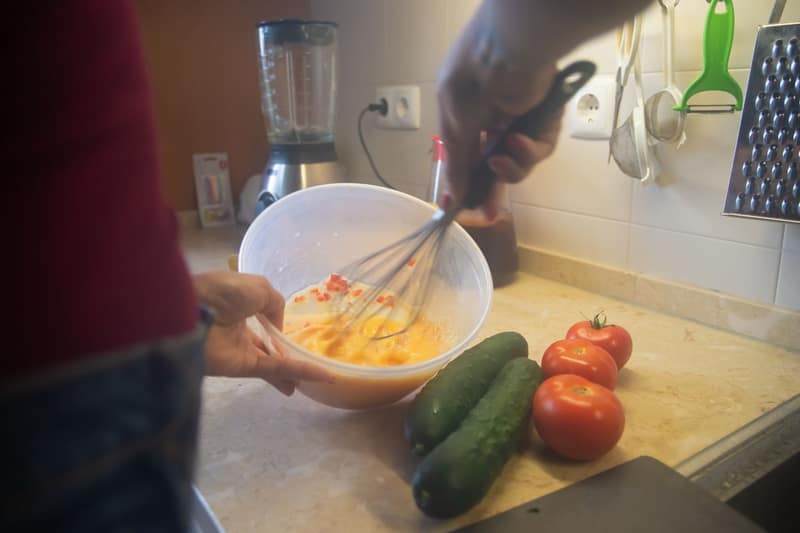
Melt the cream cheese (opens in a new tab), 50 g butter (opens in a new tab) and milk (opens in a new tab) together in a bowl over simmering water, whisking until completely smooth. Take off the heat and cool for a few minutes.
Step 3
Whisk (opens in a new tab) in the egg yolks (opens in a new tab) one at a time, then the lemon juice (opens in a new tab) and vanilla (opens in a new tab). Sift over the flour and cornstarch (opens in a new tab) and whisk until smooth. Pass the mixture through a sieve for a silky texture.
How it looks · Photo: Kampus Production on Pexels
Meringue
1 h 41 minStep 4
In a clean, grease-free bowl, whisk (opens in a new tab) the egg whites (opens in a new tab) with the cream of tartar (opens in a new tab) until foamy. Add the sugar (opens in a new tab) a spoonful at a time and keep whisking to soft-to-medium peaks that bend over at the tip — glossy but not stiff.
Stiff meringue makes the cake rise too fast, crack and then sink.
Step 5
Stir a third of the meringue into the cheese mixture to loosen it, then gently fold in the rest in two additions with a spatula (opens in a new tab) until no white streaks remain. Pour into the tin and tap it on the worktop to release large bubbles.
Step 6
Stand the tin in a roasting pan (opens in a new tab) and pour in hot water to come 2–3 cm up the side. Bake at 160 °C for 20 minutes, then lower to 140 °C and bake for 60–65 minutes more, until risen, golden on top and springy when pressed.
Step 7
Turn off the oven (opens in a new tab) and leave the cake inside with the door ajar for 30 minutes, then lift it out, unmould it while warm and peel off the paper. Cool, then chill for at least 3 hours.
- 5 min
At a glance
1 · Cheese base in a bowl
 Cream cheese
 Butter
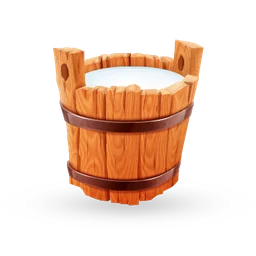 Milk
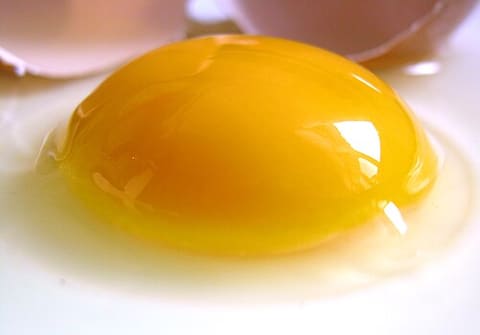 Egg yolk
 Lemon juice
 Vanilla extract
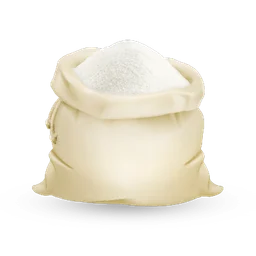 All-purpose flour
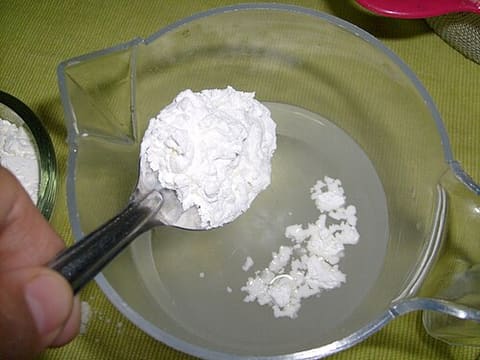 Cornstarch
then grease-free
2 · Meringue in a bowl
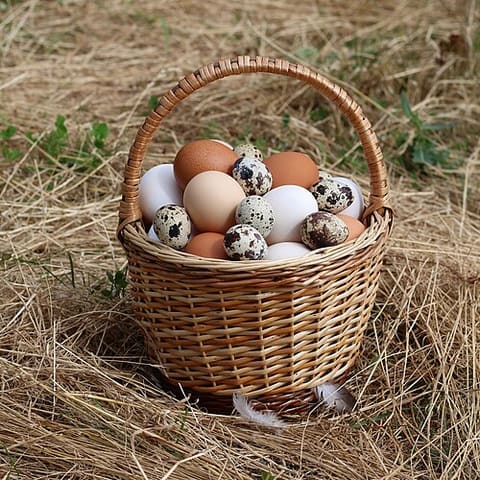 Egg white
 Cream of tartar
 Sugar
About this dish
- Origin
- Japan · Commonly attributedUsually credited to chef Tomotaro Kuzuno, who adapted a German Käsekuchen he tasted in Berlin in the late 1960s; Japanese bakery chains later made the wobbly, freshly baked versions famous across East Asia.Also popular in Taiwan, Singapore, MalaysiaMore food from Japan
Japan - Dish
- Dessert · Snack · Cakes · Desserts
- Cooking method
- Oven-baked, Whipped
- Taste
- creamy, sweet, tangy
- Diet
- Vegetarian (lacto-ovo) · No nut ingredientsWithout the optional extras: Alcohol-freeWorked out from the ingredients. How labels work
All labels
Vegetarian (lacto-ovo) · Eggetarian · Pescatarian · Flexitarian-friendly · No nut ingredients · Pork-free · Beef-free - Good for
- Make-ahead · Child-friendly
- Cook more with
- Cream cheese · Egg yolk · Egg white · Butter · Milk · Lemon juice
- Techniques
- Roasting · Baking · Simmering · Emulsification · Fermentation
Allergens
- Contains: Milkfrom cream cheese, butter, milk
- Contains: Eggsfrom egg yolk, egg white
- Contains: Wheatfrom all-purpose flour
- Contains: Glutenfrom all-purpose flour
Based on typical versions of these ingredients and not verified allergen-free. Brands differ and cross-contact happens, so always check labels. For severe allergies, follow your clinician’s advice.
Nutrition
330 kcal per serving
Calculated1 serving ≈ 119 g · recipe makes 8
Where the energy comes from
- Protein 9%
- Carbohydrate 34%
- Fat 56%
| Nutrient | Per serving | Per 100 g* |
|---|---|---|
| Energy | 330 kcal | 278 kcal |
| Protein | 7.9 g | 6.7 g |
| Carbohydrate | 28.6 g | 24.1 g |
| Net carbohydrate | 28.4 g | 24 g |
| Sugars | 19.6 g | 16.5 g |
| Added sugars | 17.5 g | 14.8 g |
| Fibre | 0.2 g | 0.2 g |
| Fat | 20.8 g | 17.5 g |
| Saturated fat | 11.6 g | 9.8 g |
| Trans fat | — | — |
| Cholesterol | 187 mg | 158 mg |
| Sodium | 200 mg | 168 mg |
| Salt equivalent | 0.5 g | 0.4 g |
Vitamins & minerals per serving
- Potassium
- 125 mg
- Calcium
- 66 mg
- Iron
- 0.8 mg
- Magnesium
- 9 mg
- Vitamin A (RAE)
- 202 µg
- Vitamin C
- 1 mg
- Vitamin D
- 0.9 µg
- Vitamin B12
- 0.4 µg
- Folate (DFE)
- 45 µg
How these numbers were made
- Calculated from USDA FoodData Central (SR Legacy) per-100 g values and the listed quantities.
- *Per 100 g of combined raw ingredients; the cooked dish may weigh more or less.
- Optional ingredients are not included: vanilla extract, cream of tartar.
- “—” means the value isn’t known for enough of the ingredients; it is never zero by default.
- Values are estimates for guidance, not for medical dosing. U.S. Department of Agriculture, Agricultural Research Service. FoodData Central, 2019. fdc.nal.usda.gov.
Good to know
Tips
- Use a conventional (non-fan) oven setting; fan heat browns and cracks the top.
- A thin sieve of icing sugar or a brush of warmed apricot jam gives the classic bakery shine.
Common mistakes
- Over-whipping the meringue, which leads to a cracked top and a dense, sunken centre.
- Opening the oven door during baking.
Serve with
- Chilled, with fresh strawberries and a cup of green or black tea.
- Slightly warm on the day it is baked, when it is at its most jiggly.
Food safety
- Batter and dough containing raw egg should not be tasted before cooking.
Storage
- Keeps 4 days refrigerated, covered.
Variations
- Matcha cheesecake: 1 tbsp matcha powder sifted in with the flour.
- Baked rare cheesecake: Japan also loves 'rare' (no-bake) cheesecakes set with gelatin; the soufflé style is the baked one.
Original editorial recipe · FriendsPantry editorial · source: TasteAtlas (dish facts) · Not yet independently reviewed · Added
Recipe DNA
How this dish is built
Built from the recipe’s own sections. Each band’s width is its share of the dish by weight. Choose a component to see what it does.
The body of the dish
For the cheese base
- Cream cheese, full-fat block, at room temperature250 g
- Butter50 g
- Milk100 ml · 103 g
- Egg yolk6 piece · 102 g
- Lemon juice1 tbsp · 15 g
- Vanilla extract (optional)1 tsp · 4.3 g
- All-purpose flour60 g
- Cornstarch20 g
Reviews & corrections
Reviews come from signed-in cooks and appear after a moderator checks them. We never show made-up ratings.
You might also like
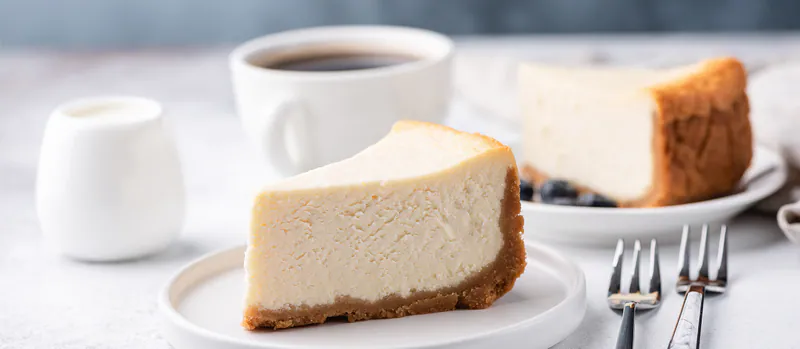
New York cheesecake
 American · 7 h 45 min · 527 kcal · Contains egg
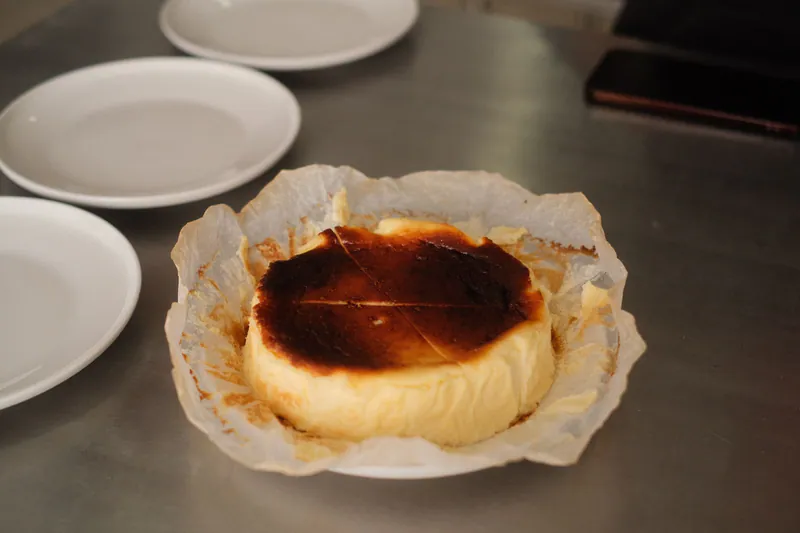
Basque burnt cheesecake
 Spanish · 4 h 10 min · 494 kcal · Contains egg
Gâteau mille crêpes (crêpe cake)
 French · 6 h 40 min · 394 kcal · Contains egg
Krémes (Hungarian cream slice)
 Hungarian · 5 h 15 min · 480 kcal